

Will non-standard panel sizes cause rework delays during installation?
Will non-standard panel sizes cause on-site rework delays?
Yes—non-standard panel sizes can trigger on-site rework delays, but not inevitably. The risk isn’t inherent to the dimensions themselves; it’s concentrated in the gap between specification intent and field execution. Contractors and interior fit-out teams consistently report that the most disruptive delays occur not when panels are custom-sized, but when those custom sizes arrive without full integration into three interdependent systems: architectural detailing, fabrication tolerances, and site coordination protocols.
Where the risk actually lives—and where it doesn’t
Many assume the problem is dimensional uniqueness: “If it’s not 1200 × 2400 mm, something will go wrong.” That’s misleading. Standard-sized panels routinely fail on site due to unaccounted-for substrate variations, thermal expansion in ceiling plenums, or misaligned framing—issues entirely unrelated to nominal size. Conversely, carefully engineered non-standard panels—such as a 1378 × 2942 mm fire-rated decorative wall panel for a curved reception wall—often install faster than standard alternatives, because they eliminate seam lines, reduce joint finishing labor, and align precisely with structural bays.
The real delay triggers are narrower and more operational:
- Design-to-fabrication handoff gaps: When architectural drawings specify “custom size” without defining reference points (e.g., “measured from finished floor to soffit underside, excluding base trim”), fabricators interpret dimensions differently—and corrections only surface during dry-fit.
- Tolerance stacking: A panel ordered at ±1 mm tolerance may be perfectly acceptable in factory conditions, but if installed over a substrate with ±5 mm planarity deviation (common in existing buildings), the cumulative mismatch forces field scribing, filler application, or even full replacement.
- Logistics-driven sequencing conflicts: Non-standard panels often ship as dedicated batches. If one panel in a set is delayed—even by 48 hours—the entire installation sequence stalls, because adjacent panels rely on its precise edge profile for alignment or gasket engagement.
When non-standard sizing adds value—not risk
There are four high-leverage scenarios where deviating from stock dimensions demonstrably reduces rework potential:
- Column wraps and structural transitions: Panels sized to wrap around steel columns or bridge between dissimilar substrates (e.g., concrete to metal stud) avoid complex field miters and inconsistent reveal widths.
- Acoustic or fire-performance continuity: In demising walls or ceiling plenums, non-standard lengths can eliminate joints within critical attenuation zones—removing the need for on-site acoustic sealant injection or fire-collar adjustments.
- Large-format aesthetic continuity: For seamless visual fields—especially with digitally printed or veined materials—panels exceeding standard lengths suppress visible repetition and eliminate seam-related color shift or gloss differential.
- Adaptive reuse constraints: In heritage retrofits or tight urban infill sites, non-standard heights or depths often match existing window reveals, door headroom, or mechanical chases—avoiding costly substrate modification.
In each case, the time saved in reduced joint work, fewer callbacks for aesthetic correction, and elimination of secondary sealing steps typically offsets any premium in fabrication lead time.
Three non-negotiable controls before ordering custom dimensions
If your project requires non-standard panels, delay mitigation hinges on three pre-order actions—not post-order fixes:
1. Anchor all dimensions to as-built conditions—not design drawings. Require laser-scanned point clouds or physical verification of key interfaces (floor level, ceiling grid datum, column face locations) before finalizing panel sizes. A 3 mm discrepancy between drawing assumption and reality becomes a 3 mm gap—or worse, a forced compression fit—that halts installation until resolved.
2. Specify dimensional control at the interface—not just the panel. Instead of “panel height = 2850 mm,” define “distance from finished floor to top edge of panel = 2850 mm ±0.5 mm, measured at three points across width, with tolerance verified on completed substrate.” This shifts accountability to the condition the panel must meet—not just its own manufacturing spec.
3. Lock joint methodology before sizing. Panel dimension affects joint behavior. A 10 mm expansion gap behaves differently in a silicone-filled reveal than in a concealed clip system. Confirm joint type, movement capacity, and finish method first—then derive panel dimensions to accommodate them, not the reverse.
How integrated material systems change the calculus
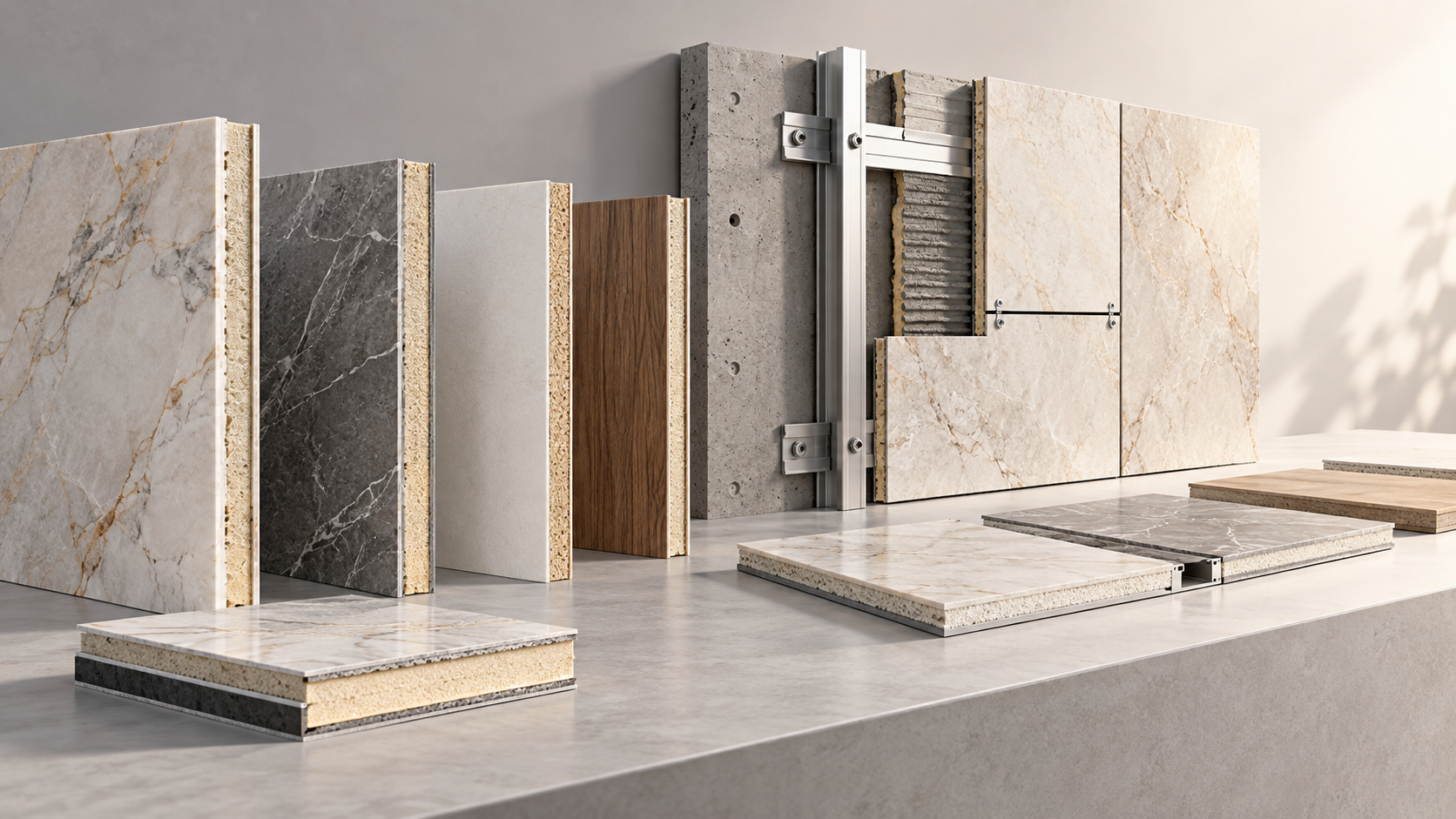
For projects where schedule certainty is non-negotiable, the distinction between “non-standard size” and “non-standard system” matters deeply. A standalone custom-sized panel remains vulnerable to field variables. But when non-standard dimensions are part of a certified, tested assembly—where panel, substrate adapter, edge detail, and perimeter sealant have been validated together—the risk profile changes.
Take fire-rated decorative wall systems, for example. Some manufacturers offer fully tested assemblies for non-standard heights up to 4200 mm, including integrated fire-stopping at top and bottom terminations. Here, the panel’s uniqueness isn’t an isolated variable—it’s a calibrated component of a documented performance pathway. Installation proceeds from a known sequence, with defined tolerances at each interface, and no reliance on field-applied fire caulking to compensate for dimensional drift.
This integration eliminates the most common root cause of rework delays: ambiguity about who resolves the gap between what was ordered and what the site actually delivers.
Final judgment: It’s about traceability, not size
Non-standard panel sizes don’t cause delays. Untraceable dimensional decisions do. If every custom dimension can be traced back to a verified as-built condition, a defined interface tolerance, and a validated assembly protocol, then deviation from standard sizes becomes a schedule accelerator—not a liability. If any one of those three links is missing, even a nominally “standard” panel can trigger the same cascade of field adjustments, labor downtime, and aesthetic compromise.
The question isn’t whether to go non-standard. It’s whether your specification process treats dimension as a coordinate—not a number.
RECOMMEND

Oct 27, 2026
Are Aluminum Honeycomb Panels Moisture-Resistant Enough for Bathrooms?
Explore aluminum honeycomb panel moisture resistance for bathrooms. Learn how finishes, sealed edges, and waterproofing help you choose suitable panels for walls, ceilings, and showers.
Oct 27, 2026
How Are Custom Veneer Panels Color-Matched for High-End Interiors?
Explore custom veneer panels color matching for high-end design. Discover how veneer selection, finishes, and lighting create cohesive, luxurious interiors.
Oct 26, 2026
How Do You Choose Fire-Resistant Composite Panels for Commercial Use?
Choose fire resistant composite panels for commercial interior projects. Learn how to verify fire documentation, compare options, and avoid costly specification mistakes.
Oct 26, 2026
Are Meilin Board Custom Panels Suitable for Luxury Hotel Lobbies?
Explore Meilin Board custom decorative panels for luxury hotel lobbies. Discover design considerations and essential fire, emissions, and maintenance checks before specifying your project.