

How to verify if an OEM panel supplier operates real production lines?
How to Verify If an OEM Panel Supplier Operates Real Production Lines?
When sourcing decorative panels, knowing how to verify if an OEM panel supplier has real production lines is critical to ensuring quality, consistency, and supply chain reliability. Many buyers unknowingly partner with trading companies masquerading as manufacturers—leading to delays, substandard products, or compliance risks. As a high-tech enterprise specializing in advanced decorative and fireproof materials, Shenyang Shengshi Meilin Technology Co., Ltd. operates fully integrated, ISO-certified production lines in Shenyang—enabling end-to-end control from R&D to finished panels. In this guide, we reveal practical, on-the-ground methods to authenticate a supplier’s manufacturing capability—so you invest with confidence.
Why This Verification Matters More Than You Think
For procurement managers, interior designers, and construction contractors, the distinction between a true OEM manufacturer and a middleman isn’t academic—it directly impacts project timelines, fire safety compliance, surface finish consistency, and long-term warranty enforceability. A supplier without in-house production often outsources to multiple subcontractors, resulting in batch-to-batch variation, untraceable raw material origins, and no accountability for dimensional tolerances or flame-retardant performance.
At Shengshi Meilin, every decorative panel—from melamine-faced MDF to aluminum-composite fire-rated wall cladding—passes through our proprietary R&D lab, automated cutting line, thermoforming station, and final QC bay. No third-party handoff. That means when you specify a 12mm thickness or Class B fire rating, it’s engineered and verified—not promised.
5 On-Site & Remote Verification Methods That Actually Work
Don’t rely on glossy brochures or “factory tour” videos shot years ago. Here’s what experienced buyers do:
1. Request Full-Process Video Walkthroughs—Not Just Static Photos
Ask for live or timestamped video footage showing *continuous flow*: raw board unloading → edge banding → CNC profiling → surface coating → stacking → packaging. Key red flags: reused background music, identical lighting across “different” zones, or missing operator interaction. At Shengshi Meilin, we offer scheduled Zoom walkthroughs where buyers watch real-time panel lamination under controlled temperature/humidity—proving not just capacity, but process discipline.
2. Cross-Check Equipment Branding & Serial Numbers
Top-tier panel lines use machinery from Biesse, Homag, or SCM—each with visible serial plates and software interfaces. Request photos of control panels showing active production logs (e.g., “Batch #SM-2024-0876 running at 12.4m/min”). If the supplier hesitates or provides generic stock images, that’s a strong signal they lease equipment—or worse, don’t own any.
3. Audit Raw Material Traceability Documentation
A real OEM maintains traceability down to the resin batch number used in fireproof core layers or the substrate mill certificate. Ask for a sample Material Test Report (MTR) linked to a recent order ID. Trading firms typically provide only generic EN or GB standard summaries—not lot-specific data. Shengshi Meilin embeds QR codes on every panel shipment linking directly to its internal ERP system, showing exact glue formulation, curing time, and post-cure moisture testing results.
4. Verify ISO & Fire Certification Validity—Not Just Presence
Many suppliers display ISO 9001 certificates—but check the scope clause. Does it explicitly cover “decorative panel manufacturing,” or just “trading services”? Likewise, fire test reports must be issued by accredited labs (e.g., TÜV SÜD, CNAS) and reference *your exact product specification*, not a similar model. We hold ISO 9001:2015 and ISO 14001:2015 certifications with scopes covering R&D, production, and installation support—and all fire ratings are validated per GB 8624-2012 and EN 13501-1.
5. Confirm In-House R&D Capability—Not Just “Design Support”
True OEMs invest in material science—not just graphic design. Ask: Do they formulate their own fire-retardant resins? Can they adjust surface texture depth within ±0.03mm tolerance? Do they hold patents related to substrate bonding or wear-layer adhesion? Shengshi Meilin holds 27+ invention and utility model patents—including one for low-VOC nano-ceramic coating applied via inline plasma treatment—proving deep technical ownership, not superficial customization.
What to Avoid: 3 Common “Verification” Traps
Buyers often waste time on ineffective checks. Don’t fall for these:
“Factory Address Verification” — A registered office ≠ production site. Use satellite tools like Google Earth to check for cranes, ventilation stacks, or truck loading docks. Shenyang’s industrial zone zoning maps confirm our 32,000㎡ facility includes dedicated coating booths and hazardous-material storage compliant with GB 50160.
“Employee Count Claims” — Headcount says nothing about skilled labor density. Instead, ask for technician certification records (e.g., CNC machine operator licenses) and average tenure in production roles. Our core team averages 8.2 years—critical for maintaining micron-level surface flatness across 2.4m-wide panels.
“Sample Quality Alone” — A perfect sample proves nothing if it’s hand-assembled off-line. Insist on sampling *from a live production run*—with batch ID, date stamp, and full test report attached.
When You Need More Than Verification: The Value of Integrated OEM Partnership
Once confirmed, a real OEM offers strategic advantages beyond risk mitigation: faster NPI (New Product Introduction) cycles, shared IP development, bulk cost optimization through substrate pooling, and responsive engineering support during site installation. For example, when a Shanghai hotel project required custom 3D-textured panels with acoustic absorption, Shengshi Meilin co-developed the mold tooling and adjusted our vacuum-forming parameters—cutting lead time by 40% versus outsourcing.
This level of collaboration is impossible with non-manufacturing suppliers. Their role stops at order forwarding—not problem solving.
Final Checklist Before You Commit
Before signing an OEM agreement, complete this 7-point validation:
- ✅ Live video walkthrough showing ≥3 consecutive process stages
- ✅ Equipment serial numbers matched to purchase invoices or lease agreements
- ✅ Raw material MTRs tied to a recent order ID
- ✅ ISO/fire certs listing *your product category* in the scope clause
- ✅ Patent documentation or R&D lab photos showing active experiments
- ✅ ERP screenshot showing real-time WIP (Work-in-Progress) status
- ✅ Signed NDA permitting third-party audit (we welcome SGS or Bureau Veritas)
Conclusion: Verification Is the First Step—Control Is the Real Advantage
Verifying whether an OEM panel supplier runs real production lines isn’t about ticking boxes—it’s about securing control over aesthetics, safety, and schedule. Trading intermediaries offer convenience; true OEMs deliver consistency, traceability, and partnership. Shenyang Shengshi Meilin Technology Co., Ltd. invites qualified partners to validate our capabilities firsthand—not through marketing claims, but through transparent access to our production data, certified processes, and engineering expertise. Because in decorative materials, what happens *inside the factory* determines what performs *on your wall*.
RECOMMEND

Oct 27, 2026
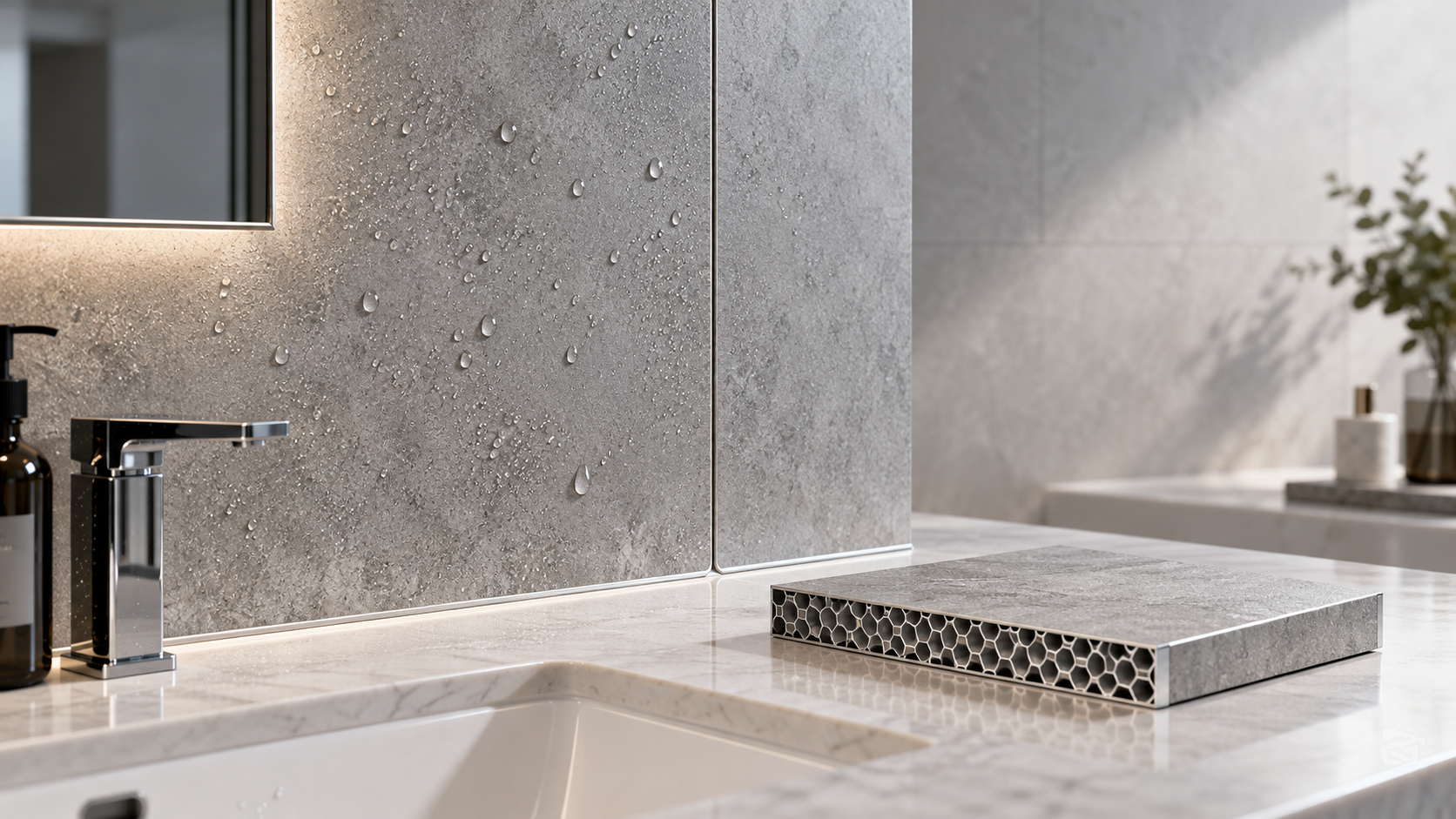
Are Aluminum Honeycomb Panels Moisture-Resistant Enough for Bathrooms?
Explore aluminum honeycomb panel moisture resistance for bathrooms. Learn how finishes, sealed edges, and waterproofing help you choose suitable panels for walls, ceilings, and showers.
Oct 27, 2026
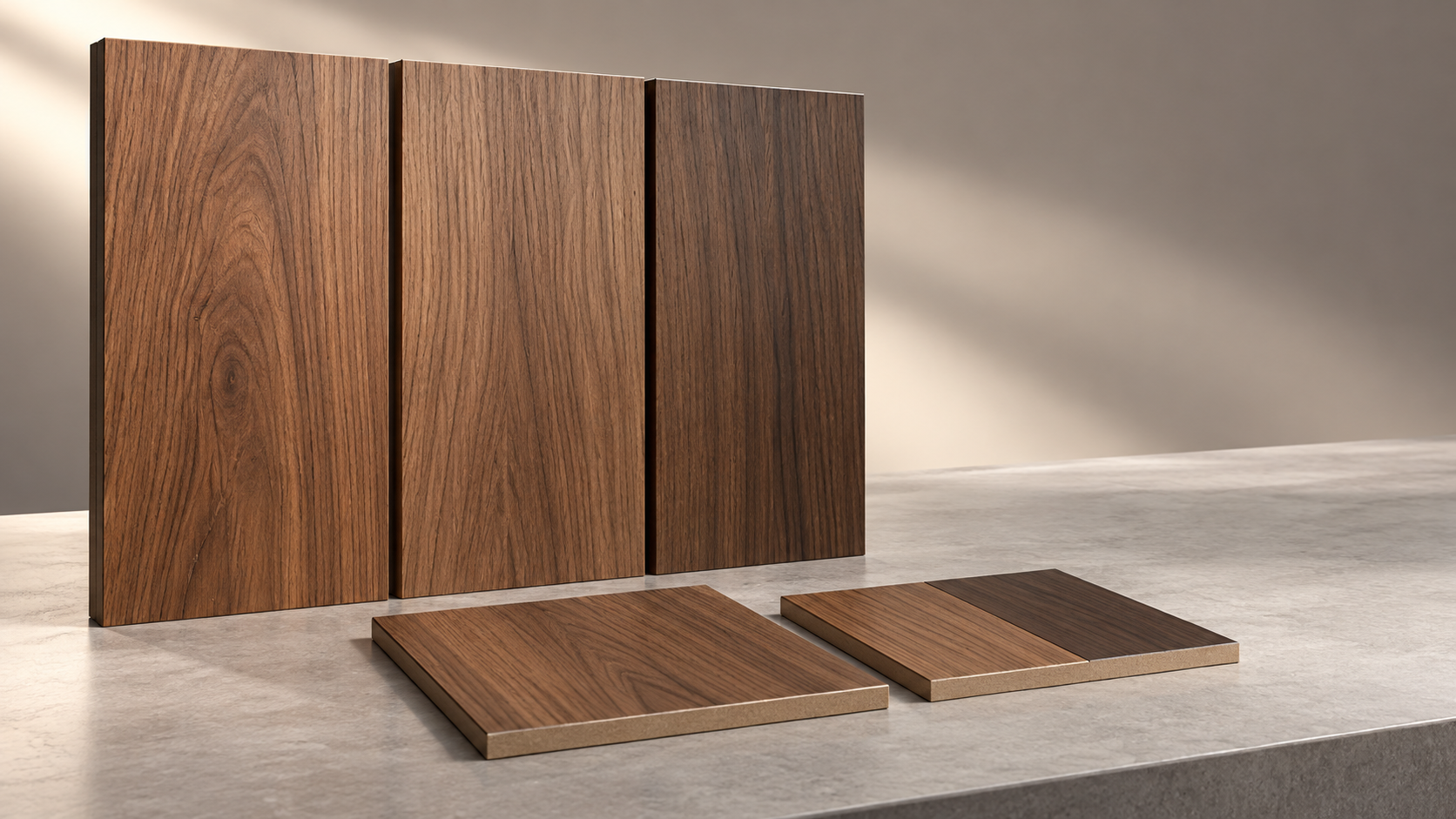
How Are Custom Veneer Panels Color-Matched for High-End Interiors?
Explore custom veneer panels color matching for high-end design. Discover how veneer selection, finishes, and lighting create cohesive, luxurious interiors.
Oct 26, 2026
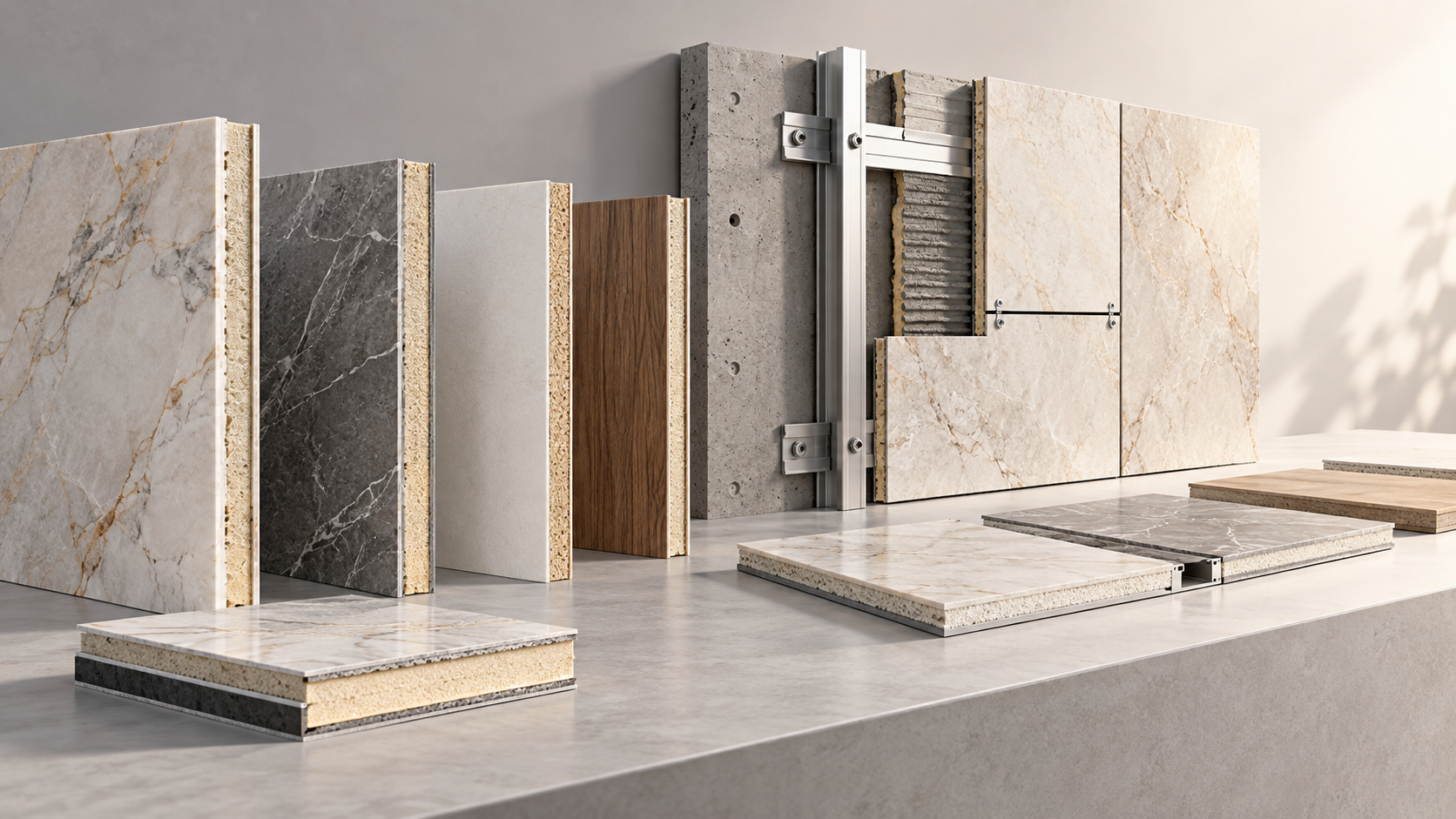
How Do You Choose Fire-Resistant Composite Panels for Commercial Use?
Choose fire resistant composite panels for commercial interior projects. Learn how to verify fire documentation, compare options, and avoid costly specification mistakes.
Oct 26, 2026
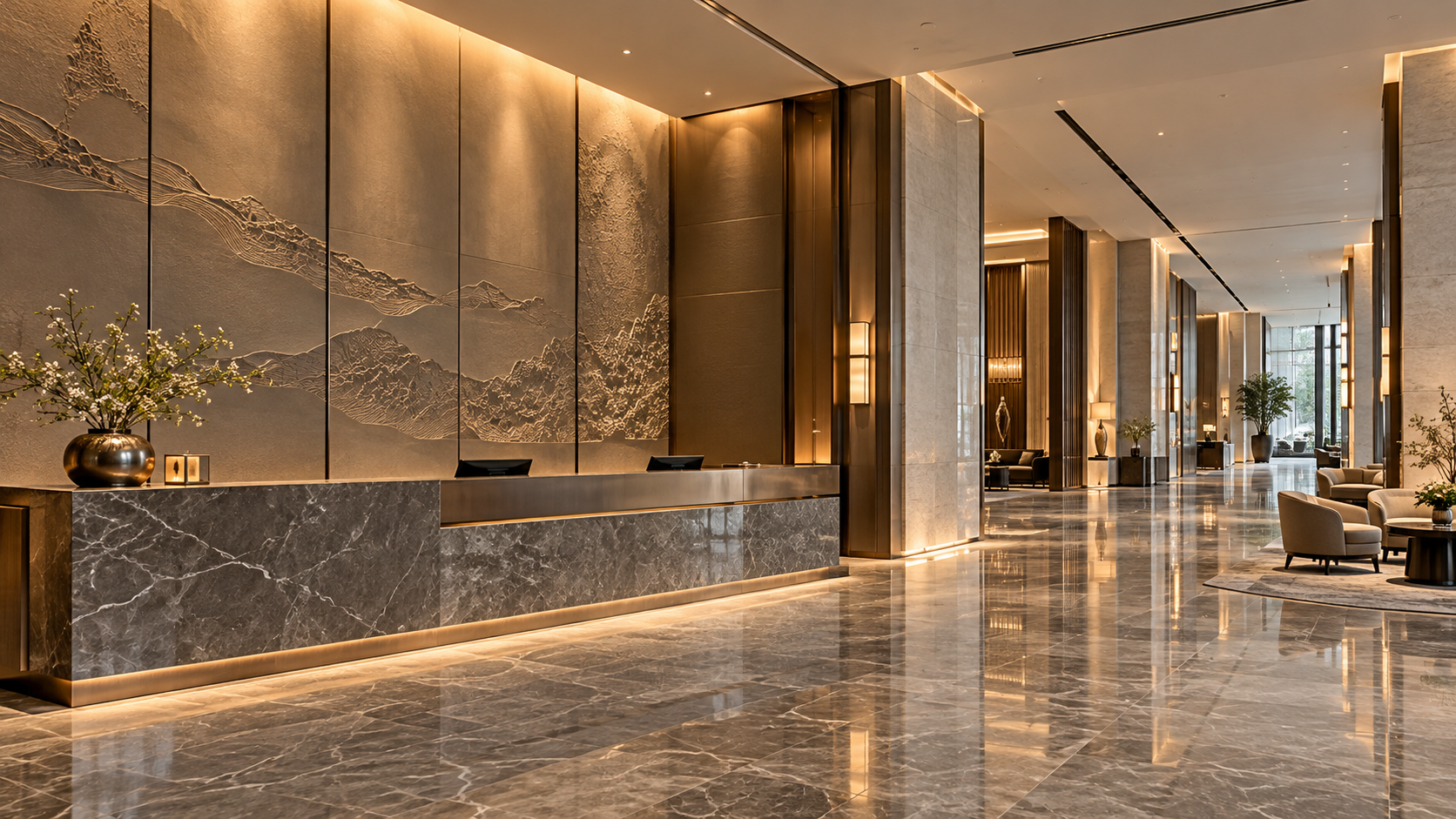
Are Meilin Board Custom Panels Suitable for Luxury Hotel Lobbies?
Explore Meilin Board custom decorative panels for luxury hotel lobbies. Discover design considerations and essential fire, emissions, and maintenance checks before specifying your project.