

Why Lightweight Panels Warp in Direct Sunlight Exposure — UV Stability, Coating Adhesion, and Thermal Expansion Mismatch
Lightweight Composite Wall Panels deliver clear advantages in speed of installation and material economy—but when installed on south-facing facades, rooftop canopies, or unshaded exterior walls, warping under prolonged direct sunlight exposure is not an anomaly. It’s a repeatable failure mode that compromises flatness, creates visible gaps at joints, and undermines both aesthetic continuity and long-term dimensional stability. For quality control and safety managers overseeing large-scale commercial or residential builds, this isn’t just a cosmetic issue: it triggers rework, delays handover, raises questions about compliance with thermal performance specifications, and—critically—introduces uncertainty around panel anchoring integrity over time.
The root cause lies not in a single flaw, but in the interplay of three material-level mechanisms: UV-induced degradation of surface coatings, insufficient intrinsic UV resistance in core substrates, and mismatched coefficients of thermal expansion (CTE) across layered components. These factors converge under solar loading—especially during summer months in high-UV zones—and accelerate physical distortion far beyond what ambient temperature cycling alone would produce. Identifying which mechanism dominates in a given installation allows targeted mitigation—not blanket replacement.
UV Degradation Weakens Coating Adhesion
Many lightweight panels use polymer-based topcoats for weather resistance and finish aesthetics. Under sustained UV exposure, photochemical chain scission occurs in the binder resin, particularly in acrylics or low-stabilizer polyester systems. This reduces crosslink density, softens the film, and diminishes interfacial adhesion to the underlying substrate. The result isn’t uniform shrinkage—it’s localized delamination at microstructural boundaries, where coating pull-away initiates differential stress. You’ll see early signs as fine surface crazing near panel edges or subtle lifting at cut ends, often before bulk warping becomes visible. If the substrate beneath is hygroscopic (e.g., certain fiber-cement or wood-fiber cores), moisture ingress through compromised coating further amplifies swelling-driven distortion.
Inadequate Core Material UV Stability
Unlike cladding materials designed for full-exposure façades, many lightweight composite wall panels prioritize weight reduction and cost efficiency over UV endurance in their structural core layers. Common core materials—including expanded polystyrene (EPS), polyurethane (PU), or low-density mineral wool composites—exhibit varying degrees of photodegradation. EPS, for instance, undergoes yellowing and embrittlement; PU foams may oxidize and lose compressive strength. When UV penetrates even partially through thin or semi-transparent top layers—or reflects off adjacent surfaces—the core begins losing mechanical cohesion. This loss isn’t always measurable via standard tensile tests post-installation, because field exposure combines UV with thermal cycling and humidity fluctuations—conditions rarely replicated in lab-accelerated aging protocols. A panel passing ASTM G154 Class B doesn’t guarantee real-world performance on a west-facing curtain wall with no shading.
Thermal Expansion Mismatch Between Layers
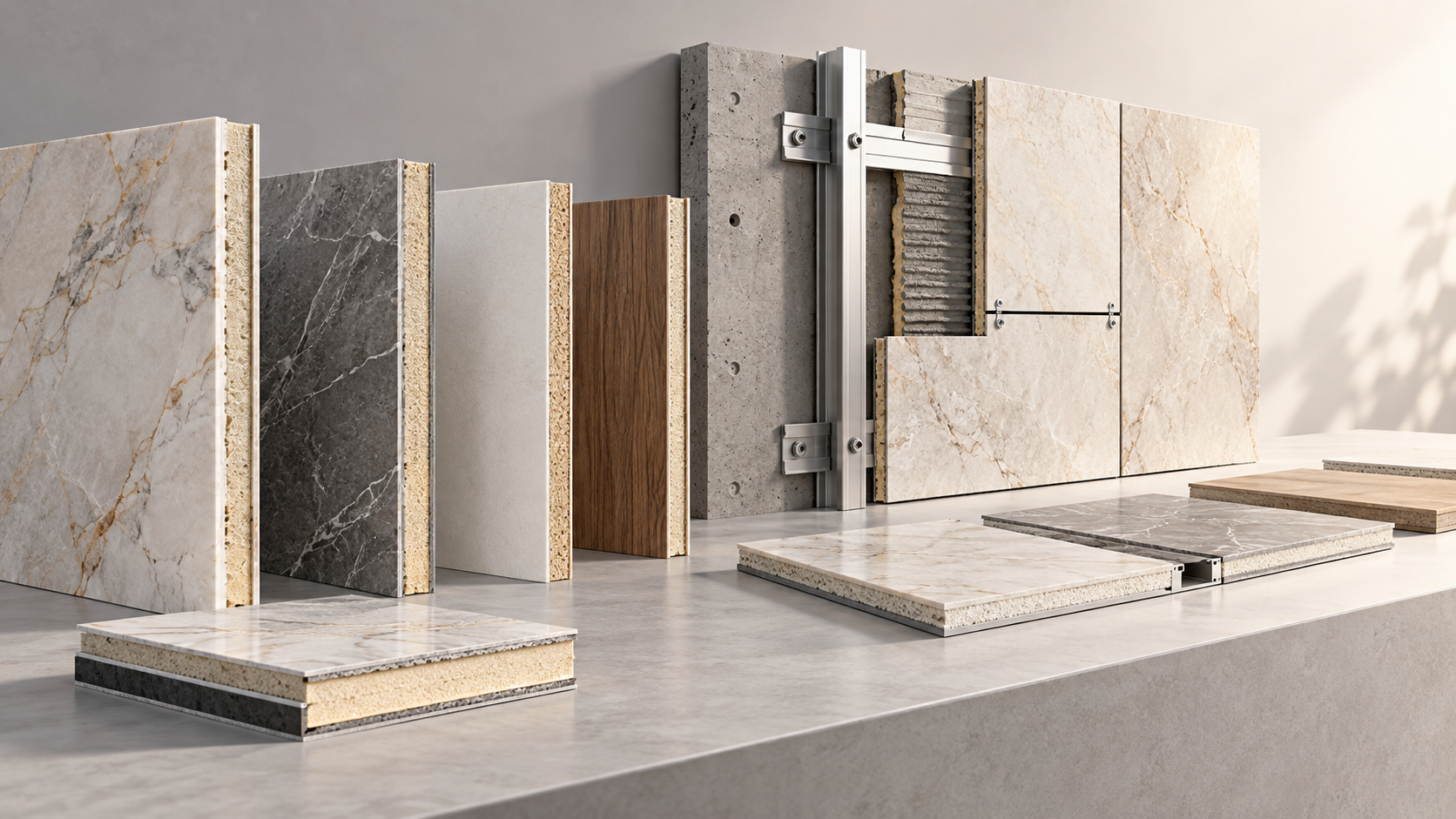
This is the most mechanically decisive factor—and the one most directly tied to warping geometry. Lightweight panels are inherently multilayered: a decorative skin, adhesive layer, core, backing layer, and sometimes secondary bonding film. Each component has its own coefficient of thermal expansion. Aluminum-faced skins expand ~23 µm/m·°C; PVC-based laminates ~50–70 µm/m·°C; gypsum or fiber-cement substrates ~8–12 µm/m·°C; and polymer cores often exceed 100 µm/m·°C. Under direct sun, surface temperatures can reach 70–85°C—30–40°C above ambient—creating steep thermal gradients across thickness. The outer layer heats and expands first, while inner layers lag. If adhesion is already weakened by UV or if CTE differences exceed 30 µm/m·°C between adjacent layers, compressive stress builds at the interface. That stress resolves as buckling—typically convex toward the sun—because the heated side seeks relief through lateral displacement rather than pure elongation.
How to Diagnose the Dominant Mechanism On-Site
Visual and tactile assessment, combined with installation context, narrows the likely cause:
- Edge-lifting + surface micro-cracking + uniform bowing: Points strongly to UV-driven coating failure, especially if panels were stored uncovered pre-installation or installed without UV-blocking temporary covers.
- Localized bulging + discoloration + brittle fracture on bending: Suggests core material degradation—particularly if warping worsens after midday heating and doesn’t fully recover overnight.
- Directional bowing (e.g., consistent convexity toward south) + no visible surface damage + reversible flattening in shade: Indicates thermal expansion mismatch as the primary driver, especially when panels were installed tightly with minimal expansion gaps.
Crucially, these aren’t mutually exclusive. In practice, UV degradation enables thermal mismatch to manifest more severely—and vice versa. But prioritizing corrective action requires distinguishing the initiating factor.
Mitigation Strategies That Address Root Causes
Prevention starts at specification—not just selection. Review manufacturer data sheets not only for “UV resistance” claims, but for test methodology: Does it cite ISO 4892-2 (Xenon arc) or just QUV? Is testing done on full assemblies—or only on surface films? What’s the maximum allowable surface temperature in service conditions?
For existing installations showing early warping:
- Avoid mechanical flattening or re-tightening fasteners—this stresses already-compromised interfaces.
- Shading devices (e.g., horizontal louvers, overhangs) reduce peak surface temperature more effectively than reflective paint, since they block radiant heat before absorption.
- If coating adhesion is the weak link, recoating is rarely viable unless the substrate remains sound and clean—field-applied UV-stable topcoats require precise surface prep and cure conditions not achievable on-site.
For new projects, specify panels with verified CTE compatibility across layers—verified via thermal cycling tests per EN 13501-1 Annex A, not just individual material datasheets. Prioritize cores with inherent UV stability (e.g., mineral-filled thermoplastics or ceramic-reinforced composites) over organic foams where full-sun exposure is unavoidable.
Selecting Panels Designed for Full-Sun Exposure
When architectural intent demands exposed lightweight panels on high-heat, high-UV surfaces, material architecture must account for all three mechanisms—not just one. Shenyang Shengshi Meilin Technology’s High-End Wood Grain-MLMW537 integrates a UV-stabilized acrylic-polyester hybrid topcoat with a mineral-reinforced polypropylene core engineered for CTE alignment within ±5 µm/m·°C across layers. Its fireproofing additives also contribute to thermal mass, reducing surface temperature spikes during solar loading. Unlike standard lightweight composite wall panels, it maintains dimensional stability under continuous irradiance exceeding 800 W/m²—validated through 1,200-hour xenon arc exposure followed by thermal cycling from –20°C to +80°C.
RECOMMEND

Oct 26, 2026
How Do You Choose Fire-Resistant Composite Panels for Commercial Use?
Choose fire resistant composite panels for commercial interior projects. Learn how to verify fire documentation, compare options, and avoid costly specification mistakes.
Oct 26, 2026
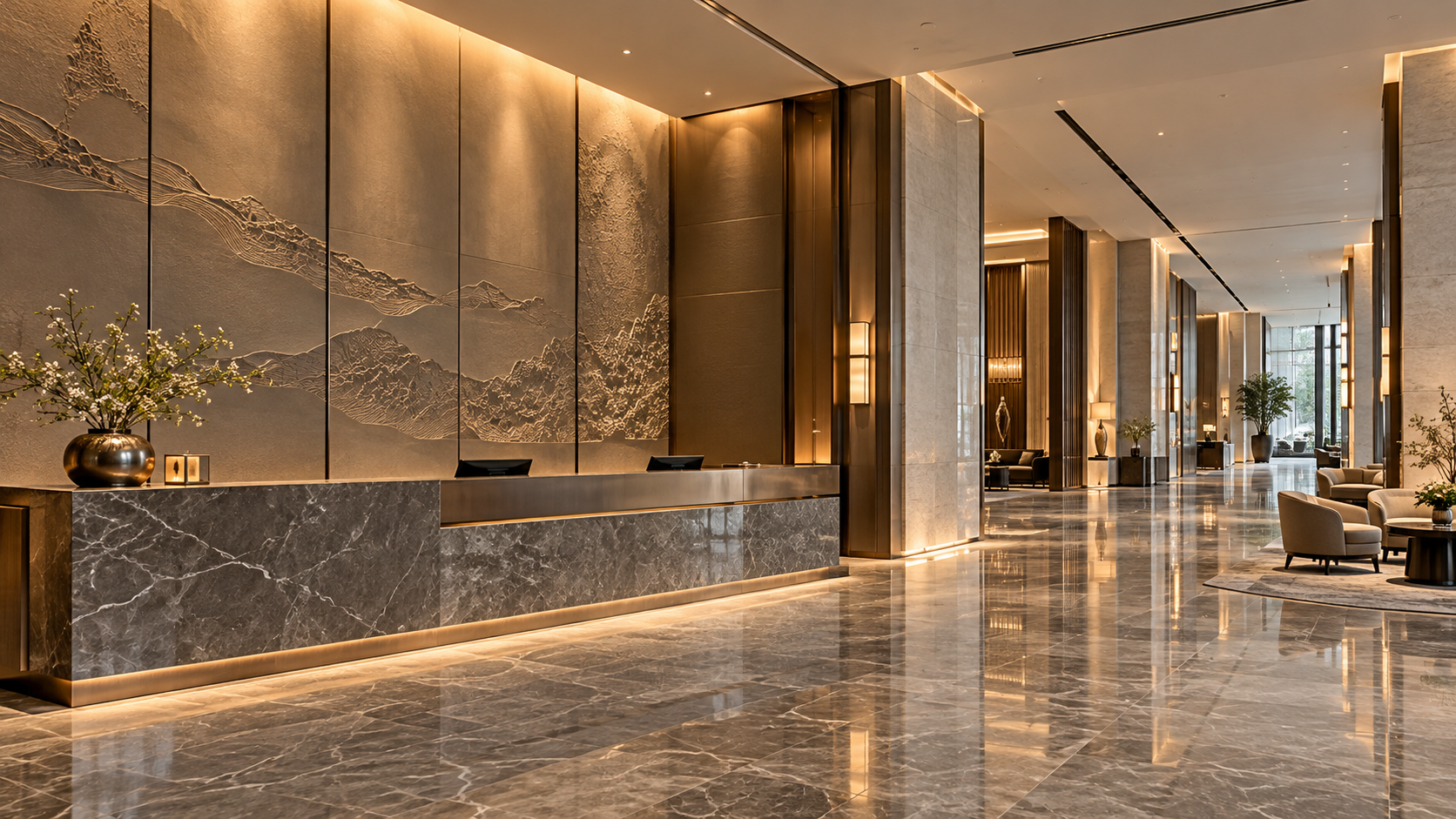
Are Meilin Board Custom Panels Suitable for Luxury Hotel Lobbies?
Explore Meilin Board custom decorative panels for luxury hotel lobbies. Discover design considerations and essential fire, emissions, and maintenance checks before specifying your project.
Oct 26, 2026
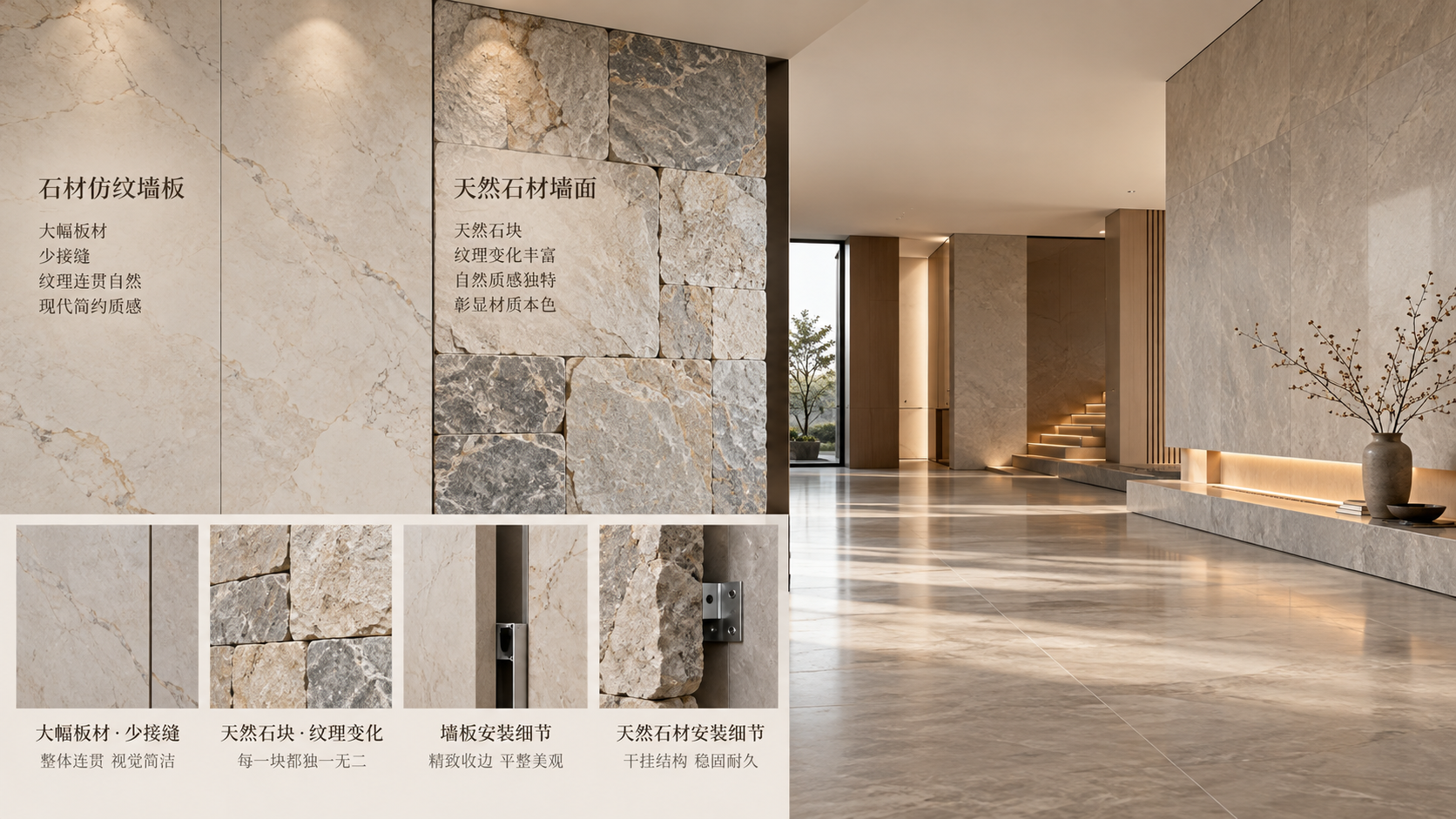
Stone-Look Wall Panels vs. Natural Stone: Which Costs Less?
Compare stone look wall panels vs natural stone cost, from materials and installation to maintenance. Discover which option delivers better value for your next wall project.
Oct 25, 2026
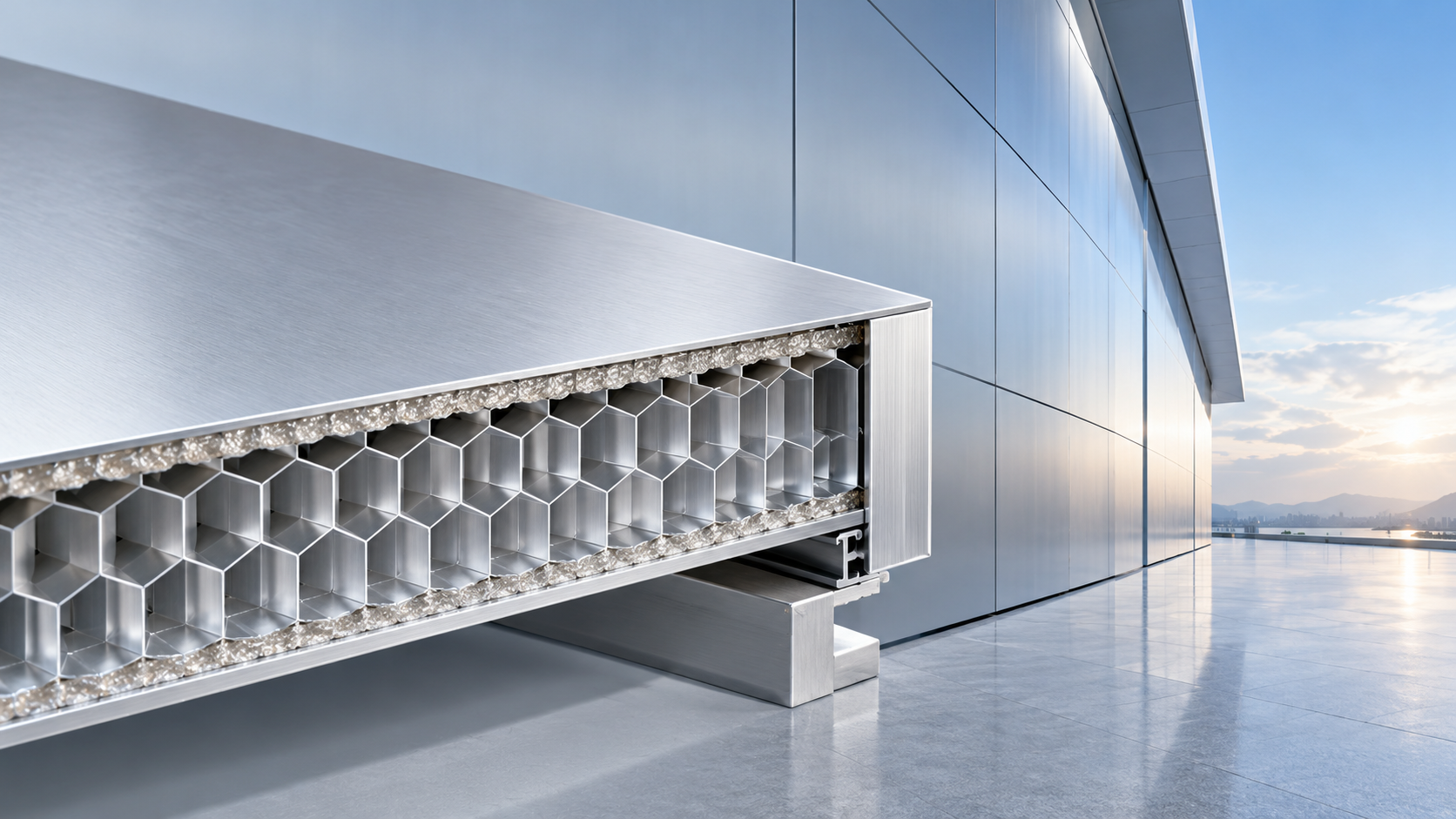
How Strong Are Meilin Board Aluminum Honeycomb Panels?
Explore aluminum honeycomb panels structural strength with Meilin Board. Learn how thickness, core design, and fixings affect performance to choose panels confidently.