

Stone Look Decorative Panels: How Realistic Are They? PEI Rating, Scratch Resistance, and Texture Depth Metrics
How Realistic Are Stone Look Decorative Panels—Really?
If you’re evaluating stone look decorative panels for a project—whether a high-traffic retail interior, a moisture-prone bathroom renovation, or a façade upgrade—the first question isn’t “What’s the price?” or “Who manufactures it?” It’s: Can I trust this to hold up—and hold attention—like real stone?
The answer isn’t binary. Realism here isn’t just about how closely it photographs under studio lighting. It’s the convergence of three measurable, interdependent factors: visual fidelity under varied light and viewing angles; tactile authenticity that registers as stone-like to touch and tool contact; and functional resilience where abrasion, impact, and environmental exposure test whether the surface stays convincing over time. Without all three, “stone look” remains decorative—not durable, not credible, and ultimately, not cost-effective.
PEI Rating: Not Just for Tile Anymore
Many specifiers assume PEI (Porcelain Enamel Institute) rating applies only to ceramic tile. But for stone look panels intended for floors, countertops, or wall cladding in commercial settings, PEI is one of the few standardized, lab-verified metrics that directly correlates with real-world wear resistance.
PEI measures resistance to surface abrasion using a calibrated steel wheel loaded with abrasive particles. Ratings range from 0 (wall-only, no foot traffic) to 5 (heavy commercial use). A PEI 3 panel may pass visual inspection in a low-use residential hallway—but under the rolling carts and stiletto heels of a boutique hotel lobby, micro-scratching accumulates fast, dulling the stone grain and exposing substrate inconsistencies.
Crucially, PEI doesn’t measure edge chipping, thermal cycling fatigue, or UV-induced color shift—only surface abrasion. So while a PEI 4 rating signals strong suitability for medium-to-heavy traffic, it must be paired with other data: adhesive bond strength for vertical applications, coefficient of friction (COF) for wet areas, and certified fire performance if used near exits or ceilings.
Scratch Resistance: Beyond “Hardness” Claims
You’ll see claims like “Mohs 6+” or “resistant to keys and coins.” But Mohs scale is a relative mineral hardness test—designed for geology labs, not construction sites. It tells you little about how a composite panel responds to repeated, low-force, multi-angle contact from furniture legs, vacuum cleaners, or maintenance tools.
What matters more is ASTM D3363 (Pencil Hardness Test) and ASTM D7091 (Automated Scratch Testing). The former quantifies coating resistance using standardized graphite pencils under controlled pressure; the latter simulates real-world scratching using a diamond-tipped stylus at variable loads and speeds. Panels rated ≥3H on ASTM D3363 typically resist everyday incidental contact—but only ASTM D7091 reveals whether fine linear scratches appear at 1–2N load (common for cleaning equipment), and whether those scratches self-heal or compound over time.
Also critical: scratch visibility. A panel can score well on force thresholds but still show scratches prominently due to high-gloss finish or uniform texture. Matte, low-sheen surfaces with randomized micro-relief patterns mask minor abrasion far better than mirror-finish alternatives—even when both share identical pencil hardness ratings.
Texture Depth: Where Visuals Meet Tactility
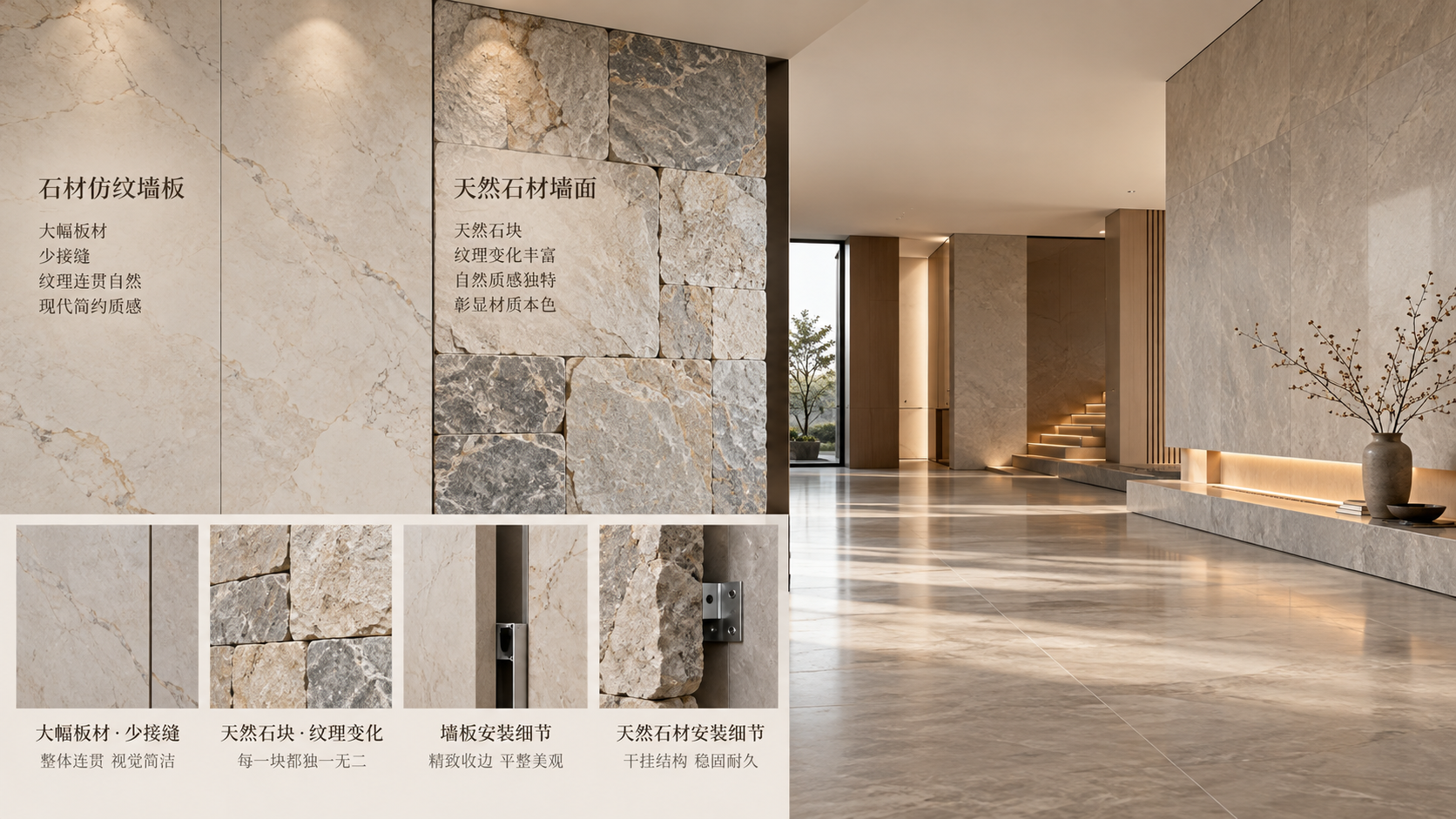
This is where many stone look panels fall short—not in image quality, but in dimensional honesty. Natural stone has depth: quartz veins protrude; limestone pitting varies from 0.2mm to over 1.5mm; granite granules sit at different elevations. Flat-printed films or shallow embossing (≤0.15mm) flatten that hierarchy. Under raking light or fingertip sweep, the illusion collapses.
True texture depth is measured in microns—not just peak-to-valley height, but variance across the surface. Leading panels now achieve 0.3–0.8mm average relief, with intentional variation mimicking natural erosion and crystallization. That depth does more than enhance realism: it improves grip, diffuses light more naturally, and increases surface area for adhesive bonding—reducing long-term delamination risk on vertical substrates.
But depth alone isn’t enough. Consistency matters. A panel with 0.6mm peaks but uneven distribution will feel “bumpy,” not “stone-like.” And excessive depth (>1.0mm) without structural reinforcement risks chipping at sharp edges during cutting or installation—especially around outlets or transitions.
What “Realistic” Actually Means in Practice
Realism isn’t an aesthetic goal—it’s a performance threshold. A panel passes that threshold when:
- It retains visual integrity after 12 months in a sunlit, high-humidity bathroom (no yellowing, no gloss differential between printed and textured zones);
- Its texture remains legible and consistent after repeated cleaning with alkaline solutions and non-abrasive pads;
- Scratches from routine maintenance don’t accumulate into a visible network—especially along baseboards or transition lines;
- Its PEI rating aligns with actual traffic load—not theoretical maximums, but observed wear patterns in similar installed environments.
None of these are guaranteed by marketing renderings or showroom samples. They require third-party test reports—not internal QA checklists—and, ideally, documented field performance from installations with comparable exposure profiles.
A Note on Material Integrity
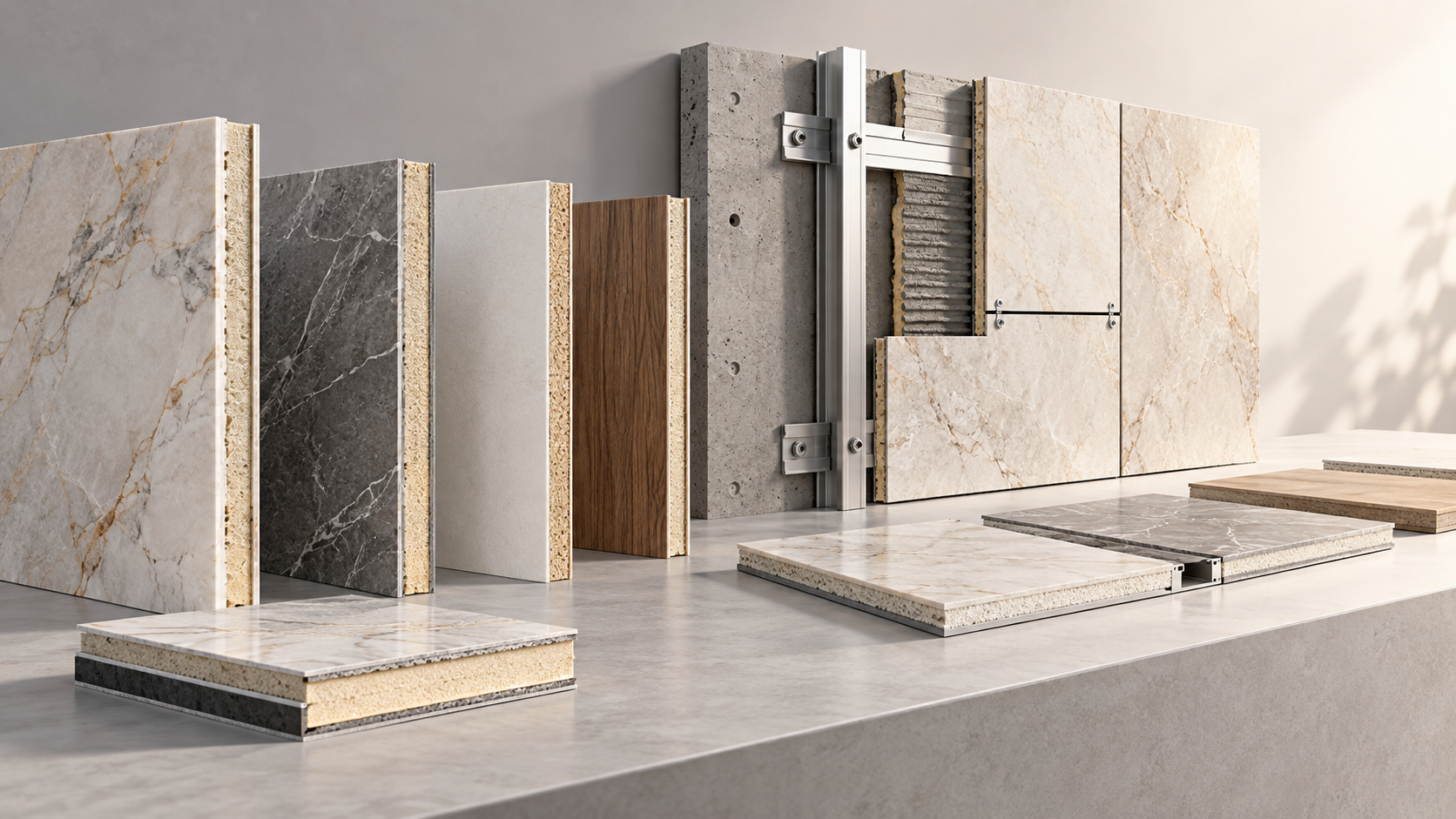
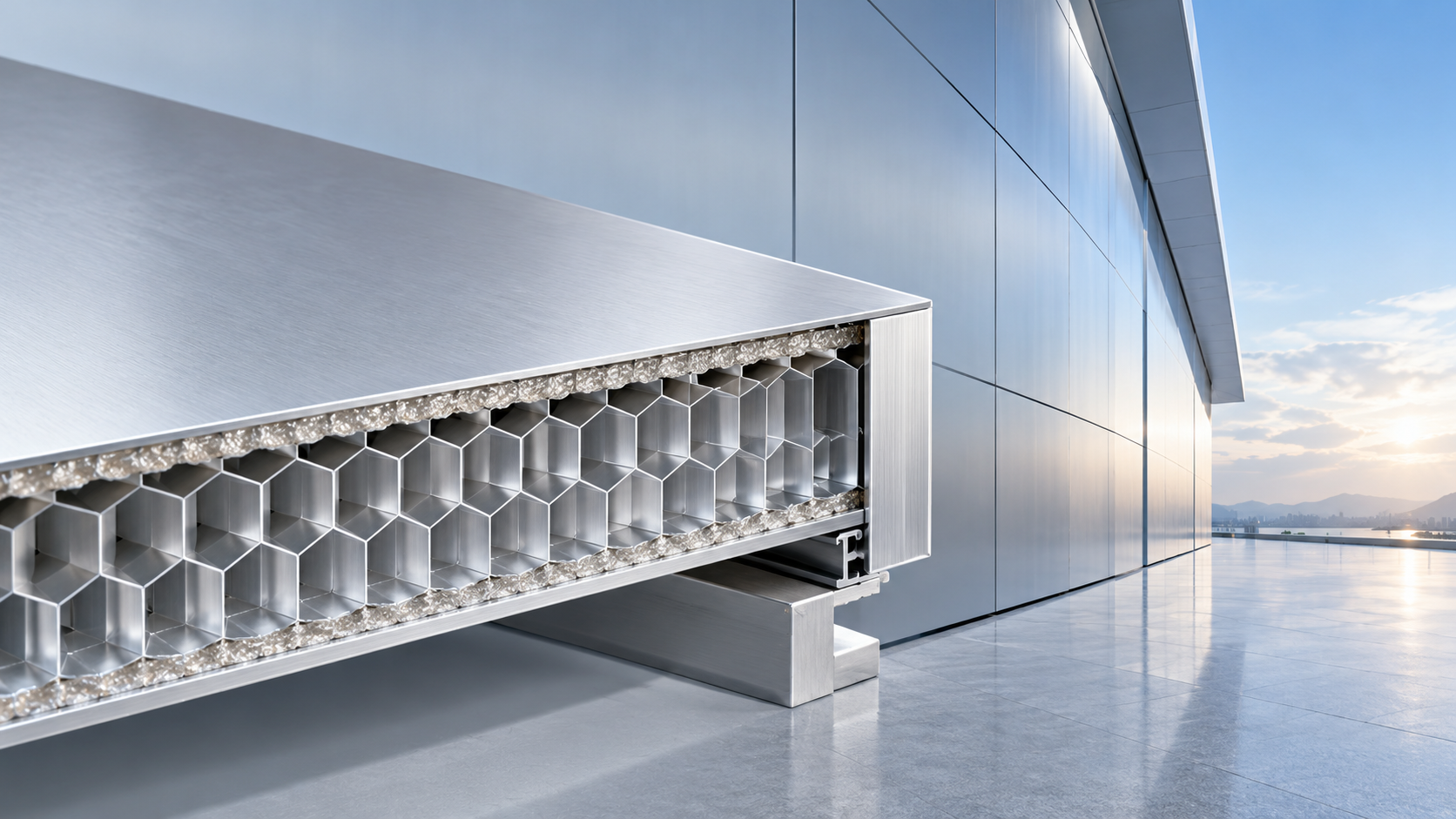
Underlying all three metrics is substrate integrity. Many stone look panels use PVC or MDF cores laminated with thin decorative films. These can warp in humidity swings, delaminate under thermal stress, or off-gas volatile compounds in enclosed spaces. High-performance alternatives integrate mineral-filled composites or metal-reinforced substrates—offering dimensional stability, fire resistance (ASTM E84 Class A), and compatibility with structural adhesives.
For exterior or semi-exterior use—think covered patios, entry canopies, or elevator lobbies exposed to indirect sunlight—UV stability becomes non-negotiable. Look for panels certified to ASTM D4303 (accelerated weathering) with ≤10% ΔE color shift after 1,000 hours QUV exposure. Anything less risks noticeable fading within two years.
Finally, consider serviceability. Can damaged sections be replaced without visible seam mismatch? Does the manufacturer offer batch-matched inventory for future repairs? Realism erodes fast when a single replacement panel stands out—not because it’s inferior, but because production runs shifted hue or texture calibration.
For projects demanding verified texture depth, ASTM-certified scratch resistance, and PEI-rated durability—particularly where aesthetics must persist under operational stress—the Embossed Metal-FXDD-HEI panel offers a tested balance of dimensional fidelity and functional resilience, built on a fire-resistant, mineral-enhanced substrate engineered for both visual continuity and long-term structural integrity.
RECOMMEND

Oct 26, 2026
How Do You Choose Fire-Resistant Composite Panels for Commercial Use?
Choose fire resistant composite panels for commercial interior projects. Learn how to verify fire documentation, compare options, and avoid costly specification mistakes.
Oct 26, 2026
Are Meilin Board Custom Panels Suitable for Luxury Hotel Lobbies?
Explore Meilin Board custom decorative panels for luxury hotel lobbies. Discover design considerations and essential fire, emissions, and maintenance checks before specifying your project.
Oct 26, 2026
Stone-Look Wall Panels vs. Natural Stone: Which Costs Less?
Compare stone look wall panels vs natural stone cost, from materials and installation to maintenance. Discover which option delivers better value for your next wall project.
Oct 25, 2026
How Strong Are Meilin Board Aluminum Honeycomb Panels?
Explore aluminum honeycomb panels structural strength with Meilin Board. Learn how thickness, core design, and fixings affect performance to choose panels confidently.