Stone-Look Wall Panels vs. Natural Stone: Which Costs Less?
Stone-look wall panels usually cost less than natural stone once the full project is priced, but the gap depends on the panel construction, the stone selected, the wall condition, and the installation method. A low panel price does not automatically produce a low project cost, just as a premium natural stone specification may be unnecessary for a wall that mainly needs visual impact.
For homeowners, designers, contractors, and commercial buyers, the useful comparison is not simply the price per square metre of the facing material. The better question is: how much will the finished wall cost to purchase, prepare, install, maintain, repair, and eventually replace?
Why stone-look wall panels often have the lower installed cost
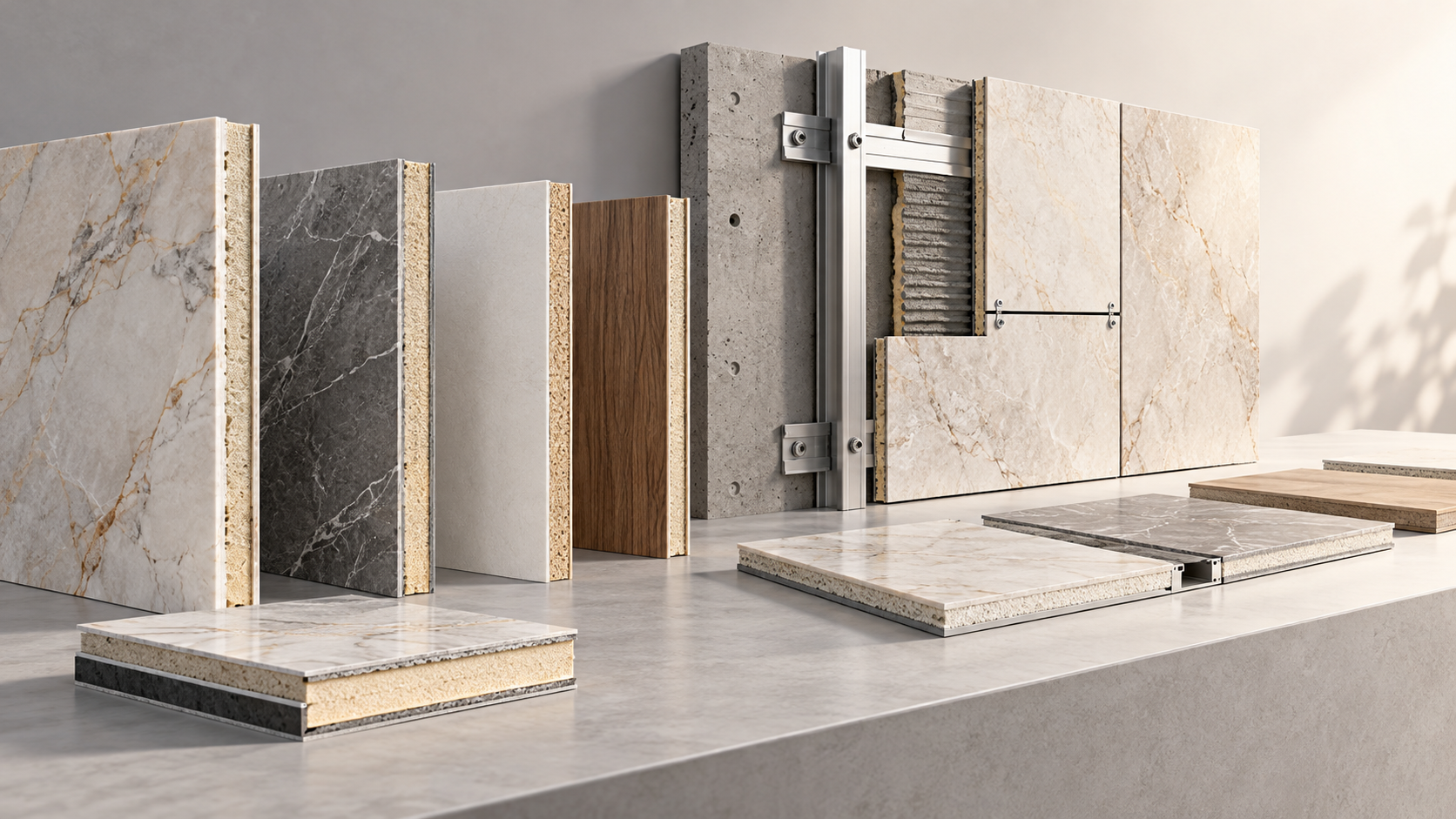
Stone-look wall panels are manufactured to reproduce the colour, texture, and pattern of stone while reducing some of the weight and labour associated with individual stone pieces. Depending on the product, the panel may use a polymer, mineral composite, cement-based core, fibre-reinforced material, PVC-based structure, or another engineered construction. These products should not be treated as one identical category. Their cost and performance can differ substantially.
The main saving usually comes from installation. Large-format panels cover more area with fewer joints, and many systems can be cut and fitted with standard site tools. A wall may require less sorting, alignment, mortar work, grouting, and finishing than a natural stone installation. If the existing wall is sound and relatively flat, the preparation period may also be shorter.
Transportation can add another advantage. Natural stone is dense, so freight, handling, storage, and movement around the site can become meaningful parts of the budget. Lighter panels may reduce the need for heavy handling equipment and make installation easier in locations where access is restricted, such as upper floors, retail interiors, corridors, or occupied buildings.
These savings are most visible on projects with a large wall area, a tight installation schedule, or a site where structural loading and material handling are difficult. They are less significant when the project uses a small amount of cladding or requires extensive framing and detailing for the panels.
Where natural stone can become more expensive
Natural stone is not priced as a single material. A thin stone veneer, standard slate, limestone, marble, granite, and highly selected architectural stone can have very different material and installation costs. The stone’s thickness, finish, colour consistency, origin, availability, and cutting requirements all affect the quotation.
The wall structure also matters. Full-bed or heavier stone may require a stronger substrate, additional support, or a more carefully engineered fixing system. The installer may need to account for the dead load, moisture management, movement joints, corners, openings, and transitions to other finishes. These details are easy to overlook when comparing only the face material.
Natural stone installation is often labour-intensive because each piece may need to be positioned according to its size, shape, grain, and colour variation. Dry-stacked appearances, tight joints, irregular patterns, and complex corners require more time than a simple repeating layout. A material that appears affordable at the supplier’s warehouse can become expensive after cutting, wastage, transport, installation, sealing, and cleaning are included.
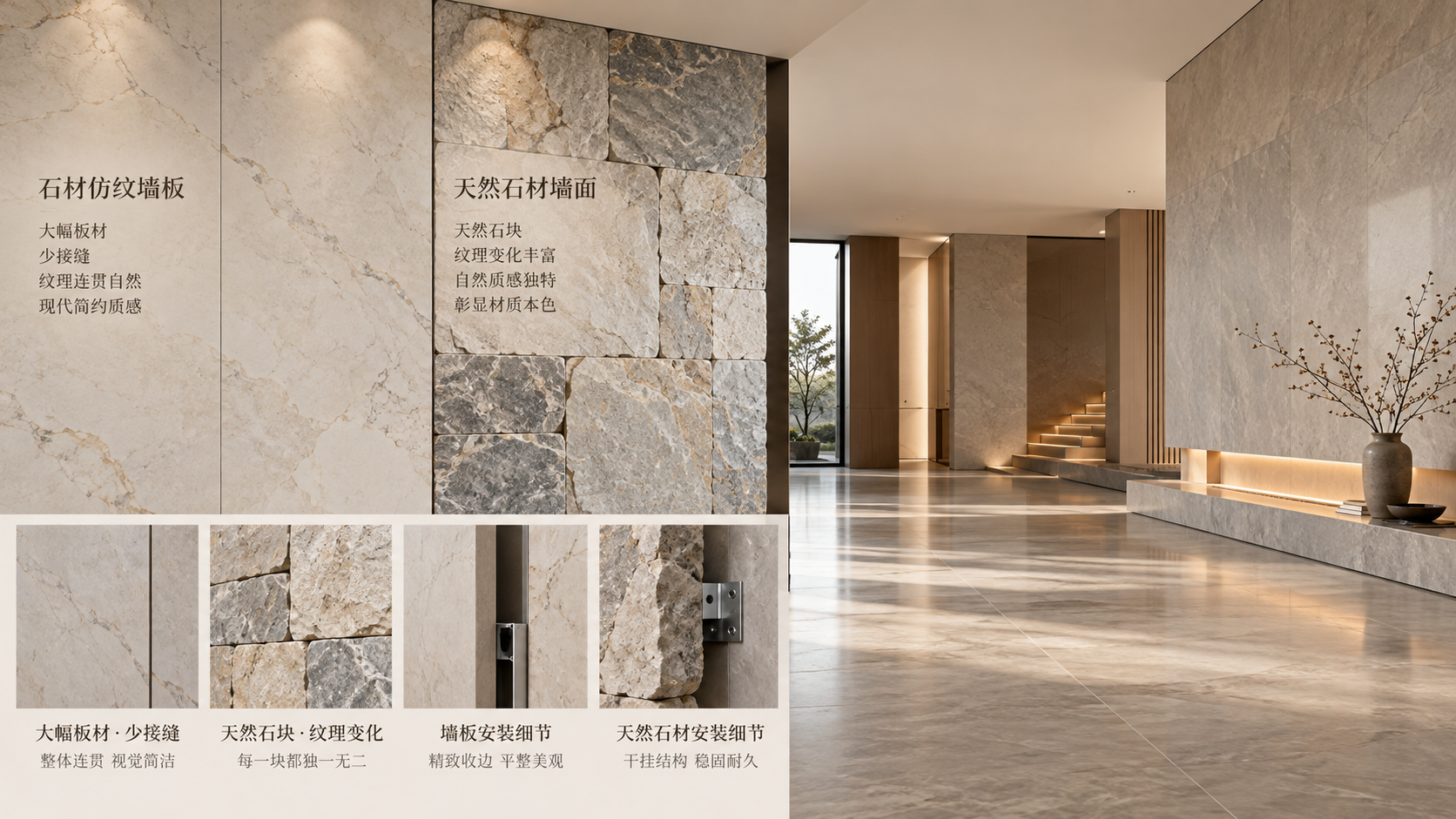
Natural stone can still be the better financial choice when the design depends on authentic variation, the building has been designed for the load, or the finish is expected to remain in place for a very long service period. It may also support the design value of hospitality, retail, residential, and institutional spaces where the character of real stone is part of the project brief.
The cost comparison should include six separate items
A reliable comparison of stone look wall panels vs natural stone cost should be made with a complete installed-wall quotation. Ask suppliers and installers to separate the following items instead of presenting one unexplained total.
- Material: Include the facing product, trims, corner pieces, adhesives, fasteners, grout, membranes, and sealers.
- Waste and cutting: Irregular walls, openings, corners, and pattern matching can increase the quantity required. Panel systems may also need additional material for offcuts and damaged pieces.
- Substrate preparation: Budget for levelling, repair, moisture control, removal of existing finishes, backing boards, or reinforcement where required.
- Installation labour: Compare the time required for cutting, layout, fixing, joint treatment, sealing, cleaning, and final inspection.
- Site logistics: Freight, lifting, storage, access, protection of finished surfaces, and disposal of packaging or removed materials can affect the final figure.
- Future maintenance: Consider routine cleaning, resealing, replacement of damaged sections, and the availability of matching material.
This method prevents a common pricing error: comparing the factory price of a panel with the retail price of stone, or comparing a finished natural stone installation with a panel material quotation that excludes trims and labour.
Material price is only one part of the panel calculation
Stone-look panels are often described as a budget alternative, but the phrase covers both entry-level decorative products and higher-performance systems. A low-cost interior panel may not be suitable for a humid room, a commercial corridor, an exterior wall, or an area subject to impact. A panel with a denser core, fire performance documentation, stronger surface layer, or a more complex texture may cost considerably more than a basic decorative sheet.
Before comparing quotations, identify the intended location. Interior dry areas, kitchens, bathrooms, feature walls, hospitality spaces, and exterior applications place different demands on the material. Check the manufacturer’s stated limits for moisture, temperature, impact, ultraviolet exposure, cleaning chemicals, and installation over the proposed substrate.
Fire performance deserves particular attention in commercial and multi-unit projects. Do not assume that a stone appearance means the product behaves like stone in a fire. The core, surface coating, adhesive, backing layer, and complete wall assembly can all influence performance. Where the project has a fire classification requirement, request documentation for the relevant finished system and confirm that it applies to the intended installation method.
Water resistance also needs a practical reading. A panel may resist occasional splashes while still requiring sealed joints, compatible trims, and a properly prepared backing wall in a wet area. If moisture enters behind the system, the repair cost can exceed the original material saving.
Natural stone has maintenance costs that vary by type and finish
Natural stone is durable, but durability does not mean maintenance-free. Porous stones may require sealing, and some surfaces can react to acidic cleaners, oils, staining agents, or prolonged moisture. Polished, honed, split-face, and textured finishes have different cleaning requirements. A surface that looks attractive in a sample may be harder to keep clean once installed across a large wall.
Repairs can also be less predictable. Replacing one damaged piece may involve removing adjacent material, matching colour and texture, and locating a suitable batch. Natural variation is part of the appeal, but it can make a repair visually obvious if the replacement does not age or weather in the same way.
Panel maintenance is often simpler when the surface is sealed and the installation has few joints. Damage may be repaired by replacing a section, depending on the system. However, replacement panels can become difficult to match if the product is discontinued or if the colour changes between production batches. Retaining a small quantity of the original material after installation can reduce this risk.
The right life-cycle comparison therefore depends on the building’s use. A private feature wall in a dry room may have modest maintenance exposure. A restaurant, hotel lobby, shopping area, or public corridor may experience frequent contact, cleaning, and impact. In those locations, surface repairability and spare-material availability deserve as much attention as the initial price.
When the cheaper panel option may not be the cheaper decision
Stone-look panels can lose their cost advantage when the wall requires a new support frame, substantial levelling, fire-rated backing, special moisture protection, or custom edge detailing. A panel that is fast to install on a flat wall may be slow to install on a curved, uneven, highly interrupted, or heavily serviced surface.
Design complexity can also narrow the difference. Many small niches, window reveals, columns, external corners, electrical outlets, and transitions require careful cutting and additional trims. If the design needs a fully bespoke pattern, a standard modular panel may produce more waste or require visible joints.
There is also a quality risk. Low-cost products may reproduce the overall impression of stone without matching its depth, texture, colour variation, or edge appearance. In a small sample, the difference may seem minor. Across a prominent wall, repeated patterns, artificial joints, or poorly finished corners can affect the perceived quality of the entire space. Replacing an unsuitable finish after installation is rarely economical.
The practical response is to approve a full-size sample or sample board, including joints, corners, trims, and the proposed lighting. A flat product sample does not show how the finished wall will look at a distance or under strong side lighting.
When natural stone justifies the higher budget
Natural stone becomes easier to justify when the design relies on authentic variation, tactile depth, or a material that gains character with age. It can also be appropriate where the building’s structure and detailing already accommodate the material, reducing the cost of adaptation.
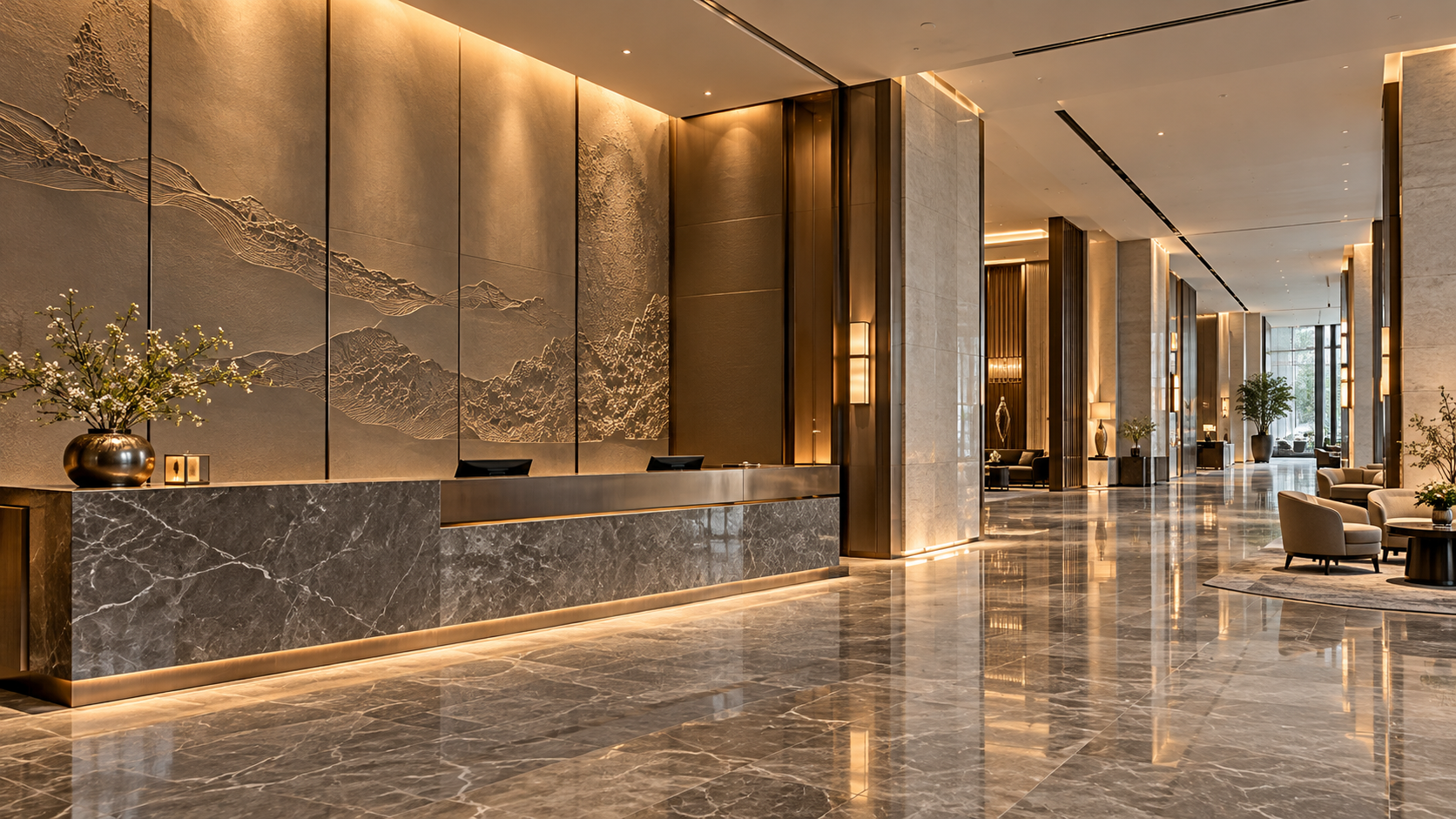
Some buyers are willing to pay more because the finish contributes to the identity of the property. In a high-end residence, boutique hotel, flagship showroom, or carefully designed public interior, the visual and tactile qualities may carry more value than the initial saving. That is a design and asset decision rather than a simple material comparison.
Natural stone is also worth considering when the wall is exposed to conditions that a selected panel system cannot adequately handle. The decision still depends on the specific stone, finish, fixing method, and environmental exposure. “Natural” should not be used as a substitute for checking technical suitability.
A practical way to decide between the two
Start by fixing the performance requirements before reviewing colours. Identify whether the wall is interior or exterior, dry or wet, private or commercial, low or high traffic, and temporary or intended for long-term use. Establish the required fire, moisture, impact, cleaning, and structural performance.
Then request two comparable installed quotations. Each quotation should show material quantity, allowance for waste, substrate work, fixing products, trims, labour, transport, protection, cleaning, and any testing or documentation required by the project. If one quote omits several of these items, the apparent price difference is not meaningful yet.
Finally, compare the cost against the consequences of failure. A small saving is difficult to defend if the selected finish cannot tolerate cleaning, develops loose edges, requires frequent repairs, or causes a schedule delay. Conversely, paying for heavy natural stone may be difficult to justify on a dry interior feature wall where a properly specified panel provides the required appearance and service performance.
For many projects, stone-look wall panels will deliver the lower total cost because they reduce weight, installation time, and handling. Natural stone remains a strong choice when authenticity, long-term visual character, or a particular performance requirement carries enough value to offset the higher material and installation budget. The sound decision comes from comparing complete wall systems under the actual conditions of the project, rather than choosing from a material price alone.
Next:No more content
RECOMMEND

Oct 26, 2026
How Do You Choose Fire-Resistant Composite Panels for Commercial Use?
Choose fire resistant composite panels for commercial interior projects. Learn how to verify fire documentation, compare options, and avoid costly specification mistakes.
Oct 26, 2026
Are Meilin Board Custom Panels Suitable for Luxury Hotel Lobbies?
Explore Meilin Board custom decorative panels for luxury hotel lobbies. Discover design considerations and essential fire, emissions, and maintenance checks before specifying your project.
Oct 26, 2026
Stone-Look Wall Panels vs. Natural Stone: Which Costs Less?
Compare stone look wall panels vs natural stone cost, from materials and installation to maintenance. Discover which option delivers better value for your next wall project.
Oct 25, 2026
How Strong Are Meilin Board Aluminum Honeycomb Panels?
Explore aluminum honeycomb panels structural strength with Meilin Board. Learn how thickness, core design, and fixings affect performance to choose panels confidently.