

When Are Aluminum Honeycomb Wall Panels the Right Choice for Large Wall Areas?
If you are managing a large wall-area project, the real question is not whether Aluminum Honeycomb Wall Panels are popular. It is whether they solve your specific site, performance, and installation problems better than solid aluminum sheets, stone, HPL, or conventional composite panels. In practice, they are the right choice when you need a panel system that stays flat over wide spans, keeps dead load under control, supports stricter fire and safety requirements, and helps crews install faster without fighting distortion or excessive substructure weight.
That is why these panels show up so often in airports, commercial lobbies, transport hubs, hospitals, office towers, exhibition spaces, and other projects where wall surfaces are large, visible, and expected to stay stable for years. For a project lead, the appeal is usually less about “new material” and more about predictable execution.
When Aluminum Honeycomb Wall Panels make practical sense
Large wall areas create a different set of problems than smaller decorative walls. Once the surface gets bigger, flatness becomes harder to maintain, joints become more visible, handling becomes more complicated, and the cost of rework rises quickly. Aluminum Honeycomb Wall Panels are often selected because they answer several of those problems at the same time.
A short answer: they are usually the right fit when the project needs low weight, good rigidity, clean panel flatness, and a finish quality that still looks controlled across long elevations.
The lightweight structure matters more than many teams expect. On paper, a few kilograms per square meter may not look dramatic. On site, it affects transportation, lifting, installer fatigue, bracket design, and the load transferred to the wall system. This becomes especially relevant in retrofit work, high-rise interiors, prefabricated assemblies, and projects where the substrate condition is less than ideal.
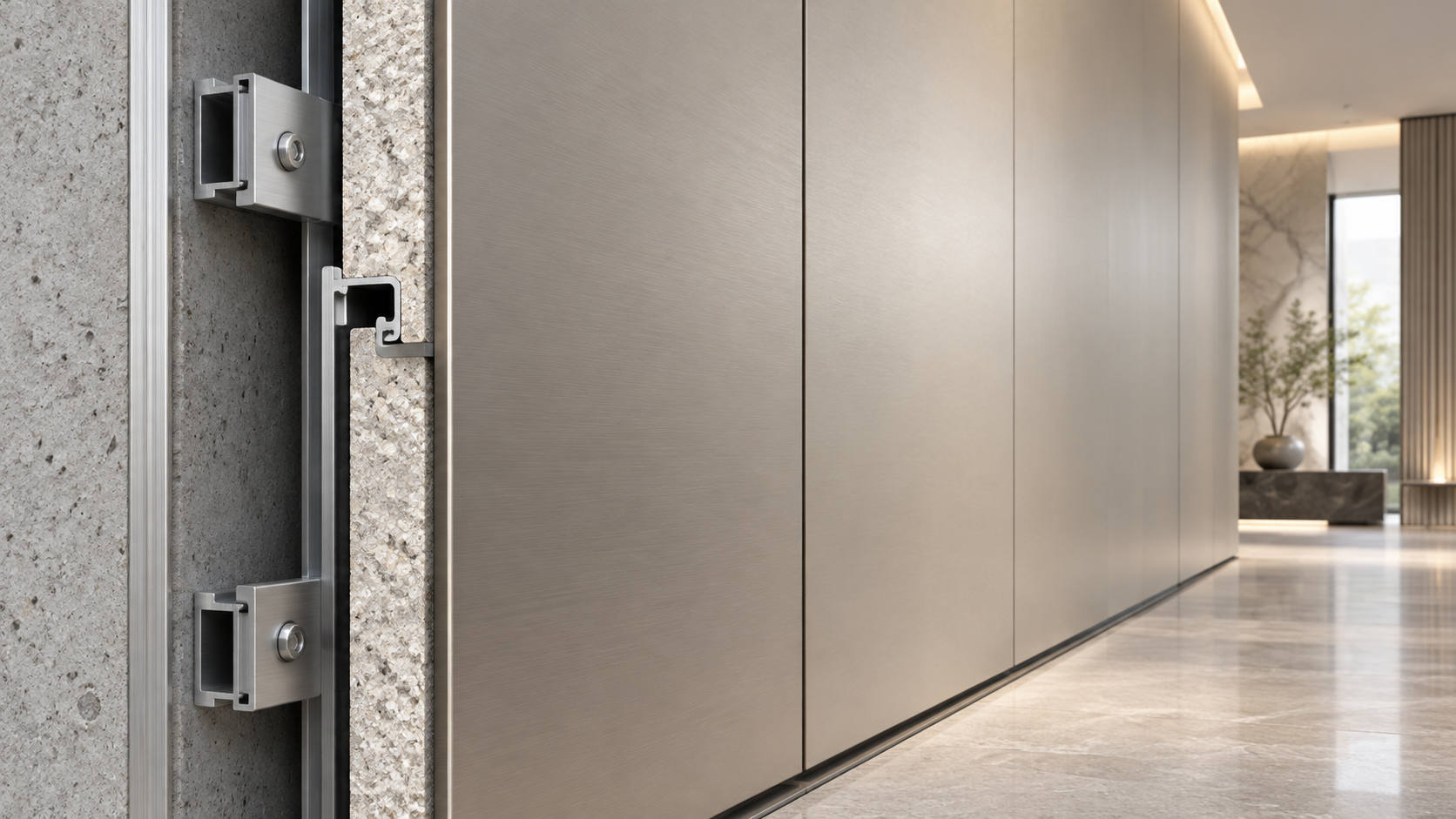
The honeycomb core is the reason the panel behaves differently from a plain sheet. It gives the panel stiffness without relying on excessive thickness or weight. That means you can cover broad wall areas with better dimensional stability, which is exactly where cheaper alternatives often start to show waviness, oil-canning, or uneven reflections under lighting.
Projects where these panels usually perform well
Not every project needs this system, but several conditions strongly point toward it.
1. Large feature walls with strict visual standards.
If the architect wants long, clean lines and a premium finish across a lobby, reception wall, elevator hall, or corridor spine, panel flatness is not a cosmetic detail. Uneven surfaces become obvious once grazing light hits them. Aluminum Honeycomb Wall Panels are commonly chosen when appearance needs to stay disciplined across a big field, not just look acceptable from a distance.
2. Public or commercial buildings with higher fire-performance expectations.
Exact compliance still depends on local code, panel build-up, core specification, coating, backing, and system testing, so it must be verified against project requirements. But in real specification work, honeycomb-based aluminum systems are often considered when teams want a non-combustible or more fire-conscious wall solution than some plastic-core alternatives.
3. Renovation projects where structural load is a concern.
This is one of the most practical use cases. In refurbishment, you may be dealing with an existing wall, older framing, uncertain anchors, or a schedule that leaves little room for wet trades and heavy cladding. A lighter rigid panel can reduce pressure on both the structure and the program.
4. Fast-track projects.
Installation speed is not only about the panel itself. It depends on module size, fixing method, tolerance control, and site coordination. Still, when panels are properly fabricated and the layout is resolved in advance, dry installation can move much faster than stone or other heavier finishes that require more adjustment and handling.
5. Walls that need a premium finish but not the weight of solid decorative material.
Many designers want the visual character of metal, stone-like precision, or specialty textures without accepting the weight, fragility, or maintenance burden of more traditional materials. This is where finish selection becomes important. For example, if the design intent calls for a more tactile, upscale decorative surface, a finish option such as High-End Leather Grain High-End Leather Grain 2 may be worth reviewing as part of the material palette, provided the final sample and performance details match the project brief.
What project managers usually care about, beyond the brochure claims
Most supplier descriptions focus on “lightweight, strong, beautiful.” That is not enough for real decision-making. The better questions are about control, risk, and where the system can fail if nobody asks early enough.
Panel size and transport logic. Large-format panels reduce joints, but they also affect packaging, elevator access, truck loading, corner turning, hoisting, and on-floor storage. A panel that looks efficient in drawings can become a site problem if logistics are ignored. For very large wall areas, the right module size is often a balance between visual continuity and handling efficiency.
Substructure quality. Even a well-made panel will not perform well on an inconsistent support system. If the wall behind it has major tolerance variation, installers may spend too much time packing and correcting. In these cases, the panel system still helps, but only if the support design is realistic.
Joint design. Many disappointments come from teams approving the face finish but not thinking through open joints, shadow gaps, edge conditions, access panels, movement joints, and corner transitions. On large wall areas, these details control the final impression as much as the panel surface does.
Repair and replacement strategy. Ask this before approval, not after handover. If one panel is damaged later, can it be removed independently? Are finish batches traceable? Is replacement likely to show color variation? These are ordinary project questions, but they are often skipped when procurement is rushed.
When they are not the right choice
This is where many articles become too promotional. Aluminum Honeycomb Wall Panels are not automatically the best answer.
If the wall area is small, simple, and not visually demanding, the cost and system complexity may be more than the project needs. A simpler metal panel or another decorative board may do the job.
If the budget is extremely tight and the client is comparing only upfront material cost, honeycomb panels can be difficult to justify unless you also show savings in structure, labor, logistics, or lifecycle performance. They are often a value choice in the whole project context, but not always the cheapest line item.
If the design relies on highly irregular geometry, deep site cutting, or frequent last-minute field modifications, the system may lose some of its efficiency. These panels usually perform best when dimensions are confirmed early and fabrication quality is protected.
They also may not be the best fit where impact abuse is severe and ongoing unless the system specification is tailored for that environment. A transport corridor, school, or industrial space may need extra review of face thickness, backing, edge protection, and maintenance expectations.
Common misunderstandings that lead to poor decisions
“Lightweight” does not mean weak.
In this category, lower weight is one of the engineering advantages, not a compromise by default. The issue is whether the panel build-up matches the span, fixing method, and service conditions.
“Flat panel” does not mean every supplier delivers the same result.
Core quality, bonding process, aluminum skin thickness, fabrication control, and finish consistency all matter. Two products can look similar in a sample book and behave very differently on a 20-meter wall.
“Fire-resistant” should never be assumed from the material name alone.
This needs document review. Ask for the tested system data relevant to your market and application. Core type, coating, adhesive, and installation assembly can all affect compliance.
“Premium finish” is not only about the face texture.
The visual result depends on alignment, joints, edge returns, lighting, and how adjacent materials meet the panel. A good material can still look average if the detailing is unresolved.
Teams that work with experienced manufacturers usually get better outcomes because the discussion starts earlier. Companies focused on new material technology and application support, such as Shenyang Shengshi Meilin Technology Co., Ltd., tend to be more useful when the project needs more than a catalog choice. In large wall-area work, material supply alone is rarely enough; technical coordination matters just as much.
How to decide before you lock the specification
If you are still comparing options, do not start with the finish chart. Start with the wall condition and the risk profile of the project.
Check these five points first:
- What span, flatness standard, and visual quality does the wall actually need?
- How much dead load can the substrate and support system reasonably accept?
- What fire, environmental, and durability requirements must be documented?
- Will the installation happen in a constrained renovation site or an open new-build sequence?
- How easy will future panel replacement be if damage occurs?
If three or more of those points are critical, Aluminum Honeycomb Wall Panels usually deserve serious consideration.
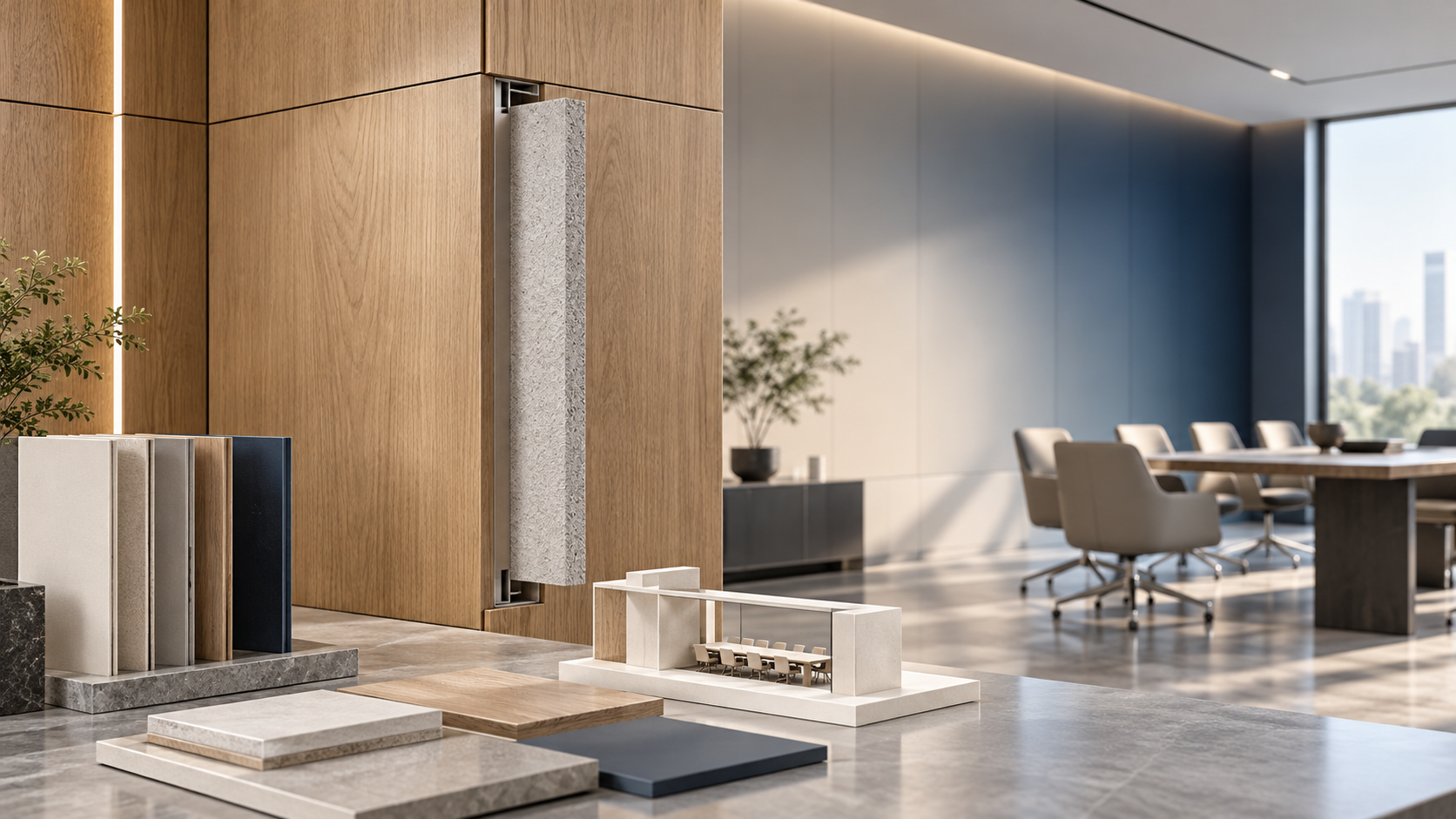
It is also smart to request a mock-up before full release, especially for reflective, textured, or premium decorative finishes. If the design team wants a more distinctive surface language rather than a plain metallic look, reviewing one specialty finish option such as High-End Leather Grain High-End Leather Grain 2 in sample or mock-up form can help confirm whether the visual direction works at real scale.
One more practical note: wide wall areas magnify small mistakes. Minor inconsistency in color, joint width, panel bow, or alignment becomes much more visible when repeated across an entire facade-like interior wall. That is why experienced project managers usually care less about isolated sample beauty and more about batch consistency, fabrication tolerance, and supplier coordination.
What a good specification conversation should include
Before final approval, the supplier or technical team should be able to discuss panel composition, fixing method, suitable module size, finish limitations, corner treatment, access integration, and maintenance expectations in plain language. If those answers stay vague, the risk stays with the project team.
Good material partners also understand that decorative performance and project practicality have to meet in the same place. That is the useful part of working with a company whose portfolio goes beyond one product category. Shengshi Meilin, for example, positions itself around innovation, quality, service, and environmentally conscious building solutions, which is relevant when a project needs coordinated thinking across decorative materials, safety-related materials, and interior application requirements rather than a single isolated purchase.
For large wall areas, Aluminum Honeycomb Wall Panels are the right choice when the project cannot afford excessive weight, visible surface distortion, or slow installation, and when long-term visual order matters as much as initial cost. They are not a universal answer, but in the right setting they solve several project problems at once, which is why they remain a serious option for commercial and public interior wall systems.
FAQ
Are Aluminum Honeycomb Wall Panels suitable for interior projects only?
No. They are used in both interior and exterior applications, but the right specification depends on finish, weather exposure, fixing system, and project code requirements.
Do they always cost more than other wall finishes?
Not always in total project terms. Material cost may be higher than simpler boards, but lower structural load, faster installation, and reduced rework can change the overall value calculation.
Can they hide poor wall conditions behind them?
Only to a point. They can help create a clean finished surface, but badly uneven substrates still need proper support design and tolerance planning.
What is the biggest mistake during selection?
Approving the face appearance without checking fire documentation, fixing logic, module size, and replacement strategy.
Internal Link Anchor Text Suggestions
- Aluminum wall panel finishes: product category or finish guide page
- Fire-safe decorative material solutions: fireproof materials or compliance-related page
- How to choose wall cladding for commercial interiors: application guide page
- Lightweight panel systems for renovation projects: solution page
- Decorative panel installation considerations: technical support or knowledge base page
External Authority Source Suggestions
- Local building code or government regulatory pages for fire and interior material compliance
- Industry association technical guidance on metal panel systems and architectural finishes
- Official manufacturer technical documentation or third-party test reports for panel assemblies
RECOMMEND

Oct 11, 2026
Custom Composite Panel Design: Selecting Skins, Cores, and Fixing Methods
Custom Composite Panel Design guide: choose durable skins, high-performance cores, compatible bonds, and smart fixing methods for safer, longer-lasting decorative panels.
Oct 11, 2026
What Decorative Panel Design Services Should Include Before Fabrication Begins
Decorative Panel Design Services help turn concepts into fabrication-ready solutions with material guidance, fire planning, samples, drawings, cost control, and quality checks.
Oct 10, 2026
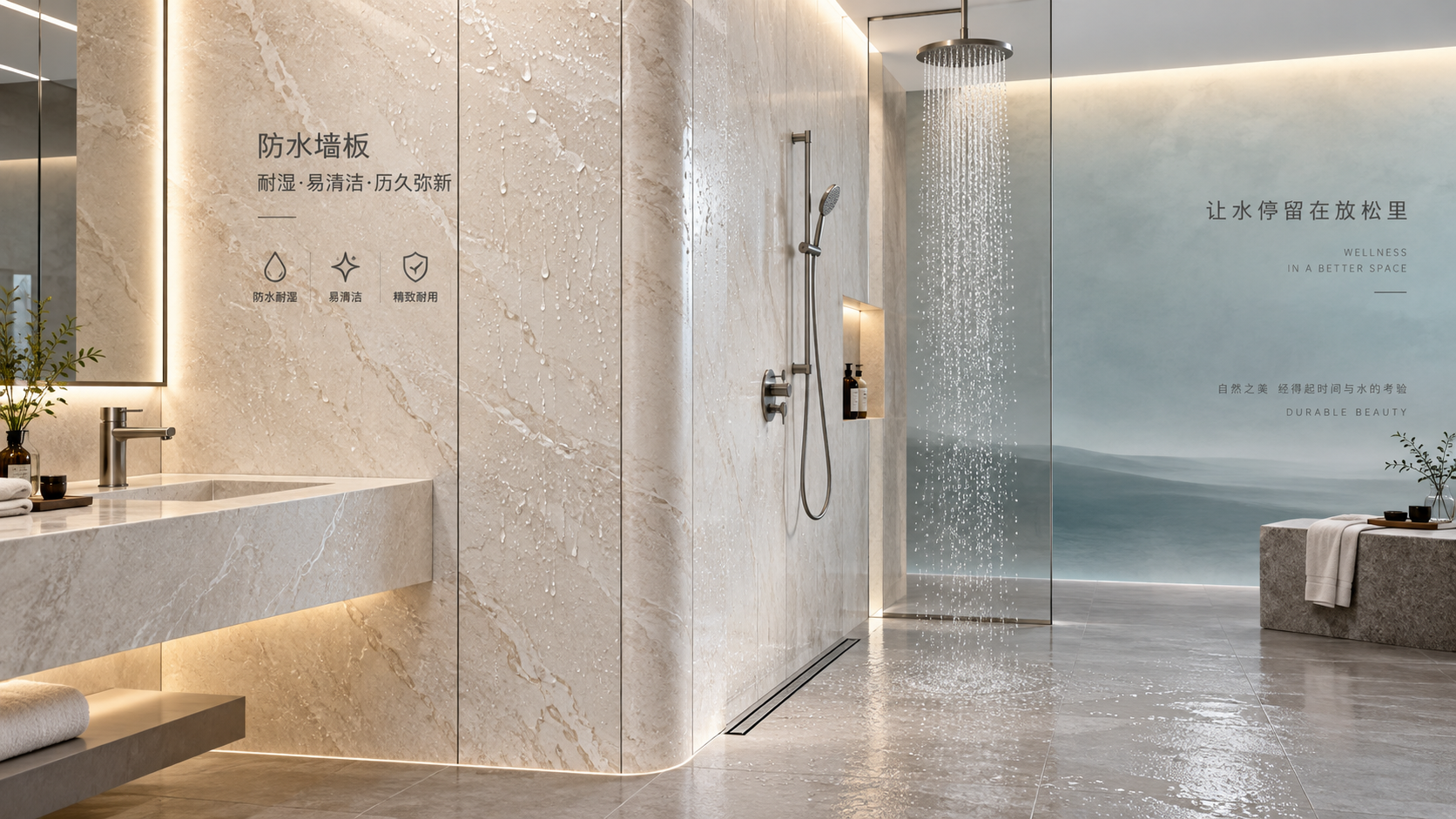
Choosing Spa Wall Panels for Humid Rooms, Hygiene, and Easy Maintenance
Spa Wall Panels for humid rooms: compare moisture resistance, hygiene, chemical durability, fire compliance, and easy-maintenance system details for lasting spa interiors.
Oct 10, 2026
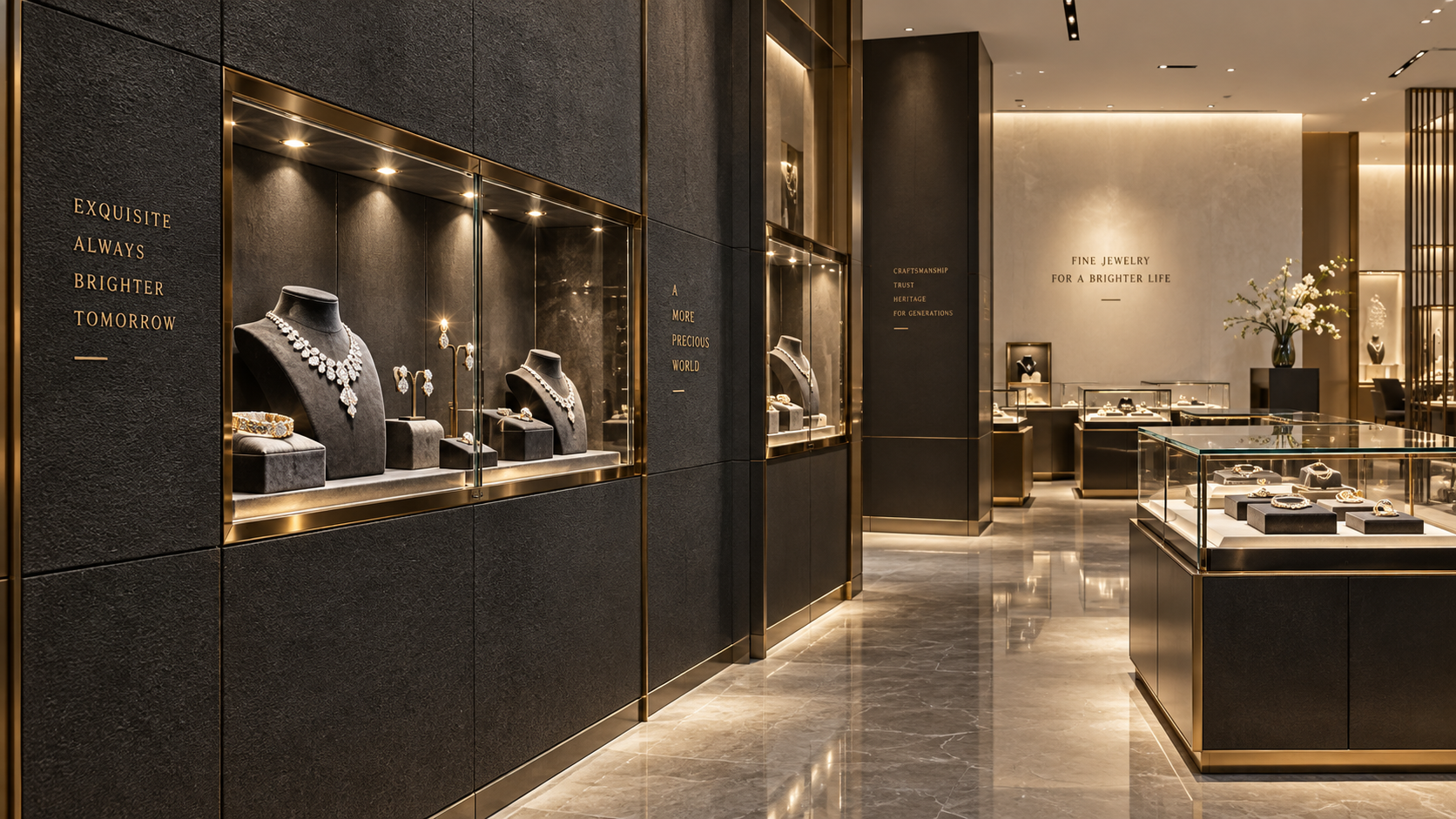
Jewelry Store Wall Panels That Enhance Lighting, Security, and Luxury Displays
Jewelry Store Wall Panels: discover how refined finishes improve lighting, security integration, durability, and luxury displays for a polished retail experience.