

Stone Look Wall Panels vs Natural Stone: Which Fits Commercial Interiors Better?
Stone Look Wall Panels vs Natural Stone: Which Fits Commercial Interiors Better?
When specifying finishes for commercial interiors, the real question is rarely “Which one looks better?” On a mood board, both can look convincing. On site, the decision gets harder. Weight limits, fire requirements, installation sequencing, substrate conditions, cleaning protocols, and long-term repair all start to matter more than a showroom sample.
That is why Stone Look Wall Panels are getting serious attention in offices, hospitality projects, retail environments, healthcare waiting areas, and public-facing lobbies. They offer the visual depth associated with stone, but often with fewer constraints during installation and operation. Natural stone still has a strong place in premium interiors, especially where authenticity, tactile depth, and perceived permanence are central to the design intent. But it is not automatically the better technical choice.
For technical evaluators, the better material is the one that fits the building system, the compliance path, and the actual maintenance reality of the space. That sounds obvious, yet a surprising number of finish decisions still get made too early on appearance alone.
Where natural stone still wins
Natural stone brings something difficult to replicate completely: genuine mineral variation, edge authenticity, and a sense of permanence that many owners still value in flagship commercial spaces. In reception walls, luxury retail, boutique hospitality, and executive zones, that authenticity can support the brand story in a way printed or composite alternatives may not fully match.
It also performs well in areas where impact resistance and long service life are priorities, assuming the stone type, finish, backing method, and sealing strategy are correctly chosen. That “assuming” matters. Not every stone behaves the same way. Some are more porous, some stain more easily, and some require more disciplined cleaning and sealing than teams expect during specification.
In other words, natural stone can be excellent, but it asks more of the project team: stronger substrate coordination, heavier logistics, more skilled installation, and tighter quality control. If any one of those slips, the premium finish can become a premium headache.
Why Stone Look Wall Panels are gaining ground
Stone Look Wall Panels are often chosen not because they are trying to “replace” stone in every sense, but because they solve a broader set of project constraints. In commercial interiors, that matters more than design teams sometimes admit at the early stage.
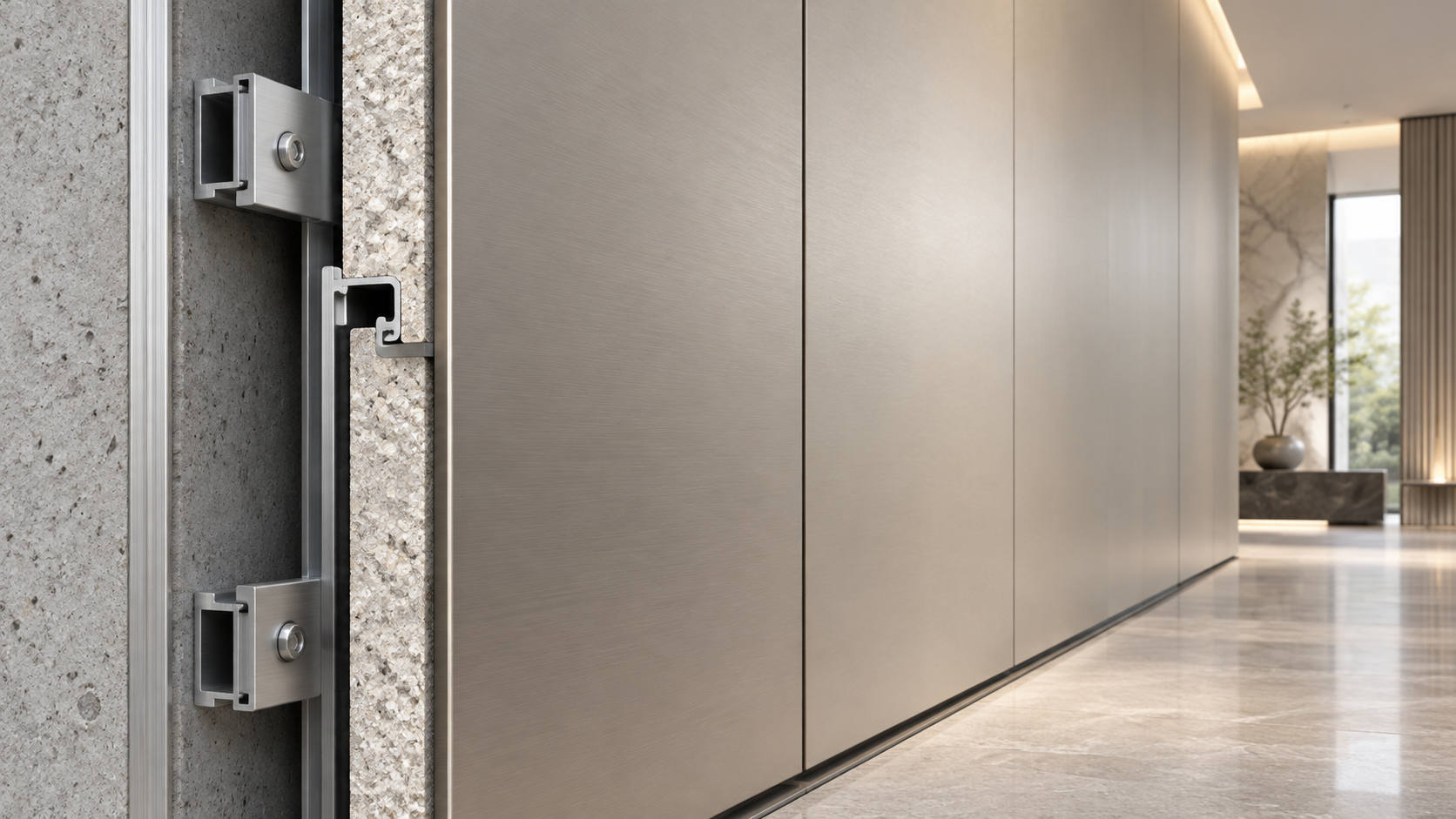
One obvious advantage is reduced weight compared with many natural stone assemblies. That can simplify wall construction, ease transportation and handling, and lower the burden on substrates or secondary support systems. In fit-out projects with tight schedules or renovation work inside occupied buildings, this practical difference can be more valuable than marginal differences in surface realism.
Installation speed is another factor. Panelized systems generally reduce wet work, shorten curing dependency, and create a cleaner workflow. For commercial projects where multiple trades overlap, fewer installation variables often mean fewer delays. Evaluators who have worked on compressed timelines know that the finish material is never just a finish material; it affects sequencing, protection, rework risk, and handover confidence.
Maintenance can also be more straightforward, depending on the panel composition and surface treatment. Some projects do not need the full material authenticity of stone. They need a surface that looks refined, can be cleaned consistently, and does not create long-term uncertainty for the facilities team.
The fire performance question should come early, not late
This is where many commercial specifications become more technical than aesthetic. Fire performance cannot be treated as a box to tick after material selection. The wall finish, substrate, adhesive, joint treatment, and perimeter detailing may all affect the final compliance route. A stone surface alone does not guarantee that the complete assembly will satisfy project requirements, and the same is true for decorative panels.
For this reason, technical teams usually need to review not only the visible finish but the full system data provided by the supplier. Companies active in new material technology, such as Shenyang Shengshi Meilin Technology Co., Ltd., tend to be relevant in this conversation because they operate across materials, fireproof sealing materials, and interior application solutions rather than treating the decorative layer in isolation. That broader system awareness is useful when a project has to balance appearance with safety and constructability.
The key point is simple: do not compare a loose panel sample with a loose stone sample and assume that is the technical comparison. The assembly is the comparison.
Cost is not just material price
Natural stone may appear reasonable when compared by square meter alone, especially if the selected stone is locally available and the design uses standard formats. But direct material cost rarely tells the full story. Handling, cutting waste, reinforcement needs, breakage risk, specialist labor, and slower installation can move the budget significantly.
Stone Look Wall Panels often perform better on installed cost and program cost, not only purchase price. That distinction is important in commercial interiors where contractors are working around MEP coordination, access restrictions, and phased turnover requirements. If a panel system saves days on site, reduces dust-heavy cutting, or limits the need for structural upgrades, that operational value belongs in the evaluation.
Lifecycle cost also deserves a realistic view. Natural stone can last a long time, but some stone surfaces require sealing, stain management, and more careful maintenance protocols. Panels vary by material and finish, so assumptions are risky, but many are selected precisely because facility teams want a more predictable cleaning and replacement strategy.
What tends to decide the outcome in real projects
In practice, the decision often comes down to one of three pressures: the building cannot easily take the weight, the program cannot absorb the installation complexity, or the owner wants the look without a maintenance burden that becomes visible six months after handover.
A detail many teams overlook: edge conditions and transitions
Panels can look excellent across broad wall areas, but transitions are where specification quality shows. External corners, reveals, access panels, door frames, and intersections with ceilings or metal trims deserve early review. The same is true for natural stone, of course, but with panels the success of the “stone effect” often depends on how convincingly those details are resolved.
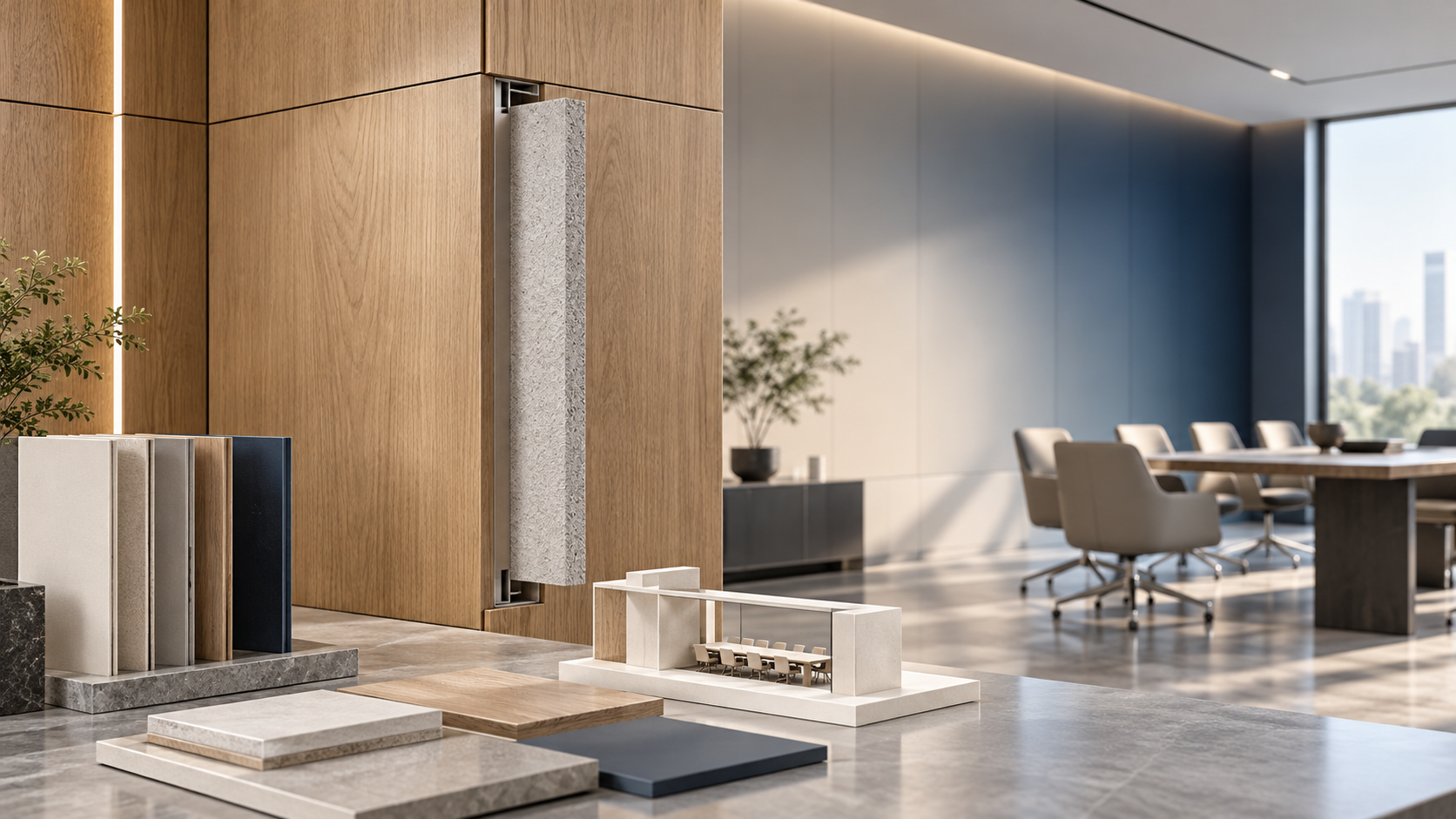
This is also the point where some designers start considering contrast materials instead of forcing one finish everywhere. A project may, for example, use a stone-look wall surface in public circulation areas and a warmer wood-grain element in touchpoints or feature zones. If that route is being considered, products such as High-End Wood Grain-MLMW516 may fit as a complementary finish rather than a competing one, especially where the design brief needs visual warmth without adding too much installation complexity.
Common mistakes during evaluation
One is assuming all Stone Look Wall Panels perform similarly. They do not. Surface realism, core material, impact resistance, moisture behavior, cleaning compatibility, and fire-related documentation can differ substantially. Another is treating natural stone as inherently low-risk because it is a traditional material. Traditional does not mean simple. It still requires the right stone, the right backing system, and the right installer.
A third mistake is evaluating with a sample board only. Large-format appearance, joint rhythm, reflected light, and edge treatment often change the impression of the material once it is installed at scale. Mock-ups are not always possible, but in high-visibility areas they are often worth the effort.
And then there is cleaning. Facility managers tend to care less about whether the wall started life as quarried stone or engineered panel, and more about whether fingerprints, splashes, dust, and minor impact marks can be handled without specialist intervention. That is not glamorous, but it is exactly the kind of issue that decides whether a finish remains acceptable in daily use.
So which fits commercial interiors better?
If the project is prestige-led, the budget is robust, the substrate and installation conditions are well controlled, and long-term stone maintenance is acceptable, natural stone still makes a strong case. It has material authority that replicas rarely equal completely.
If the project is schedule-sensitive, weight-conscious, operationally practical, or part of a broader standardized fit-out program, Stone Look Wall Panels usually make more sense. They align well with modern commercial delivery demands, especially when the specification needs to reconcile aesthetics with installation efficiency and a clearer maintenance path.
The better choice is not the one that wins in abstract. It is the one that survives contact with the real project: its compliance requirements, its installers, its maintenance team, and the way the building will actually be used. Before finalizing either route, request full assembly information, review transition details, and check whether the finish still works when the nice sample leaves the meeting room and meets the wall it has to live on.
RECOMMEND

Oct 11, 2026
Custom Composite Panel Design: Selecting Skins, Cores, and Fixing Methods
Custom Composite Panel Design guide: choose durable skins, high-performance cores, compatible bonds, and smart fixing methods for safer, longer-lasting decorative panels.
Oct 11, 2026
What Decorative Panel Design Services Should Include Before Fabrication Begins
Decorative Panel Design Services help turn concepts into fabrication-ready solutions with material guidance, fire planning, samples, drawings, cost control, and quality checks.
Oct 10, 2026
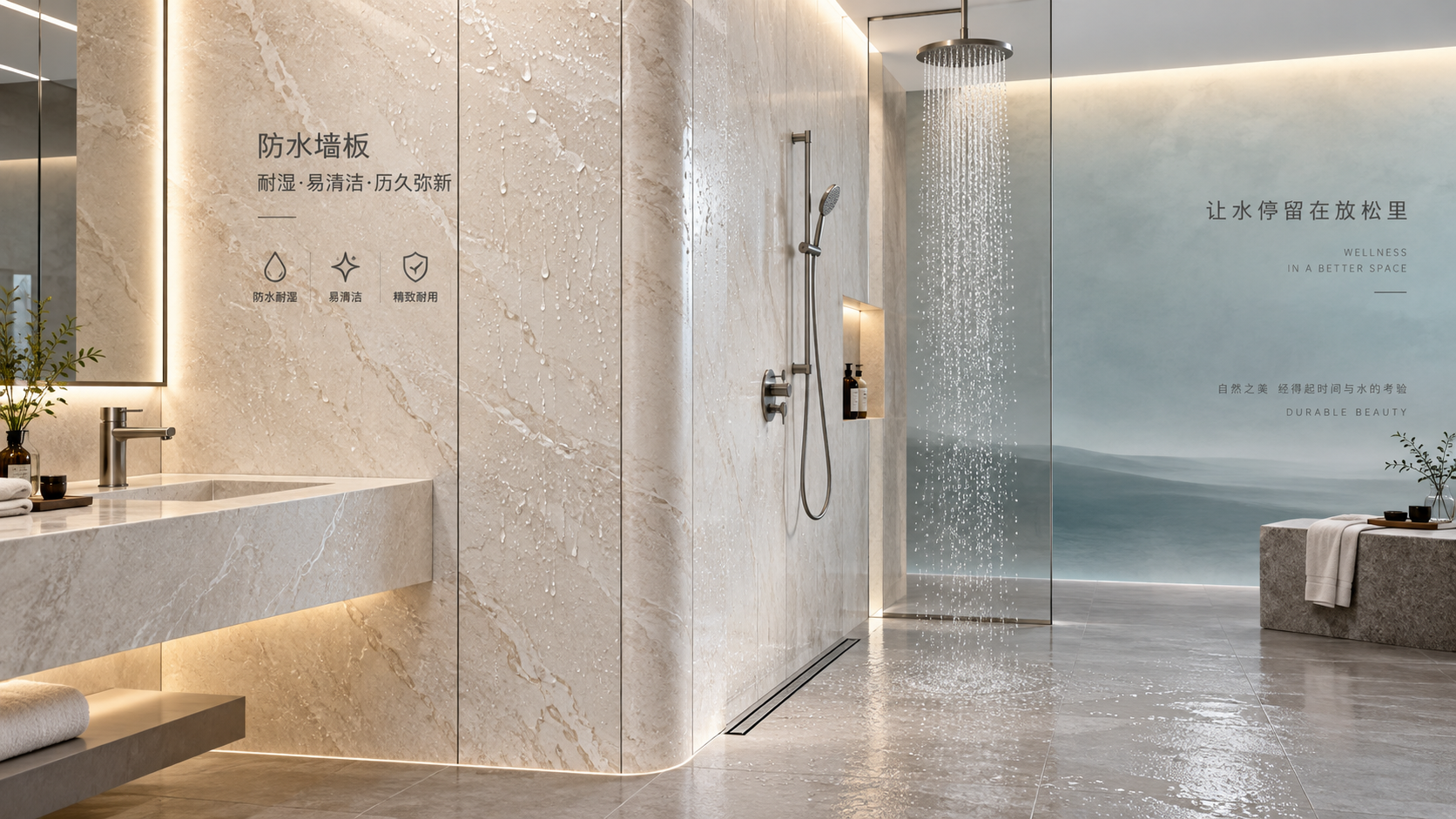
Choosing Spa Wall Panels for Humid Rooms, Hygiene, and Easy Maintenance
Spa Wall Panels for humid rooms: compare moisture resistance, hygiene, chemical durability, fire compliance, and easy-maintenance system details for lasting spa interiors.
Oct 10, 2026
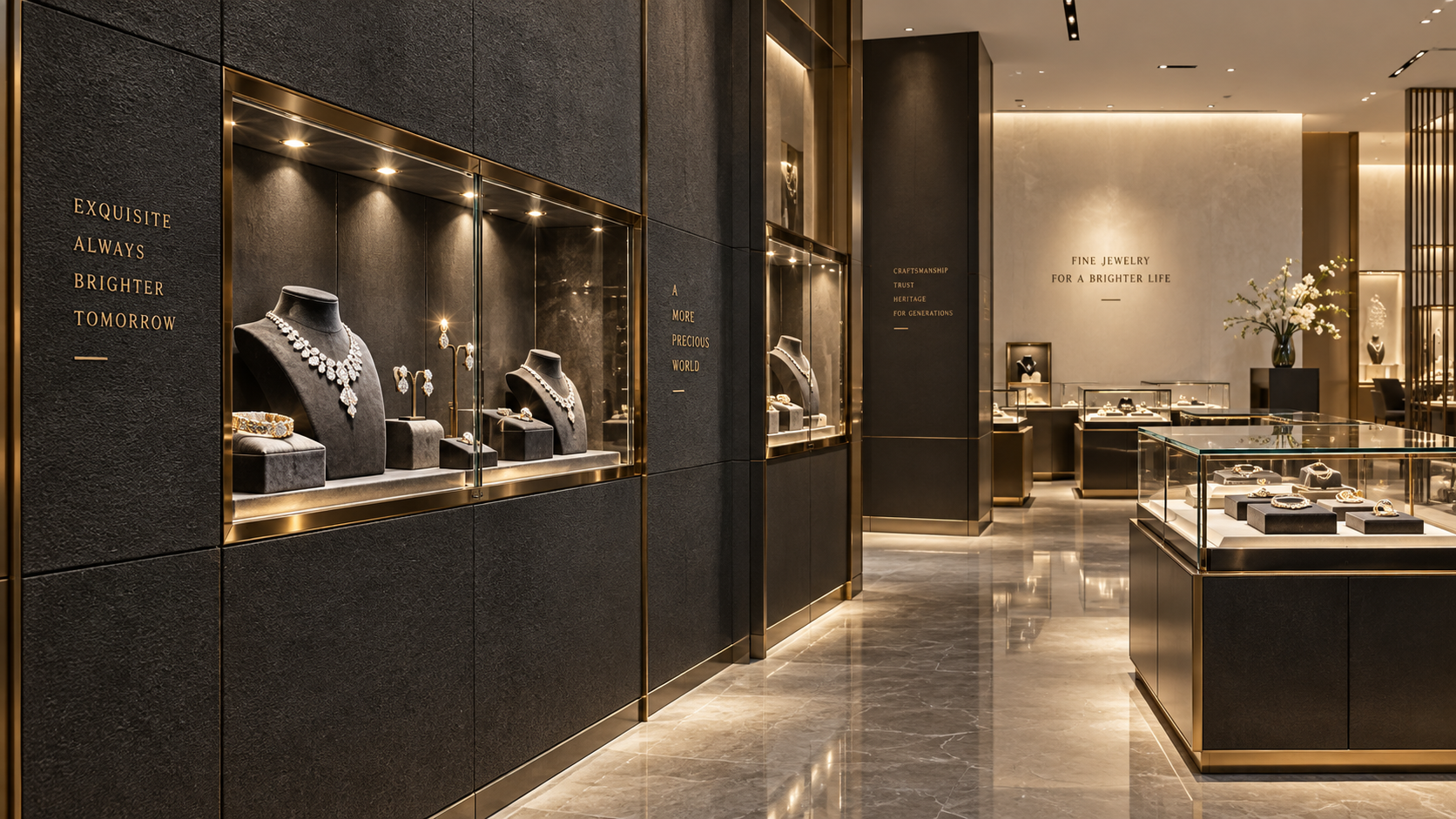
Jewelry Store Wall Panels That Enhance Lighting, Security, and Luxury Displays
Jewelry Store Wall Panels: discover how refined finishes improve lighting, security integration, durability, and luxury displays for a polished retail experience.