What Decorative Panel Design Services Should Include Before Fabrication Begins
A decorative panel may be specified in a meeting room as a finish, a fire-rated lining, a brand element, or a practical surface expected to endure years of daily contact. On paper, it can look like a simple material choice. Once fabrication starts, however, every unresolved detail becomes a potential source of delay: a pattern that cannot align at corners, a finish that changes under site lighting, a core that does not satisfy fire requirements, or a panel size that creates unnecessary waste.
For business evaluators, the value of Decorative Panel Design Services lies in turning an attractive concept into a controlled, buildable package before material is cut, coated, laminated, or machined. The service should not stop at mood boards and renderings. It should establish what will be made, how it will perform, how it will be installed, what must be approved, and where commercial risk may still exist.
This matters across hospitality, offices, retail interiors, public buildings, residential developments, and furniture applications. A decorative surface is often one of the most visible decisions in a project, yet its success depends on technical choices that may be hidden after installation. The following areas should be addressed before fabrication begins.
Start with the panel’s job, not only its appearance
A design brief should define the panel’s intended function in the finished environment. “Wall decoration” is rarely sufficient. Is the panel used for a reception backdrop, a corridor cladding system, cabinet fronts, a ceiling feature, a partition, or a furniture component? Will it be touched frequently? Is it installed near a heat source, within a humid zone, or in an area where cleaning chemicals are used?
These questions affect nearly every later decision. A finely textured veneer may suit a private lounge but require different protection in a busy hotel corridor. A glossy decorative surface can create visual depth in a retail display, while becoming impractical in a location where fingerprints and glare are constant concerns. Panels used in furniture may need reliable edge treatment and machining compatibility; architectural wall panels may demand concealed fixing details, dimensional stability, and consistent joint lines.
Useful Decorative Panel Design Services translate the design intention into measurable performance expectations. The brief should clarify:
- Application location and substrate conditions;
- Expected traffic, impact, abrasion, and cleaning exposure;
- Target service life and maintenance expectations;
- Visual priorities, such as warmth, uniformity, depth, texture, or natural variation;
- Relevant safety, fire, indoor-environment, and local project requirements;
- Whether the panel is a standard repeatable item or a one-off feature with custom geometry.
Without this foundation, a design team may evaluate samples on appearance alone and discover too late that the selected construction is unsuitable for the application.
Material recommendation should compare trade-offs openly
Material selection is where design, compliance, cost, and manufacturing capability meet. A panel design service should recommend an appropriate face material, substrate or core, decorative process, and protective finish—not simply present a catalog of attractive options.
Depending on the project, the discussion may involve wood-based boards, mineral-based materials, metal-faced panels, laminated constructions, composite boards, decorative films, veneers, coated surfaces, or specially developed fireproof sealing materials used within the assembly. Each route carries a different balance of weight, flatness, machinability, moisture resistance, fire behavior, surface durability, and visual character.
Natural materials deserve particular care in the approval process. Wood grain, stone-like textures, brushed metals, and hand-applied finishes can introduce variations that are desirable in principle but difficult to manage if stakeholders expect identical panels. The design specification should state what degree of variation is acceptable. It should also define whether grain direction, pattern repeat, and color tone must be controlled across adjoining panels.
For evaluators, the right question is not “Which material is best?” It is “Which construction best supports this project’s visual and operational requirements?” A less expensive face material may add cost elsewhere if it needs more careful handling or frequent replacement. Conversely, an overly complex construction may not offer meaningful value in a low-impact, short-term installation.
Fire performance must be integrated into the design decision
Fire performance is not an item to add after the visual design is approved. It can influence core selection, adhesive systems, coatings, edge treatments, panel thickness, and the installation method. If the project has specified fire classifications or requires documented performance under a particular standard, those requirements should be confirmed before fabrication drawings are released.
A sound design process identifies where the panel will be installed, what regulations apply to that location, and whether the proposed assembly—not just an individual component—can meet the intended requirement. This distinction is important. A decorative surface may be paired with a core, backing, adhesive, sealant, or mounting system that changes the behavior of the finished construction.
Companies working with new materials and fireproof sealing solutions can contribute valuable early-stage insight here. Shengyang Shengshi Meilin Technology Co., Ltd., for example, develops and applies new material technologies across decorative materials, fireproof sealing materials, furniture, and home furnishing solutions. In a design conversation, that cross-category perspective is useful because decorative intent and safety performance often need to be coordinated rather than treated as separate procurement packages.
Business evaluators should ask for the fire-performance path to be explained clearly: what is required, what materials are proposed, what documentation may be needed, and which installation conditions must remain consistent with the evaluated assembly. Vague assurances are not a substitute for a defined compliance strategy.
Samples should be treated as decision tools, not presentation pieces
A small swatch can confirm color direction, but it may not reveal the realities of a completed wall or furniture run. Decorative Panel Design Services should outline a sampling plan that reflects the decisions still at risk.
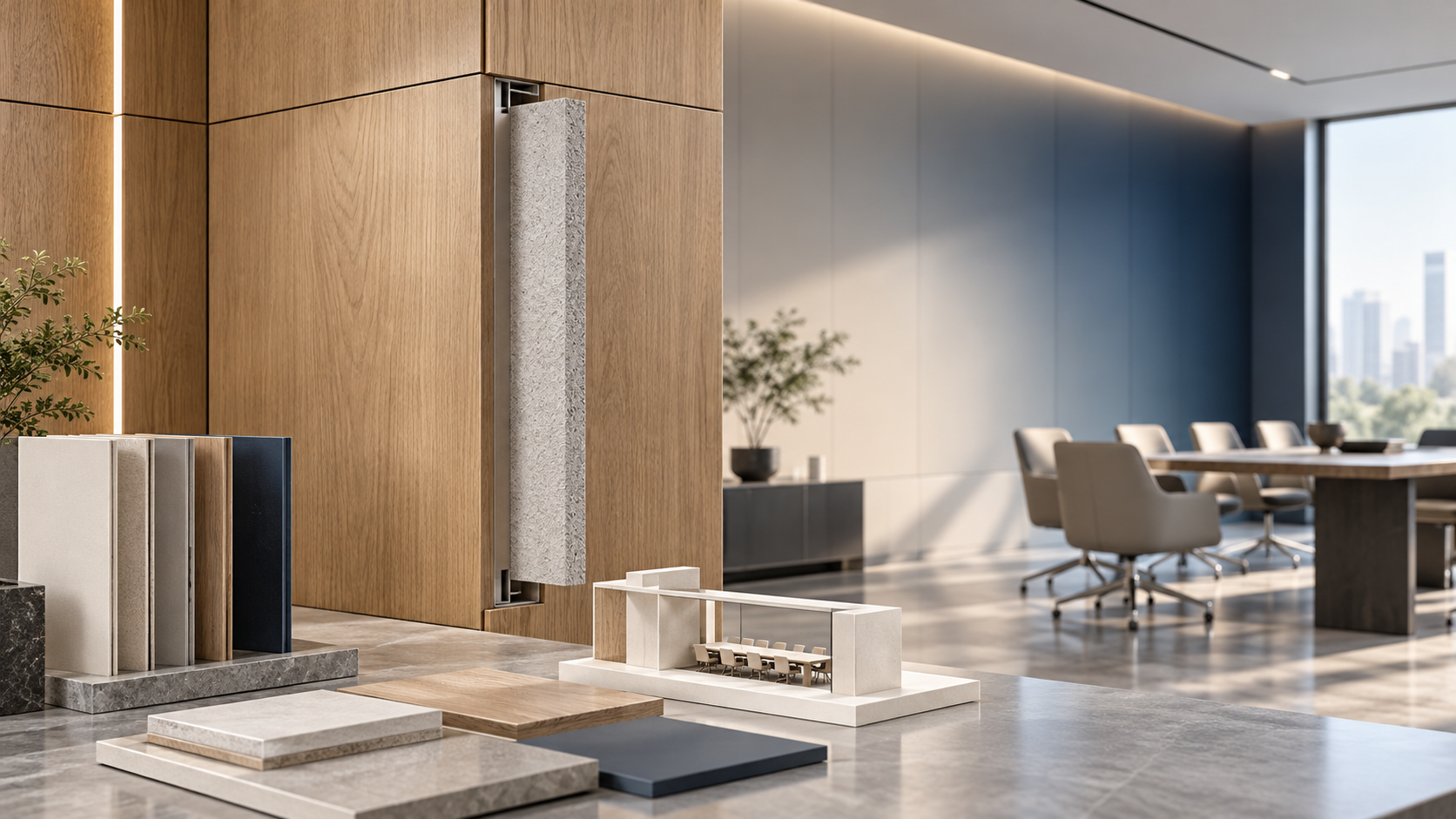
At minimum, stakeholders often need to assess color, gloss level, texture, edge appearance, and pattern scale. For larger projects, a control sample or mock-up panel may be more meaningful than a handful of small chips. It can show how light moves across the finish, whether joints are visually acceptable, how the surface responds to touch, and whether the texture appears too busy or too flat at full scale.
Lighting deserves deliberate attention. Warm hospitality lighting, daylight near glazing, and cool office illumination can make the same decorative panel appear surprisingly different. If the final setting has unusual lighting conditions, samples should be reviewed under representative light whenever possible. Color should also be approved with a stated tolerance, especially when future batches or phased deliveries are likely.
Approval records should identify the sample version, material construction, finish code, date, and any accepted natural variation. This creates a reference point for production inspection and helps prevent disputes based on memory rather than documented agreement.
Production-ready drawings are where a concept becomes manufacturable
Many expensive panel issues begin with drawings that describe the visual idea but leave fabrication and installation questions unanswered. Before production starts, drawings should be detailed enough for the manufacturer, installer, and project team to interpret the same result.
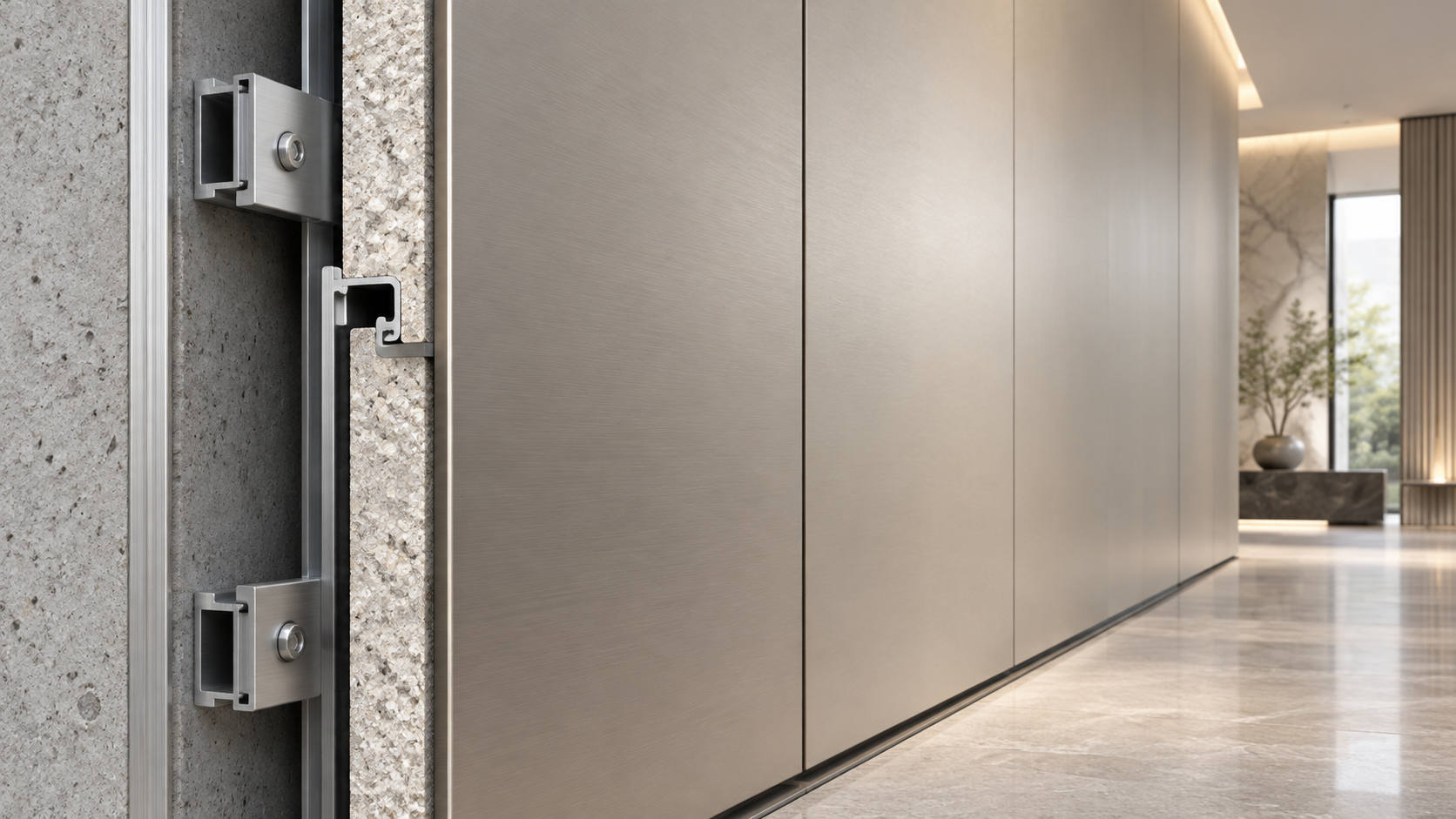
The required level of detail depends on the application, but a fabrication package commonly includes panel dimensions, thickness, material build-up, face direction, edge treatment, reveal sizes, cut-outs, drilling locations, return details, joint locations, fixing approach, and tolerance expectations. Where a pattern, perforation, veneer, or printed graphic continues across multiple panels, the layout needs to show the sequence and orientation.
Coordination is especially important around doors, electrical outlets, sprinklers, access panels, lighting channels, corners, and transitions to other finishes. A panel may look perfect in elevation while proving impossible to install neatly around a site condition that was not included in the drawing set.
It is also wise to establish who owns final site verification. A manufacturing drawing can only be as reliable as the dimensions it is based on. For custom decorative panels, measured-site information, tolerances in existing walls, and sequence of installation should be discussed before cutting begins. This is less glamorous than selecting a finish, but it is frequently what protects the finished appearance.
Cost review should look beyond the unit price
Commercial evaluation becomes more accurate when the quotation structure reflects the actual design. A decorative panel price can be influenced by panel size, substrate, face material, special coating, fire-rated construction, machining complexity, edge processing, pattern matching, packaging, testing, and order quantity. Custom curves, deep grooves, oversized panels, and unusually tight tolerances may also affect yield and production time.
Rather than requesting a single number too early, evaluators benefit from a cost breakdown that distinguishes base material from custom features. This makes value engineering more intelligent. If the budget needs adjustment, the team can compare options such as changing panel module sizes, simplifying hidden details, revising the finish, or using a standard substrate while preserving the visible design language.
Waste should be considered as well. A layout based on efficient board dimensions may reduce material loss without changing the user experience. In contrast, a pattern that requires extensive matching or a panel grid that produces many narrow offcuts can increase cost and resource use. Good design support identifies these implications before the project is committed to a visually appealing but inefficient format.
Sustainability needs evidence and practical boundaries
Environmental considerations have become part of many material evaluations, but they should be discussed with the same discipline as aesthetics and fire performance. A sustainable decorative panel strategy may include responsible material selection, low-emission considerations, durable surface design, efficient cutting layouts, reduced replacement needs, and attention to packaging or end-of-life separation.
There is no universal “green” panel. A material’s suitability depends on how it is sourced, processed, transported, installed, maintained, and expected to perform over time. A surface that lasts longer and is easier to repair may offer better practical value than one selected solely for a single environmental claim.
For projects focused on environmentally conscious construction and home furnishing, design services should identify which sustainability goals are material to the decision and what supporting information is available. This avoids broad claims that cannot be verified at the procurement stage.
Define quality control before the first production run
Quality expectations should not remain subjective. Terms such as “consistent color,” “smooth finish,” or “premium appearance” mean different things to different people. Before fabrication, the parties should agree on the inspection basis: approved reference sample, acceptable visual distance, lighting conditions, allowable surface variation, edge quality, dimensional tolerances, and packaging requirements.
This is particularly important for decorative panels that will be installed in sequence. A minor tonal difference may be acceptable between separate rooms but highly noticeable across a continuous lobby wall. Similarly, a small dimensional tolerance may be harmless for individual cabinet doors but disruptive in a tightly aligned grid of architectural cladding.
A pre-production sample, first-article inspection, or pilot batch can be appropriate where the design is technically complex or highly visible. It gives the project team a final opportunity to confirm that approved intent survives real manufacturing conditions.
Questions a business evaluator should ask before release
Before authorizing fabrication, it is worth pausing for a concise readiness review. Can the supplier explain the full panel construction and why it suits the intended environment? Are fire and safety requirements identified at assembly level? Has the finish been approved under relevant lighting? Do drawings address joints, edges, cut-outs, mounting, and pattern orientation? Are site dimensions verified or clearly assigned for verification? Is the quotation based on the same specification that was approved?
It is equally important to ask what could still change. Long lead materials, custom colors, complex tooling, and incomplete interface details should be visible risks, not surprises discovered after purchase orders are issued.
A better definition of “ready for fabrication”
Ready for fabrication does not mean every stakeholder has agreed that the panel looks attractive. It means the project has reached a point where appearance, performance, manufacturing, installation, cost, and approval responsibilities are aligned well enough to proceed with confidence.
The strongest Decorative Panel Design Services create that alignment. They give decision-makers a way to compare materials fairly, protect design intent, identify safety and compliance implications early, and reduce the chance that a finished space differs from what was imagined. For a decorative materials supplier committed to innovation, quality, service, safe construction, and more environmentally considered interiors, that preparation is not an administrative step. It is the beginning of a panel system that can perform as well as it looks.
RECOMMEND

Oct 11, 2026
Custom Composite Panel Design: Selecting Skins, Cores, and Fixing Methods
Custom Composite Panel Design guide: choose durable skins, high-performance cores, compatible bonds, and smart fixing methods for safer, longer-lasting decorative panels.
Oct 11, 2026
What Decorative Panel Design Services Should Include Before Fabrication Begins
Decorative Panel Design Services help turn concepts into fabrication-ready solutions with material guidance, fire planning, samples, drawings, cost control, and quality checks.
Oct 10, 2026
Choosing Spa Wall Panels for Humid Rooms, Hygiene, and Easy Maintenance
Spa Wall Panels for humid rooms: compare moisture resistance, hygiene, chemical durability, fire compliance, and easy-maintenance system details for lasting spa interiors.
Oct 10, 2026
Jewelry Store Wall Panels That Enhance Lighting, Security, and Luxury Displays
Jewelry Store Wall Panels: discover how refined finishes improve lighting, security integration, durability, and luxury displays for a polished retail experience.