

When Are Aluminum Honeycomb Panels the Right Choice for Lightweight Wall Systems?
It usually starts with a familiar design review problem: the wall system has to stay light, look flat from a distance, meet fire-related project expectations, and survive years of use without becoming a maintenance issue. On paper, several materials may seem workable. But once the conversation moves from concept drawings to actual buildability, the trade-offs become harder to ignore. A panel that is light may feel too flexible. A panel that is rigid enough may add too much dead load. A finish that looks good in samples may reveal waviness after installation.
If you are comparing materials for interior feature walls, transportation hubs, public buildings, clean-looking commercial spaces, or certain facade zones, this decision can quickly become less about preference and more about risk control. That is where Aluminum Honeycomb Panels often enter the discussion. Not because they fit every project, but because they solve a very specific combination of concerns that many lightweight wall systems struggle to handle at the same time.
When the usual alternatives start creating new problems
Many evaluation discussions begin with a simple target: reduce wall weight without giving up visual quality. The complication is that “lightweight” alone is not a useful selection standard. In decorative wall applications, weight reduction only matters if the system also stays dimensionally stable, can be detailed cleanly, and does not create extra trouble during fabrication or installation.
A common situation is this: a team first looks at thinner solid metal sheets, light composite boards, or conventional framed assemblies. At first glance, these seem practical. Then the review gets more detailed. Will large-format panels remain flat enough under changing temperatures? Will the wall feel solid rather than hollow or fragile? How much substructure is required to compensate for panel behavior? Does the assembly become more complex just to solve stiffness issues that the panel itself cannot handle well?
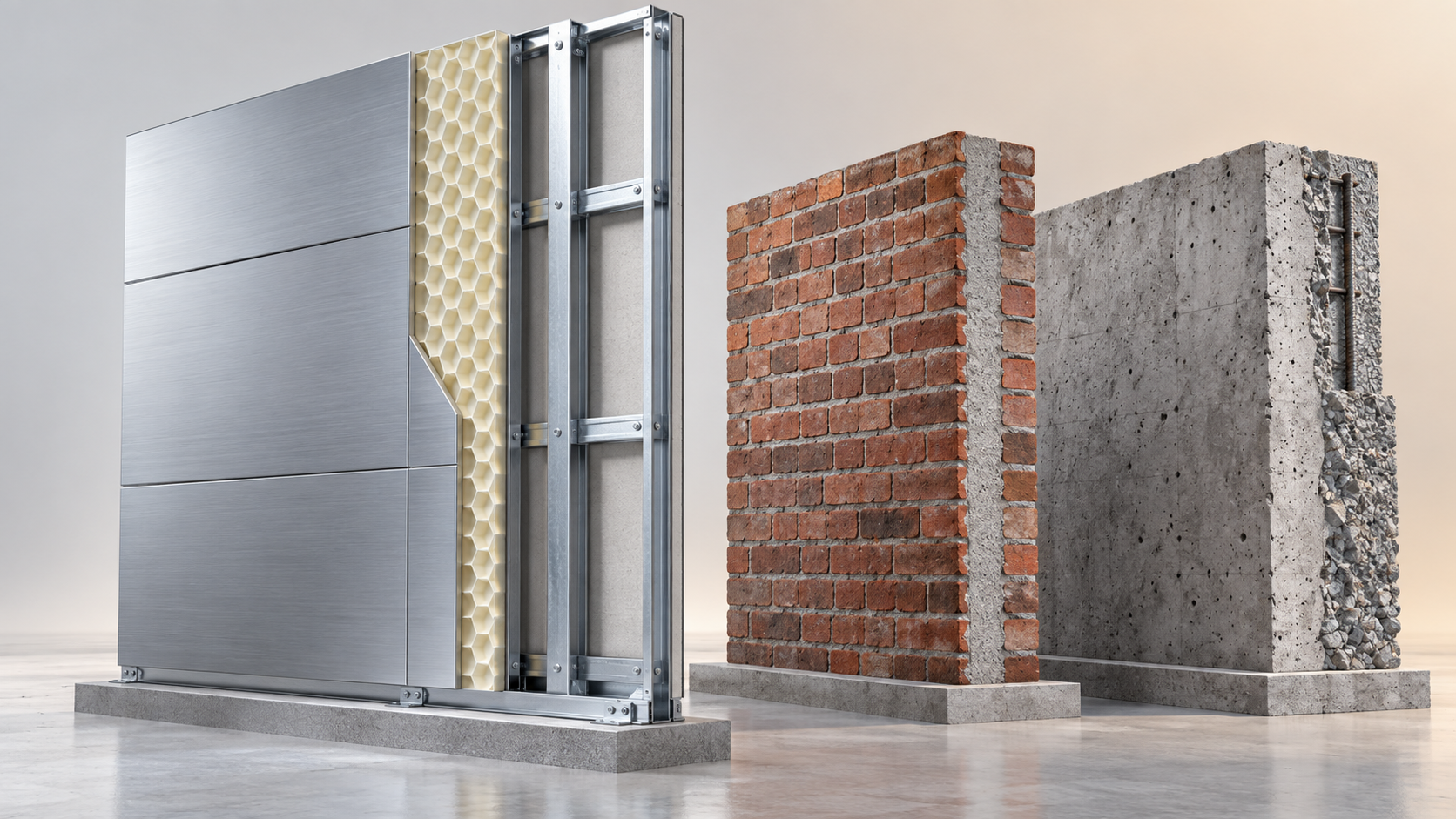
That is often the point where Aluminum Honeycomb Panels become a serious option rather than just another line in a comparison table. Their value comes from structural efficiency: two thin face sheets separated by a honeycomb core can create a panel with relatively low weight but strong resistance to bending and deformation. For technical evaluation work, this matters because it affects more than structural logic. It influences fixing strategy, support spacing, visual consistency, handling, and even the realism of achieving the intended finish quality on site.
The projects where they make the most sense
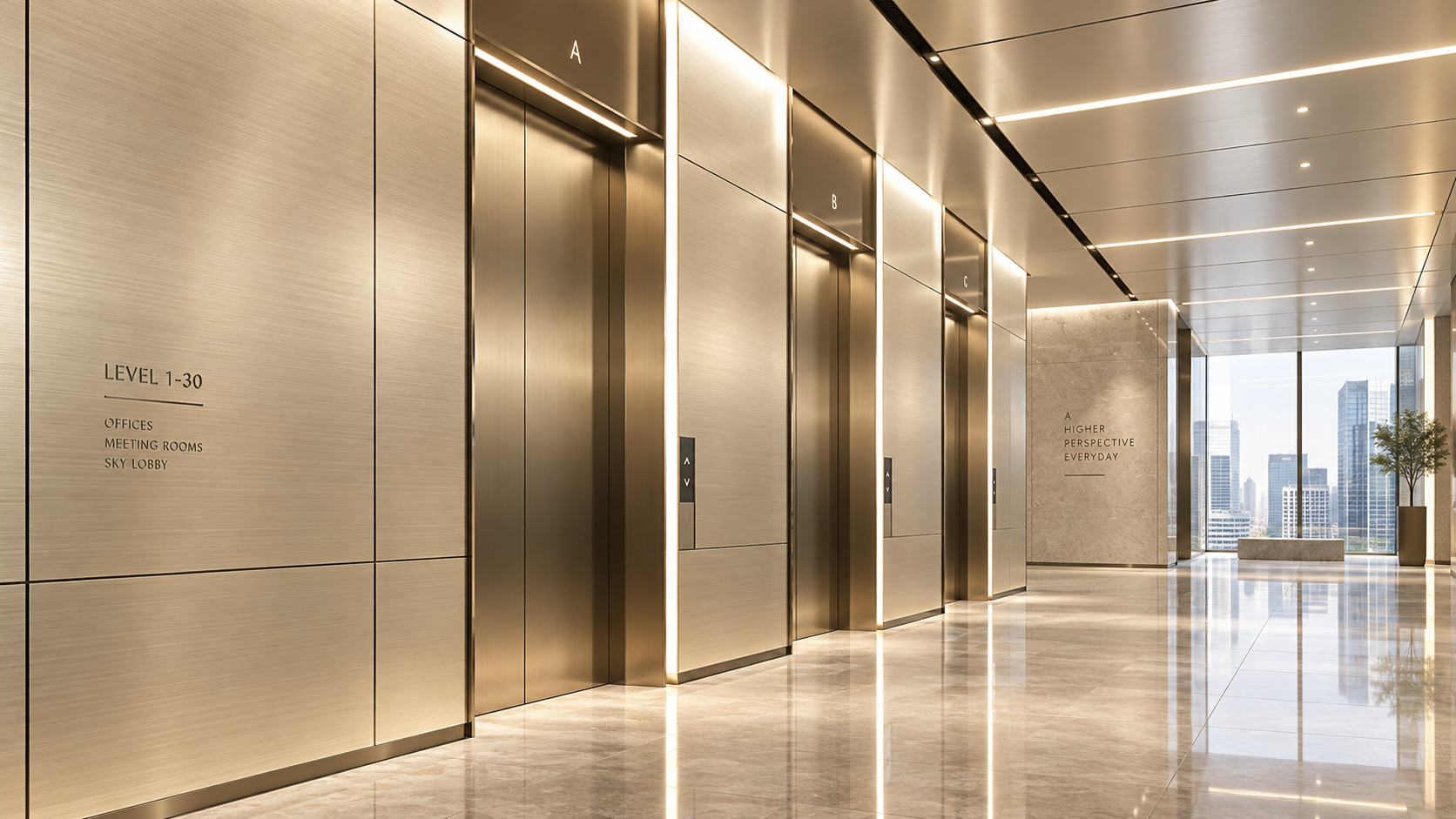
These panels are usually the right choice when the wall area is large enough that flatness is visibly important. In many decorative projects, small samples can be misleading. A material may look acceptable at hand-sample size but behave differently when expanded into broad planes under long sight lines or directional lighting. Honeycomb construction helps in cases where the design intent depends on crisp geometry, clean reflections, and controlled surface appearance.
They also make sense when the support conditions are limited. If the wall backing cannot comfortably accept excessive load, reducing panel weight becomes useful for the whole assembly, not just for transportation. This may matter in renovation work, suspended features, prefabricated modules, or areas where installation access makes heavy components inconvenient.
Another strong use case is when fire performance is a serious part of the review, especially in public or commercial environments where material selection cannot be based on appearance alone. A lightweight decorative wall product is easier to justify when it is also compatible with more demanding safety expectations. In practice, technical teams still need to verify the exact build-up, finishes, and project-specific requirements, but the base logic of aluminum-faced honeycomb construction often aligns well with this kind of screening process.
Durability is another reason these panels are frequently shortlisted. If the wall system must resist dents, movement-related distortion, or long-term visual decline better than many lighter decorative boards, the panel structure can be a practical advantage. That does not mean it is immune to damage or poor detailing, only that its basic form is well suited to projects where service life and appearance retention matter together.
Where they are often misunderstood
One common mistake is assuming that every lightweight panel behaves roughly the same once installed. In reality, panel stiffness, core structure, edge treatment, and fixing design can change the outcome significantly. A wall system that appears similar in a specification summary may perform very differently when spanning between supports or when exposed to temperature variation.
Another misunderstanding is treating Aluminum Honeycomb Panels as a universal substitute for any cladding or partition surface. They are not automatically the best answer for every budget level, every curved geometry, or every impact-prone location. In some small areas, the added precision they offer may not justify the fabrication route. In very simple applications, other materials may be adequate if flatness tolerance, finish expectations, and long-term service conditions are not especially demanding.
There is also a tendency to focus only on panel weight and ignore system weight. A technically sound review should ask whether using these panels reduces the burden on framing, anchors, and handling, or whether other project constraints cancel out that advantage. In some assemblies, the panel is only one part of the decision. The substructure, joint design, tolerances, and maintenance access can be just as important.
A more reliable way to evaluate the fit
When deciding whether this panel type is appropriate, it helps to review the wall system from the installed condition backward. Instead of asking, “Is this panel lightweight?” start with questions like these: What visual standard does the finished wall need to hold? How large are the panel modules? How visible will surface irregularities be under lighting? What kind of support spacing is realistic? Are there fire-related restrictions that eliminate some alternatives early? Will the wall face regular touch, cleaning, or minor impact?
From there, the material choice becomes clearer. Aluminum Honeycomb Panels are often a strong match when the required panel size is relatively large, when a thin-looking but rigid wall surface is preferred, or when the project needs a cleaner balance between aesthetics and engineering practicality. Their structure tends to reward projects that need control, precision, and low unnecessary mass.
It also helps to review edge conditions early. A technically good panel can become a poor wall system if corners, returns, reveals, or access panels are treated as afterthoughts. Since honeycomb panels are typically chosen for refined appearance, detailing discipline matters. Evaluators should check whether the design team has considered fixing concealment, edge closure, movement tolerance, and coordination with adjacent finishes. If those issues remain unresolved, the panel’s advantages may not be fully realized.
Comparing them with other lightweight wall options
Against thin solid aluminum sheets, honeycomb panels usually offer better stiffness for the weight, especially where panel size grows and visual flatness becomes harder to maintain. Thin solid sheets may still work in smaller modules or where support is dense, but they are more likely to rely on additional backing or reinforcement to achieve a similar visual result.
Against some composite decorative boards, honeycomb panels are often preferred when the project places more emphasis on metal appearance, rigidity, and a more engineered panel behavior. Composite products may remain viable in lower-demand interiors, yet evaluators often shift toward honeycomb construction when the wall is expected to carry a more premium or technically controlled finish.
Against heavier rigid boards or framed build-ups, the decision often comes down to installation strategy and service conditions. If the assembly must stay lighter without appearing lightweight, honeycomb panels can hold a useful middle position. They are not the simplest option in every case, but they can reduce compromises that appear later with heavier or less dimensionally stable systems.
Sometimes the best next step is not a broad market search but a focused review of a specific panel route that fits the intended finish and fabrication logic. For example, a product such as Metal-MLJS2203 may be relevant during this stage if the project team is narrowing choices within metal decorative wall solutions rather than comparing completely different material families. The value of looking at a specific option is not to shortcut evaluation, but to make detail questions more concrete.
Signs that this choice is likely justified
If you are still uncertain, a few recurring signals usually point toward these panels being the right fit. One is when mock-up discussions repeatedly return to the issue of perceived waviness or insufficient rigidity in other materials. Another is when the support structure starts becoming heavier or more complicated just to make a lighter panel behave acceptably. A third is when the visual standard is high enough that rework risk from surface distortion would be expensive or disruptive.
They are also easier to justify when the wall design includes broad uninterrupted planes, metallic finishes, crisp joint lines, or conditions where lighting will exaggerate imperfections. In those settings, structural efficiency is not just an engineering benefit; it directly affects the decorative outcome.
Less obvious, but equally important, is coordination risk. If a project involves multiple trades, tight sequencing, or limited site adjustment tolerance, panels that arrive with a more stable geometry can reduce uncertainty. That does not remove the need for careful installation, but it can make the system more predictable.
Points that should still be checked before approval
Even when Aluminum Honeycomb Panels appear to be the right material direction, approval should not be based on generic assumptions. The face sheet thickness, core configuration, coating or finish system, panel dimensions, edge build-up, and fixing method all influence real-world suitability. Some project teams stop at the phrase “honeycomb panel” as if it guarantees performance by itself. It does not. The exact assembly matters.
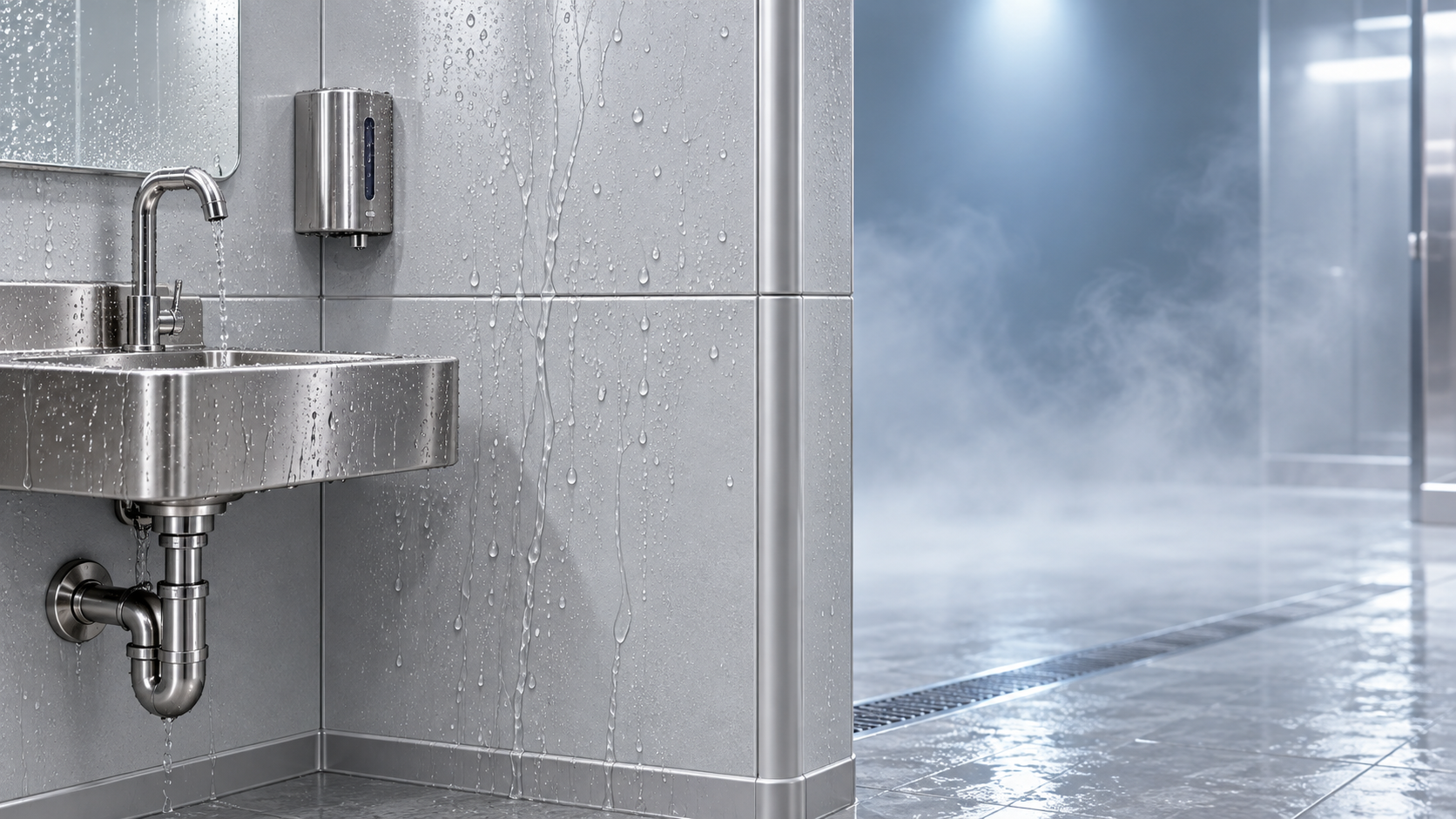
Installation environment should also be reviewed. Interior dry areas, semi-exposed zones, and exterior wall conditions create different demands. Thermal movement, moisture exposure, cleaning regime, and potential impact all shape whether the selected panel build-up is appropriate. If the wall includes doors, service access points, or integration with lighting and signage, those interfaces deserve the same level of scrutiny as the main panel field.
At this stage, looking at a candidate like Metal-MLJS2203 can help frame discussions around detailing and fit rather than abstract performance claims. That kind of focused review is often more useful than debating material categories in general terms.
Choosing with fewer surprises later
In practical selection work, the right question is rarely whether Aluminum Honeycomb Panels are “good.” The better question is whether they solve the exact problems this wall system is most likely to face. If the project needs a lightweight assembly that still delivers panel stiffness, visual flatness, fire-conscious material logic, and long-term decorative stability, they are often one of the most sensible choices available.
They are less compelling when the wall is small, visually forgiving, lightly specified, or unlikely to benefit from their structural advantages. But when the project asks for large-format discipline, clean metal expression, and reduced weight without a thin or unstable appearance, the case for them becomes much stronger. For evaluators trying to avoid late-stage compromises, that is usually the deciding factor.
RECOMMEND

Oct 04, 2026
Are Aluminum Honeycomb Panels Suitable for High-Rise Interiors?
Aluminum honeycomb composite panels for high-rise interiors offer lightweight strength, flatness, and design flexibility. Explore fire, installation, and specification insights.
Oct 03, 2026
Can Designers Order Private-Label Decorative Panels?
Private label decorative panel production for designers creates distinctive, repeatable finishes. Explore customization, sampling, performance, and branding options.
Oct 02, 2026
Are Waterproof Interior Wall Panels Suitable for High-Humidity Commercial Areas?
Waterproof interior wall panels for high humidity commercial use: discover how sealed joints, suitable substrates, and proper installation deliver durable, hygienic wall protection.
Oct 01, 2026
Are Lightweight Composite Wall Panels Lighter Than Traditional Materials?
Lightweight composite wall panels vs traditional materials weight: compare kg/m², installation benefits, and key fire, fixing, and code factors.