Can Decorative Wall Panels Handle Spa Humidity?
Yes, decorative wall panels can work in a humid spa, but only when the complete wall assembly is suited to the conditions. A panel that performs well in a damp treatment room may fail beside a shower, where water reaches joints and penetrations every day. The panel face, core, backing, substrate, adhesive and edge details all affect the outcome.
Start by separating humid air from direct water exposure. For a reception area or relaxation lounge, moisture resistance and cleanability may be enough. For a shower enclosure or a steam room, look for a manufacturer-approved wall system designed for that specific use, including its waterproofing and installation details. A decorative surface alone should not be assumed to protect the wall behind it.
Match the panel to the moisture it will actually encounter
A spa rarely has one uniform moisture condition. Water can be present as humid air, condensation on cooler surfaces, splashes, cleaning water or continuous steam. The same room may contain several exposure zones, especially around showers, pools and treatment stations.
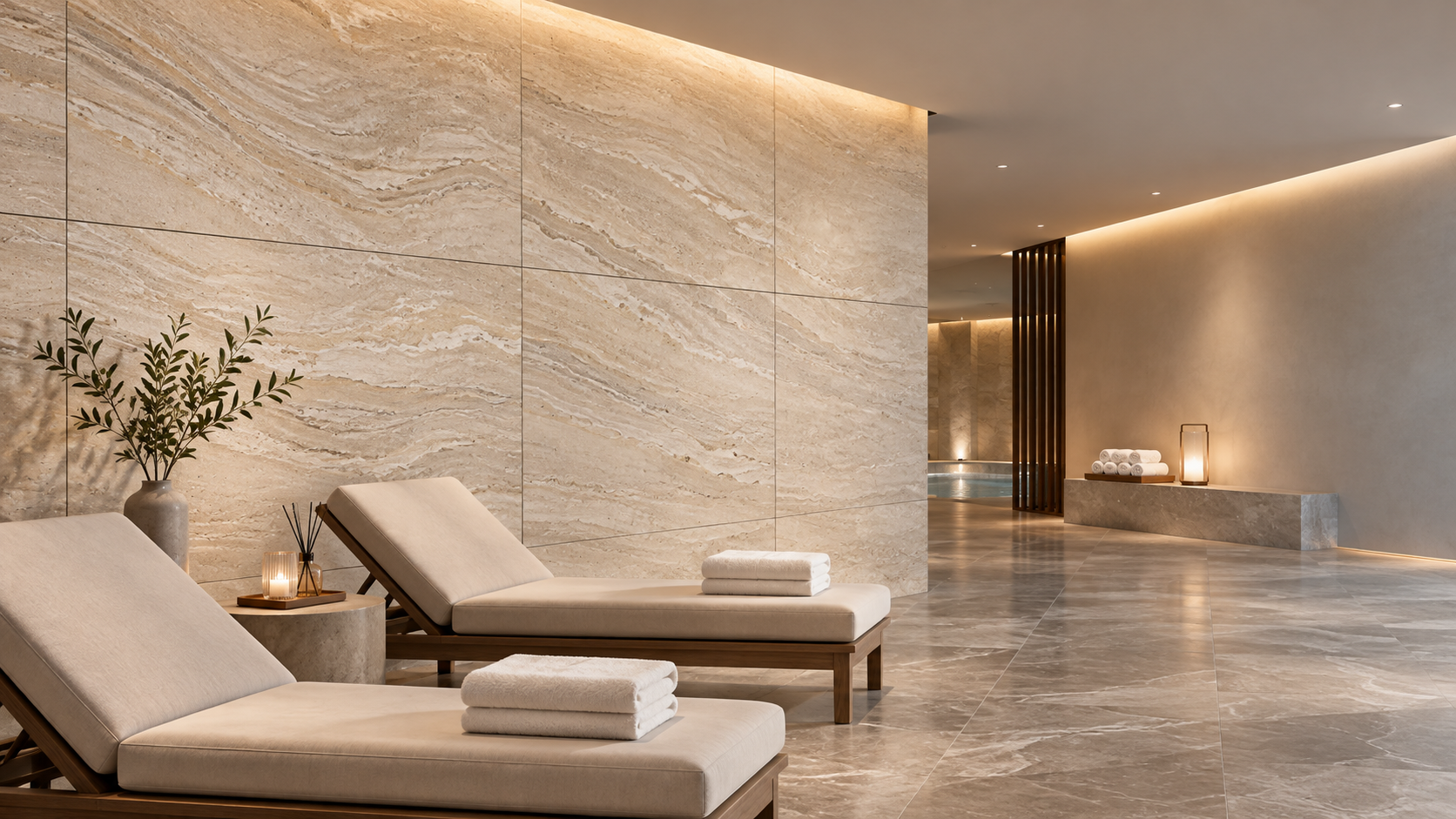
In reception areas and corridors away from wet facilities, ordinary interior conditions may prevail. A relaxation room or massage room can experience higher humidity, particularly when doors open frequently to wet areas. Panels in these spaces should tolerate the expected humidity and cleaning routine, but they may not need the same construction as a shower wall.
Changing rooms and areas near washbasins demand closer attention. Damp towels, splashes and repeated cleaning can put water on lower walls and around fixtures. In these locations, check whether the panel edges and joints can withstand occasional wetting, and whether the wall can dry between uses.
Inside a shower or beside a pool, splashing and direct water contact become part of normal use. Select a system explicitly approved for that exposure, with compatible waterproofing behind it where required. Steam rooms are more demanding again: heat, prolonged humidity and condensation call for a system specifically approved for steam-room conditions. A product described only as suitable for “bathrooms” may not cover either application.
Also consider how the spa operates. A panel in a private facility used intermittently may have more opportunity to dry than the same panel in a commercial spa operating throughout the day. Cleaning practices matter too: a wall wiped with a damp cloth faces different exposure from one regularly rinsed down.
Choose materials by construction, not appearance alone
Decorative wall panels come in many constructions, and their appearance can hide important differences. Two panels with a similar stone or wood finish may have very different cores, edge treatments and resistance to water. Review the full product specification for the intended installation, including any limits on temperature, direct water exposure and cleaning chemicals.
PVC and other polymer panels
Some polymer panels are suitable for humid interiors and can be easy to wipe clean. Their suitability for shower walls or steam rooms, however, depends on the particular product and system. Joints, trims and penetrations still need to prevent water from reaching vulnerable parts of the assembly.
For commercial interiors, also examine surface durability and fire performance for the proposed use. A panel that resists moisture may still scratch under frequent contact or have temperature limitations that make it unsuitable near a heat source.
Composite and laminate-faced panels
Composite panels can offer a wide range of decorative finishes, but their performance depends heavily on the core and how the surface is bonded to it. A water-resistant face does not necessarily protect an exposed edge or a cutout around a pipe. If water reaches a moisture-sensitive core, swelling or delamination can follow.
Ask how cut edges, corners and fixture openings must be treated, and whether the manufacturer permits the panel in the specific wet zone. A panel approved for humid rooms may still be restricted from areas subject to direct spray.
Wood, veneer and wood-based panels
Wood finishes can give a spa a warm appearance, but many wood-based products respond to changes in moisture. Swelling, movement, staining or finish deterioration are possible when exposure exceeds the product’s intended conditions. Even where the face is sealed, exposed edges and fixing points can create paths for water.
For these materials, a dry or moderately humid area with reliable ventilation is generally a more practical starting point than a shower wall. If a wood or wood-based product is proposed for a more demanding location, its manufacturer should support that exact application and specify the required finish, detailing and maintenance.
Mineral-based and other rigid panels
Some mineral-based panels can tolerate moisture, but composition varies. Water resistance, weight, installation method and compatibility with the substrate all need review. A rigid panel may resist swelling while still allowing water through joints or behind the surface. Its performance in a wet area depends on the entire specified assembly.
Across all material types, avoid treating terms such as “waterproof,” “moisture resistant” and “washable” as interchangeable. A washable face may tolerate routine wiping without being suitable for standing water, continuous spray or steam. Ask what exposure the claim covers and whether it applies to the panel alone or to an installed system.
Installation determines where the water goes
Water frequently reaches a wall through details rather than through the middle of a panel. Corners, panel joints, floor junctions, pipe openings and the edges of fixtures deserve particular attention. If moisture enters behind the finish and cannot dry, the concealed substrate or adhesive may deteriorate even when the visible panel remains intact.
Before installation, the wall should be suitable for the specified system: sound, clean and prepared as the panel and waterproofing manufacturers require. Existing dampness or leakage needs to be corrected before it is covered. Installing a new finish over a wet or damaged wall can conceal the problem while allowing it to continue.
In direct-spray areas, establish where the waterproofing layer sits and how it connects to adjacent surfaces, drains and penetrations. Decorative panels may form part of an approved waterproof wall system, but they should not automatically be treated as the waterproofing layer. Follow the system instructions for the substrate, membrane, adhesive, sealant and trims rather than combining components on the assumption that they will work together.
Joints also need to accommodate the movement expected from the panel and building. A rigidly sealed joint can fail if materials expand or contract beyond what the detail allows. Conversely, an open decorative joint in a wet zone can let water reach the wall behind it. The appropriate detail depends on the product and exposure.
Pay special attention to the bottom of the wall. Water may collect where a panel meets a floor, shower tray or bath. The connection should direct water away from vulnerable edges and remain accessible for inspection and maintenance. Sealant is useful when specified, but it is a maintained component; it should not be the only defense against water where the design calls for a waterproof layer.
Ventilation and cleaning are part of the specification
Even a suitable panel benefits from a space that can remove moisture after use. Persistent condensation can leave surfaces wet for long periods and increase the chance of microbial growth on dirt, sealant or other materials. A moisture-resistant panel does not eliminate the need for an effective ventilation strategy.
Review ventilation alongside the expected occupancy and operating schedule. Look for cold surfaces where condensation may form, including external walls and areas behind furniture. Keep access clear enough to inspect and clean the wall, especially in corners and near the floor.
Cleaning requirements should be settled before the finish is purchased. Spa operators may use disinfectants, oils and other products that affect certain coatings or sealants. Ask which cleaning agents and methods the panel manufacturer permits, and check that these are compatible with the facility’s hygiene procedures. Abrasive pads, aggressive chemicals or high-pressure washing can damage a surface or its joints even when ordinary damp cleaning is acceptable.
Plan for routine inspection of sealant, trims and penetrations. Cracked sealant, lifting edges, discoloration or a persistent musty smell can indicate a problem that needs investigation. The visible mark may be some distance from the point where water entered, so simply covering it with more sealant may leave the underlying cause unresolved.
What to confirm before placing an order
A useful specification describes the room and exposure as clearly as it describes the desired finish. Give the supplier the proposed location, whether water will strike the wall directly, the expected cleaning method and the type of substrate. For a steam room, state that explicitly and discuss the complete wall assembly with the relevant system manufacturers and installer.
Then obtain documentation or installation instructions that answer these practical questions:
- Is the exact panel approved for this location, including direct spray or steam if applicable?
- What substrate, waterproofing, adhesive, trims and sealants are required, and are they compatible with one another?
- How should cut edges, internal corners, floor junctions and pipe penetrations be detailed?
- What cleaning chemicals and methods can be used without damaging the finish or joints?
- Does the proposed assembly meet the applicable fire and building requirements for the project’s location and use?
If the supplier cannot support the intended wet-zone application, move the decorative finish to a less exposed area or select a system with documented approval for the conditions. A coherent design can still use different finishes across the spa: a decorative panel in a lounge, for example, and a specified wet-area system inside the shower. The division follows the water exposure, making the wall easier to maintain over its working life.
Next:No more content
RECOMMEND

Nov 18, 2026
Can Decorative Wall Panels Handle Spa Humidity?
Can decorative wall panels handle the humidity in a spa? Discover how to choose the right materials and wall systems for lounges, showers and steam rooms.
Nov 18, 2026
How Do You Match Colors for Wood Grain Panels?
Master wood grain panel color matching with practical tips on undertones, lighting, flooring, and finishes. Create a cohesive space with confidence.
Nov 17, 2026
How Do You Read an E0 Decorative Board Test Report?
Learn how to read an E0 decorative board test report, verify emission limits and sample details, and choose the right board with confidence.
Nov 17, 2026
How Do You Choose Lightweight Wall Panels for Hotels?
Choose lightweight panels for hotel walls with confidence. Compare fire safety, durability, installation and cost to find the right finish for every space.