What Surface Finish Options Are Available for Custom Veneer Panels?
A veneer panel can look completely different depending on what happens after the veneer is pressed, sanded, and protected. The same oak, walnut, ash, or engineered wood surface may feel quiet and architectural under a low-sheen oil, polished and formal beneath a high-gloss lacquer, or surprisingly tactile when paired with an embossed texture. That is why surface treatment is not a final decorative afterthought. It is a central material decision.
When designers, contractors, furniture makers, and homeowners compare custom veneer panels surface finish options, they are usually weighing more than color. They want to know whether the panel will resist fingerprints in a hotel corridor, stand up to daily cleaning in a commercial interior, meet fire-safety requirements, or retain the warmth of real wood in a residential living space. The right answer depends on the veneer species, panel substrate, installation location, lighting, expected wear, and the atmosphere the project is intended to create.
Below is a practical look at the most widely used surface finishes for custom veneer panels, along with the trade-offs that matter before a specification is finalized.
Start with the character of the veneer itself
Surface finishing should enhance the wood rather than fight it. Natural veneer has grain movement, mineral variation, pores, and tonal shifts that give it depth. An open-grain oak veneer may benefit from a finish that preserves texture, while a fine, tight-grain maple or dyed veneer can carry a smoother, more contemporary coating.
Before choosing a finish, it is useful to decide what the panel should communicate. Is the goal a calm, almost raw timber appearance? A seamless luxury wall with reflected light? A durable cabinet face for a busy family home? Or a decorative interior panel that must combine visual warmth with fire-resistant performance? These questions narrow the field more reliably than selecting by gloss level alone.
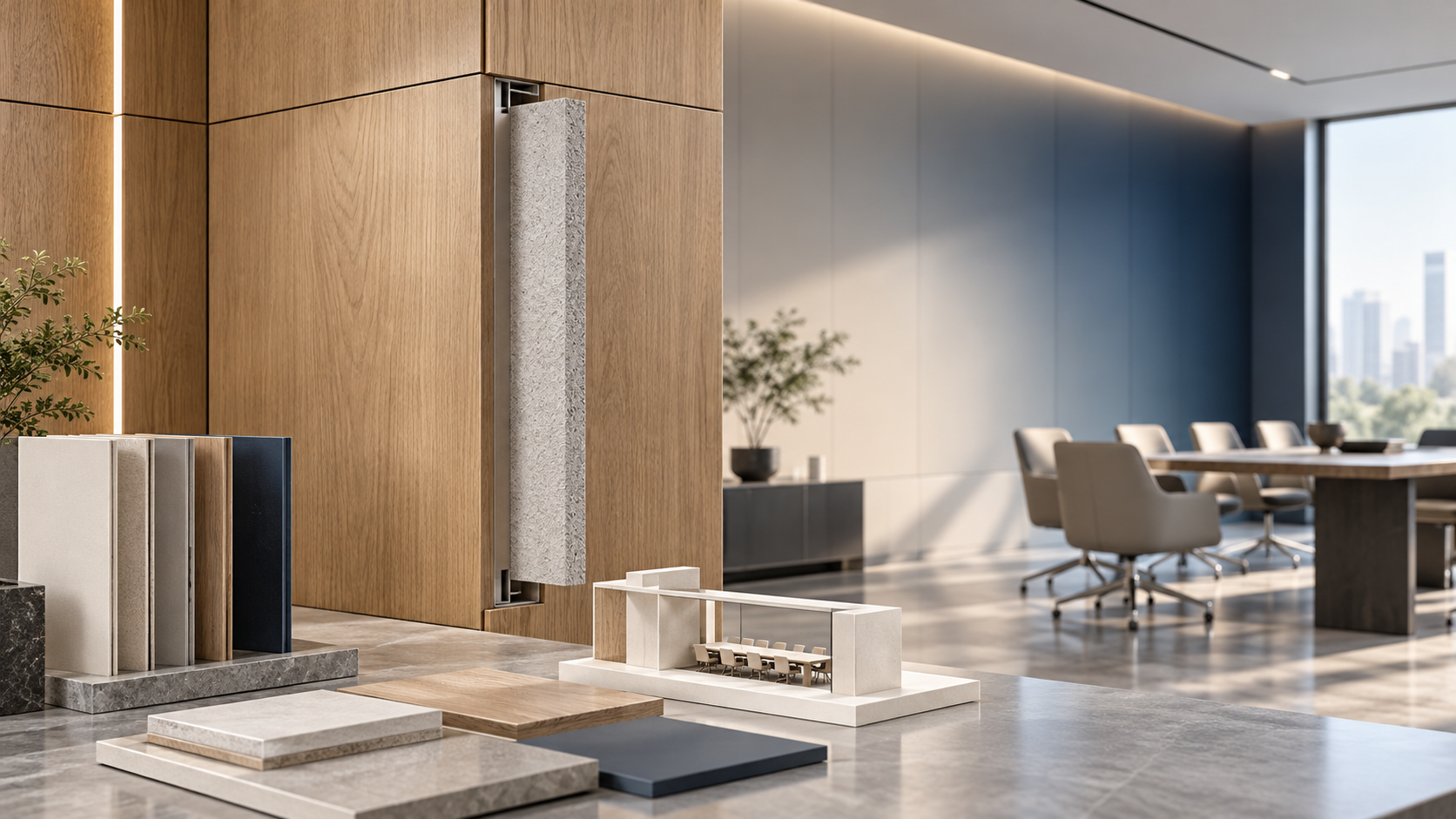
Samples are essential. Wood tone can shift significantly under warm residential lighting, cool office lighting, daylight, and directional spotlights. A finish that looks soft in a showroom may reveal scratches, glue lines, or uneven reflections once installed across a large wall.
Clear matte and ultra-matte finishes: a natural, modern appearance
Matte finishes are among the most requested choices for contemporary veneer wall panels, cabinet doors, and furniture surfaces. They minimize glare and let the grain remain the visual focus. Ultra-matte coatings create an especially restrained appearance, making wood feel closer to its unfinished state while still providing a protective layer.
This finish works particularly well with white oak, smoked oak, ash, elm, and other veneers selected for their open grain and understated character. In hospitality spaces, apartments, offices, and retail interiors, matte surfaces can make large panel installations feel less visually heavy than glossy alternatives.
The practical benefit is that low-gloss surfaces tend to conceal small scratches and dust better than high-gloss panels. However, “matte” does not automatically mean easy to clean. Some very soft-touch matte surfaces can show oily fingerprints or polishing marks if the wrong cleaning products are used. The coating chemistry matters as much as the sheen level.
For high-contact areas, ask whether the finish has been developed for stain resistance and whether it should be cleaned with a damp cloth only, a neutral cleaner, or a specific maintenance product. A sample should be tested with the types of marks likely to occur in the real setting: hand oils, coffee, ink, cosmetics, or cleaning residue.
Satin and semi-matte lacquer: the versatile middle ground
For many projects, satin lacquer is the safest balance between visual warmth and practical durability. It offers a gentle sheen that brings out the grain and color of the veneer without producing the mirror-like reflections associated with gloss finishes. Under interior lighting, satin panels often look richer and more dimensional than completely matte panels.
Clear lacquer is commonly used when the selected veneer already has the desired tone. It seals the surface, improves resistance to everyday moisture and staining, and provides a consistent appearance across a group of panels. Depending on the formulation, lacquer systems may be solvent-based, water-based, polyurethane-based, or cured with ultraviolet light.
A satin finish suits executive offices, wardrobes, reception desks, restaurant joinery, residential kitchens, and feature walls. It is forgiving enough for regular use yet polished enough for refined interiors. Where a designer wants a warmer look, a lightly tinted lacquer can adjust the tone while allowing the grain pattern to remain visible.
High-gloss lacquer: dramatic depth, higher maintenance expectations
High-gloss veneer panels create a more formal and expressive effect. Light bounces across the surface, colors appear deeper, and the veneer can take on a near-luxury furniture character. Walnut, ebony-style recon veneers, figured eucalyptus, and dark dyed veneers are often paired with gloss finishes when the design calls for visual drama.
There is a cost to that clarity: gloss makes imperfections easier to see. Fingerprints, fine scratches, dust, uneven substrates, and light reflections become more noticeable. The panel fabrication process must therefore be carefully controlled, from substrate flatness and veneer pressing to sanding and coating application.
High-gloss finishes are best reserved for spaces where appearance is prioritized and regular cleaning is realistic: decorative cabinet fronts, boutique retail displays, private residences, selected hospitality furniture, and accent walls away from constant touch. They are less forgiving on doors, public corridors, or horizontal work surfaces that receive hard daily use.
Open-pore, closed-pore, and brushed finishes change the tactile experience
Gloss level describes how a surface reflects light, but pore treatment describes how the wood feels. This distinction is easy to overlook when reviewing only small color chips.
Open-pore finish
An open-pore finish leaves the natural grain texture visible and palpable. The pores of oak, ash, and similar species remain present rather than being filled smooth. This approach gives custom veneer panels an authentic, crafted quality and is popular in biophilic interiors, boutique hotels, and homes seeking a natural-material feel.
Because the surface is more textured, cleaning requires slightly more attention than on fully filled panels. It is generally suitable for vertical cladding and furniture components, but specifications should consider the environment where dust, grease, or food residue may accumulate.
Closed-pore finish
With a closed-pore or grain-filled finish, the texture is filled and leveled before topcoating. The result is smoother, more uniform, and often more formal. It can make open-grain wood species feel refined and contemporary, especially when paired with satin or gloss lacquer.
Closed-pore treatments are often selected for cabinetry, desk surfaces, and areas where a smoother cleaning surface is preferred. The trade-off is that some of the raw tactile identity of the wood is reduced.
Brushed or wire-brushed veneer
Brushing removes softer fibers from the veneer surface to emphasize the harder grain lines. The treatment creates relief and visual movement, particularly on oak and ash. It can look rustic, industrial, coastal, or sophisticated depending on the stain and topcoat chosen.
Brushed veneer panels are effective when a plain wall needs material interest without relying on bold color. In large-scale applications, however, confirm that the brushing direction and intensity remain consistent from panel to panel.
Stained, smoked, and tinted finishes for color control
Natural veneer variation is part of its appeal, but it may not always align with a project palette. Stains and tinted coatings give designers more control over tone while retaining the underlying grain. Pale white-washed oak, warm medium walnut, charcoal ash, grey elm, and deep espresso finishes are common examples.
A stain penetrates or colors the wood surface before the protective topcoat is applied. A tinted lacquer adds color through the coating system itself. The visual difference can be subtle, but it affects repairability, consistency, and the way the grain reads. Strong stains may highlight veneer joints or natural absorption differences, so production samples should be reviewed under the project’s intended lighting.
Smoked effects, whether achieved through controlled treatment or color finishing, can add depth without covering the wood pattern. They are often chosen for hospitality, premium residential, and commercial interiors where the design needs a darker, more atmospheric material palette.
For custom work, color matching should never be based solely on a digital image. A physical approved sample, including veneer species, cut, stain, topcoat, and gloss level, provides a more dependable reference for production.
UV-coated veneer panels for efficient, consistent protection
UV coating is cured rapidly using ultraviolet light during manufacturing. It is widely used in panel production because it can provide a uniform, durable protective film with efficient processing and consistent finish quality. UV-coated surfaces may be matte, satin, or gloss, depending on the selected system.
For interior decorative panels, furniture components, and cabinet surfaces, UV finishes are often valued for their scratch resistance, stain resistance, and controlled appearance. They can be especially practical for repeatable projects that require multiple panels to match across a larger installation.
Still, the intended use matters. A rigid UV-cured coating may perform differently from a more flexible coating when used on profiled surfaces, edges, or components exposed to movement. Discuss panel construction and fabrication details early, particularly if panels will be CNC-machined, edged, grooved, or curved after finishing.
Textured, embossed, and synchronised finishes for a more architectural surface
Not every veneer panel needs to be smooth. Textured and embossed finishes can introduce a deliberate surface pattern, from fine linen-like texture to deeper woodgrain relief. When texture follows the printed or reconstructed grain pattern, it is sometimes described as synchronised texture.
These treatments are more frequently associated with engineered decorative panels, but they can also inform the design direction of veneer-based products. A subtle texture can reduce visible fingerprints, soften reflected light, and give a large wall installation more presence at close range.
Textured surfaces should be selected with cleaning in mind. Deep relief is visually attractive but may be less suitable for areas exposed to grease, dust, or frequent sanitation. For a restaurant feature wall, hotel room millwork, or retail display, that may be entirely appropriate. For a laboratory-adjacent space or busy food-service counter, a smoother finish may be the wiser choice.
Fire-resistant surface systems: appearance must work with safety
In commercial interiors, public facilities, transportation-related spaces, and certain residential developments, fire performance can shape material selection from the beginning. A fire-resistant veneer panel is not defined by surface coating alone. Its performance depends on the complete panel assembly, including the veneer, adhesive, substrate, core material, protective finish, edge treatment, and installation method.
Some coatings may contribute to improved flame-retardant characteristics, while fire-rated substrates and properly designed sealing solutions are often equally important. It is risky to assume that applying a “fireproof” topcoat to a standard panel will automatically meet a project requirement.
Shenyang Shengshi Meilin Technology Co., Ltd. focuses on the development and application of new materials, including decorative materials and fireproof sealing materials. For projects where aesthetics and safety need to be considered together, the most useful conversation is not simply “Which finish is fire-resistant?” but “What complete panel and installation system is required for this space?” The answer should be verified against the applicable local codes and the project’s specified test standards.
A practical comparison of common surface finish options
How to specify the right finish without surprises
The most successful veneer panel specifications describe more than a wood name and a color. They identify the veneer species or reconstructed veneer style, cut direction, desired tone, pore treatment, coating type, gloss range, substrate, panel thickness, edge treatment, intended location, and any fire-performance requirement. This level of clarity protects both the visual concept and the installation schedule.
It is also worth viewing a full-size sample or mock-up instead of relying only on hand samples. Veneer has a natural scale; a small chip cannot show how cathedral grain, crown cuts, seams, or tonal variation will read across a 2.4-meter wall panel. Where sequence matching is important, the veneer layout should be agreed upon before manufacturing begins.
Finally, think about ownership after installation. A beautiful finish that requires delicate care may be ideal for a private study, but frustrating in a busy public lobby. Cleaning teams, maintenance budgets, daylight exposure, and touch frequency are all part of the finish decision.
The broad range of custom veneer panels surface finish options makes it possible to tailor a panel to the mood and performance needs of almost any interior. Matte, satin, gloss, brushed, stained, UV-cured, textured, and fire-conscious systems each have a legitimate place. The strongest choice is rarely the most fashionable one; it is the finish that lets the veneer look convincing, wear appropriately, and remain satisfying long after the project opens.
RECOMMEND

Oct 12, 2026
Where Magnesium Oxysulfate Honeycomb Panels Fit in Fire-Sensitive Interiors
Magnesium Oxysulfate Honeycomb Panels offer a lightweight, fire-conscious solution for wall cladding, partitions, ceilings, furniture, and refurbishment interiors.
Oct 12, 2026
PUR Laminated Decorative Panels: Bond Strength, VOCs, and Heat Resistance Explained
PUR Laminated Decorative Panels: explore bond strength, VOC control, and heat resistance for furniture and interiors. Learn how to specify durable, low-emission panel systems.
Oct 11, 2026
Custom Composite Panel Design: Selecting Skins, Cores, and Fixing Methods
Custom Composite Panel Design guide: choose durable skins, high-performance cores, compatible bonds, and smart fixing methods for safer, longer-lasting decorative panels.
Oct 11, 2026
What Decorative Panel Design Services Should Include Before Fabrication Begins
Decorative Panel Design Services help turn concepts into fabrication-ready solutions with material guidance, fire planning, samples, drawings, cost control, and quality checks.