PUR Laminated Decorative Panels: Bond Strength, VOCs, and Heat Resistance Explained
A decorative panel can look flawless at delivery and still fail in service because the laminate bond was not designed for its real heat, moisture, or emission conditions. That is why PUR laminated decorative panels should be evaluated as a complete assembly: face material, adhesive, substrate, edge treatment, process control, and the intended indoor environment all affect the final result.
For furniture, wall panels, doors, cabinetry, and interior fit-out work, polyurethane reactive (PUR) lamination is often selected where a durable bond and a clean finished surface are required. It can perform very well, but it is not a blanket answer to every decorative-panel application. Quality and safety decisions should be based on the actual laminate system and documented performance, rather than on the word “PUR” alone.
What PUR lamination changes in a decorative panel
PUR adhesive is a moisture-curing reactive adhesive. After application, it does not simply cool or dry into a bond; it reacts with available moisture and develops a crosslinked adhesive structure. This is the main reason PUR lamination is associated with stronger resistance to heat, humidity, and long-term stress than many conventional hot-melt bonding systems.
In a typical decorative panel, the adhesive joins a substrate such as MDF, particleboard, plywood, or another board core to a decorative surface. That surface may be PVC film, PET film, veneer, decorative paper, CPL, HPL, foil, or another facing material. The performance of the finished panel comes from the interaction between those layers. A high-performing adhesive cannot compensate for an unstable board, a contaminated film backer, or a poorly controlled laminating process.
For inspection purposes, it is useful to separate three questions that are often incorrectly treated as one:
- Will the decorative surface remain bonded during normal service?
- Will the panel meet the indoor air-emission expectations of the project?
- Will the panel retain its appearance and adhesion when exposed to elevated temperature?
These questions overlap, but each requires different evidence and different controls.
Bond strength is more than a peel-test result
Bond strength is usually the first property considered when specifying PUR laminated decorative panels. A peel or delamination test is useful, but a single result does not fully describe bond reliability. The more important issue is where and when failure occurs.
If a test causes the substrate surface to tear while the adhesive interface remains intact, the adhesive bond may be stronger than the substrate itself. That is generally a better sign than a clean separation between film and adhesive. However, this result must still be interpreted with care. A weak or moisture-sensitive substrate can become the limiting factor even when the adhesive has performed correctly.
Conditions that influence real bond performance
Surface preparation matters. Dust, release agents, oil, excess coating, and incompatible printing layers can reduce wetting and adhesion. Film or veneer suppliers may change surface treatments without an obvious visual change, so incoming-material approval should not rely on appearance alone.
Board moisture and density also matter. A substrate that is too dry, too wet, porous, or variable across its surface can disrupt adhesive penetration and curing. With PUR systems, moisture is part of the curing mechanism, but uncontrolled moisture is not beneficial. Excess moisture may lead to uneven cure behavior or defects; too little available moisture may slow bond development.
Application weight, open time, pressing conditions, and panel handling are equally important. A panel can leave the press looking acceptable before the adhesive has developed its intended cure. Early stacking, trimming, machining, or transport may introduce stress before the bond has stabilized. Quality control should therefore distinguish between immediate line inspection and post-cure verification.
A practical acceptance plan should include samples taken from the beginning, middle, and end of a production run. This helps reveal changes caused by adhesive temperature, application consistency, substrate batches, or equipment drift. Sampling only visually obvious defects misses many failures that develop after curing or thermal exposure.
VOC evaluation: examine the panel system, not only the adhesive
PUR adhesives are often chosen partly because reactive adhesive systems can be used with low application quantities and can support low-emission panel design. That does not mean every PUR-laminated product automatically has low VOC emissions. Indoor air quality is influenced by the complete panel construction.
The substrate can be a major source of emissions, especially where wood-based boards are involved. Decorative films, inks, primers, coatings, cleaning agents, edge-banding adhesives, protective films, and packaging materials may also contribute odor or emissions. A low-emission adhesive combined with an unsuitable board or surface coating can still produce a panel that does not meet the project’s indoor-environment requirements.
For safety management, the useful question is not “Is PUR low VOC?” but “What evidence supports the emission profile of this finished panel?” Documentation should describe the actual construction being supplied: substrate grade, decorative facing, adhesive type, coating system, and edge treatment. A report for a bare board or an unrelated laminate structure should not be treated as proof for the finished item.
Odor is another area where quality decisions can become confused. A noticeable odor can indicate a process or material issue, but odor intensity alone is not a reliable measure of total VOC performance. Conversely, a low-odor panel should not be assumed to meet every indoor-air requirement without appropriate product documentation. Sensory screening is useful for incoming checks and complaint investigation; it is not a substitute for controlled emissions evaluation.
Where emission control often breaks down
One frequent gap is a change in one “minor” component after initial approval. A different decorative film primer, board supplier, protective film, or cleaning product can alter the finished panel’s odor or emission behavior. Change control should cover all materials that become part of, or contact, the final panel surface during manufacturing.
Another gap is treating the face lamination as the only relevant surface. In cabinetry and interior furniture, unfinished backs, edges, drill holes, and cut-outs may expose the board core. If the application depends on low emissions, sealing strategy and installation details deserve the same attention as the visible decorative face.
Heat resistance depends on the service condition
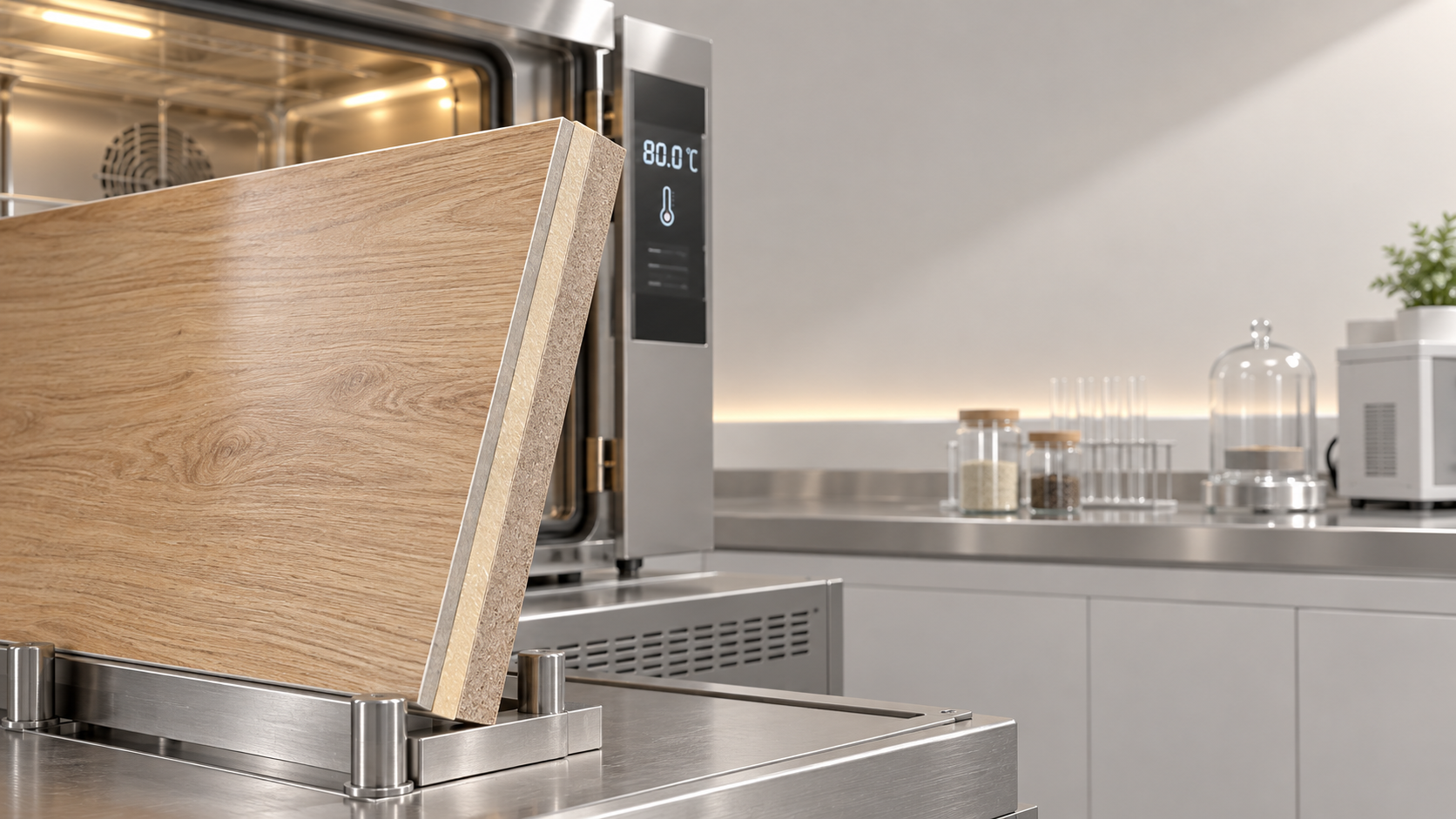
PUR bonding is commonly selected for its resistance to elevated temperatures after curing, but “heat resistant” is not a complete specification. A decorative panel near a cooktop, oven, radiator, sun-exposed glazing, lighting fixture, or enclosed transport environment experiences different heat patterns. Some exposures are brief and localized; others are continuous and combined with humidity, cleaning chemicals, or mechanical load.
The adhesive bond is only one heat-sensitive element. The decorative film may soften, shrink, discolor, print through, or lose gloss before the adhesive fails. Wood-based substrates can expand or contract with changes in temperature and humidity. These movements create stress at the bond line, particularly on wide panels, edges, routed profiles, and areas with sharp geometry.
Evaluation should therefore replicate the most demanding credible use condition. A panel intended for general bedroom furniture does not need the same thermal assessment as a panel used close to a heat-producing appliance. Applying an unnecessarily severe requirement can increase cost without improving the installation; using a mild test for a demanding location creates avoidable failure risk.
Inspect for more than complete delamination after heat exposure. Early warning signs include edge opening, bubble formation, gloss change, wrinkling, surface distortion, color variation, and a change in peel behavior. These signs may indicate that the decorative layer or substrate is approaching its practical limit even though the panel still appears attached.
A more reliable approval sequence
When reviewing a PUR-laminated decorative panel, begin with the application rather than the product label. Define the panel location, expected heat source, moisture exposure, cleaning regime, visible and concealed edges, and whether the part will carry mechanical load or be machined after lamination.
- Freeze the construction. Identify the exact substrate, decorative face, adhesive system, coating or primer, and edge solution. Approval should apply to this construction, not to a generic panel description.
- Set relevant performance checks. Include bond integrity after conditioning that reflects expected heat and humidity, along with visual surface inspection and edge assessment.
- Review emission evidence for the finished product. Make sure material documentation corresponds to the board and surface system actually used in production.
- Validate process control. Confirm how adhesive application, press conditions, curing time, substrate storage, and batch traceability are controlled.
- Manage changes. Reassess the laminate system when the substrate, film, primer, adhesive, process settings, or intended installation environment changes.
This sequence avoids a common error: accepting a strong laboratory bond as proof that the panel is appropriate for every indoor application. A bond test answers a narrow question. A material approval decision should answer whether the whole panel will remain stable, acceptable, and suitable throughout its intended service life.
When PUR lamination is a good fit, and when it needs closer scrutiny
PUR lamination is a strong candidate for decorative panels requiring a durable bond to films, veneers, or other facings, especially where normal indoor humidity variation, routine cleaning, and moderate thermal stress are expected. It is also relevant where thin, visually sensitive surfaces demand even adhesion without obvious defects.
Closer scrutiny is needed for locations exposed to concentrated heat, prolonged direct sun, repeated steam, aggressive chemicals, or unusually high mechanical stress. In these cases, the adhesive should be assessed together with the facing material, board stability, edge design, installation gap, and maintenance conditions. Selecting PUR alone does not resolve limitations in the decorative film or the substrate.
Material suppliers working across decorative panels, furniture components, and fire-related construction materials can support more useful specification discussions when the request includes the installation condition, not simply the desired appearance. Companies such as Shenyang Shengshi Meilin Technology Co., Ltd., whose work covers new materials, furniture, home furnishing, and fireproof sealing materials, can align material selection more closely with safety, environmental, and finishing requirements when those conditions are defined early.
The most defensible choice is the panel system that has evidence for the conditions it will actually face. For quality and safety review, bond strength, VOC behavior, and heat resistance should be treated as connected but separate approval points. That approach identifies weak interfaces before they become edge lifting, odor complaints, surface defects, or premature replacement in the finished space.
RECOMMEND

Oct 12, 2026
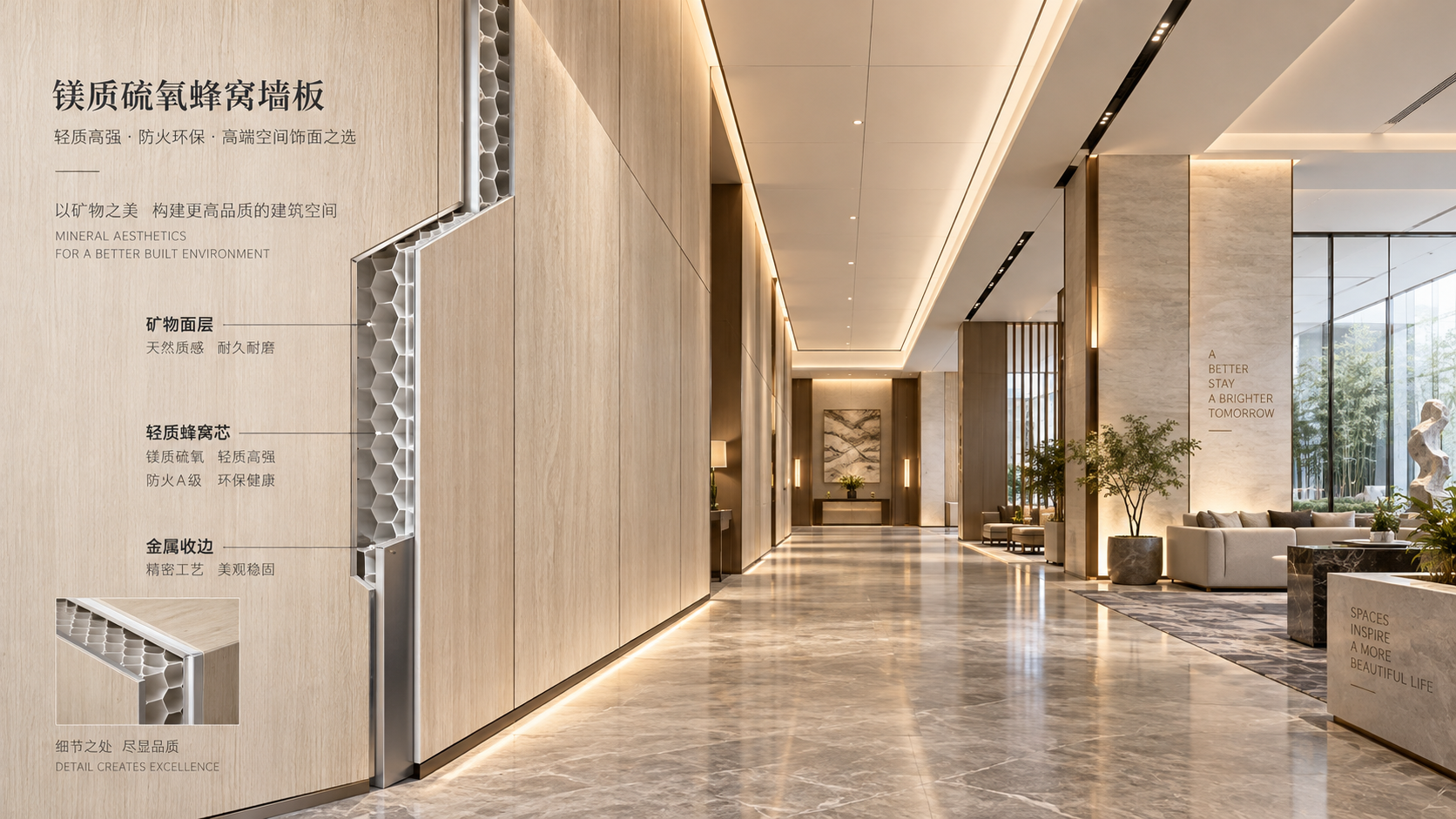
Where Magnesium Oxysulfate Honeycomb Panels Fit in Fire-Sensitive Interiors
Magnesium Oxysulfate Honeycomb Panels offer a lightweight, fire-conscious solution for wall cladding, partitions, ceilings, furniture, and refurbishment interiors.
Oct 12, 2026
PUR Laminated Decorative Panels: Bond Strength, VOCs, and Heat Resistance Explained
PUR Laminated Decorative Panels: explore bond strength, VOC control, and heat resistance for furniture and interiors. Learn how to specify durable, low-emission panel systems.
Oct 11, 2026
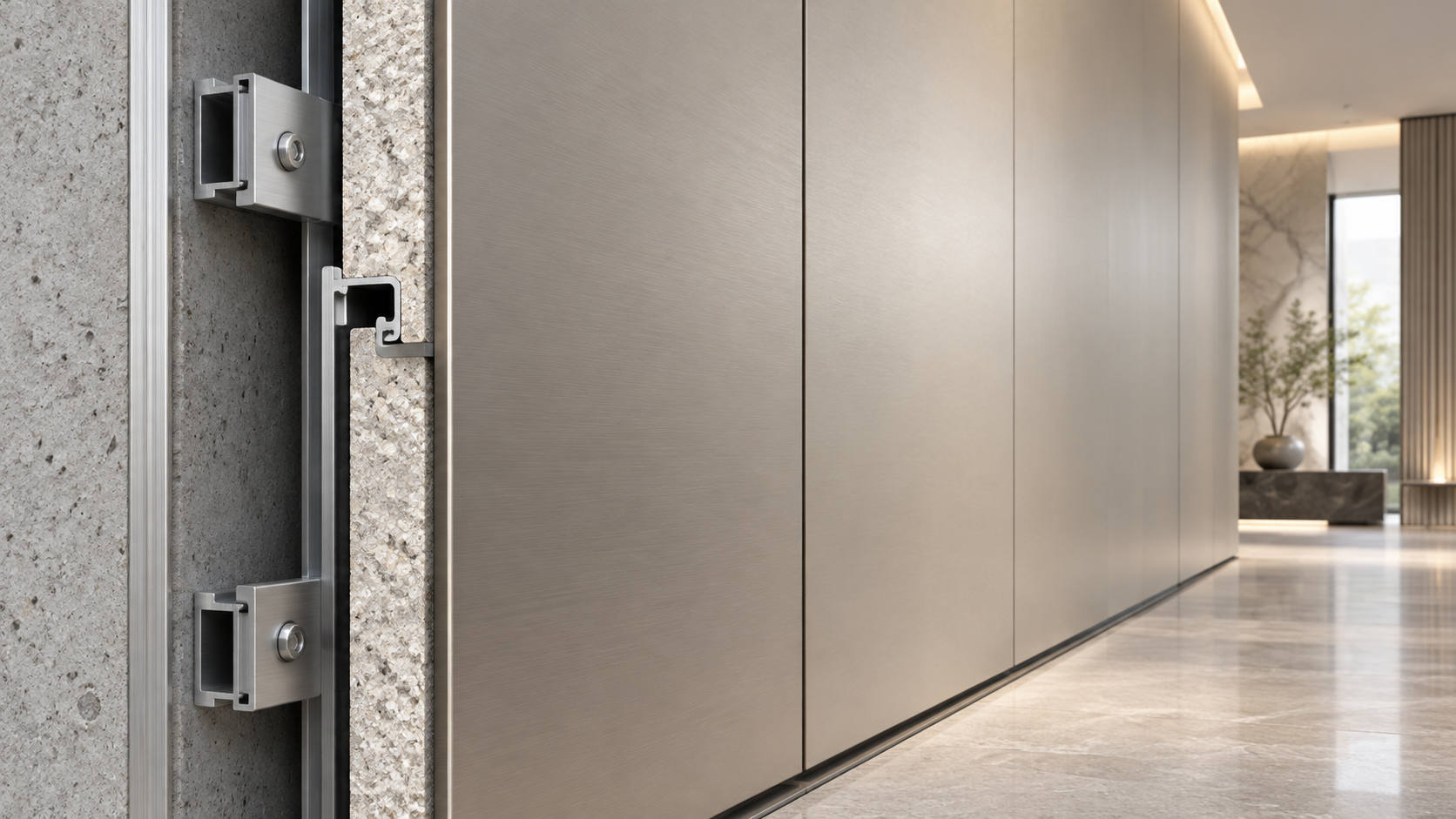
Custom Composite Panel Design: Selecting Skins, Cores, and Fixing Methods
Custom Composite Panel Design guide: choose durable skins, high-performance cores, compatible bonds, and smart fixing methods for safer, longer-lasting decorative panels.
Oct 11, 2026
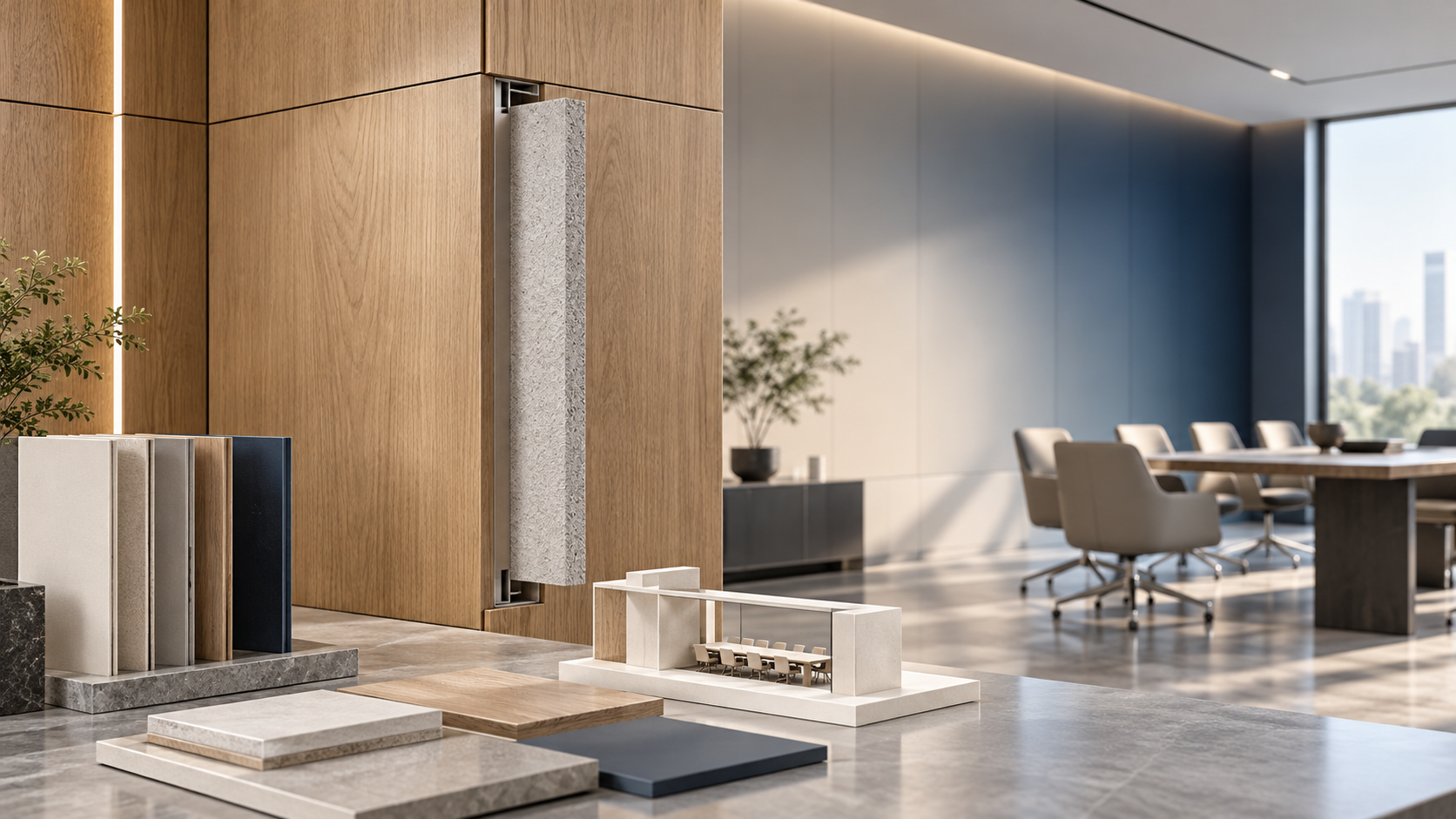
What Decorative Panel Design Services Should Include Before Fabrication Begins
Decorative Panel Design Services help turn concepts into fabrication-ready solutions with material guidance, fire planning, samples, drawings, cost control, and quality checks.