

Is stone-look wall panel color consistent across large-batch orders?
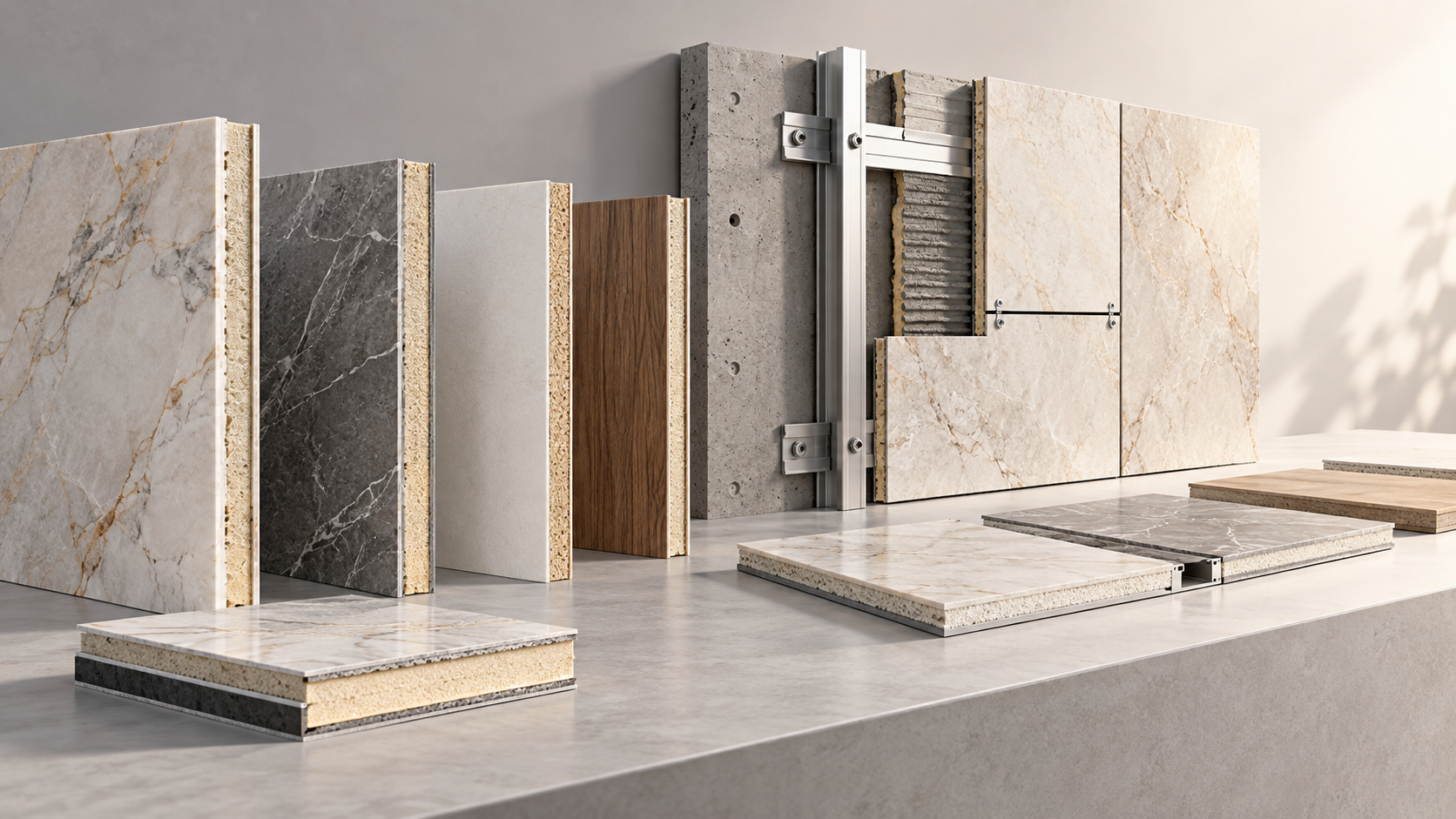
Yes—stone-look wall panel color is consistently maintained across large-batch orders, provided the order is placed under a single production run and follows standardized specification protocols. For architects specifying materials for multi-story lobbies, contractors managing phased commercial builds, or interior designers coordinating wall finishes across contiguous zones, visible color variation between panels shipped in separate containers—or even across different pallets within the same shipment—can compromise visual continuity, delay installation, and trigger rework requests. At Shenyang Shengshi Meilin Technology Co., Ltd., consistency isn’t assumed; it’s engineered into every stage from pigment formulation to final inspection.
Why batch-to-batch color drift happens—and why it doesn’t have to
Color inconsistency in stone-look wall panels most commonly stems from three interrelated variables: raw material variability (especially natural mineral fillers), ambient conditions during extrusion or coating (temperature, humidity, line speed), and manual calibration of digital printing systems. When pigment batches differ slightly in particle size distribution or iron oxide content, or when UV-curing lamps degrade unevenly over time, subtle hue shifts accumulate—not enough to fail tolerance thresholds individually, but enough to become perceptible when panels are installed side by side across large surfaces.
Shenyang Shengshi Meilin addresses this not with post-production sorting, but with upstream control. All stone-look panels use digitally mixed, water-based pigments formulated to ISO 12233:2016 spectral stability standards. Each pigment lot undergoes spectrophotometric verification before release to production. Crucially, panels intended for the same architectural zone are assigned a unified “color batch code” at order entry—triggering coordinated scheduling across mixing, printing, and curing lines to minimize process drift.
What defines “large-batch” in practice—and how it affects color control
“Large-batch” isn’t defined by tonnage or square meters alone. It’s determined by whether the entire order can be produced within one continuous production cycle—typically ≤72 hours—under identical machine settings, ambient monitoring, and operator shift coverage. Orders exceeding this window are automatically segmented into discrete production lots, each receiving its own calibrated reference sample and spectral validation report.
This means: A 5,000 m² order completed in 48 hours qualifies as a single color batch. The same volume spread across three weeks—with two-week gaps between production runs—results in three separate lots, each with documented ΔE* (CIE L*a*b*) deviation from master standard (≤0.8 under D65 lighting, measured per ASTM D2244). Customers receive these reports with shipment documentation—not as marketing collateral, but as traceable quality evidence.
How to specify for guaranteed consistency—before placing the order
Consistency starts with specification clarity—not just aesthetics. To lock in uniformity:
- Reference physical samples—not digital files. RGB or Pantone values don’t translate reliably to mineral-based stone visuals. Request a signed, dated master sample (minimum 300 × 300 mm) cut from actual production stock, not lab-scale mockups.
- Define acceptable tolerance upfront. Specify maximum allowable ΔE* between panels (e.g., ≤1.2 for high-visibility walls; ≤1.8 for textured or heavily veined patterns where human perception is less sensitive).
- Require lot tracking on packing lists. Each pallet should list its production date, line number, and batch ID—enabling cross-reference with spectral reports if variance is suspected onsite.
- Avoid mixing finish types in one order. Matte, honed, and polished variants use different top-coat formulations and curing profiles. Even with identical base color, their light reflectance curves differ—making side-by-side comparison misleading.
On-site verification: What to check—and what to ignore
When panels arrive, inspect under consistent, neutral lighting (preferably daylight-equivalent LED at 5000K, ≥500 lux). Lay out at least six panels from different pallets in a 2 × 3 grid, rotating orientation to simulate real installation. Look for directional variation (e.g., darker edges on all panels from one pallet), not isolated warm/cool shifts—which may indicate lighting artifacts, not pigment drift.
Do not rely on smartphone camera white balance or screen previews. Consumer-grade devices misrender mineral tones due to automatic exposure compensation and limited dynamic range. If doubt persists, use a handheld spectrophotometer (e.g., X-Rite i1Basic Pro 3) to measure L*, a*, b* values directly on panel surfaces. Values differing by more than ±0.5 in L* or ±0.3 in a*/b* across pallets warrant contacting technical support with measurement logs—not subjective descriptions.
When variation is expected—and how to manage it
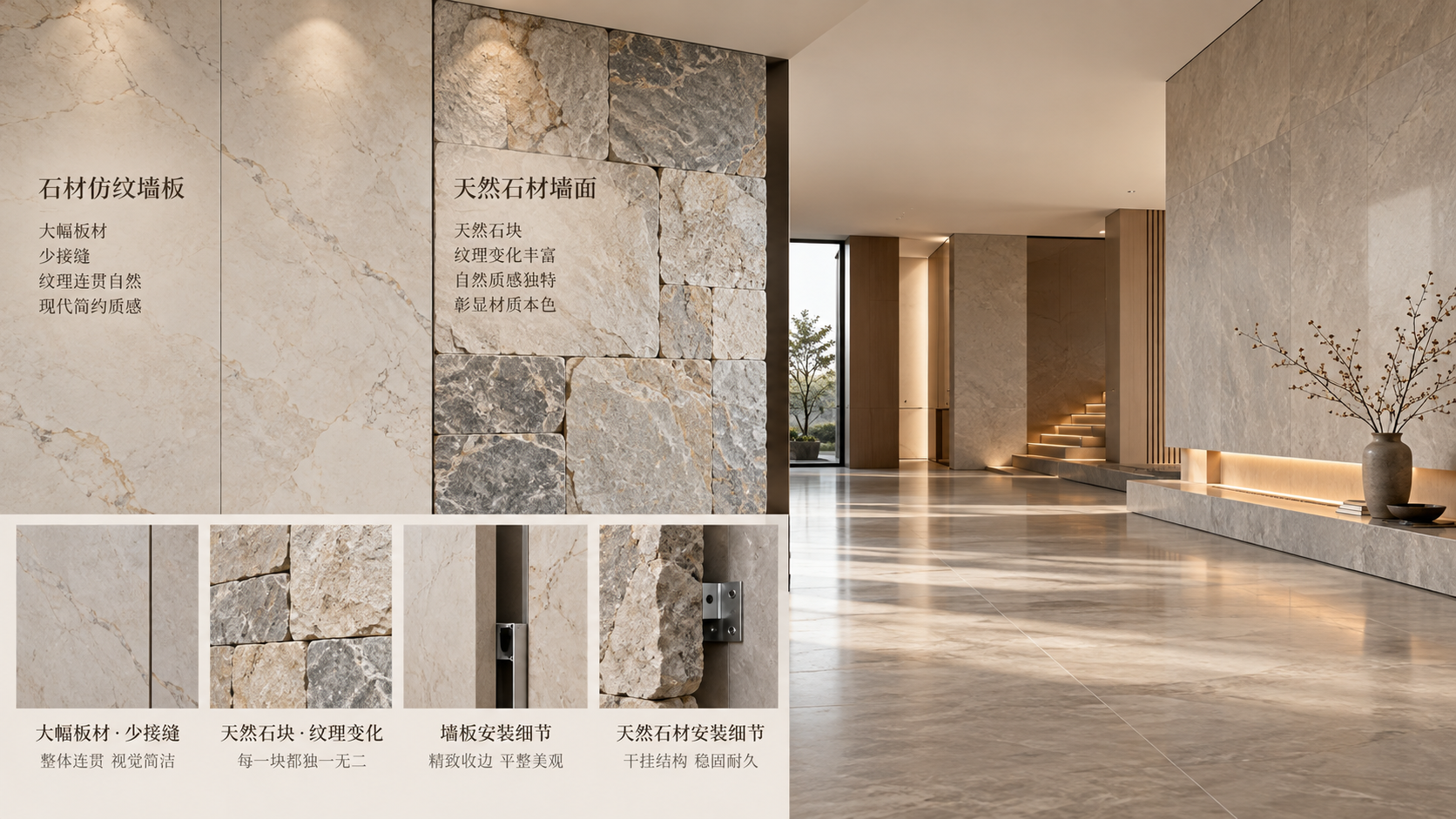
Some variation is inherent—and intentional—in stone-look products designed to emulate natural geology. Veining density, quartz fleck distribution, and subtle tonal gradation across a panel surface are controlled parameters, not defects. What matters is predictability: the degree and direction of variation must repeat across batches. If your project uses multiple batches, request a “variation profile sheet” showing statistical ranges for key visual attributes (e.g., “vein contrast ratio: 1.8–2.3 across 95% of panels”). This allows designers to plan layout sequences that normalize perceived differences—such as staggering panels from alternate pallets in linear runs.
Technical limits—and when to escalate
Color consistency cannot override fundamental material constraints. Panels produced >6 months apart—even under identical specs—may show measurable divergence due to long-term pigment stabilization kinetics and storage-condition effects on substrate porosity. Similarly, orders combining standard thickness (9 mm) with custom thickness (15 mm) require separate tooling setups, introducing unavoidable process-variable offsets. In such cases, Shenyang Shengshi Meilin provides pre-production test samples from each intended lot, allowing validation before full-scale commitment.
If spectral deviation exceeds stated tolerances, or if panels from the same pallet show inconsistent gloss levels or edge discoloration, contact technical support with batch IDs, photos taken under standardized lighting, and—if available—spectrophotometer readings. Resolution involves root-cause analysis of production logs, not replacement based on visual impression alone.
RECOMMEND

Oct 26, 2026
How Do You Choose Fire-Resistant Composite Panels for Commercial Use?
Choose fire resistant composite panels for commercial interior projects. Learn how to verify fire documentation, compare options, and avoid costly specification mistakes.
Oct 26, 2026
Are Meilin Board Custom Panels Suitable for Luxury Hotel Lobbies?
Explore Meilin Board custom decorative panels for luxury hotel lobbies. Discover design considerations and essential fire, emissions, and maintenance checks before specifying your project.
Oct 26, 2026
Stone-Look Wall Panels vs. Natural Stone: Which Costs Less?
Compare stone look wall panels vs natural stone cost, from materials and installation to maintenance. Discover which option delivers better value for your next wall project.
Oct 25, 2026
How Strong Are Meilin Board Aluminum Honeycomb Panels?
Explore aluminum honeycomb panels structural strength with Meilin Board. Learn how thickness, core design, and fixings affect performance to choose panels confidently.