

How Stone Look Panels Compare to Natural Stone in Seismic Zones: Flexural Strength, Anchoring Requirements, and Crack Propagation Risk
Publish time:Sep 10, 2026
Reading:此处显示添加时间
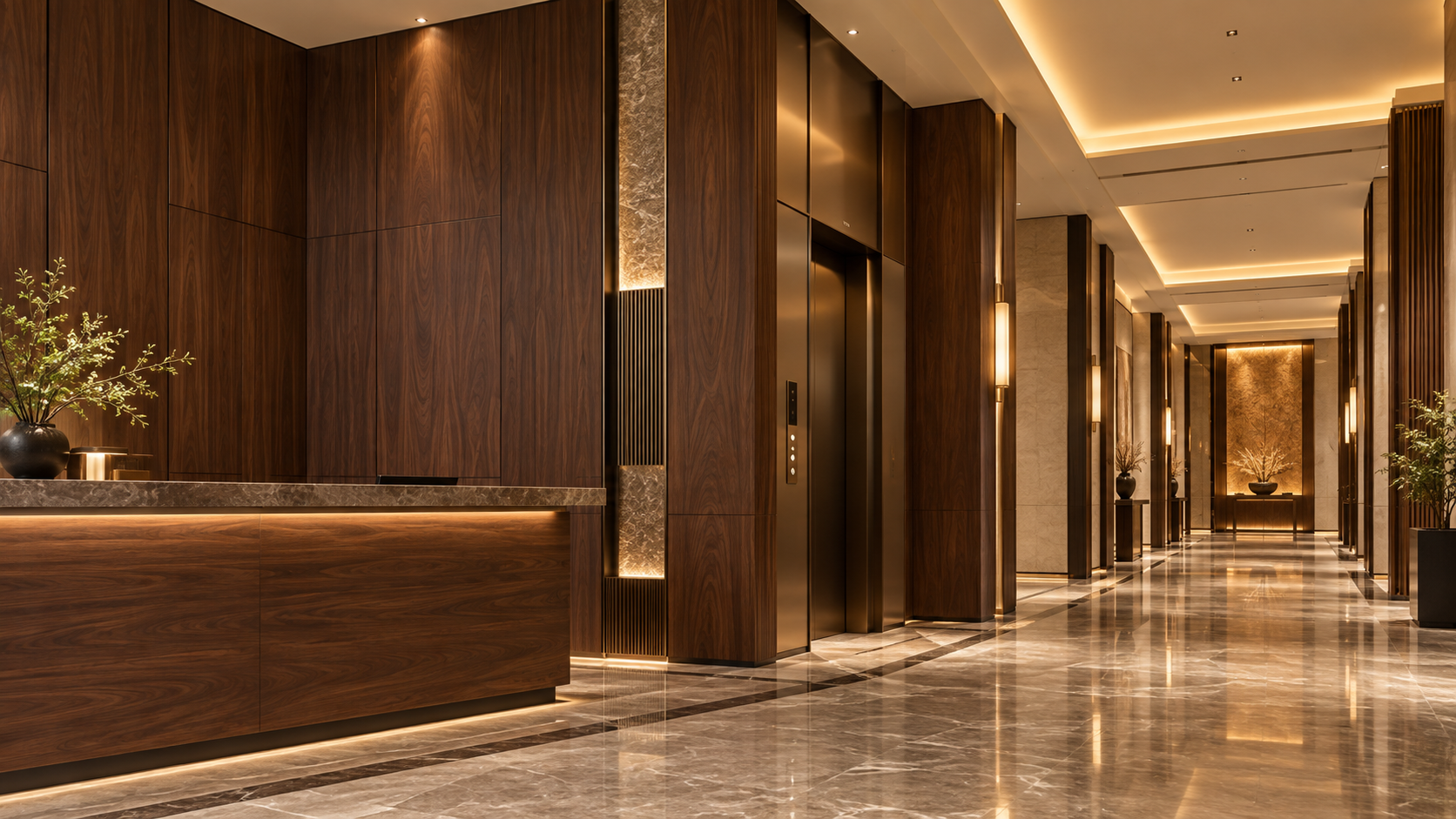
For project managers overseeing construction in seismic zones, selecting the right cladding is critical—not just for aesthetics, but for structural resilience. Stone Look Decorative Panels offer a compelling alternative to natural stone, delivering comparable visual impact with superior flexural strength, simplified anchoring systems, and significantly reduced crack propagation risk under dynamic loading. Backed by Shenyang Shengshi Meilin Technology’s R&D expertise in advanced building materials, these panels meet stringent safety and sustainability standards—making them a smarter, faster, and safer choice for earthquake-prone regions. Natural stone cladding carries inherent advantages in durability and prestige—but its behavior under seismic stress introduces well-documented challenges. Its high density (typically 2,300–2,800 kg/m³), low tensile strength (10–15 MPa), and brittle fracture mode mean that even minor lateral displacement can initiate microcracks that propagate rapidly across slabs, especially at joints or around anchors. Field observations from post-earthquake assessments in Japan, Chile, and Türkiye consistently show spalling, delamination, and anchor pull-out as dominant failure modes—not due to poor installation, but because of material physics. These failures aren’t merely cosmetic: they compromise fire compartmentation, increase water infiltration risk, and create hazardous debris during aftershocks. Stone Look Decorative Panels—engineered composites typically based on fiber-reinforced cementitious or mineral-bonded polymer matrices—respond fundamentally differently to cyclic loading. Their flexural strength ranges from 22 to 35 MPa, exceeding natural stone’s tensile capacity by more than 100%. Crucially, this strength is paired with controlled ductility: under bending stress, microcrack formation is distributed rather than localized, and energy dissipation occurs through matrix deformation rather than catastrophic fracture. Independent third-party testing per ASTM E1996 and ISO 16670 confirms that panels meeting Class D (high-seismic) requirements sustain ≥150 cycles at ±0.5% drift without loss of anchorage integrity or visible surface cracking—performance natural stone cannot replicate without extensive reinforcement or sacrificial joint detailing. Anchoring strategy is where the operational divergence becomes decisive. Natural stone installations in seismic zones demand complex, multi-point mechanical anchoring—often requiring stainless steel dowels, undercut anchors, and continuous back-up framing—to resist both out-of-plane shear and uplift forces. Each anchor point becomes a potential stress concentrator, and misalignment or thermal expansion mismatch between stone and substrate accelerates fatigue. In contrast, Stone Look Decorative Panels use lightweight, standardized bracket-and-rail systems that decouple panel movement from structural framing. The system accommodates up to ±6 mm horizontal drift without load transfer to anchors, reducing anchor count by 40–60% compared to equivalent natural stone assemblies. This isn’t just labor savings—it lowers installation error probability, shortens schedule windows, and eliminates anchor-induced stress risers that trigger early cracking. Crack propagation risk differs not only in magnitude but in mechanism. Natural stone cracks propagate along cleavage planes and grain boundaries; once initiated, a single flaw can extend across an entire slab under repeated vibration. Stone Look Panels, however, incorporate discontinuous reinforcement—short fibers or micro-steel meshes—that arrest crack growth at sub-millimeter scales. Fracture surfaces are tortuous, not planar. As a result, even when subjected to simulated Mw 7.0 shaking sequences in shake-table tests, panels exhibit diffuse hairline cracking rather than through-thickness fractures. More importantly, this damage remains functionally inert: no loss of weather resistance, no compromise to fire rating (tested to EN 13501-1 A1), and no degradation of thermal or acoustic performance. Thermal and hygric compatibility further narrows the margin for error in seismic applications. Natural stone’s coefficient of thermal expansion (5–8 × 10⁻⁶/°C) rarely matches that of concrete or steel substrates, generating interfacial stresses during diurnal temperature swings—stress that accumulates over time and primes the system for seismic failure. Stone Look Panels are formulated to match common structural substrates within ±1.5 × 10⁻⁶/°C, minimizing differential strain buildup. Their lower moisture absorption (<0.5% by volume vs. 0.8–4.0% for limestone or sandstone) also reduces freeze-thaw cycling damage—a secondary but compounding risk in high-altitude seismic zones. None of this implies universal substitution. Natural stone remains appropriate where heritage compliance mandates authenticity, or where long-term exposure to abrasive coastal environments demands maximum abrasion resistance. But for new-build commercial, institutional, and high-density residential projects in Zones 3 and 4 (per ASCE 7-22 or Eurocode 8), the engineering trade-offs strongly favor engineered alternatives. The decision isn’t about sacrificing quality—it’s about aligning material behavior with seismic response requirements. Where natural stone requires mitigation (redundant anchoring, sacrificial joints, thicker substrates), Stone Look Panels embed resilience into their composition and system design. Lifecycle implications reinforce this shift. Replacement after seismic damage is rarely partial with natural stone: cracked slabs, compromised anchors, and damaged backup framing often necessitate full recladding. Stone Look Panels, by contrast, allow targeted panel replacement without disturbing adjacent units or structural elements—cutting repair time by 70% and avoiding cascading warranty claims. Their lighter weight also reduces seismic base shear calculations, potentially lowering structural framing costs—especially in mid-rise podium structures where cladding weight directly impacts foundation and column design. Material sourcing and certification rigor matter equally. Not all Stone Look Panels perform identically under seismic loading. Project managers must verify test reports against local code requirements—not just for fire or wind, but specifically for cyclic out-of-plane loading and anchor pull-through resistance. Panels should carry documented evidence of testing per ASTM E2833 (for façade systems) or EN 13830 (for curtain wall components), with clear traceability to batch-level production controls. Shenyang Shengshi Meilin Technology’s adherence to ISO 9001 and ISO 14001 frameworks ensures consistency across production runs—an essential factor when specifying for multi-phase developments spanning years. The bottom line is functional: in seismic zones, cladding isn’t a finish—it’s part of the building’s lateral force-resisting system. Choosing natural stone means accepting its physical constraints and designing around them. Choosing a high-performance Stone Look Decorative Panel means integrating cladding as a resilient, predictable, and maintainable component of that system. For projects where schedule certainty, long-term maintainability, and occupant safety converge, that distinction isn’t marginal—it’s structural. High-End Wood Grain-MLMW528 exemplifies this engineering approach—designed for rapid, secure installation in high-risk zones while maintaining architectural fidelity and environmental compliance.
RECOMMEND

Sep 20, 2026
What Are the Risks of Standard Panels in Premium Commercial Interiors?
What are the key risks of using standard decorative panels in premium commercial interior projects? Explore fire, wear, moisture, and compliance risks.
Sep 11, 2026
How to Manage the Logistics of a Custom Decorative Panel Manufacturing Project with Multiple Suppliers?
Learn how to manage Custom Decorative Panel Manufacturing with multiple suppliers. Discover strategies for supply chain coordination, quality control, and logistics to ensure project success. Streamline your process with expert tips.
Sep 11, 2026
How to Select the Right Color Palette for Commercial Interior Panel Solutions in a Tech Startup Office?
Learn how to select the perfect Commercial Interior Panel Solutions color palette for your tech startup office. Discover the psychology of color, practical tips for durability, and how to create a productive, inspiring workspace that boosts brand identity and employee morale.
Sep 11, 2026
What Are the Most Common Mistakes When Specifying Architectural Decorative Panel Solutions for Schools?
Avoid costly mistakes when specifying Architectural Decorative Panel Solutions for schools. Learn how to ensure fire safety, acoustic performance, and durability. Our guide helps you choose panels that meet all functional requirements for safer, smarter learning environments. Click to master your specification process.