

How Lightweight Decorative Panels Help Reduce Installation Time and Structural Load
For developers, contractors, and owners under pressure to shorten build cycles without compromising design intent, panel weight has become more than a technical detail. It now affects labor planning, structural design, transport efficiency, safety management, and total installed cost. That is why Lightweight Decorative Panels are drawing attention across commercial interiors, hospitality fit-outs, prefabricated building systems, renovation projects, and selected façade applications.
The value proposition is often described too simply: lighter panels are easier to move and faster to install. That is true, but it only captures part of the decision. In practice, the real business case comes from the interaction between reduced dead load, simplified handling, fewer structural demands, and better predictability on site. For decision-makers evaluating material systems, the question is not whether lighter is always better. The better question is where light weight creates measurable project advantages, and where performance trade-offs need closer review.
Why installation time is becoming a strategic cost factor
In decorative materials, installation speed matters far beyond labor wages. A slower installation sequence can delay follow-on trades, extend equipment rental, increase supervision costs, complicate access planning, and push handover dates. On time-sensitive projects such as hotels, retail chains, office retrofits, transport hubs, and modular construction, these indirect costs can easily exceed the apparent difference in material price.
Traditional heavy finishing materials often require more workers for lifting, more robust substructures, and more frequent use of mechanical assistance. They can also increase breakage risk during handling, especially in confined interior spaces or upper-floor work. Lightweight Decorative Panels reduce friction at several points in the process:
- Panels are easier to carry and position manually.
- Crew fatigue is lower, which supports steadier installation output.
- Fixing systems may be simpler when panel mass is reduced.
- Transport from staging area to final location is faster.
- Site safety improves when fewer heavy lifts are required.
These benefits are particularly important where labor availability is tight. In many markets, finishing trades are under cost pressure and skilled installers are harder to secure than before. Materials that reduce installation complexity can help offset this labor constraint, even if they do not eliminate the need for skilled workmanship.
How lower weight changes structural calculations
The structural impact of decorative materials is often underestimated during early design and budgeting. Dead load affects more than the immediate wall or ceiling assembly. Depending on the application, it can influence framing design, anchoring strategy, suspension systems, seismic behavior, retrofit feasibility, and even transport and storage logistics.
When decorative panels are lighter, the load transferred to the supporting structure is reduced. In new-build projects, this may create opportunities to optimize the support system rather than overdesign it. In renovation and adaptive reuse projects, the effect can be even more important. Existing buildings frequently have load limitations, dimensional irregularities, or legacy structural conditions that make heavy cladding and decorative finishes more difficult to implement economically.
For suspended ceilings, partition systems, column wraps, feature walls, and prefabricated interior modules, a lighter decorative skin can help reduce:
- Demand on hangers, rails, and secondary framing
- Stress on existing substrates in retrofit conditions
- Installation risk in seismic or vibration-prone environments
- Handling damage during vertical transport
This does not mean every lightweight product automatically simplifies engineering. Fire performance, impact resistance, deflection control, and fastening integrity still need validation for the intended application. But from a project management perspective, lower mass often increases design flexibility and reduces constraints that would otherwise appear late in execution.
The time-saving mechanism is not just “lighter equals quicker”
Some buyers assume that panel weight alone determines installation speed. In reality, installation time depends on the full system. A light panel installed with a complicated joint treatment may still be slower than a slightly heavier panel with a well-designed modular fixing method.
Decision-makers should look at four variables together:
- Panel size and rigidity: Larger formats can reduce joint lines and placement time, but only if the panel remains dimensionally stable and easy to align.
- Fixing method: Adhesive, clip-on, mechanical fastening, or hybrid systems all affect labor time differently.
- Cutting and edge finishing: If extensive on-site trimming is needed, time savings may shrink.
- Tolerance management: Lightweight panels can speed work when manufacturing consistency is high, but poor dimensional control creates rework.
This is where panel engineering matters. A well-developed decorative panel system is not only low in weight; it is designed to move efficiently through the installation sequence. Surface finish durability, substrate compatibility, edge integrity, and support spacing all influence whether labor productivity improves in reality or only in product brochures.
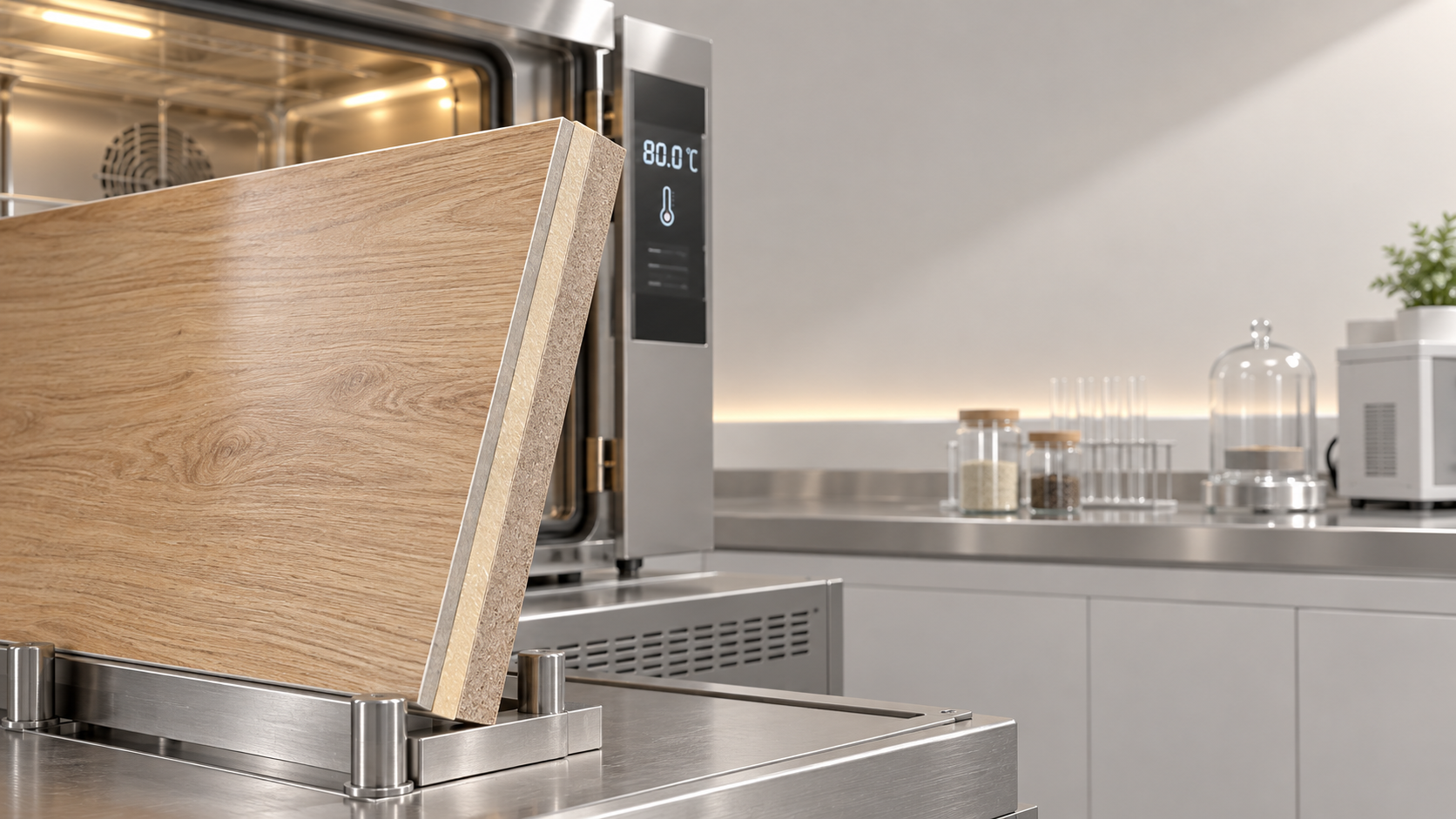
In wood-look decorative applications, for example, products such as High-End Wood Grain-MLMW1411 represent the kind of solution buyers increasingly assess not only for aesthetics, but for whether the panel system supports faster fit-out while maintaining a premium appearance.
Where Lightweight Decorative Panels create the strongest business value
Not every project benefits equally from lightweight systems. The strongest value usually appears in a few recurring scenarios.
Renovation of existing buildings. Older commercial properties often present structural uncertainty, restricted access, occupied environments, and aggressive timelines. Heavy finishing systems increase disruption. Lighter panels are easier to bring through elevators, corridors, and active tenant spaces, and they put less demand on existing structures.
High-rise interior fit-out. Vertical transport is expensive and slow. Every reduction in material weight can improve logistics, especially when multiple floors are being finished simultaneously.
Modular and off-site construction. Factory-built bathroom pods, room modules, wall assemblies, and integrated furniture systems benefit from materials that lower shipping weight and simplify assembly without sacrificing finish quality.
Hospitality and branded commercial chains. Repeatable installation methods and compressed opening schedules make speed a competitive advantage. Lightweight systems can help standardize execution across multiple locations.
Projects with seismic considerations. In some regions, reducing non-structural mass can support better risk management, although project-specific engineering review remains essential.
Common misconceptions that lead to poor selection
One of the most common mistakes is treating lightweight panels as a low-duty decorative category suitable only for budget interiors. That view is outdated. Material innovation has expanded the performance range significantly. Today, lightweight does not automatically mean fragile, temporary, or low-end. Performance depends on composition, surface technology, core structure, installation design, and quality control.
Another common error is focusing only on purchase price per square meter. This approach misses the real cost structure of installed decorative systems. A heavier panel may appear cheaper at procurement stage, yet become more expensive after accounting for freight, breakage, labor intensity, support framing, and schedule impact. Conversely, some lightweight systems underperform if they require excessive accessory costs or specialized labor.
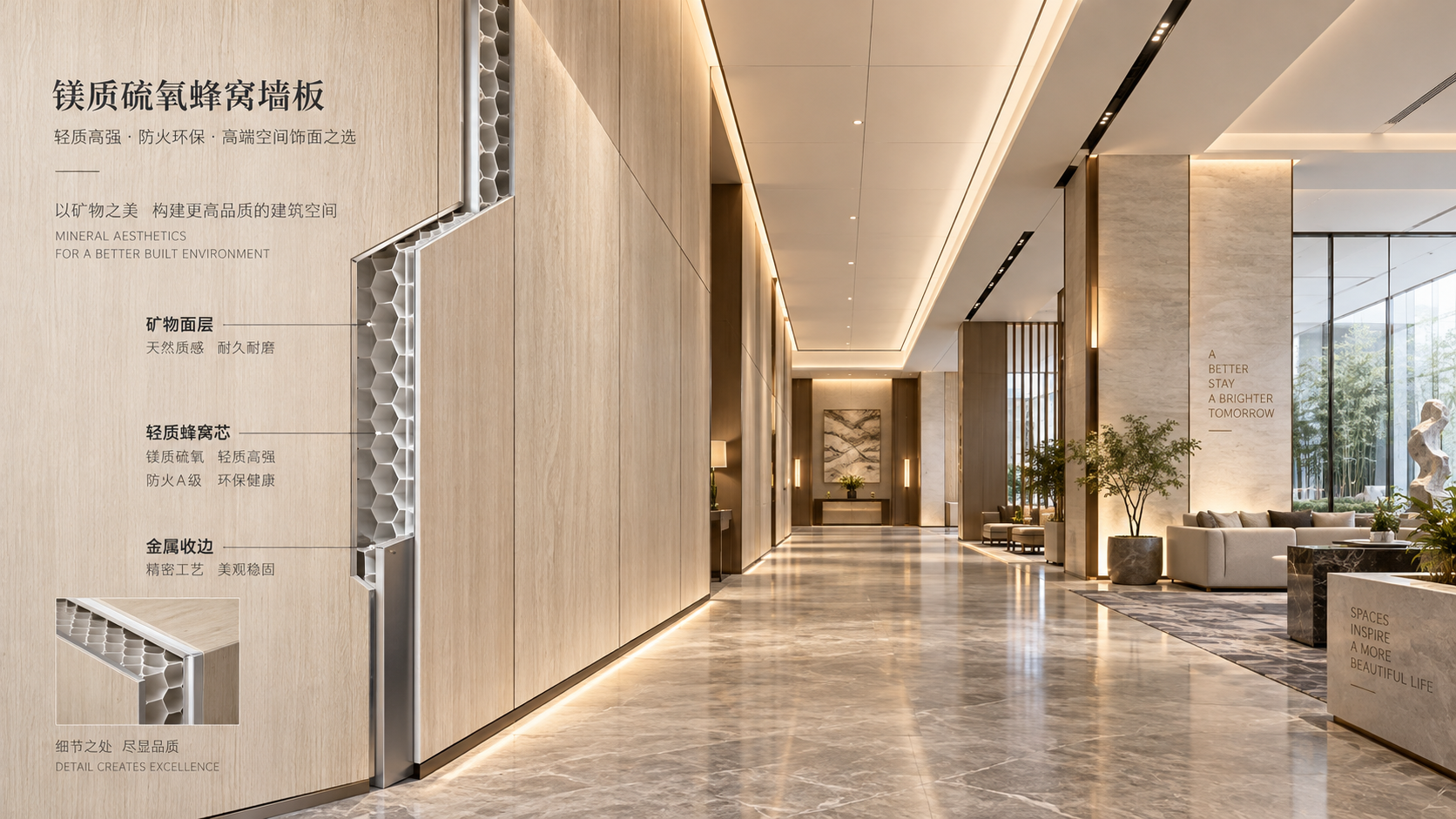
A third misconception is assuming all lightweight panels are interchangeable. They are not. The category includes very different technologies, from mineral-based composite boards to honeycomb structures, foam-core laminates, metal composite panels, engineered wood alternatives, and other hybrid solutions. Their fire behavior, moisture tolerance, impact resistance, repairability, and finish retention can differ sharply.
What enterprise decision-makers should verify before specifying
For management teams, procurement leaders, and project owners, panel selection should be tied to risk reduction, not just material novelty. Several questions deserve early review.
Is the claimed weight reduction meaningful at system level?
A lighter panel does not guarantee a lighter installed assembly if substructure requirements remain heavy. Ask for system weight, not only board weight.
Does the product support local code compliance?
Fire classification, smoke development, VOC performance, and other compliance items vary by market and application. If a supplier references standards, those standards should be verified against project jurisdiction. If certification details are incomplete, treat them as 【待核实】 until documented.
How stable is the surface under real-use conditions?
Decorative surfaces must maintain appearance under cleaning, abrasion, humidity fluctuation, and UV exposure where relevant. A panel that installs quickly but ages poorly creates reputational and maintenance costs.
What is the supply-chain reliability?
Some decorative systems look efficient on paper but depend on long lead times, imported accessories, or limited color matching capacity. For multi-site or export-oriented procurement, consistency matters as much as performance.
How much site skill is still required?
The best lightweight systems simplify installation, but they do not eliminate the need for correct substrate preparation, alignment, expansion allowance, and finishing detail control.
The sustainability argument is real, but should be assessed carefully
Lightweight Decorative Panels are often associated with sustainability, and in many cases there is a legitimate basis for that claim. Lower weight can reduce transportation-related energy use, decrease material input in support structures, and improve retrofit feasibility rather than requiring more invasive rebuilding. Some systems also align with the growing demand for environmentally conscious interior solutions.
Still, sustainability claims should not be accepted at face value. Buyers should distinguish between three different issues:
- Whether the product contains environmentally preferred materials
- Whether the manufacturing process reduces environmental burden
- Whether the installed system improves life-cycle performance
A panel can be lightweight yet difficult to recycle, or low in transport emissions but weak in durability. From a business standpoint, the most credible sustainability advantage usually comes from a combination of long service life, low maintenance burden, efficient logistics, and compliance with indoor environmental expectations.
How the market is evolving
The shift toward lightweight decorative solutions is being driven by several structural changes in the construction and interiors market. Projects are moving faster, labor is less predictable, and clients increasingly expect premium finishes in spaces that must be delivered with industrial efficiency. At the same time, renovation activity is rising in many markets, which favors systems that can adapt to existing buildings with minimal structural penalty.
There is also a visible convergence between decorative performance and engineered assembly logic. Buyers are no longer looking only for an attractive panel surface. They want a finish system that integrates with modern construction methods: prefabrication, dry installation, reduced disruption, cleaner site processes, and easier replacement or upgrade cycles.
Suppliers that understand this shift are positioning products less as isolated materials and more as part of a buildability solution. In that context, solutions such as High-End Wood Grain-MLMW1411 fit into a broader market preference for decorative materials that combine visual quality with installation efficiency and practical project performance.
What matters most in final evaluation
For enterprise decision-makers, the most useful way to assess lightweight panels is not to ask whether they are better than traditional materials in general. The better approach is to test whether they improve the economics and execution of a specific project type.
If the project is constrained by structural load, labor availability, vertical transport, renovation complexity, or handover deadlines, lighter decorative systems may create clear operational value. If the project instead faces high impact exposure, demanding public-safety requirements, or unusually harsh environmental conditions, the selection process should be more performance-led and less weight-led.
The practical conclusion is straightforward. Lightweight Decorative Panels help reduce installation time and structural load when they are chosen as complete systems rather than surface products. Their advantage comes from improving logistics, labor efficiency, and support design simultaneously. For companies balancing speed, design quality, and long-term asset performance, that combination is increasingly relevant—not as a trend slogan, but as a measurable project decision.
RECOMMEND

Oct 13, 2026
Can Stone-Look Decorative Panels Match Natural Stone in Premium Projects?
Can stone look decorative panels really match natural stone in high-end project settings? Explore premium design, fire performance, installation, and specification insights.
Oct 13, 2026
What Fire Rating Should Decorative Wall Panels Meet in Hotel Lobbies?
What fire rating should decorative wall panels meet for high-end hotel lobby applications? Explore Class A, B-s1,d0, system testing, and approval essentials for luxury hospitality interiors.
Oct 12, 2026
Where Magnesium Oxysulfate Honeycomb Panels Fit in Fire-Sensitive Interiors
Magnesium Oxysulfate Honeycomb Panels offer a lightweight, fire-conscious solution for wall cladding, partitions, ceilings, furniture, and refurbishment interiors.
Oct 12, 2026
PUR Laminated Decorative Panels: Bond Strength, VOCs, and Heat Resistance Explained
PUR Laminated Decorative Panels: explore bond strength, VOC control, and heat resistance for furniture and interiors. Learn how to specify durable, low-emission panel systems.