

Composite Wall Panels Selection Guide: Core Materials, Durability, and Cost Trade-Offs
Selecting the right Composite Wall Panels requires balancing core material performance, long-term durability, fire and moisture resistance, and total project cost. For technical evaluators, the most practical approach is to compare panel systems by substrate, face layer, installation environment, maintenance burden, and compliance risk rather than by price alone. This guide explains the trade-offs that matter in real projects and shows how advanced material development can support safer, more sustainable, and visually refined wall systems.
What Technical Evaluators Need to Confirm First
When professionals search for guidance on Composite Wall Panels, they usually are not looking for a broad definition. They want a fast, reliable method to assess whether one panel system will perform better than another.
The core search intent is comparative and decision-oriented. Technical evaluators need to understand how different core materials affect fire behavior, moisture stability, impact resistance, weight, service life, installation constraints, and total ownership cost.
They are also trying to reduce specification risk. A panel that looks competitive in a brochure may fail under real humidity cycles, cleaning exposure, or fire code requirements once it enters an actual building project.
That is why the early screening process should focus on application conditions first. Interior dry spaces, wet zones, public commercial walls, transport hubs, residential upgrades, and high-traffic corridors all impose different performance thresholds.
Why Core Material Selection Matters More Than Surface Appearance
Surface color, texture, and finish usually attract the first attention, but the substrate determines most of the engineering value of Composite Wall Panels. In technical evaluation, the core should always be reviewed before visual treatment.
Different cores create very different structural and environmental behaviors. Even panels with similar finishes can vary significantly in density, thermal movement, edge stability, mechanical strength, and resistance to water penetration or deformation.
For this reason, a technical assessment should separate decorative appeal from performance verification. The correct question is not whether a panel looks premium, but whether the internal construction supports the required service conditions over time.
Comparing Common Core Materials in Composite Wall Panels
Mineral-based cores are typically chosen for stronger fire performance, dimensional stability, and resistance to biological degradation. They can be especially suitable for commercial interiors, public buildings, and applications where non-combustibility is a priority.
Cement-based or inorganic composite cores often provide a balanced profile of rigidity, moisture tolerance, and durability. Their trade-off is usually higher weight, which can influence handling, fastening methods, support requirements, and installation labor.
Polymer or foam-based cores may reduce weight and improve handling efficiency. However, technical evaluators must review flame spread, smoke development, thermal sensitivity, and long-term mechanical behavior under varying site temperatures and load conditions.
Wood-based composite cores can offer cost advantages and machining convenience. Yet they require closer scrutiny in projects where moisture cycling, mold risk, or strict fire regulations could create performance limitations or additional treatment requirements.
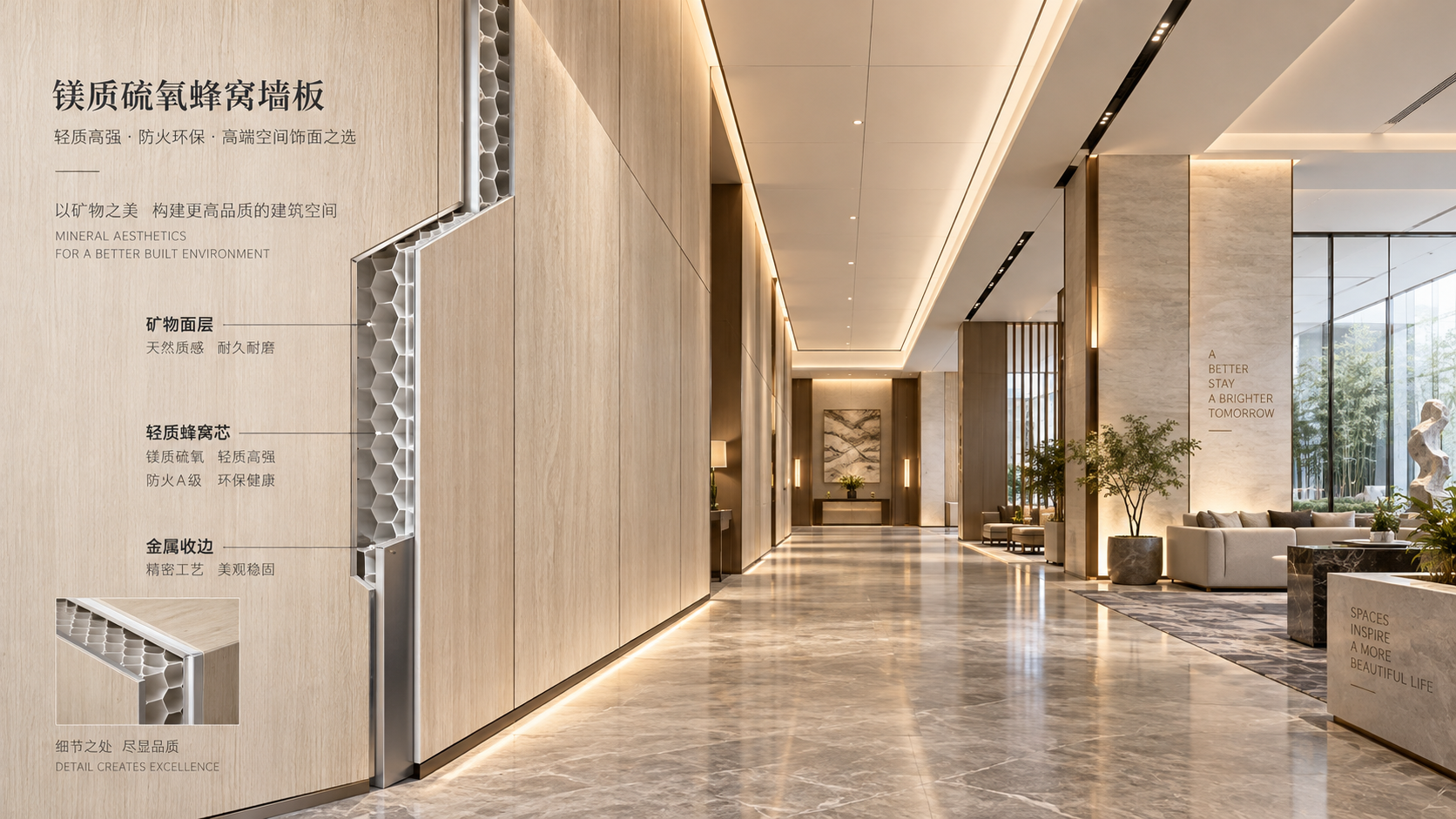
Honeycomb or lightweight engineered cores are sometimes preferred when reducing dead load is essential. These systems can improve logistics and installation speed, but edge integrity, puncture resistance, and substrate compatibility need careful validation.
How to Evaluate Durability Beyond Basic Product Claims
Durability is often described too generally in marketing content. For technical readers, it should be broken into measurable categories such as impact resistance, abrasion resistance, edge stability, stain behavior, moisture movement, and fastening retention.
Impact resistance matters in schools, hospitals, retail spaces, and circulation areas where carts, luggage, furniture, or routine contact can damage weak surfaces. A visually attractive panel loses value quickly if denting or cracking appears early.
Moisture durability should also be tested realistically. It is not enough for a panel to resist occasional splashes. Evaluators should ask how the system behaves under repeated humidity swings, condensation exposure, wet cleaning, or long-term edge contact with moisture.
Dimensional stability is another critical point. Panels that expand, shrink, cup, or delaminate under changing conditions create visible joint problems and premature maintenance costs, even when the original purchase price appears favorable.
For projects with demanding lifecycle expectations, request test data, aging simulations, or installed references in similar environments. Real-world evidence often reveals more than isolated product claims taken out of project context.
Fire, Moisture, and Hygiene Performance Should Be Reviewed Together
Technical evaluators often assess fire resistance and moisture resistance separately, but in many interior wall systems these requirements interact. The most suitable Composite Wall Panels should support both regulatory compliance and practical building operation.
In healthcare, education, hospitality, and public-use projects, cleaning frequency can be intense. The panel surface must tolerate repeated wiping, disinfectants, and wear without degrading finish quality or exposing vulnerable internal layers.
Where fire safety is a primary concern, verify the exact classification standard being referenced. Terms like fireproof or flame retardant are not enough on their own. The rating system, test method, and assembly conditions all matter.
Likewise, moisture claims should be linked to actual construction details. A moisture-resistant face layer may still fail if joints, edges, backing, or adhesive interfaces are poorly matched to the service environment.
Evaluators should review the full wall build-up, including trims, sealants, and connection points. System performance is rarely determined by the panel board alone, especially in demanding interior applications.
Surface Systems Influence Maintenance, Aesthetics, and Lifecycle Cost
The face layer affects more than appearance. It directly influences cleanability, scratch resistance, UV behavior, stain retention, tactile quality, and how consistently the panel system will age after installation.
High-pressure decorative surfaces, coated mineral finishes, laminated skins, and textured architectural faces each offer different benefits. The correct choice depends on whether the project prioritizes design detail, high wear resistance, or easy sanitation.
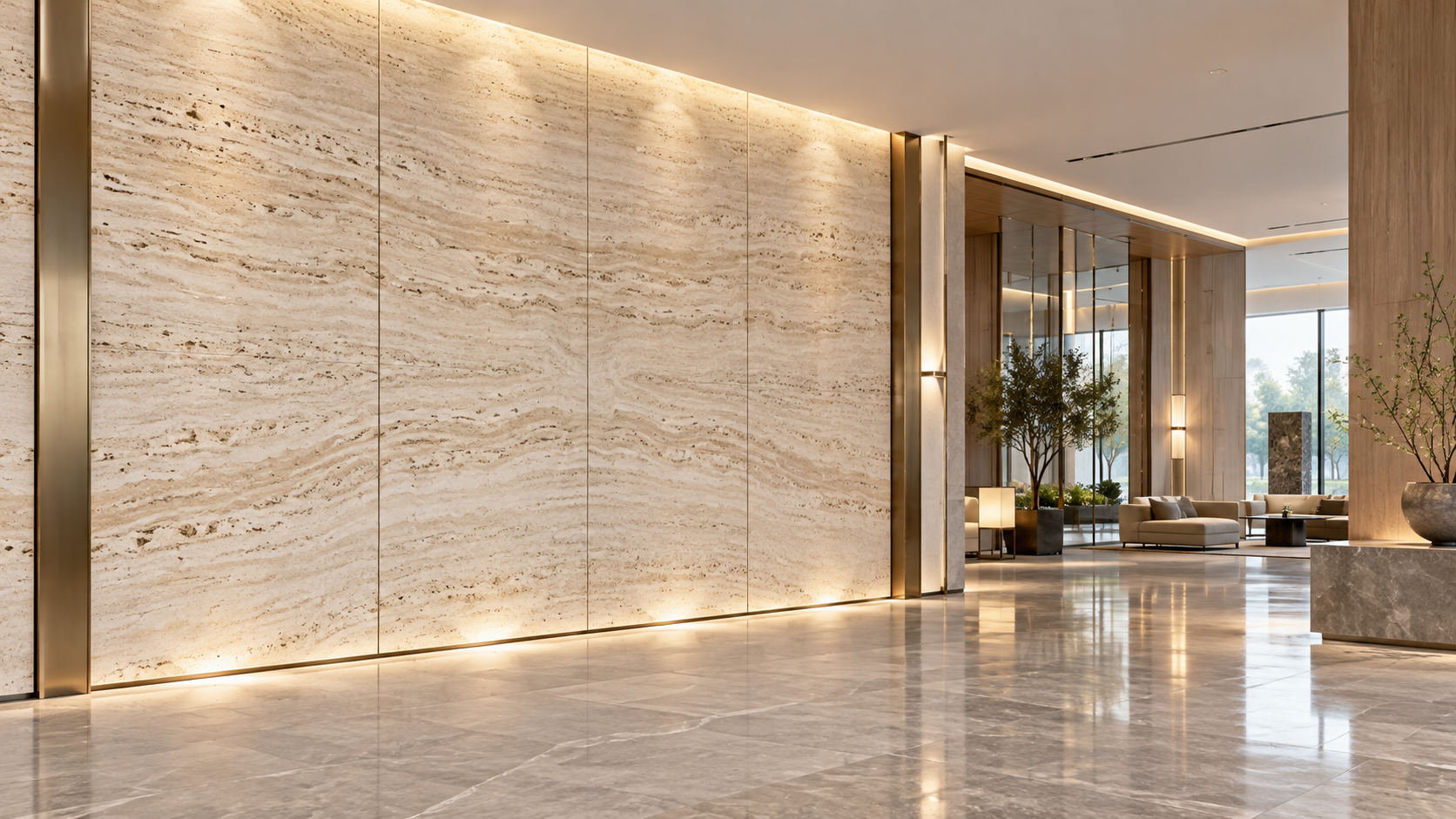
For example, a terrazzo-inspired finish may align well with projects that want a refined mineral appearance with modern wall panel efficiency. In some decorative specifications, Cementterrazzo-Terrazzo-6 may fit visual and functional requirements where surface depth and material character matter.
Still, surface selection should always come back to use conditions. A highly textured finish can look premium, but may collect dirt or complicate cleaning in settings that demand hygiene and frequent maintenance.
Technical evaluators should also confirm color consistency across batches, repairability after local damage, and whether the finish can maintain visual quality under lighting conditions that reveal joint lines or surface irregularities.
Cost Trade-Offs: Why Lowest Purchase Price Rarely Means Lowest Project Cost
One of the most common evaluation mistakes is comparing Composite Wall Panels primarily by unit purchase price. For technical assessment, a more accurate comparison includes transport, installation speed, waste rate, support structure, maintenance, and replacement risk.
Heavier panels may cost more to deliver and install, but they can reduce future maintenance or improve fire confidence. Lighter panels may reduce labor time, yet require stricter substrate conditions or offer lower impact tolerance.
A lower-cost board with weaker moisture resistance may seem efficient at procurement stage, but become expensive if swelling, staining, or edge failure appears after occupancy. Technical evaluators should model lifecycle implications, not only tender values.
Installation complexity also affects cost. Panel systems that require special framing, tight tolerance control, or multiple finishing steps can increase labor exposure and schedule risk even when material pricing looks attractive.
It is often useful to build a comparison matrix covering initial material cost, installation cost, maintenance frequency, expected service life, and probable replacement scenarios. This gives a far more realistic basis for specification decisions.
How to Match Panel Types to Different Application Scenarios
In dry residential or light commercial interiors, visual quality, installation speed, and cost efficiency may lead the decision. In these cases, moderate-duty composite solutions can be appropriate if compliance and stability remain acceptable.
For wet or humidity-prone environments, evaluators should prioritize inorganic or moisture-stable cores, protected edges, and reliable joint detailing. The panel system should be reviewed as a complete assembly rather than a decorative surface alone.
In high-traffic commercial spaces, schools, transport facilities, and institutional corridors, impact resistance and maintainability usually deserve more weight than initial aesthetics. Panels must continue to perform after repeated contact and cleaning cycles.
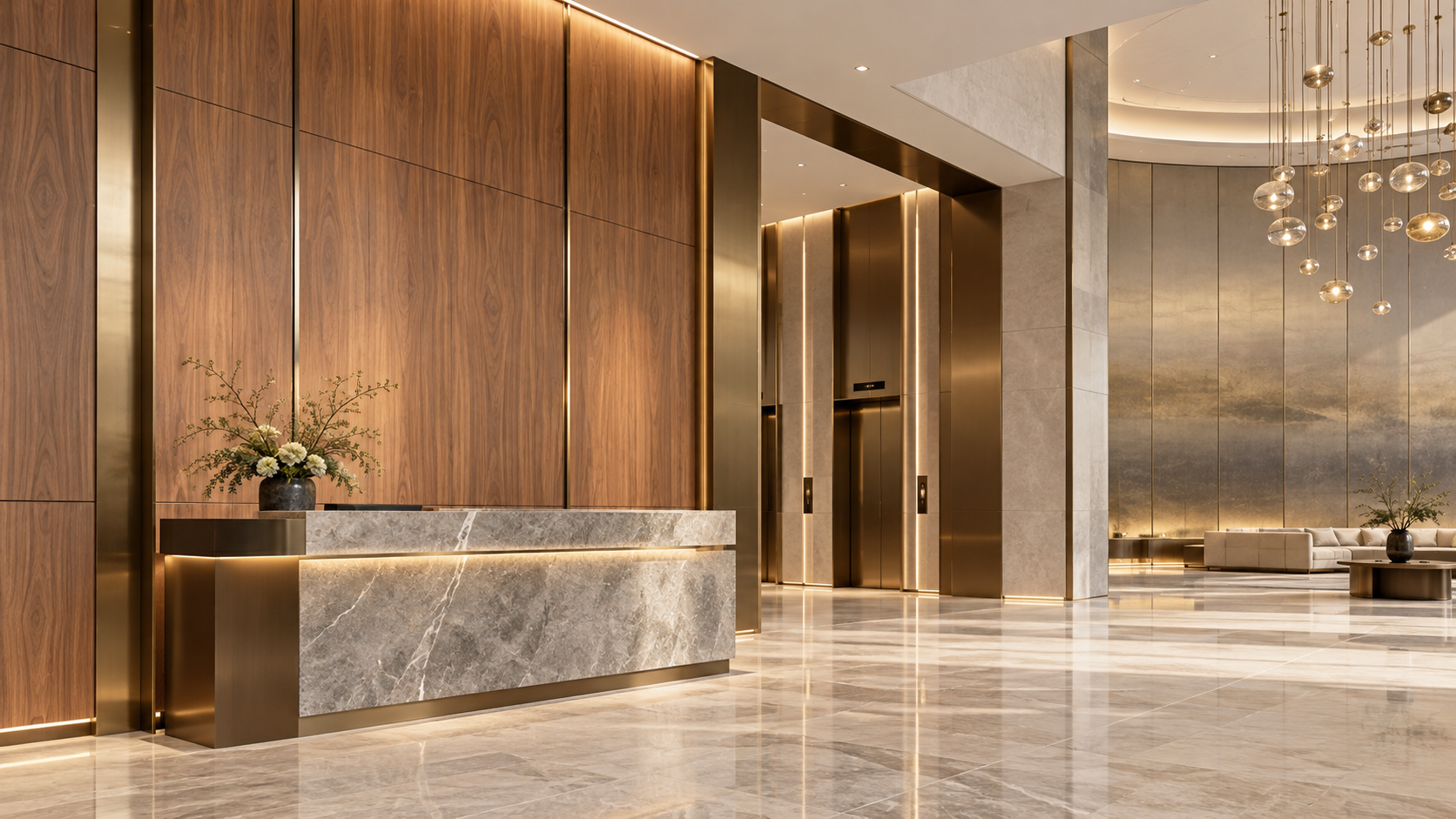
Where design value is central, such as hospitality, showrooms, premium residences, or branded commercial interiors, finish quality becomes more prominent. In that context, products such as Cementterrazzo-Terrazzo-6 may support a more distinctive material expression without abandoning functional evaluation.
For code-sensitive projects, especially public buildings, fire classification and documentation should be treated as gate criteria. Materials that fail the compliance screen should not advance simply because they offer lower cost or faster procurement.
Questions Technical Evaluators Should Ask Suppliers
A strong supplier conversation should move beyond catalogs. Ask for test reports, application limitations, substrate recommendations, cleaning guidance, edge treatment details, and evidence from comparable projects already in service.
It is also important to confirm what is being tested. Some performance values apply only to a standalone board, while actual project compliance may depend on adhesive choice, framing method, joint design, or backing structure.
Request clarity on warranty scope and exclusions. If surface discoloration, moisture exposure, or installation deviation can void support, those conditions should be understood before approval, not after procurement problems emerge.
For long-term value, evaluate the manufacturer’s technical capability as well as the panel itself. Companies with strong material research, process control, and application support are often better positioned to deliver consistent outcomes across projects.
This is especially relevant in markets that increasingly demand environmentally responsible, safe, and design-conscious materials. Suppliers with real innovation capacity can help bridge performance, aesthetics, and sustainability more effectively.
A Practical Decision Framework for Final Selection
To make specification decisions more reliable, start with non-negotiable requirements: fire rating, moisture behavior, compliance needs, and service environment. These factors should narrow the shortlist before cost comparison begins.
Next, compare candidate panels on core composition, face durability, installation complexity, and maintenance exposure. Weight each criterion according to the project type rather than using a generic scoring model for every job.
Then review lifecycle cost, not just procurement cost. A panel that performs consistently for years with limited maintenance can be more economical than a cheaper option that creates repair, replacement, or operational disruptions.
Finally, validate the choice through documents and references. The best Composite Wall Panels are not simply the strongest or the cheapest. They are the systems whose material structure, finish, and support details align with the project’s actual risks and priorities.
Conclusion
For technical evaluators, selecting Composite Wall Panels is fundamentally a trade-off analysis between core material performance, durability, compliance confidence, appearance, and total project cost. The right answer depends on service conditions, not on trend-driven preferences.
Mineral, cement-based, polymer, wood-based, and lightweight engineered cores each offer advantages, but each also introduces limitations that must be tested against real application demands. Surface systems add another layer of value and risk, especially for maintenance and design outcomes.
The most effective evaluation process is structured, evidence-based, and lifecycle-focused. When panel selection is approached this way, it becomes easier to identify solutions that are safe, durable, visually refined, and economically sound over time.
RECOMMEND

Oct 13, 2026
Can Stone-Look Decorative Panels Match Natural Stone in Premium Projects?
Can stone look decorative panels really match natural stone in high-end project settings? Explore premium design, fire performance, installation, and specification insights.
Oct 13, 2026
What Fire Rating Should Decorative Wall Panels Meet in Hotel Lobbies?
What fire rating should decorative wall panels meet for high-end hotel lobby applications? Explore Class A, B-s1,d0, system testing, and approval essentials for luxury hospitality interiors.
Oct 12, 2026
Where Magnesium Oxysulfate Honeycomb Panels Fit in Fire-Sensitive Interiors
Magnesium Oxysulfate Honeycomb Panels offer a lightweight, fire-conscious solution for wall cladding, partitions, ceilings, furniture, and refurbishment interiors.
Oct 12, 2026
PUR Laminated Decorative Panels: Bond Strength, VOCs, and Heat Resistance Explained
PUR Laminated Decorative Panels: explore bond strength, VOC control, and heat resistance for furniture and interiors. Learn how to specify durable, low-emission panel systems.