

Can Shengshi Meilin Meet Custom Panel Needs for Hotel Projects?
A hotel interior is rarely a single-material decision. A lobby may need a dramatic stone-like wall finish that still allows access to concealed services. Guest-room corridors require panels that remain presentable after years of luggage impacts and frequent cleaning. Restaurant areas ask for a warmer, more residential feeling, while back-of-house zones often prioritize safety, maintenance, and installation efficiency.
That is why architects, hotel owners, fit-out contractors, and procurement teams often ask whether a supplier can do more than provide a standard decorative board. They need to know whether the material partner can interpret drawings, respond to a design concept, coordinate practical details, and produce panels suitable for the realities of hospitality construction.
The Shengshi Meilin custom decorative panel capability for hotel projects is built around this broader need. As a Shenyang-based high-tech enterprise focused on new material technologies, Shenyang Shengshi Meilin Technology Co., Ltd. develops and applies materials for construction and furnishing environments, including fireproof sealing materials, furniture-related products, and decorative solutions. Its stated focus on innovation, quality, and service provides a useful foundation for hotel projects where visual character must work alongside safety, environmental considerations, and project coordination.
Custom hotel panels are not simply “made-to-size” boards
In hospitality work, customization has several layers. A panel cut to a particular width is one basic requirement, but it is only the beginning. Real custom panel work may involve selecting a surface appearance, determining the panel core or substrate approach, defining edge treatment, coordinating joint lines, adjusting dimensions for site conditions, and considering how the finished surface will perform in a specific hotel zone.
For example, the same wood-grain visual language may be used in a guest room, corridor, reception area, and executive lounge. Yet each location has different demands. The guest-room headboard wall may need a refined, calm finish with carefully aligned openings for lighting and power. A corridor wall may need a more impact-conscious configuration. In a busy lobby, panel modules may need to coordinate with stone, metal, glass, lighting reveals, or feature ceilings.
A meaningful custom decorative panel program therefore begins with questions rather than a catalogue page:
- What atmosphere should guests feel when they enter the space?
- Which surfaces will receive frequent contact, cleaning, or accidental impact?
- Are there fire-performance or sealing requirements related to the construction assembly?
- Will panels integrate with doors, cabinetry, skirting, columns, service access, or signage?
- How consistent must color, grain direction, gloss level, and joint spacing remain across multiple floors?
- What environmental expectations are set by the hotel brand, owner, or local project requirements?
Shengshi Meilin is positioned to support this kind of material conversation because its business spans new material applications and furnishing-related solutions rather than treating decoration as an isolated surface choice. For project teams, that can be valuable when decorative panels must coexist with fireproof sealing elements, fitted furniture, and architectural finishing systems.
Where tailored decorative panels can make the greatest difference
Hotel design is full of repeated spaces, but repetition does not mean simplicity. In fact, a hotel’s repeated floors are where small inconsistencies become very visible. Uneven tone between batches, poorly planned joints, mismatched trims, or panels that do not align with door frames can weaken the sense of order guests may not consciously describe but will still notice.
Guest rooms: a controlled, comfortable backdrop
Guest rooms often call for decorative panels around headboards, entry vestibules, wardrobes, TV walls, and mini-bar units. Here, customization tends to focus on proportion and integration. The panel must sit comfortably with furniture dimensions, bedside lighting, switches, ventilation grilles, and sometimes concealed access panels. A decorative finish that looks attractive on a sample board can feel busy or heavy when repeated in hundreds of rooms, so scale and tone need careful review.
A supplier’s custom capability matters when the project team needs panels adapted to room typologies rather than forcing a single standard board into every location. This may include coordinated sizing, specified decorative patterns, edge details, and finish selection that supports the room’s intended atmosphere.
Corridors: durability without a utilitarian appearance
Hotel corridors are demanding places. Housekeeping carts, wheeled luggage, maintenance work, and constant guest circulation all place pressure on wall finishes. At the same time, corridors are part of the brand experience: they should not look like an afterthought between the lift and the room.
Custom decorative panels can help create a more composed corridor scheme by coordinating wall sections, room-entry areas, corner conditions, and decorative bands. The key is to assess the expected use honestly. A beautiful finish should be paired with appropriate detailing, substrate selection, edge protection, and maintenance planning. No panel material is immune to damage in every condition; the better question is whether the selected system is sensible for its location and can be maintained without disrupting hotel operations.
Lobbies and public zones: material identity at a larger scale
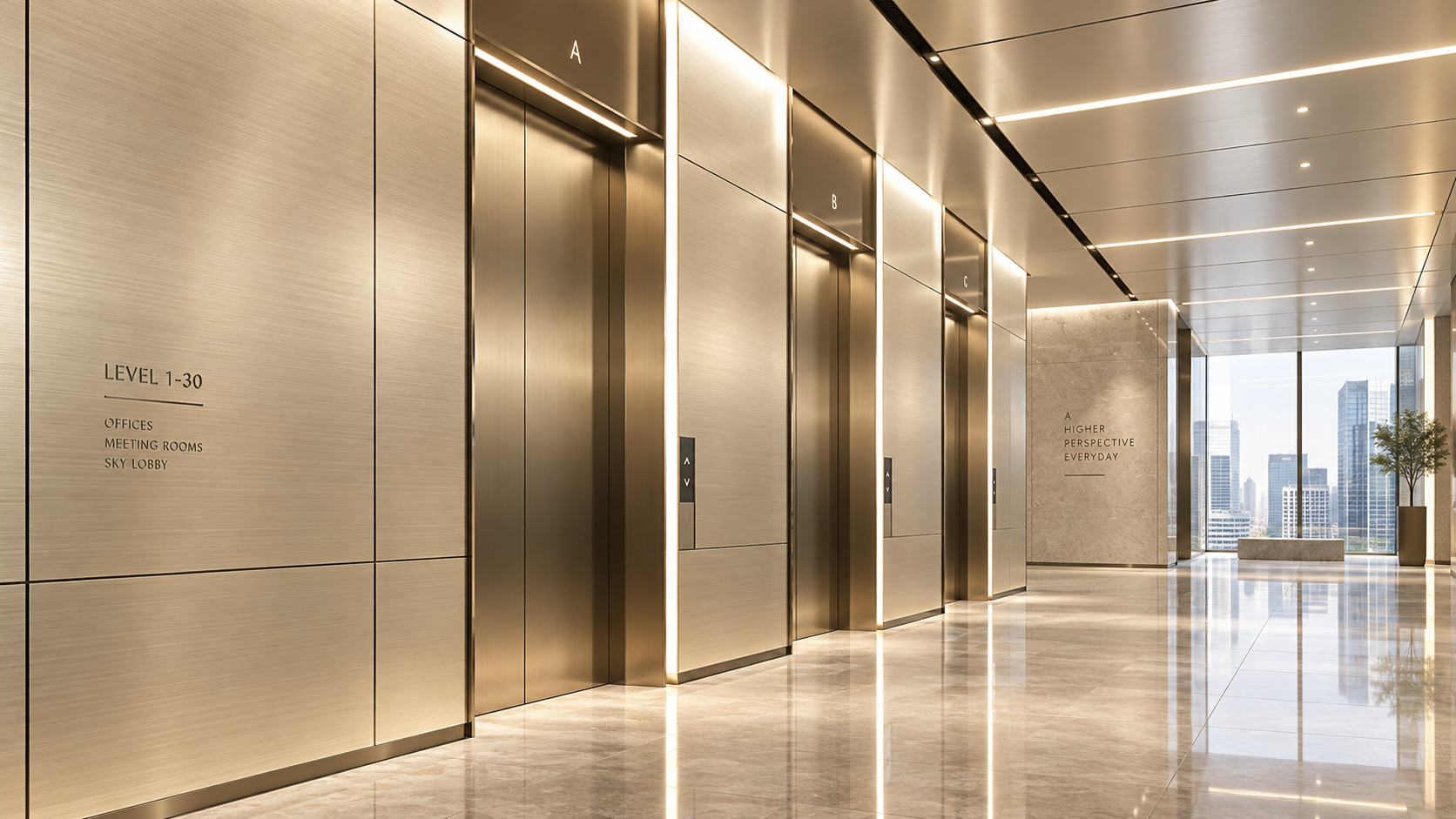
Public areas often carry the strongest design ambition. A hotel lobby may use panels to frame a reception desk, create vertical rhythm on tall walls, soften acoustically active spaces, or provide contrast against hard materials such as stone and metal. In these areas, the custom requirement may include oversized formats, special alignment, feature grooves, combinations of finishes, or coordination with bespoke furniture.
Shengshi Meilin’s materials-to-furnishings scope can be relevant in such settings because public-area design is rarely divided cleanly between “wall finish” and “furniture.” A panel behind a reception desk may visually continue into joinery; a lounge feature wall may connect with shelving, partitions, or integrated seating. Early material coordination reduces the risk of a fragmented result.
Restaurants, meeting rooms, and lounges: mood needs technical discipline
Hospitality venues often seek richer colors, softer textures, or distinctive decorative patterns in dining and event spaces. These are the rooms where designers may want a signature look, but they are also spaces affected by food service, cleaning routines, changing layouts, and varying levels of traffic.
The right custom panel solution should consider not only the visual direction but also the expected cleaning method, exposure to moisture or spills, interface with lighting, and service access needs. If a panel will sit near a buffet, beverage station, or meeting-room storage wall, the operational team should have a voice in the selection process. A finish is successful when it continues to look intentional after real use, not just on opening day.
How Shengshi Meilin can support a hotel panel brief
Based on its focus on research, development, and application of new material technologies, Shengshi Meilin can be considered a potential partner for projects seeking customized decorative material solutions rather than only off-the-shelf boards. The practical value lies in the ability to discuss a project as a system of visual, construction, safety, and furnishing requirements.
For a hotel project, the collaboration should normally move through several connected stages:
- Design intent review. The team clarifies the desired appearance, reference samples, color direction, panel layout, and intended application areas.
- Technical requirement mapping. The project identifies relevant needs for fire safety, sealing interfaces, environmental expectations, substrate conditions, installation method, and maintenance.
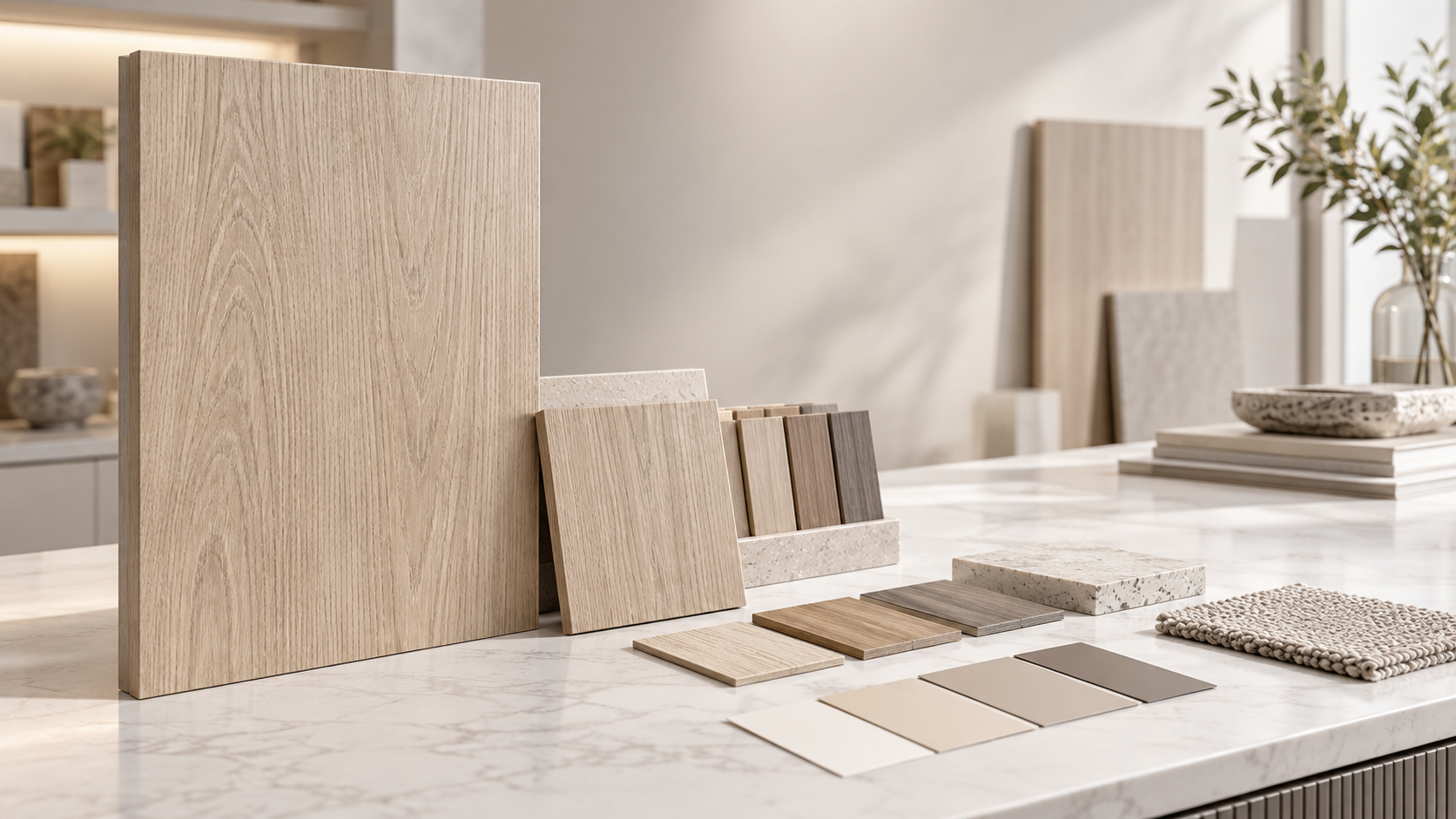
- Sample and detail confirmation. Finish samples should be reviewed under representative lighting. Where possible, a larger mock-up or a typical room-area sample can reveal issues that small swatches hide.
- Dimension and module coordination. Panel sizes, joints, cut-outs, returns, and interfaces with furniture or other finishes are reviewed against drawings and site tolerances.
- Production and delivery planning. For multi-floor hotel work, batch consistency, packaging, labeling, sequencing, and site storage all influence the final result.
This process is especially important because “custom” can mean different things to different parties. A designer may mean a particular texture and layout. A contractor may mean precise cutting and clear installation logic. An owner may mean a finish that supports a distinctive brand experience without creating unnecessary maintenance exposure. A capable supplier needs to make these expectations visible early.
Fire safety and environmental considerations should enter the discussion early
Hotel projects are subject to strict considerations around occupant safety, and interior finish choices cannot be separated from the wider building assembly. Shengshi Meilin’s involvement in fireproof sealing materials is relevant here: fire-stopping and sealing requirements often arise where services penetrate walls, floors, and partitions, including behind decorative finishes and fitted elements.
That does not mean every decorative panel is itself a fireproof sealing product, nor should project teams assume performance without reviewing the applicable product documentation and local regulations. Instead, the benefit is a more informed conversation about how decorative materials and fire-related construction details may need to coexist. Architects and contractors should confirm the required fire classifications, assembly conditions, test standards, and approval procedures for the project’s location.
Environmental performance also deserves a practical approach. Hotel owners and international brands may look closely at indoor material choices, odor, emissions-related requirements, responsible sourcing expectations, and the service life of finishes. Shengshi Meilin’s commitment to environmentally friendly, safe, and aesthetically pleasing construction and home-furnishing solutions aligns with these concerns. Still, the project team should define exactly what evidence is needed—such as applicable test reports, declarations, or material documentation—before final specification.
Questions worth asking before appointing a panel supplier
A hotel project often loses time when the material selection is treated as complete before the details have been resolved. To evaluate the Shengshi Meilin custom decorative panel capability for hotel projects, or that of any proposed supplier, procurement teams can use a focused set of questions:
- Which finish options are suitable for our specific applications: guest rooms, corridors, wet-adjacent areas, or public spaces?
- Can the panel design be coordinated with furniture, doors, metal trims, and service access points?
- What are the feasible panel dimensions and edge-processing options?
- How will finish consistency be managed across production batches?
- What documentation can be provided for the required safety and environmental criteria?
- What site information is needed before production begins?
- How should the panels be stored, installed, cleaned, and repaired?
- Who is responsible for approving samples, shop drawings, mock-ups, and final color standards?
These questions are not obstacles to creativity. They are what allow a creative interior concept to survive procurement, construction, handover, and daily hotel operations.
A balanced answer: capability depends on early coordination
Can Shengshi Meilin meet custom panel needs for hotel projects? For projects looking for a supplier with a broad new-material focus, decorative and furnishing relevance, and awareness of fireproof sealing applications, the company offers a credible starting point for custom discussions. Its business orientation supports the kind of cross-functional thinking hotel interiors often require: aesthetics should be considered alongside material suitability, safety, environmental goals, and construction detail.
However, the final fit should always be confirmed against the actual project brief. Hotel developments differ widely in brand standards, location-specific codes, finish expectations, timeline pressure, and installation conditions. The strongest outcome will come from providing Shengshi Meilin with clear drawings, material references, performance requirements, sample approval criteria, and a realistic production schedule.
When custom decorative panels are planned this way, they become more than a surface covering. They help create the quiet consistency of a guest room, the resilience of a busy corridor, and the memorable first impression of a lobby—while supporting a hotel environment that is designed not just to open beautifully, but to operate well over time.
Next:No more content
RECOMMEND

Oct 07, 2026
Can Shengshi Meilin Meet Custom Panel Needs for Hotel Projects?
Explore Shengshi Meilin custom decorative panel capability for hotel projects, from tailored finishes and coordinated details to safety-focused, durable hospitality interiors.

Oct 06, 2026
Are Magnesium Oxysulfate Composite Boards Safe for Enclosed Commercial Spaces?
Are magnesium oxysulfate composite boards safe for enclosed commercial spaces with ventilation concerns? Explore VOC, moisture, fire, and installation checks for safer specifications.
Oct 05, 2026
How Long Does Custom Panel Prototyping Take to Reach Sample Approval?
How long does custom decorative panel prototyping usually take from submission to sample approval? Explore key timeline factors and speed approval with expert planning.
Oct 04, 2026
Are Aluminum Honeycomb Panels Suitable for High-Rise Interiors?
Aluminum honeycomb composite panels for high-rise interiors offer lightweight strength, flatness, and design flexibility. Explore fire, installation, and specification insights.