Are Crystal Stone Panels Suitable for High-Traffic Areas
When choosing wall and surface materials for busy interiors, many buyers ask whether crystal stone panels are suitable for high-traffic commercial areas. The short answer is: sometimes yes, but not by default. Their performance depends less on the visual finish and more on where they are installed, how the substrate is prepared, what impact and cleaning loads they will face, and whether the specified product has been tested for fire, wear, and dimensional stability.
That distinction matters. In commercial projects, decorative materials often get selected on showroom appearance, then fail in service because the real operating environment was underestimated. A hotel corridor, a retail cashier zone, an elevator lobby, and an airport restroom wall may all be called “high traffic,” but they create very different risks. Scuffing, luggage impact, cleaning chemicals, moisture, and fire code compliance do not affect every panel system in the same way.
For procurement teams, designers, contractors, and overseas buyers evaluating decorative wall systems, the more useful question is not simply are crystal stone panels suitable for high traffic commercial areas, but under what conditions they are a sound specification and when another material is a safer choice.
What buyers usually mean by crystal stone panels
In practice, “crystal stone panels” can refer to decorative panels designed to replicate the look of natural stone while offering a lighter structure, easier fabrication, or faster installation. Depending on the manufacturer, the panel may combine mineral fillers, polymer components, surface coatings, and backing layers. Because the category is not always standardized in the same way as ceramic tile or natural stone slab, buyers should be careful not to assume identical performance across suppliers.
This is one of the first procurement risks in export and cross-border sourcing: two products may look nearly the same in sample boards but behave very differently after installation. Surface hardness, scratch resistance, UV stability, impact tolerance, edge performance, and fire behavior can vary significantly depending on formulation and manufacturing control.
That is why any evaluation for commercial use has to move beyond appearance and into application-specific performance.
The real decision point: wall use, not universal use
Crystal stone panels are generally more promising for high-traffic wall applications than for heavy-duty floor applications. This is the first filter decision-makers should make.
In vertical surfaces such as hotel lobbies, office reception walls, restaurant feature walls, corridor cladding, restroom partitions, or retail display zones, a well-made crystal stone panel may offer a good balance of aesthetics, installation speed, and manageable maintenance. In these cases, direct abrasion is limited, and the key risks are impact, scratching from bags or carts, delamination, staining, and cleaning durability.
For flooring or low-level wall areas exposed to repeated trolley contact, shopping carts, rolling luggage, or frequent collision, the material must be evaluated much more conservatively. A decorative panel that performs well above waist height may not remain attractive near corners, skirting zones, or service corridors.
So the material can be suitable for high-traffic commercial areas, but usually as part of a controlled wall-surface strategy rather than a universal solution across all contact zones.
Where crystal stone panels tend to perform well
There are several commercial scenarios where these panels may be a rational choice.
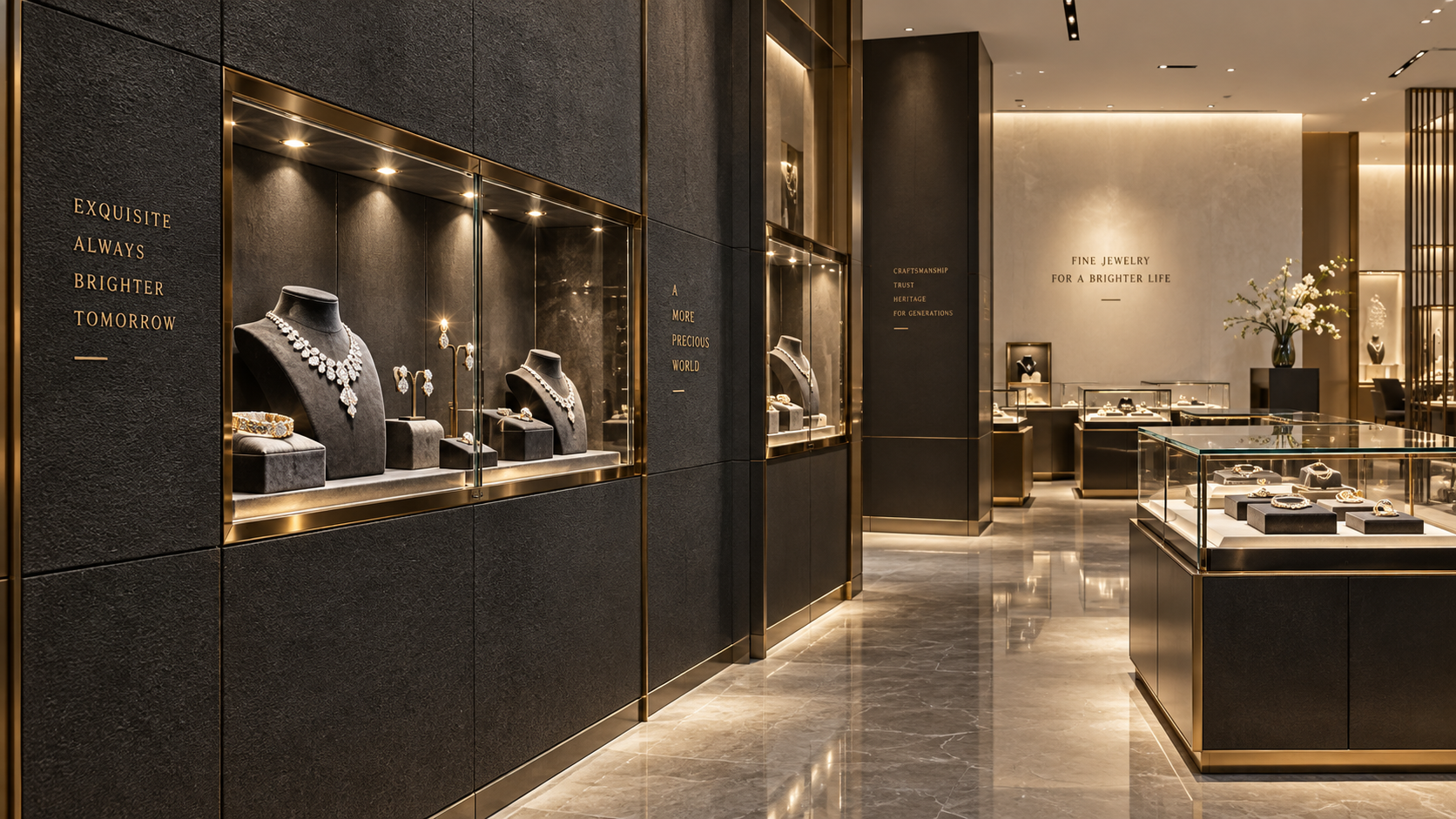
Retail interiors. In fashion stores, cosmetics shops, telecom outlets, and branded display environments, visual consistency matters and renovation cycles are relatively short. Lightweight decorative panels can reduce installation complexity and support faster fit-out compared with heavier stone systems.
Hospitality spaces. Lobby walls, guest corridor feature areas, bar backdrops, and decorative restroom walls often prioritize upscale appearance with moderate touch exposure. If the panel has good stain resistance and cleaning compatibility, it can fit well here.
Office and commercial reception areas. Modern office projects often need stone-like finishes without the cost, structural load, or installation burden of natural stone. In these spaces, panels may be suitable where traffic is high but direct physical abuse is not extreme.
Public interior renovations. In some renovation projects, substrate limitations or schedule constraints make thin decorative panels attractive. If the existing wall cannot easily support heavier cladding, a lighter system may create practical value.
In all of these cases, suitability improves when the panel is used above impact-prone zones or combined with protective details such as corner guards, skirting systems, or harder base materials at lower levels.
Where caution is necessary
There are also environments where “stone-look” should not be confused with “stone-grade durability.”
Transport hubs and healthcare corridors. Airports, stations, and hospitals generate constant movement of carts, wheelchairs, stretchers, and luggage. The issue is not only traffic volume but repeated impact at predictable heights. Decorative panels without strong impact resistance or easy repairability may deteriorate quickly.
Foodservice back-of-house areas. Cleaning chemicals, grease, steam, and hard contact from equipment create a more severe environment than customer-facing dining areas.
School interiors and public institutions. Surface abuse can be more random and severe than in premium retail or office environments. Durability at edges, joints, and corners becomes critical.
Exterior-facing zones with high UV exposure. If the product is intended only for interior use, placing it near large sun-exposed glazing without verifying UV stability can lead to discoloration or surface aging over time.
Areas with strict code requirements. Fire performance and smoke characteristics must match the jurisdiction and occupancy type. A decorative material that is acceptable in one market may require different documentation in another.
The five checks that matter before specifying
For buyers and project teams, the most reliable way to judge suitability is to evaluate five practical dimensions.
1. Surface durability under real contact conditions
Ask what kind of wear the panel will actually face. Is the risk mainly hand contact and routine cleaning, or repeated abrasion from bags, carts, cleaning machines, and maintenance equipment? Scratch resistance alone is not enough. Edge chipping, denting, surface gloss change, and localized repair difficulty are often more relevant in commercial settings.
Sample boards viewed in offices rarely reveal this. Large-format mock-ups installed in a realistic environment are far more informative.
2. Fire performance and compliance documentation
This is non-negotiable in many commercial projects. Buyers should request test reports relevant to the destination market and verify whether the product classification matches the intended use. Fire requirements differ by country, building type, and installation location. If the supplier provides only general statements without traceable reports, that is a risk signal.
Where applicable, request documentation on flame spread, smoke development, and other relevant reaction-to-fire indicators. Exact standards should be checked against local project requirements because they vary by jurisdiction.【待核实】
3. Moisture and cleaning resistance
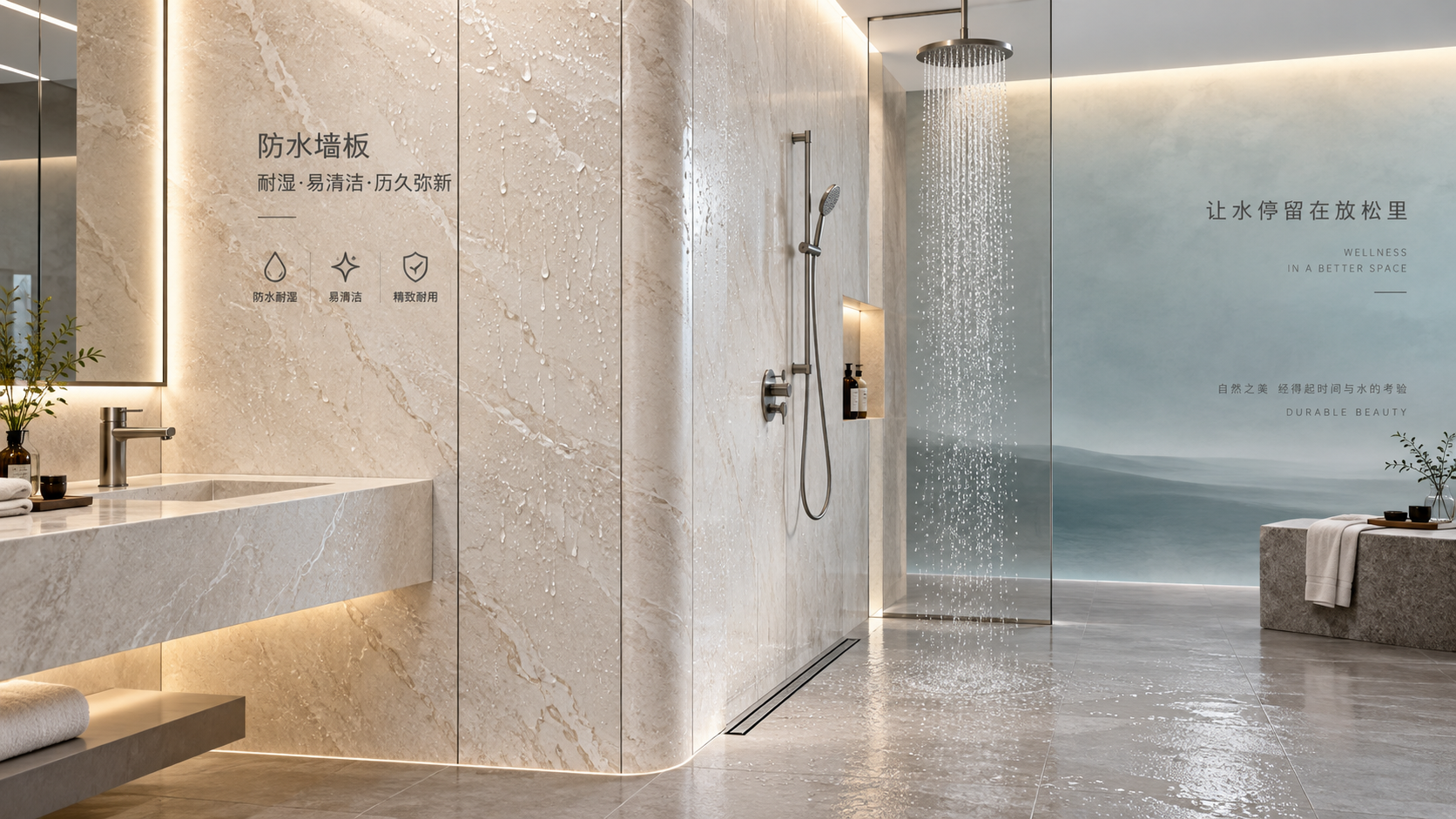
High traffic areas are often high cleaning-frequency areas. The panel surface may look premium when new, but if it is sensitive to common detergents, disinfectants, or repeated wet wiping, lifecycle appearance can decline quickly. This is especially important in hospitality, healthcare-adjacent spaces, public washrooms, and F&B environments.
Decision-makers should ask for cleaning guidance in writing and confirm whether the finish tolerates the chemicals used by facility management teams, not just mild household products.
4. Installation system and substrate compatibility
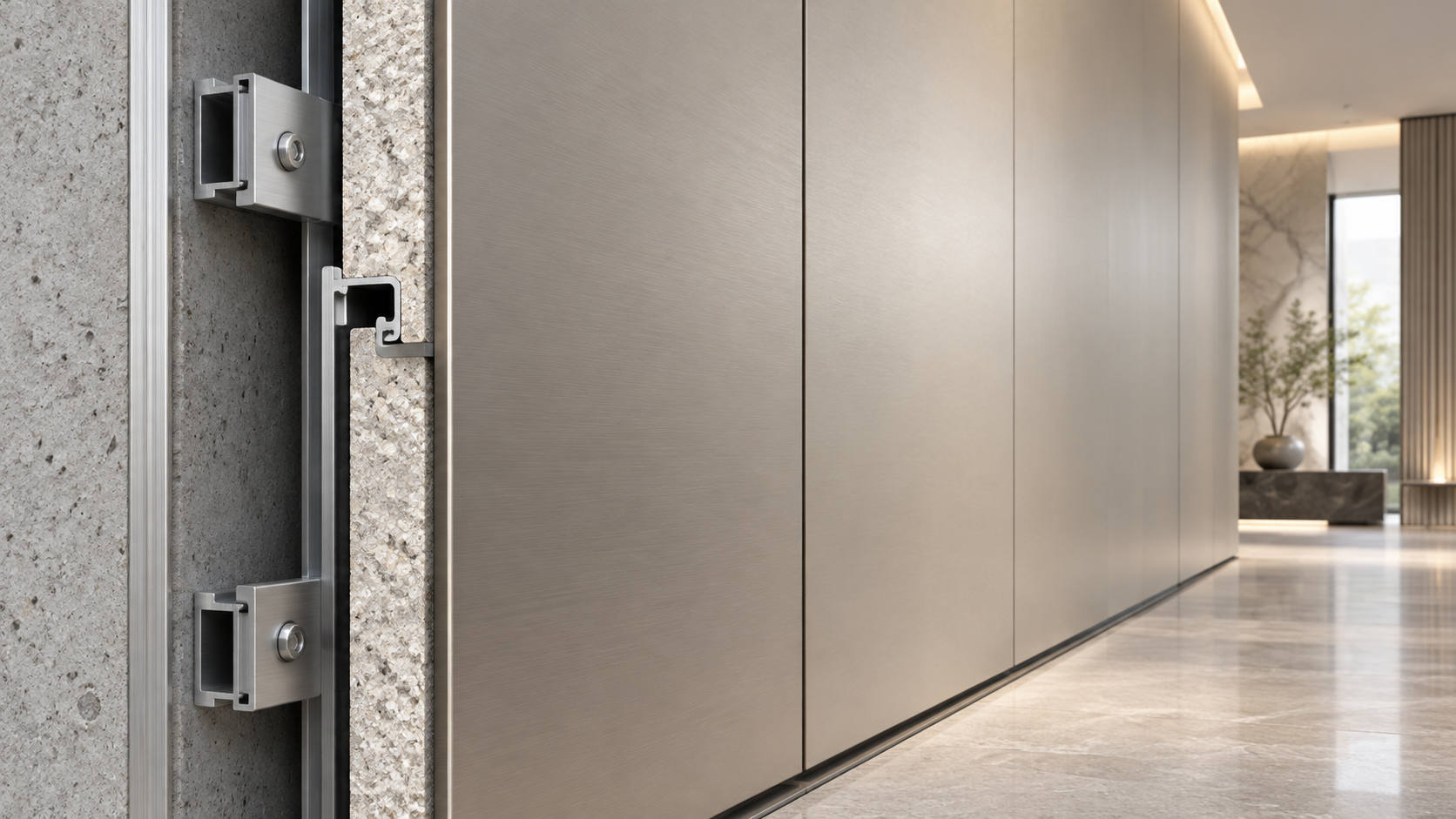
Even a good panel can fail if the wall system beneath it moves, retains moisture, or is uneven. Adhesive choice, expansion behavior, joint design, backing flatness, and corner treatment all affect long-term results. In many complaints involving decorative panels, the visible issue appears to be “panel quality,” but the root cause is installation design.
For commercial projects, buyers should ask whether the system is intended for direct adhesive bonding, mechanical fixing, or a hybrid method, and whether the supplier can provide installation tolerances and substrate requirements.
5. Repairability and replacement logistics
This is often overlooked during procurement. In a high-traffic commercial area, some damage should be assumed. The real question is whether a single damaged panel can be replaced cleanly without disrupting adjacent areas, color consistency, or operations. If lead times are long or batch color variation is high, maintenance becomes costly.
Common mistakes in commercial selection
One common mistake is treating all “high traffic” spaces as the same. A luxury office lobby with controlled visitor movement is not equivalent to a university corridor or transit concourse. The right material decision starts with traffic type, not just traffic volume.
Another mistake is relying too heavily on hardness claims. A hard decorative surface may still fail through brittle edge damage, poor adhesion, or low resistance to impact from service equipment.
A third mistake is ignoring lifecycle cleaning. Commercial materials are not judged only by day-one appearance. They are judged by how they look after eighteen months of janitorial routines, accidental knocks, and patch repairs.
Cross-border buyers also sometimes assume that a panel accepted in one market can be transferred directly into another project region. But certification expectations, installer familiarity, and code interpretation vary. Commercial suitability is partly a product issue and partly a local implementation issue.
How to make a sound specification decision
If a project team is considering crystal stone panels, a sensible approach is to separate the decision into zones rather than selecting one finish for the entire site.
Use the material in areas where it delivers clear value: decorative walls, reception backdrops, upper corridor cladding, branded interior features, and other visually important surfaces with moderate physical exposure. For lower wall sections, loading bays, service routes, or impact-prone corners, consider combining it with more robust protective materials or details.
This zoned strategy is often more effective than insisting on one material throughout. It preserves design consistency while reducing avoidable maintenance problems.
Before final approval, commercial buyers should request:
- application-specific test data rather than generic brochures;
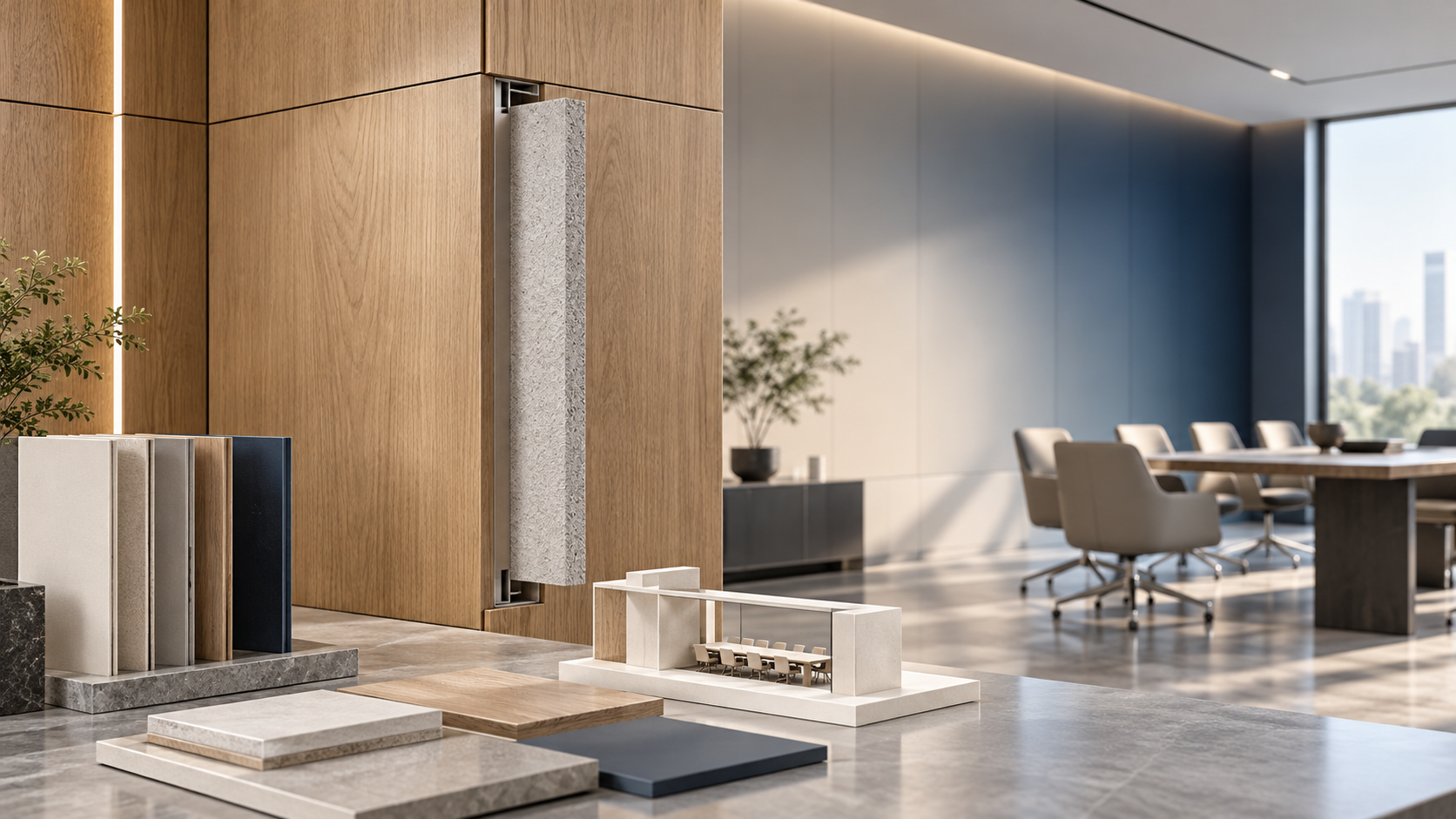
- samples large enough to evaluate finish realism and edge quality;
- fire and safety documentation relevant to the destination market;
- written installation instructions;
- cleaning and maintenance guidance;
- clarity on batch consistency, MOQ, lead time, and spare panel supply.
For larger projects, a pilot installation is worth the effort. It can reveal glare, seam visibility, substrate issues, and cleaning response before the full rollout. In commercial interiors, those details often determine whether a material remains attractive after occupancy.
Cost should be judged over service life, not only purchase price
Crystal stone panels may appear attractive because they can offer a stone-like look with lower transport weight, easier handling, and potentially faster installation than natural stone or some traditional cladding systems. For importers and procurement managers, those are meaningful advantages, especially when freight, labor efficiency, and program speed matter.
But the right comparison is not simply panel price per square meter. It is installed cost plus maintenance burden plus replacement risk. If a lower-cost decorative panel requires frequent repair in impact zones, the initial savings can disappear. On the other hand, if the material is well matched to the traffic profile, it may provide very competitive lifecycle value.
This is why commercial buyers should avoid making the decision purely as a material comparison exercise. It is a use-case comparison exercise.
So, are they suitable?
Yes, crystal stone panels can be suitable for high-traffic commercial areas when they are used in the right zones, backed by verified performance data, and installed as part of a properly designed wall system. They are often a reasonable option for retail, hospitality, office, and selected public interior wall applications where visual quality, lighter weight, and installation efficiency are priorities.
They are less convincing where heavy impact, severe abrasion, aggressive cleaning, or strict misuse conditions dominate the environment. In those cases, buyers should either limit their use to protected surfaces or select more robust materials for vulnerable areas.
The practical takeaway for specifiers and procurement teams is straightforward: do not evaluate crystal stone panels as a decorative trend item. Evaluate them as a commercial surface system with specific limits. Once those limits are understood, the material can be either a smart specification or an avoidable maintenance problem. The difference lies in how precisely the project team matches product performance to the actual traffic pattern of the space.
RECOMMEND

Oct 11, 2026
Custom Composite Panel Design: Selecting Skins, Cores, and Fixing Methods
Custom Composite Panel Design guide: choose durable skins, high-performance cores, compatible bonds, and smart fixing methods for safer, longer-lasting decorative panels.
Oct 11, 2026
What Decorative Panel Design Services Should Include Before Fabrication Begins
Decorative Panel Design Services help turn concepts into fabrication-ready solutions with material guidance, fire planning, samples, drawings, cost control, and quality checks.
Oct 10, 2026
Choosing Spa Wall Panels for Humid Rooms, Hygiene, and Easy Maintenance
Spa Wall Panels for humid rooms: compare moisture resistance, hygiene, chemical durability, fire compliance, and easy-maintenance system details for lasting spa interiors.
Oct 10, 2026
Jewelry Store Wall Panels That Enhance Lighting, Security, and Luxury Displays
Jewelry Store Wall Panels: discover how refined finishes improve lighting, security integration, durability, and luxury displays for a polished retail experience.