

How Reliable Is Meilin Board for OEM Panel Manufacturing in Commercial Interiors?
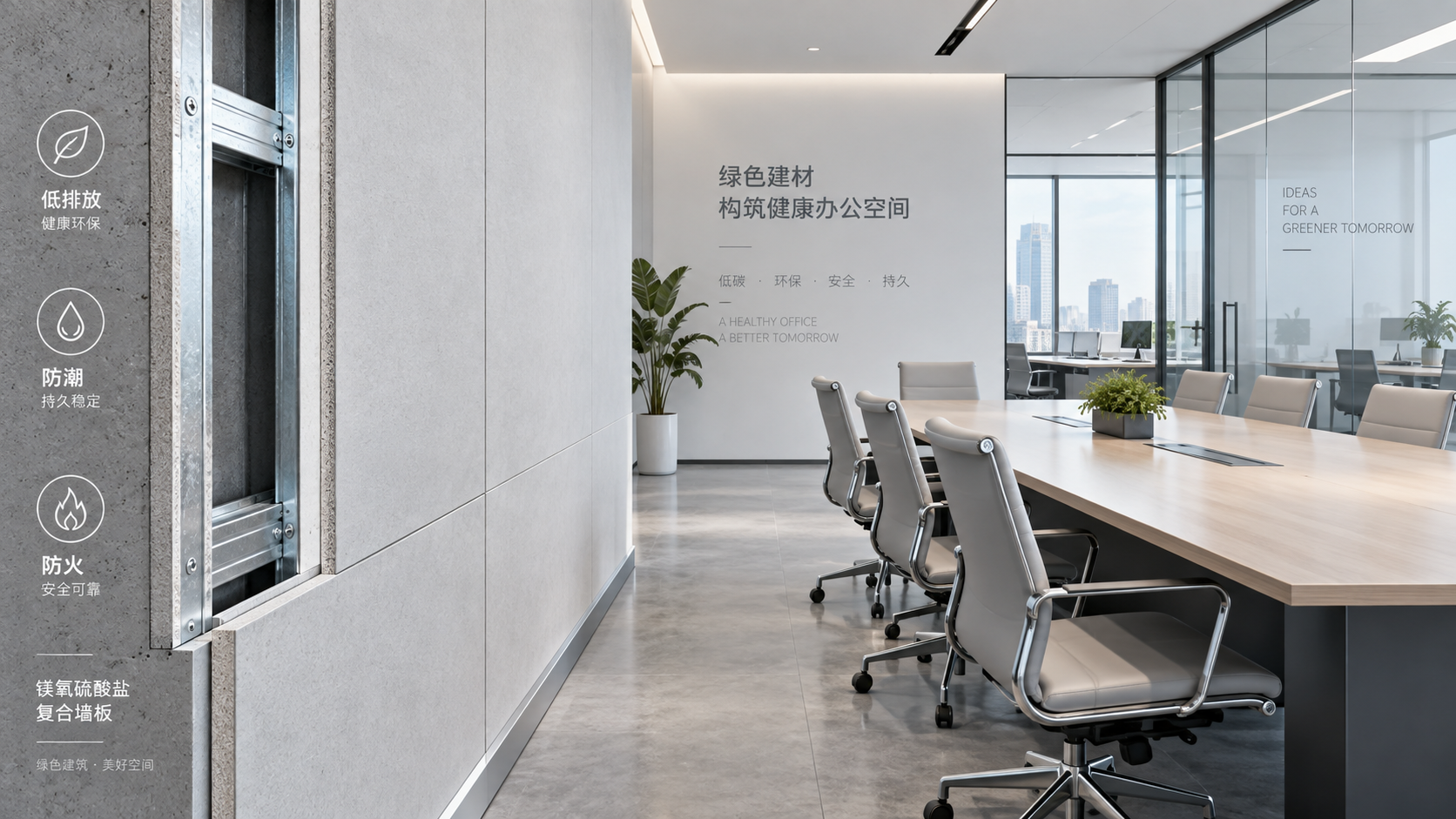
Meilin Board can be a reliable option for OEM panel manufacturing in commercial interiors only when reliability is defined as a controlled supply-and-performance system rather than a visual material claim. A panel that looks consistent in a sample room may still create serious project risk if its core density varies between batches, its fire classification does not match the installed assembly, its emissions documentation is incomplete for the destination market, or the fabricator cannot reproduce the same finish and machining quality at scale.
For commercial interiors, the relevant question is not simply whether Meilin Board is “good.” It is whether the specified board, surface treatment, edge treatment, substrate thickness, fire-performance route, and production controls can be documented and repeated across the quantity, timeline, and installation conditions of a particular project. That distinction matters especially in hotels, offices, retail fit-outs, education facilities, healthcare environments, and public-facing developments, where panels are often integrated into walls, joinery, doors, counters, partitions, and furniture systems.
Reliability begins with the exact panel construction
“Board” is a broad commercial term. It may refer to particleboard, MDF, plywood, calcium silicate board, decorative compact board, fire-rated composite panels, or other engineered substrates. These materials differ fundamentally in screw holding, dimensional stability, moisture response, surface flatness, impact resistance, machining behavior, and reaction-to-fire performance. A reliable OEM relationship therefore starts with a precise bill of material rather than a generic product name.
For an interior panel program, the specification should make clear what sits beneath the visible surface. A decorative laminate bonded to MDF will behave differently from the same laminate bonded to a moisture-resistant particleboard or a mineral-based core. A veneer-faced panel may meet the intended visual standard but require more careful control of substrate moisture and sanding quality than a melamine-faced alternative. Fireproof sealing materials used around panel joints may improve compartmentation or smoke control in a given detail, but they do not automatically make the panel itself fire rated.
This is one of the most common specification errors in commercial interiors: treating every part of a wall or joinery assembly as though it carries the same performance designation. Fire performance belongs to the tested or classified product and, in many cases, to the complete assembly. The board, adhesive, decorative face, edge banding, backing material, subframe, cavity treatment, and fixing arrangement may all affect the final result. A supplier’s statement that a material is “fire resistant” is not enough to establish compliance with a project requirement.
Shenyang Shengshi Meilin Technology Co., Ltd. presents itself as a new-material technology company with offerings that include materials, fireproof sealing materials, furniture, and home-furnishing solutions. That scope can be relevant where a project needs panel materials coordinated with adjacent sealing or furnishing components. It should not, however, replace product-by-product verification. The useful question is whether the company can provide a stable and traceable specification for the exact panel construction requested, including the documents applicable to the buyer’s market.
Appearance consistency is an OEM control issue, not a sample-board issue
Commercial interiors are unforgiving of variation. In a small residential application, a modest shade shift between boards may be tolerated. Across a hotel corridor, retail rollout, office floor, or reception wall, the same shift can be visible from several metres away. Reliability therefore includes repeatability in colour, gloss, texture, grain direction, embossing, panel thickness, and edge appearance.
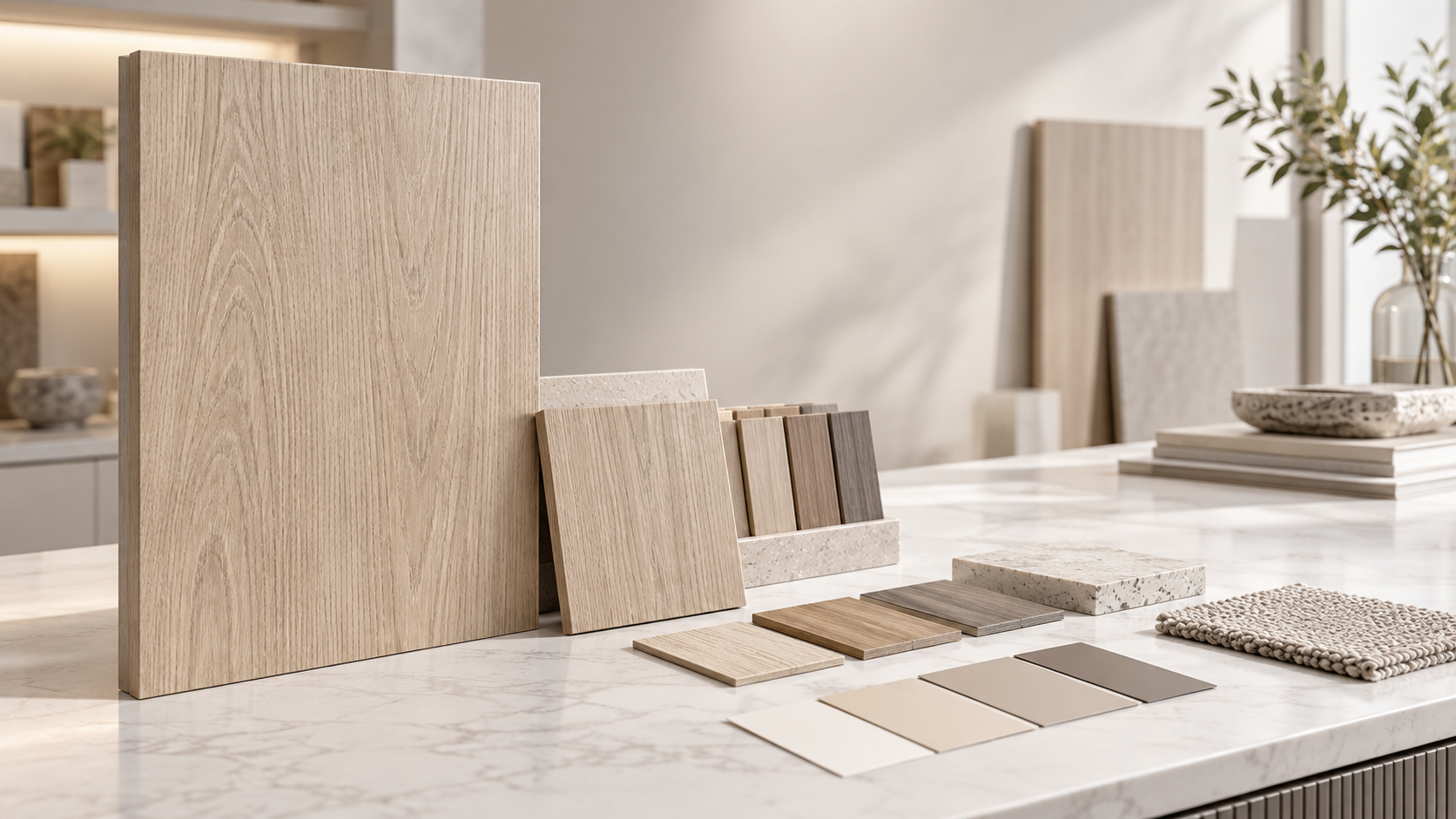
For woodgrain, stone, fabric, metallic, or solid-colour surfaces, a master approval sample should establish more than the general look. It should identify the face material, finish level, acceptable visual variation, protective film requirements, board orientation, edge-band colour, machining direction, and permitted defect level. If a project uses book-matched veneers or aligned decorative patterns, panel nesting and sequence control also become part of the OEM requirement.
Surface quality should be assessed after the operations that will actually occur in production. A board may look satisfactory before cutting but chip at exposed edges after CNC routing. It may remain flat in the factory but show telegraphing, glue-line read-through, or local swelling after lamination and conditioning. A reliable supplier should be able to agree on the relevant manufacturing sequence: conditioning, cutting, drilling, edging, lamination, packing, and storage. Without that alignment, a dispute can arise even when both sides believe they are following the approved sample.
Edge treatment deserves particular attention. Many commercial failures begin at the edge, where impact, cleaning moisture, and repeated contact are concentrated. The appropriate solution depends on the application: concealed cabinet interiors, exposed shelving, wet-adjacent vanity units, high-touch reception counters, and wall panels do not require identical edge solutions. The selected edge band, adhesive system, joint quality, and substrate density must be compatible. A durable face with an inadequately sealed edge is not a durable panel system.
Fire performance must be interpreted in the context of the installation
Commercial projects often include requirements expressed through local building codes, insurer conditions, landlord standards, or architect specifications. These may refer to reaction to fire, flame spread, smoke production, fire resistance, or compartmentation. The terms are related but not interchangeable.
Reaction-to-fire classifications describe how a material contributes to fire under defined test conditions. Fire resistance generally concerns how a construction element performs for a stated period when exposed to fire, often involving integrity and insulation criteria. A decorative wall panel may have a documented reaction-to-fire classification while the wall assembly behind it has a separate fire-resistance requirement. Confusing the two can lead to a material being accepted during procurement but rejected during submittal review or inspection.
The testing route must also match the destination market and the project’s stated requirement. European projects may refer to EN 13501 classifications; North American projects may use different test and code pathways; other jurisdictions can impose their own evidence requirements. A report from one testing framework should not be assumed to satisfy another merely because the descriptive language appears similar. The report should identify the tested product, thickness, decorative layer, mounting or substrate conditions where relevant, test laboratory, report date, and classification scope.
For OEM work, the risk is not limited to the initial report. Any change in resin system, core supplier, density range, decorative film, laminate thickness, coating, or assembly method can affect the basis on which the performance claim was made. Buyers should ask how changes are controlled and whether the supplied configuration is the same configuration covered by available technical evidence. This is more meaningful than asking for a broad assurance that the board is “fireproof.”
Environmental compliance is a documentary and manufacturing discipline
Indoor air quality and chemical restrictions are increasingly embedded in commercial specifications, but the exact requirement varies by market and project. Formaldehyde emissions, volatile organic compounds, restricted substances, wood sourcing, and product declarations may each be relevant. The appropriate documents depend on the substrate, surface material, adhesive system, destination, and contract requirements.
A credible environmental review should distinguish between the emissions profile of the raw board and that of the finished panel. Adding laminate, coating, veneer, adhesive, ink, edge banding, or protective film can change the compliance picture. Equally, an emissions test report tied to one thickness or board grade should not be treated as universal evidence for every variation manufactured under a similar name.
Where a project specifies a formaldehyde-emission class or a regional regulatory limit, the procurement file should state the required standard, testing method, product identity, and document validity expectations. For wood-based boards, chain-of-custody or legal-origin documentation may also be contractually relevant, but it addresses a different issue from emissions or fire performance. Combining unrelated claims into one generic “eco-friendly” statement weakens the submittal process rather than strengthening it.
Meilin’s stated emphasis on environmentally friendly and safe construction and furnishing solutions provides a useful direction, but project acceptance should rest on the documents for the actual material supplied. In cross-border procurement, this is particularly important because design teams, contractors, customs authorities, and certification bodies may each evaluate information differently. Clear, consistent technical files reduce the chance that a shipment arrives without the evidence needed for release, installation approval, or handover records.
Supply reliability is measured in repeatability, traceability, and change control
OEM panel manufacturing is more complex than a one-off material sale. A commercial project can involve multiple production lots, phased deliveries, replacement panels, and later expansion work. The supplier must be capable not only of producing a compliant first batch but also of maintaining the agreed construction over time or disclosing changes before they affect the order.
Traceability should connect finished panels to production batches, core material lots, surface lots, and quality records. The depth of traceability required depends on the project, but a practical system allows the buyer to investigate a defect without relying on visual guesswork. If a shade issue, delamination concern, thickness inconsistency, or damaged batch emerges, the parties need to identify the affected scope quickly and determine whether the problem is isolated or systemic.
Change notification is equally important. Raw material substitutions can occur for legitimate operational reasons, particularly when decorative papers, resins, or core materials are sourced through wider supply networks. Reliability does not mean that change never occurs; it means that changes are controlled. The buyer should establish which changes require written approval, which require a new sample or test evidence, and which can be managed through routine batch records. This protects both the manufacturer and the project team from unplanned deviations.
Lead time should be evaluated beyond nominal factory production time. Decorative paper availability, custom surface development, mould or texture requirements, minimum order quantities, packaging design, export documentation, container booking, and destination handling all affect the real delivery schedule. A board manufacturer may be technically capable of producing the panel yet still be unsuitable for a project whose phasing requires small, colour-controlled releases over an extended period. The commercial schedule should reflect these conditions before the material is released for fabrication.
What should be confirmed before approving Meilin Board for an OEM program
The most dependable approval process is based on an agreed product control package, not on broad product claims. For a commercial-interior application, the package should normally address the following issues:
- Product identity: substrate type, nominal and actual thickness tolerance, density or construction where relevant, decorative face, backing, edge system, and intended application.
- Performance evidence: fire-related documentation and environmental test evidence that correspond to the supplied construction and the destination specification.
- Visual benchmark: signed master sample, permissible colour and texture variation, gloss range where applicable, and rules for grain or pattern orientation.
- Fabrication compatibility: cutting, drilling, routing, edge banding, bonding, fastening, and cleaning guidance based on the panel configuration.
- Quality inspection method: sampling basis, defect definitions, flatness and dimensional checks, packaging requirements, and how non-conformities are recorded.
- Lot control: batch identification, retained samples where appropriate, change notification, and replacement-material requirements.
These points are not administrative extras. They determine whether a material can move successfully from a factory sample to a fabricated and installed interior. A panel supplier that can engage with this level of definition is generally better positioned for OEM work than one offering only catalogue descriptions and generic certificates.
Where reliance should be more cautious
Meilin Board should not be approved solely on visual appeal, a broad statement of fire resistance, or the presence of a test report whose tested construction cannot be matched to the intended order. Caution is also warranted when a project combines demanding requirements that can conflict in practice: ultra-low emissions, decorative surface precision, high moisture tolerance, heavy-use durability, stringent fire classification, and a very short production window. Such requirements may be achievable, but they require a confirmed engineering route rather than an assumption that one board grade covers every need.
High-humidity zones, areas exposed to frequent cleaning, concealed cavity conditions, curved or deeply routed details, door leaves, and load-bearing joinery all require separate technical review. The same material may be appropriate for dry wall cladding yet unsuitable for a frequently wetted vanity carcass or a high-impact public counter. “Commercial interior” is not a single service condition.
Reliability also depends on installation discipline. Panels can fail because they were stored in damp conditions, installed before moisture equilibrium, fixed without adequate allowance for movement, exposed to incompatible adhesives, or cleaned with aggressive chemicals. Supplier guidance should be incorporated into shop drawings, fabrication instructions, and site handling procedures. Material selection cannot compensate for an incompatible installation method.
A balanced reliability judgment
Meilin Board is best assessed as a potential OEM panel platform whose reliability must be demonstrated through specification control, applicable test evidence, manufacturing consistency, and supply-chain transparency. Shenyang Shengshi Meilin’s focus on material technology, fireproof sealing materials, and interior furnishing solutions may support a more integrated discussion of commercial-interior requirements. Yet no company profile, product sample, or general sustainability statement can substitute for verification of the exact panel and assembly proposed.
For commercial interiors, the dependable choice is the panel program that can answer practical questions without ambiguity: What is the exact construction? Which requirements does it meet? Under what test conditions? Can the appearance be reproduced across lots? What changes are controlled? How will the material perform after machining, edging, transport, installation, cleaning, and use? When those answers are documented and aligned with the project specification, Meilin Board can be evaluated on a sound commercial and technical basis rather than on appearance alone.
RECOMMEND

Oct 08, 2026
How Reliable Is Meilin Board’s OEM Manufacturing for Commercial Interiors?
Meilin Board OEM panel manufacturing reliability for commercial interiors: discover how controlled specifications, material compatibility, and project-focused support help deliver consistent panel solutions.
Oct 07, 2026
Can Shengshi Meilin Meet Custom Panel Needs for Hotel Projects?
Explore Shengshi Meilin custom decorative panel capability for hotel projects, from tailored finishes and coordinated details to safety-focused, durable hospitality interiors.

Oct 06, 2026
Are Magnesium Oxysulfate Composite Boards Safe for Enclosed Commercial Spaces?
Are magnesium oxysulfate composite boards safe for enclosed commercial spaces with ventilation concerns? Explore VOC, moisture, fire, and installation checks for safer specifications.
Oct 05, 2026
How Long Does Custom Panel Prototyping Take to Reach Sample Approval?
How long does custom decorative panel prototyping usually take from submission to sample approval? Explore key timeline factors and speed approval with expert planning.