How Durable Are PUR-Laminated Panels?
PUR-laminated panels are valued for their strong bonding and decorative appeal, but how well do they stand up to daily wear, moisture, and changing temperatures? For designers and project buyers comparing exhibition hall wall panel cost, durability is just as important as the initial price. The answer depends on more than the adhesive: the decorative surface, substrate, edge treatment, installation, and conditions inside the venue all influence how long a panel remains presentable.
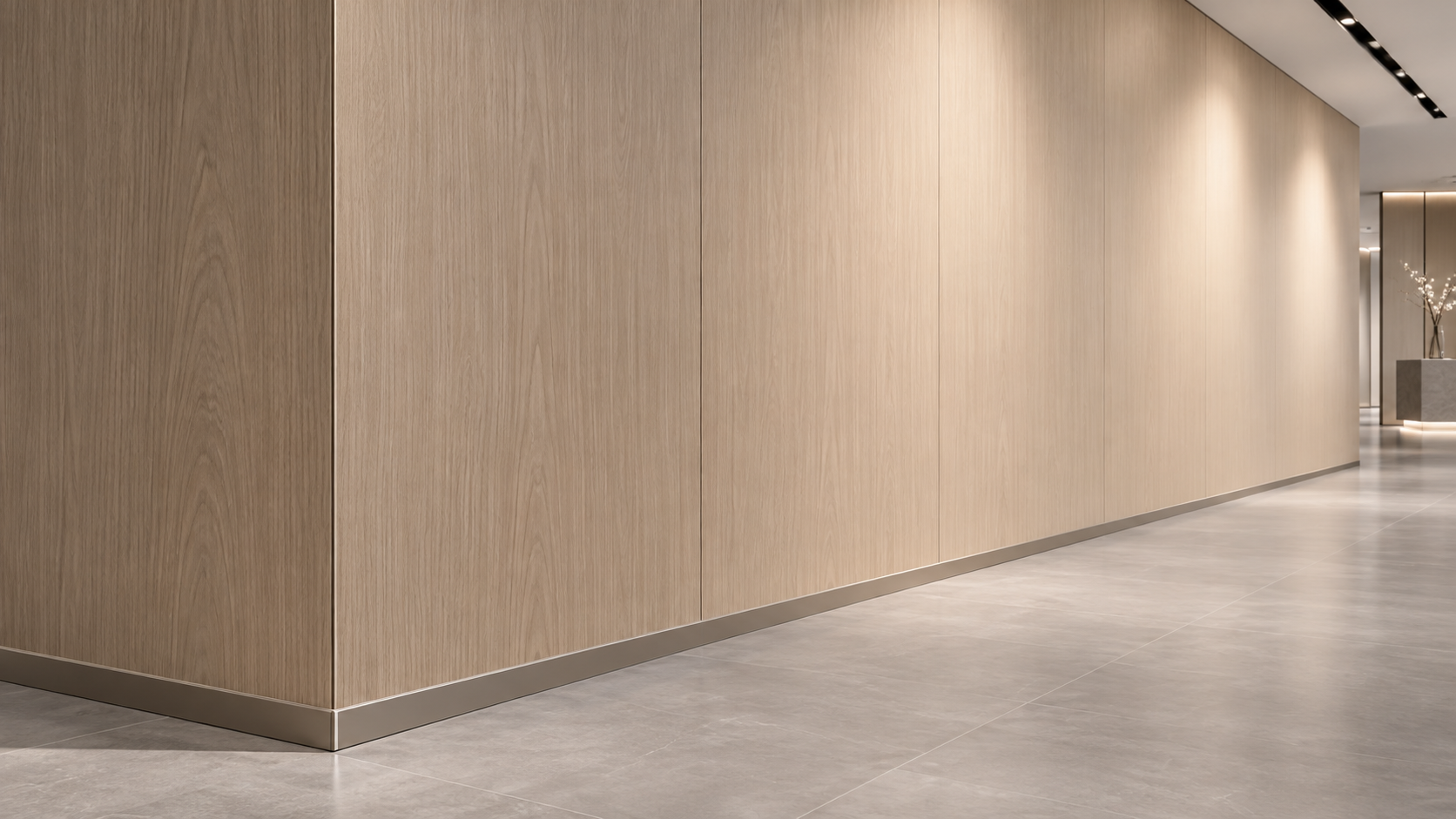
For a dry, climate-controlled interior, a well-made PUR-laminated panel can be a practical long-term decorative finish. It is not, however, automatically waterproof, scratchproof, or suitable for every exhibition wall. A panel behind a reception desk faces different stresses from one beside a loading route where equipment cases and display frames move in and out.
What PUR bonding does—and what it does not do
PUR stands for polyurethane reactive adhesive. In panel production, it is used to bond a decorative facing to a substrate. The adhesive cures through a reaction involving moisture, forming a bond that can offer good resistance to heat and moisture when the materials and process are properly matched.
That bond is only one part of the assembly. The visible surface might be a decorative film, a laminate, or another facing; the core might be an engineered wood panel or a different substrate. These components do not all behave alike. A strong adhesive layer cannot prevent a soft surface from scratching, protect an exposed wood-based edge from prolonged wetting, or compensate for a weak substrate.
This distinction matters when comparing samples. Two panels described as “PUR laminated” may have noticeably different resistance to abrasion, impact, staining, and humidity. Ask for the complete construction rather than treating the adhesive name as a performance specification.
Daily wear: the surface usually tells the story first
In an exhibition hall, visitors may touch walls, staff may clean fingerprints, and temporary displays may be installed and removed repeatedly. Near entrances and circulation routes, rolling cases and carts can strike lower wall sections. These are surface and impact problems as much as bonding problems.
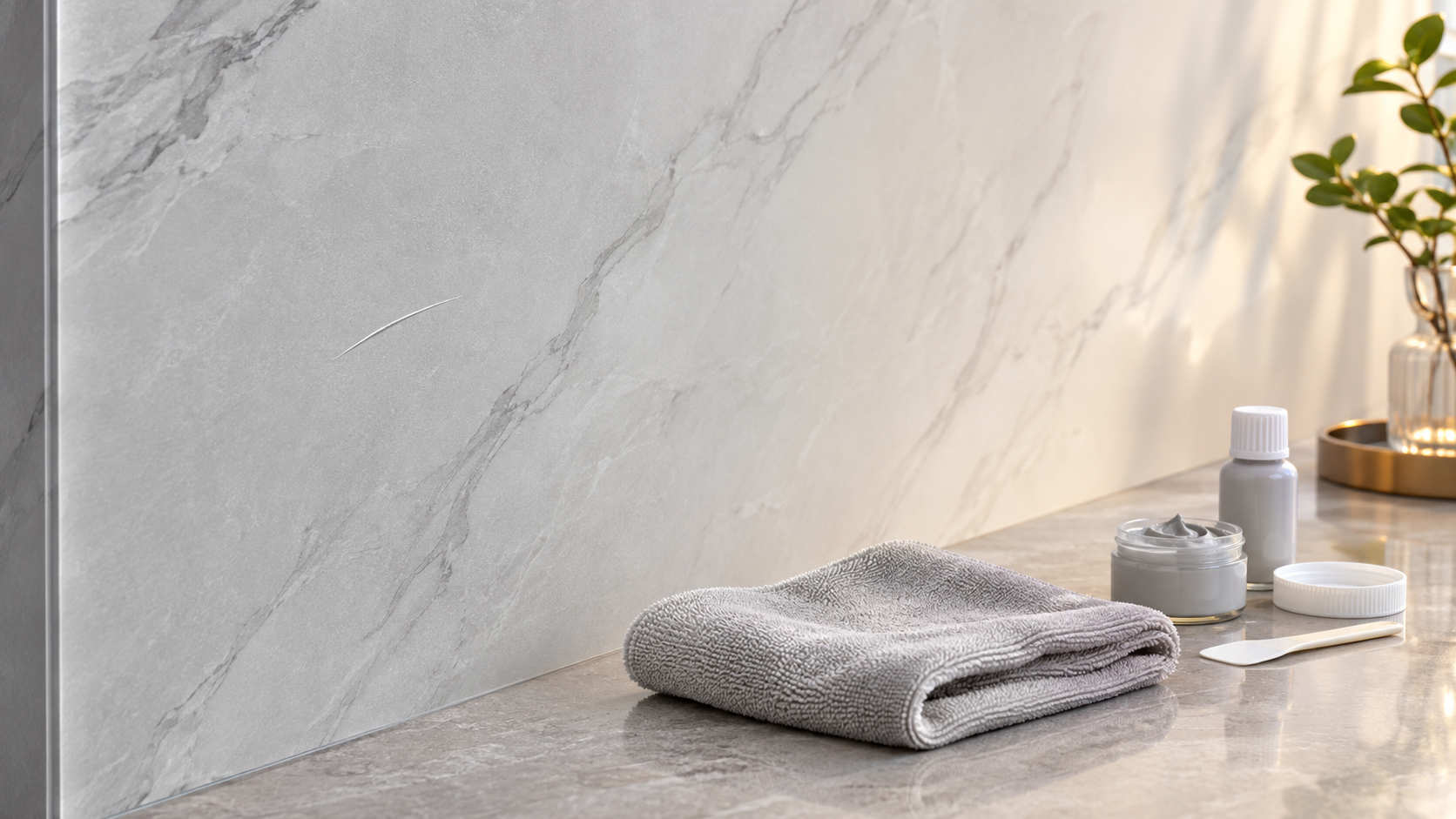
A decorative facing selected mainly for appearance may look excellent on a sample board but show scuffs quickly in a high-contact area. Dark, glossy finishes can make fingerprints and fine scratches more noticeable, although actual scratch resistance depends on the specific surface. A textured or lower-sheen finish may make minor marks less conspicuous, but texture alone does not prove that the material is tougher.
Request abrasion, scratch, stain, or impact performance information for the proposed facing where available. Check what was tested and how the results relate to the project; a report for the adhesive alone will not establish the wear resistance of the finished panel. It is also sensible to handle a sample under the lighting planned for the hall. Grazing light can reveal marks and surface irregularities that are less obvious under diffuse office lighting.
For particularly exposed corners or lower wall sections, a tougher protective detail may be more useful than upgrading the adhesive. Corner guards, skirting, or a replaceable impact strip can take damage that would otherwise require a larger decorative panel to be removed.
Moisture resistance is not the same as waterproofing
PUR bonding can help a laminate resist moisture-related bond failure, but water may still enter through joints, screw holes, damaged edges, or unfinished cutouts. If the substrate is vulnerable to moisture, swelling can distort the panel and stress the decorative layer from underneath.
The practical risk is often at the bottom of the wall. Consider a panel installed where floors are wet-mopped, where drinks may spill, or beside an entrance exposed to rain carried in by visitors. Repeated moisture at an unprotected edge is a different exposure from occasional wiping of the face. The edge detail, skirting arrangement, and cleaning practice deserve as much attention as the adhesive.
For humid spaces, confirm that the facing, core, edge treatment, and installation system are suitable for the expected conditions. Do not assume a panel intended for a dry exhibition interior is appropriate for a shower area, an outdoor wall, or a location subject to standing water. Where water exposure is unavoidable, compare alternative assemblies designed for that environment.
Temperature changes, sunlight, and movement
Exhibition venues do not always operate under steady conditions. Air conditioning may be reduced between events, loading doors may remain open during setup, and a sunlit glazed facade can create localized heating. Changes in temperature and humidity can cause the facing and substrate to move at different rates. Poorly matched materials, inadequate curing, or a constrained installation can make that movement more visible as bowing, edge lifting, or joint problems.
Before installation, panels should be stored and acclimatized in accordance with the supplier’s instructions. The wall behind them should be sound and dry, and the fixing method should allow for the movement anticipated by the panel and system suppliers. A decorative joint is not necessarily a movement joint; its detail must be designed for the assembly rather than assumed from its appearance.
Sunlight raises a separate question: color stability. PUR adhesive does not guarantee that the decorative face will resist fading. If panels sit near large windows, ask for relevant lightfastness information for the facing and compare the exposure with the intended application. Replacing a faded panel later can be difficult if the original finish has been discontinued or the surrounding panels have aged differently.
How long should a PUR-laminated panel last?
There is no reliable service-life figure for every PUR-laminated panel. A wall in a controlled interior that is touched rarely may remain acceptable much longer than the same panel used as a temporary exhibition backdrop, drilled for new graphics and knocked during every changeover. “Lasting” also needs a definition: the panel might remain securely bonded while its appearance no longer meets the venue’s expectations.
When a supplier gives a lifespan or warranty, read the conditions. Does it cover the bond, the decorative surface, or the complete installed system? Are discoloration, accidental impact, humidity, cleaning chemicals, and edge damage excluded? A warranty is useful, but it is not a substitute for selecting the right construction.
For projects that change displays frequently, plan for the service life of the fixing arrangement as well. Repeatedly driving screws into the same panel can damage the facing and core. A separate mounting rail or another purpose-designed display system may protect the decorative wall and make future changes easier.
Why durability changes exhibition hall wall panel cost
The lowest quoted panel price is not necessarily the lowest installed or maintained cost. A comparison should include the substrate, decorative facing, edge treatment, fixing system, trims, labor, and the work needed to prepare the wall. For a busy venue, it should also account for access, disruption during replacement, and whether a damaged section can be removed without disturbing adjacent panels.
A higher-wear facing may be worthwhile beside a loading corridor but unnecessary on a protected feature wall. Conversely, specifying the same inexpensive construction everywhere can shift the cost to repairs in the most exposed locations. Dividing the hall into wear zones often produces a more useful specification than asking for one panel to do every job.
Quotes also need to describe comparable assemblies. A price that excludes finished edges, corner protection, or a removable fixing system can appear attractive until those items are added. Confirm panel dimensions, finish, substrate, tolerances, installation scope, and replacement availability before deciding which offer is better value.
Checks worth making before an order
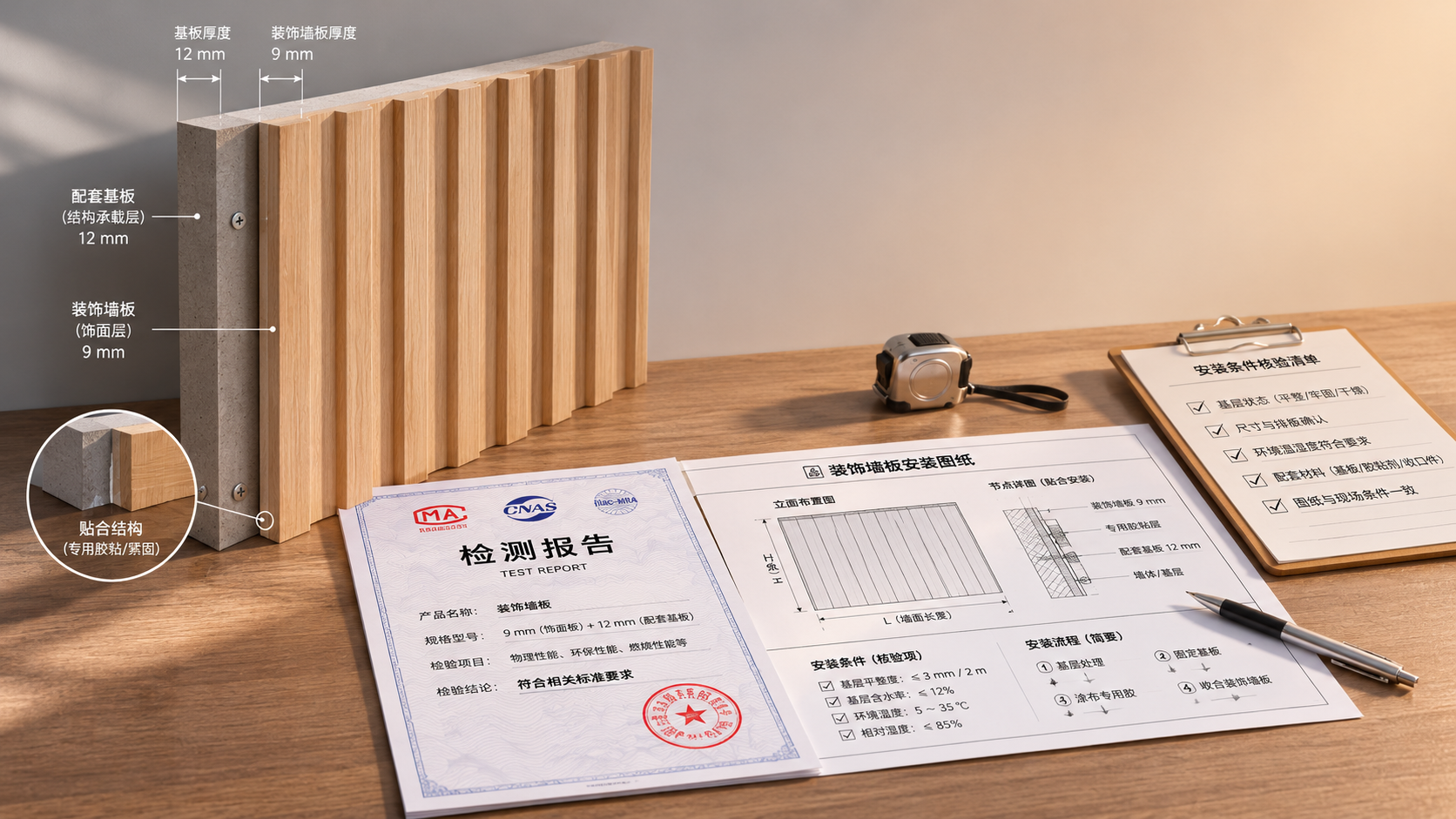
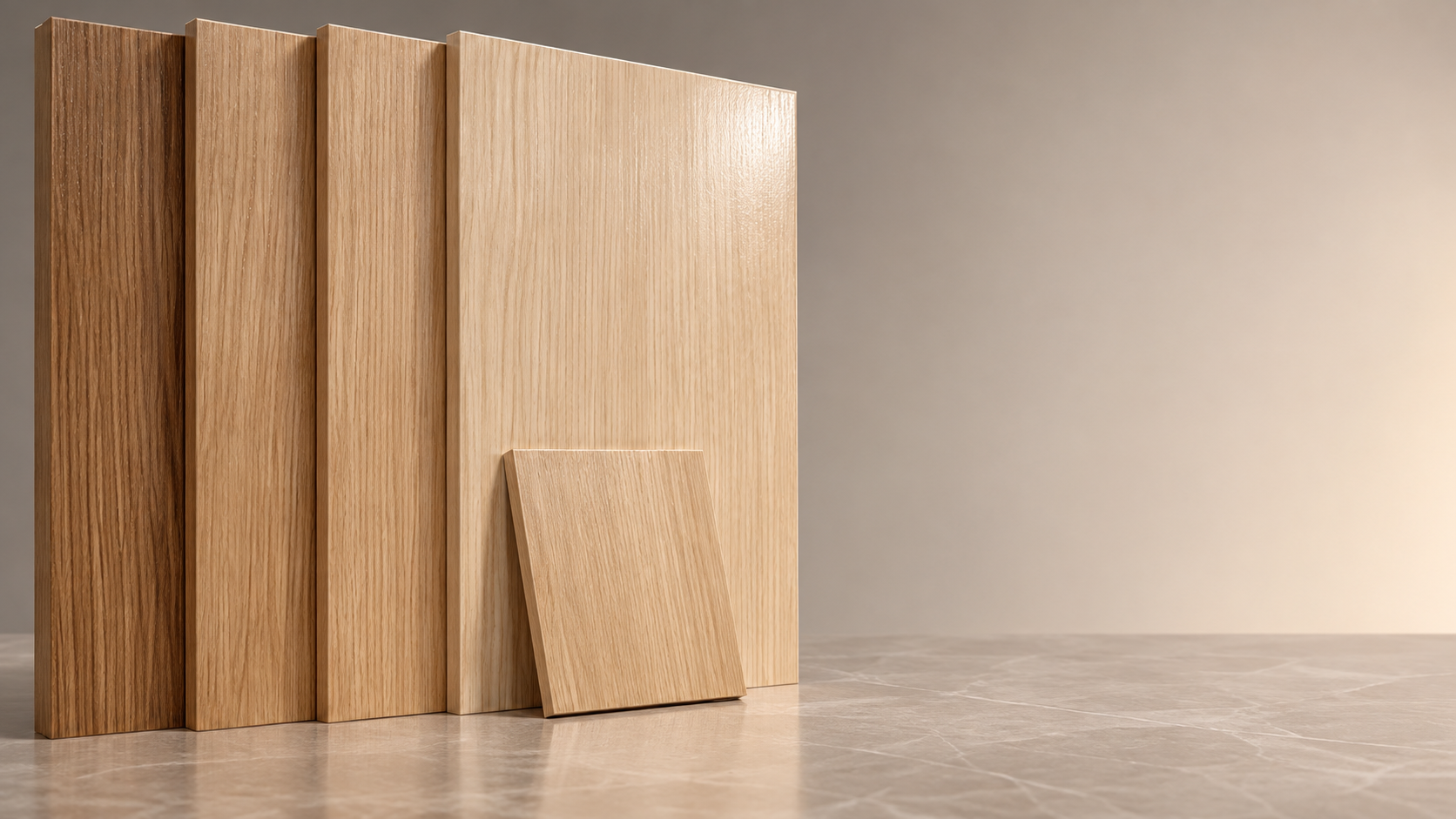
A useful sample review goes beyond checking color. Ask for a representative panel with the proposed substrate, facing, and edge finish. Inspect cut edges and corners, check the consistency of the surface, and discuss how joints and fixings will look at full scale. If the project has demanding conditions, agree on any additional testing or mock-up before placing the order.
- Confirm which components are covered by the supplier’s performance data and warranty.
- Ask how exposed edges, penetrations, and the bottom of the wall will be protected.
- Check whether individual panels can be replaced and whether spare panels or matching finishes can be supplied.
- Verify fire-performance requirements for the complete installed assembly with the project team and applicable local authorities. PUR bonding alone does not establish a fire rating.
- Request emissions information where indoor air quality requirements apply, and check that it refers to the relevant product or assembly.
Shenyang Shengshi Meilin Technology Co., Ltd., based in Shenyang, works in new-material technologies and supplies materials and products for construction and home furnishing. For a project involving decorative panels as well as fire-sealing details, a supplier discussion can help clarify which components belong to the panel specification and which require separate verification. Any claimed performance should be checked against the documentation for the specific products proposed.
Keeping the finish presentable
Routine care is usually straightforward, but the correct method depends on the facing. Use the manufacturer’s cleaning instructions; where permitted, a soft cloth and a suitable mild cleaner are preferable to abrasive pads or aggressive solvents. Avoid soaking joints and edges. Test an unfamiliar cleaner on an inconspicuous sample before using it across the wall.
Inspect high-contact areas during event changeovers, especially corners, lower edges, and fixing points. A loose trim or damaged seal is easier to address before moisture reaches the substrate or a small chip spreads. If a panel must be replaced, keep a record of the finish and batch information and retain spare material where the design makes color matching important.
The most durable choice is not simply the panel with the strongest-sounding adhesive claim. It is the assembly whose surface, core, edges, and fixing details match the actual exposure—and whose damaged parts can be maintained without rebuilding the wall.
Next:No more content
RECOMMEND

Nov 22, 2026
How Durable Are PUR-Laminated Panels?
Compare exhibition hall wall panel cost and PUR-laminated panel durability. Discover what affects wear, moisture resistance, and long-term value.
Nov 21, 2026
How Do You Verify a Wall Panel's Fire Rating for Your Project?
How do I verify a wall panel's fire rating for my project? Discover which reports to request, how to check installation details, and avoid costly specification errors.
Nov 21, 2026
How Do You Repair a Scratch on a Stone-Look Panel?
How do I repair a scratch on a stone look panel? Discover safe, material-specific repair tips and learn when to seek expert help or replace the panel.
Nov 20, 2026
How Can You Reduce Color Variation Between Panel Batches?
How can I reduce color variation between panel batches? Discover practical tips for matching finishes, managing orders, and inspecting panels with confidence.