

When aluminum honeycomb panels reduce weight without sacrificing rigidity
When Aluminum Honeycomb Panels Reduce Weight Without Sacrificing Rigidity
For technical evaluators balancing structural performance, weight limits, and design requirements, Aluminum Honeycomb Panels provide a practical route to lower dead load without surrendering flatness or visual quality.
The key judgment is not whether a panel is lightweight alone, but whether its stiffness, bonding system, facing material, and installation method match the intended service conditions.
In decorative construction, unnecessary weight can increase framing demands, transport costs, handling risks, and seismic loads. A properly specified lightweight panel can improve several project variables simultaneously.
However, low mass does not automatically mean reliable performance. Evaluators must distinguish between true sandwich-panel efficiency and products that merely use thin materials without sufficient structural support.
This article explains when Aluminum Honeycomb Panels deliver meaningful rigidity, which specifications matter most, where their performance limits sit, and how to evaluate them for decorative applications.
Why Honeycomb Construction Creates High Stiffness at Low Weight
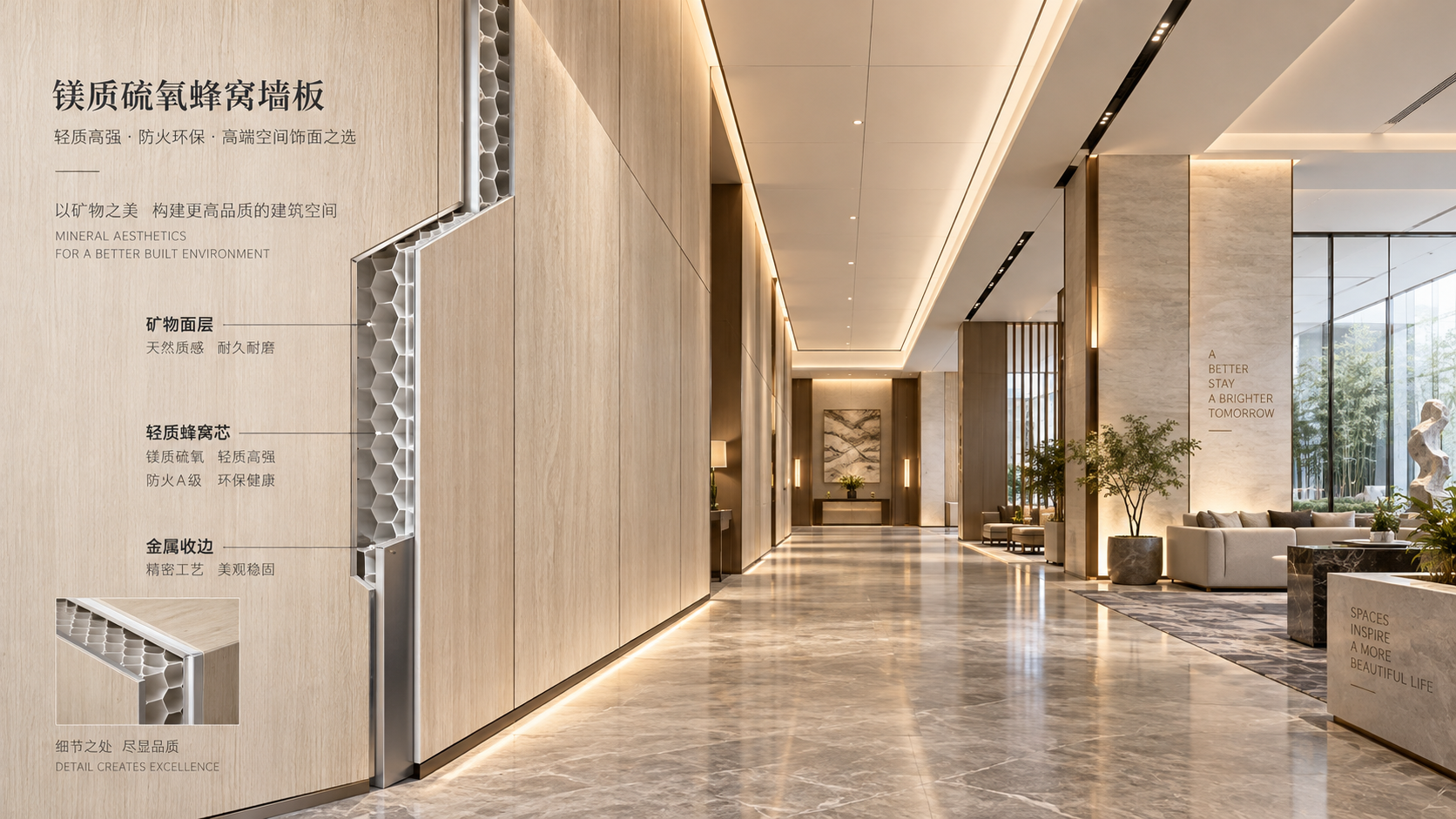
Aluminum Honeycomb Panels use a sandwich structure: two relatively thin face sheets are bonded to a lightweight aluminum honeycomb core that keeps those sheets separated.
That separation is the central engineering advantage. Increasing the distance between face sheets greatly improves bending stiffness without requiring a proportional increase in material thickness or weight.
When a panel bends, one face sheet experiences compression while the other experiences tension. The core stabilizes both surfaces and transfers shear forces between them.
A solid metal sheet can resist loads, but its weight rises quickly as thickness increases. Honeycomb construction uses material more efficiently by placing it where it contributes most.
The hexagonal core geometry delivers high strength relative to mass. Its cellular walls support the face sheets while keeping the panel interior largely open and lightweight.
For façade cladding, ceiling systems, partitions, cabinetry, transport interiors, and furniture components, this efficiency can reduce load requirements across the supporting structure.
Panel rigidity also helps preserve a smooth decorative surface. Flatness matters especially for metallic finishes, coated surfaces, large-format cladding, and illuminated interior applications.
Still, stiffness depends on the whole assembly. Face-sheet gauge, core thickness, core density, adhesive quality, panel size, and support spacing all influence actual performance.
Weight Reduction Matters Beyond Easier Handling
Weight reduction is often presented as a handling benefit, but technical evaluators should assess its wider effects on structural design, logistics, installation productivity, and long-term building performance.
Lower panel mass can reduce dead load on curtain-wall systems, interior framing, suspended ceilings, furniture carcasses, and secondary support structures. This may simplify design calculations.
In renovation work, lightweight decorative materials are particularly valuable because existing structures may have limited reserve capacity or restricted access for lifting equipment.
Reduced weight can also improve worker safety. Large decorative panels become easier to position, align, and secure, especially when installation occurs overhead or within confined interior spaces.
Transportation efficiency may improve when more panel area can be shipped within vehicle weight limits. However, packaging must still protect edges, finished surfaces, and corners.
For seismic-sensitive projects, reducing nonstructural mass can be meaningful. Lighter cladding and interior elements generally impose lower inertial forces during seismic movement.
Weight savings should not be evaluated independently from panel thickness. A thicker honeycomb panel may weigh modestly more than a thin composite sheet while offering substantially better stiffness.
The correct comparison is usually performance per kilogram, not kilogram count alone. Evaluators should compare deflection resistance, spanning capability, durability, and installation requirements at equivalent conditions.
Which Specifications Determine Whether a Panel Feels Rigid
Technical evaluation should begin with the project load case. Wind pressure, impact exposure, maintenance loads, vibration, thermal movement, and localized fixing loads create different performance demands.
Face-sheet thickness is one major variable. Thicker aluminum face sheets generally improve dent resistance, local rigidity, fastening behavior, and tolerance to handling damage.
Core thickness has an even stronger influence on global bending stiffness. Increasing core depth separates the faces further and usually produces a much stiffer panel structure.
Core density affects shear strength and resistance to crushing. Higher-density cores can support greater loads, but they increase weight and may not be necessary for every decorative application.
The adhesive or bonding film is equally important. Weak, inconsistent, or poorly cured bonding can lead to delamination, surface distortion, reduced load transfer, and early failure.
Panel dimensions must be reviewed alongside support spacing. A panel that performs well in a laboratory sample may deflect excessively when installed in a larger unsupported field.
Edge treatment deserves specific attention. Folded edges, extruded profiles, reinforced returns, and appropriate sealants can improve appearance while protecting the core from moisture or impact.
Ask suppliers for measurable data rather than broad claims. Useful documentation includes panel weight, face thickness, core type, bending stiffness, peel strength, flatness, and recommended spans.
How to Evaluate Deflection Instead of Relying on Visual Impressions
Rigidity should be assessed through expected deflection under service loads. A panel may remain intact while still looking visibly uneven, misaligned, or unsuitable for precision decorative surfaces.
Deflection limits depend on the application. Exterior cladding, ceilings, partitions, signage, furniture doors, and wall linings can each have different acceptable appearance and service criteria.
Large, reflective, or dark-colored panels often make small surface deviations more noticeable. Visual tolerances may therefore control selection before ultimate structural capacity becomes critical.
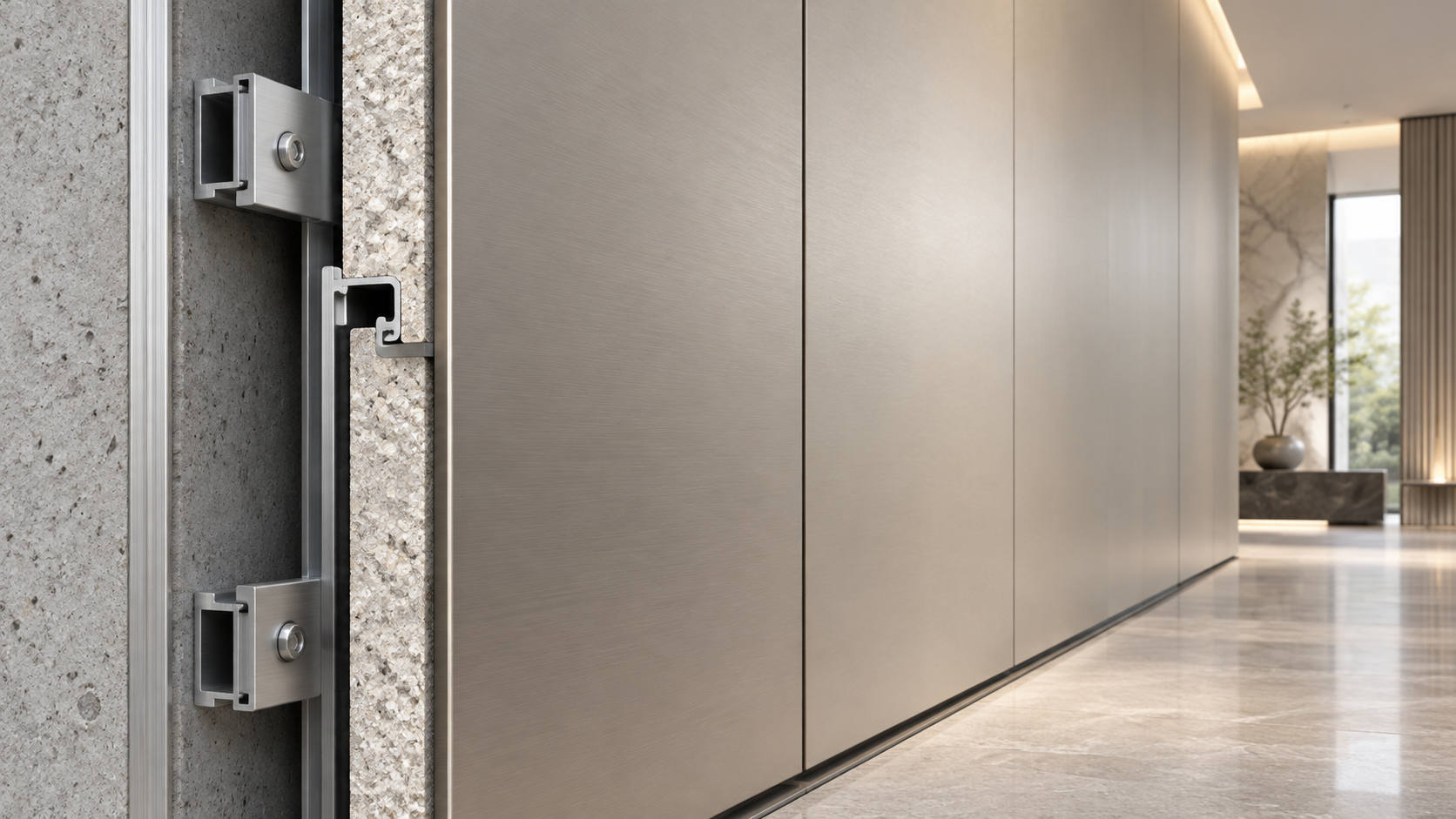
Support configuration matters as much as material selection. Continuous rails, point fixings, perimeter frames, and concealed stiffeners each create different load paths and deformation patterns.
Evaluators should request span tables based on realistic conditions. Confirm whether stated spans assume simple supports, continuous supports, specific wind pressure, or a defined deflection limit.
Do not compare span values without checking panel orientation. Honeycomb panels may perform differently depending on core direction, support layout, panel aspect ratio, and installed edge conditions.
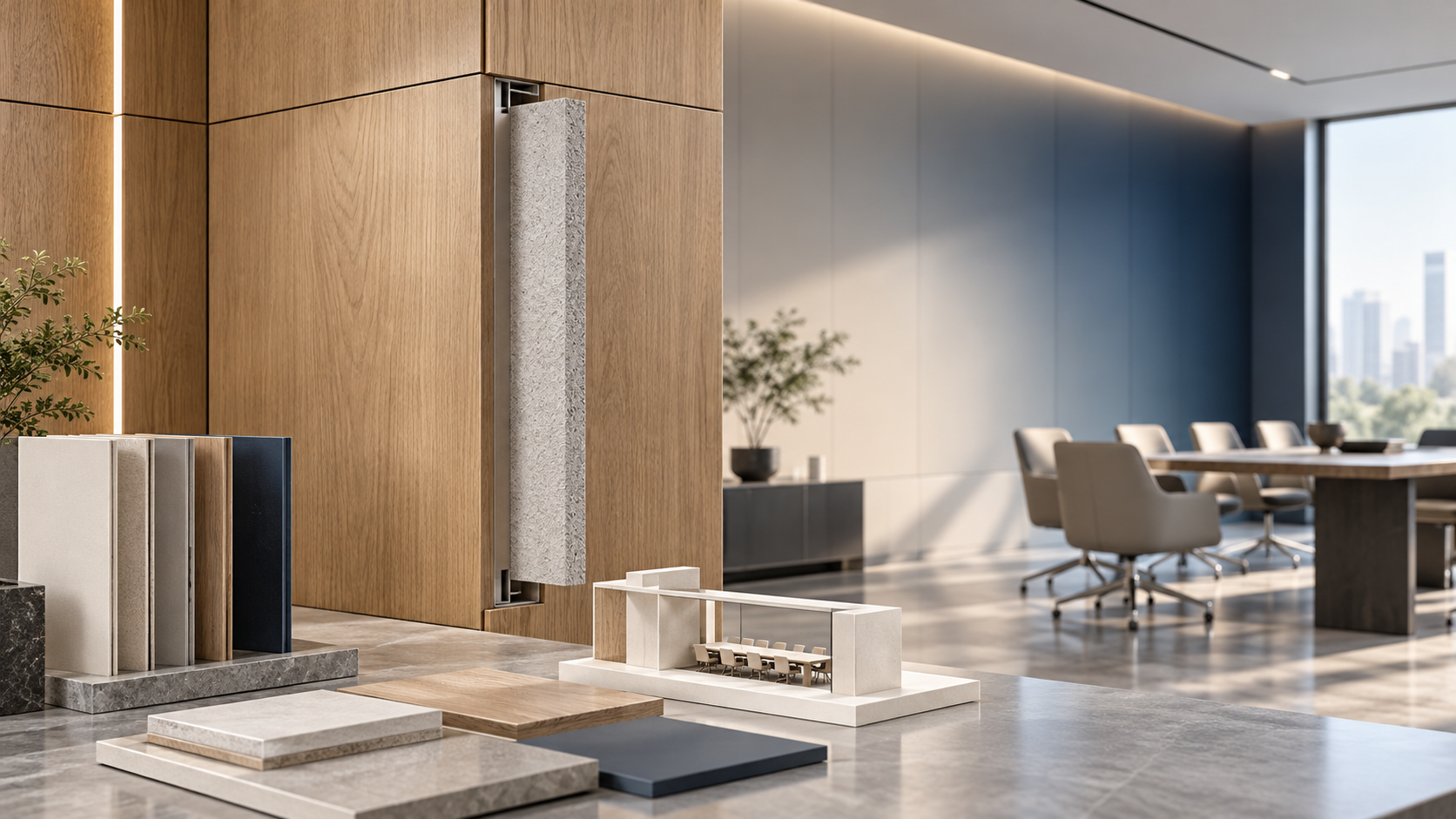
Mock-ups are valuable for high-visibility work. A full-size sample can reveal oil-canning, joint alignment issues, fastener read-through, color variation, and interface problems that datasheets may not show.
A rigorous evaluation combines calculations, supplier test data, installation details, and visual review. No single number fully predicts whether a decorative panel will perform satisfactorily in place.
Where Aluminum Honeycomb Panels Deliver the Most Value
Exterior façades are a common application because large aluminum surfaces need controlled flatness while the building envelope benefits from lower dead load and efficient supporting systems.
For curtain-wall infill or rainscreen cladding, panel selection must account for wind loading, drainage, thermal expansion, fire regulations, fixing systems, and compatibility with adjacent materials.
Interior wall panels benefit from low weight during installation and renovation. Honeycomb construction can create substantial-looking surfaces without making partitions unnecessarily heavy or difficult to modify.
Ceilings are another strong use case. Lightweight rigid panels reduce overhead loading and can support clean modular layouts, metallic finishes, access panels, and integrated lighting details.
Furniture and home furnishings can use honeycomb panels for doors, tabletops, partitions, shelving, and decorative fronts. Their flatness supports refined finishes while reducing overall product weight.
Elevator interiors, retail displays, exhibition structures, and transportation-related decorative elements also value the combination of manageable weight, durable surfaces, and dimensional stability.
The material is especially useful when designers require a large visual plane but the structure cannot accept the weight of thick solid aluminum, stone, glass, or dense board products.
Its value is lower where heavy point loads, severe abrasion, highly complex forming, or very small components dominate. In those cases, another substrate or reinforcement strategy may be preferable.
Fire, Moisture, and Environmental Conditions Need Separate Review
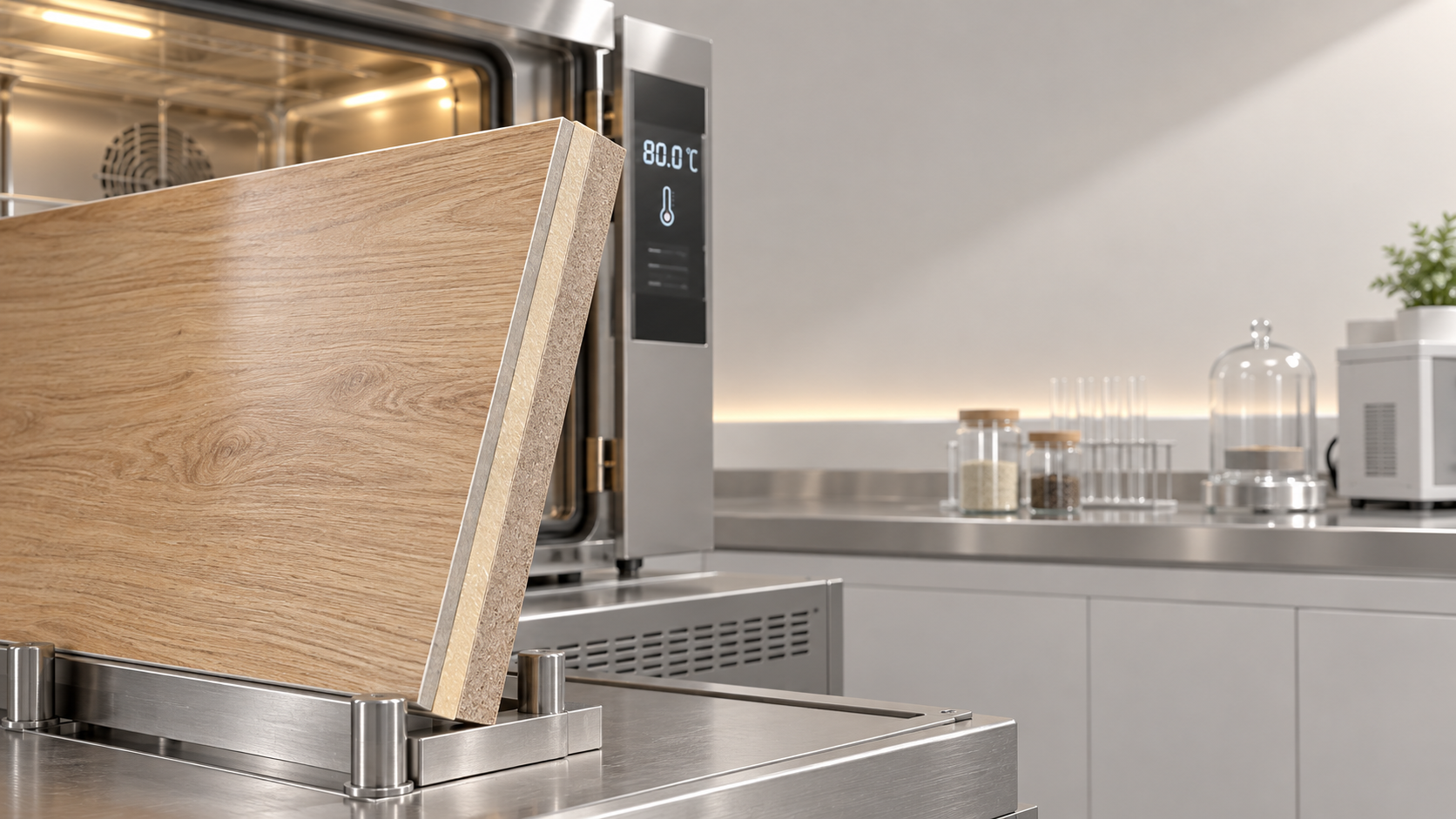
Aluminum itself is noncombustible, but a finished panel assembly must be evaluated as a system. Core design, adhesives, coatings, sealants, insulation, and adjacent materials affect fire performance.
Technical evaluators should not assume that every aluminum-faced panel meets the same fire classification. Request project-relevant test reports and verify the applicable local code requirements.
An aluminum honeycomb core can support fire-conscious design, but compliance depends on certified construction details. Product claims should be matched to the exact panel configuration being supplied.
Moisture resistance also depends on detailing. Aluminum surfaces resist corrosion well in many environments, yet exposed core edges, incompatible metals, and trapped water can create long-term problems.
Exterior systems need drainage, ventilation where appropriate, sealed interfaces, and suitable fasteners. Coastal, industrial, and high-humidity conditions may require additional corrosion-resistance assessment.
Thermal movement should be considered for long panels and dark finishes. Aluminum expands and contracts with temperature changes, so restrictive fixing arrangements can cause distortion or joint stress.
For indoor applications, assess cleaning chemicals, humidity, indoor air quality requirements, and the durability of decorative coatings. Appearance performance often depends more on finish selection than core construction.
Environmental evaluation should include material efficiency, service life, repairability, recycled aluminum content, and end-of-life separation. Lightweight construction can reduce material use, but responsible specification requires broader review.
Common Evaluation Mistakes That Create Avoidable Risk
A common mistake is selecting panels only by nominal thickness. Two panels with the same overall thickness can have significantly different face sheets, core densities, adhesives, and structural behavior.
Another error is treating aluminum honeycomb and aluminum composite panels as interchangeable. Both are lightweight, but their cores, stiffness profiles, fire behavior, and intended applications can differ substantially.
Evaluators also sometimes focus on panel cost while overlooking subframe, labor, transport, waste, and maintenance. A higher-performing panel can reduce installed system costs in certain projects.
Ignoring fabrication requirements creates another risk. Cutting, routing, folding, edge closure, fixing, and sealing methods must be compatible with the selected panel and finish.
Unverified finish samples can lead to visual disputes. Color, gloss, texture, reflectivity, and coating consistency should be approved under the project lighting conditions whenever possible.
Do not accept generic testing without checking sample relevance. Test reports should identify the panel composition, thickness, finish, mounting method, and standard used for assessment.
Installation guidance must be reviewed before procurement. A technically strong panel can still fail visually or mechanically when support spacing, joint width, fastener type, or expansion allowance is incorrect.
Finally, assess supplier consistency. Repeatable manufacturing, traceable material specifications, quality control, and responsive technical support matter when a project includes large quantities or custom finishes.
A Practical Selection Framework for Technical Evaluators
Begin by defining the application clearly: exterior or interior, vertical or overhead, visible or concealed, humid or dry, high-impact or protected, and standard or fire-regulated.
Next, establish performance criteria before reviewing products. Include maximum panel weight, required span, allowable deflection, surface flatness, impact resistance, finish durability, and fire documentation.
Then identify the support concept. Determine framing material, fixing locations, joint treatment, panel orientation, movement allowance, edge closure, and how loads transfer into the building structure.
Request project-specific samples and data. A useful supplier package should show the proposed construction rather than only a catalogue image or a generic statement of product capability.
Compare alternatives using total system value. Consider panel mass, structural demands, fabrication complexity, installation time, visual quality, maintenance exposure, compliance evidence, and expected service life.
Where the project is technically sensitive, require a representative mock-up. This is particularly important for large panels, reflective finishes, curved interfaces, demanding fire requirements, or exposed external conditions.
Document approved panel details before ordering. Changes to face thickness, core density, coating, adhesive, fabrication method, or fixing pattern can alter performance and should be controlled.
This process helps evaluators avoid vague material comparisons. It turns the decision into a verifiable assessment of whether a panel system meets the actual project requirements.
Final Assessment: Lightweight Construction Works When the System Is Specified Correctly
Aluminum Honeycomb Panels reduce weight without sacrificing rigidity when their sandwich structure, dimensions, face sheets, core, bonding, and installation details are matched to the application.
They are not simply thin decorative skins. Properly engineered panels can create large, flat, stable surfaces while reducing dead load, handling effort, and demands on supporting structures.
For technical evaluators, the decisive questions concern deflection, support conditions, finish performance, fire documentation, edge protection, environmental exposure, and supplier-controlled manufacturing consistency.
Projects should prioritize verified system data over broad marketing descriptions. The best specification is one that connects material construction directly to measurable performance and installation reality.
Shenyang Shengshi Meilin Technology Co., Ltd. supports decorative material projects with an emphasis on innovation, quality, environmental responsibility, and practical application across construction and furnishing environments.
For a decorative option that can be reviewed alongside project-specific structural, visual, and finishing requirements, examine Gilded-MLSW029 as part of a complete panel-system evaluation.
RECOMMEND

Oct 12, 2026
Where Magnesium Oxysulfate Honeycomb Panels Fit in Fire-Sensitive Interiors
Magnesium Oxysulfate Honeycomb Panels offer a lightweight, fire-conscious solution for wall cladding, partitions, ceilings, furniture, and refurbishment interiors.
Oct 12, 2026
PUR Laminated Decorative Panels: Bond Strength, VOCs, and Heat Resistance Explained
PUR Laminated Decorative Panels: explore bond strength, VOC control, and heat resistance for furniture and interiors. Learn how to specify durable, low-emission panel systems.
Oct 11, 2026
Custom Composite Panel Design: Selecting Skins, Cores, and Fixing Methods
Custom Composite Panel Design guide: choose durable skins, high-performance cores, compatible bonds, and smart fixing methods for safer, longer-lasting decorative panels.
Oct 11, 2026
What Decorative Panel Design Services Should Include Before Fabrication Begins
Decorative Panel Design Services help turn concepts into fabrication-ready solutions with material guidance, fire planning, samples, drawings, cost control, and quality checks.