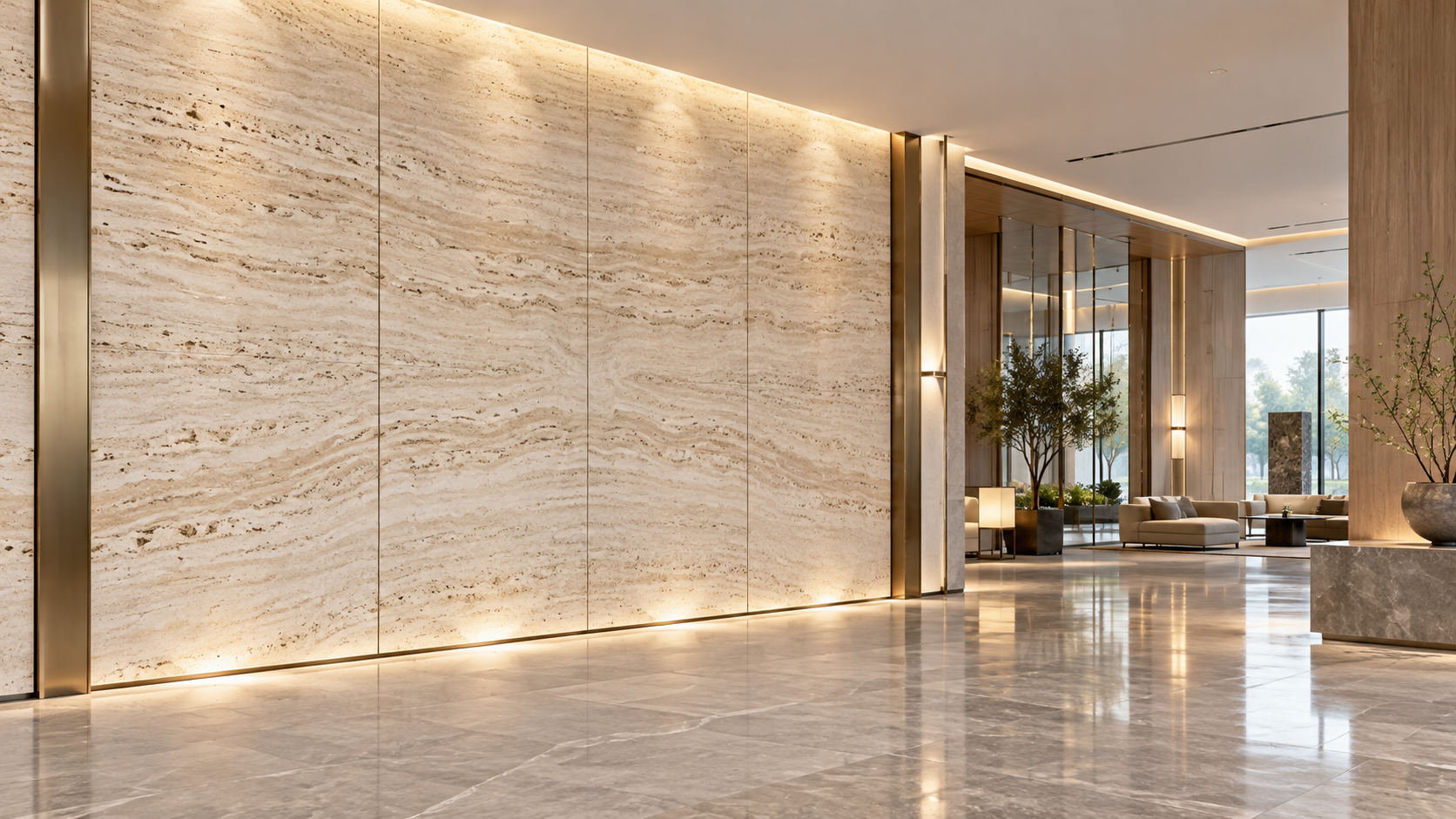


What to verify before choosing a custom decorative panel OEM
A decorative panel can look acceptable in a small sample set and still become a costly source of friction once it reaches a project site. A finish may shift under different lighting, the core may not match the approved specification, edge treatment may be inconsistent, or replacement panels may arrive with a visibly different tone. These problems often surface after installation has started, when changing suppliers is disruptive and rework affects several trades at once.
This is why choosing a Custom Decorative Panel OEM should not begin and end with a quotation comparison. Price matters, but it only becomes meaningful when the quoted panel, documented material construction, approved sample, production output, packing method, and delivery commitment all refer to the same product. Before placing an order, it helps to treat supplier selection as a verification process rather than a finish-selection exercise.
Start with the panel’s actual use, not the catalogue name
Terms such as “decorative panel,” “mirror finish,” “wood grain,” or “fire-resistant board” can describe products with very different constructions. A buyer may be looking at the same visual effect from several suppliers while comparing panels made with different substrates, surface layers, backing treatments, thickness tolerances, and edge solutions. The result is an uneven comparison: one quote may include a fully specified panel, while another covers only a basic version.
Before asking an OEM to quote, define where the panel will be used and what can reasonably happen to it during its service life. A lobby wall, a retail display, a fitted wardrobe, a lift interior, and a hospitality room may each have different demands. Moisture exposure, cleaning frequency, impact risk, reflected light, fire requirements, installation method, and adjoining materials can all change the right construction.
It is useful to prepare a short technical brief in plain language before discussing finishes. It does not need to be overly formal, but it should remove ambiguity. Include the intended application, panel dimensions, desired thickness, visible face, reverse side expectations, edge requirements, quantity by size, installation direction, and any project-specific compliance needs. If an exact design reference exists, identify which visual details are mandatory and which may vary slightly.
For example, a panel that must align across a large wall should be discussed as a sequence, not as individual pieces. Grain direction, pattern repeat, joint placement, batch continuity, and cut orientation should be considered before production. A supplier may be technically capable of making the panel but still need clear instructions to avoid a layout that looks interrupted after installation.
Separate the visible finish from the material structure
One common sourcing mistake is approving a decorative face without confirming what supports it. The finish attracts attention, especially when a project depends on color, gloss, texture, or reflection. Yet the substrate and bonding system largely influence flatness, screw holding, edge performance, dimensional stability, and suitability for the intended environment.
Ask the supplier to describe the full construction rather than only the surface name. A useful response should clarify the facing material, core or substrate type, backing layer where applicable, adhesive or lamination approach, nominal thickness, available formats, and edge options. If a panel is described as moisture-resistant, impact-resistant, or fire-related, ask what exact construction and documentation support that description.
The goal is not to force every OEM into one material route. Different constructions are appropriate for different applications. The important point is traceability: the material used for the approved sample should be the material planned for production unless a change has been discussed and accepted.
Questions that uncover hidden substitutions
- Is the quoted core identical to the core used in the sample?
- Can the face, backer, adhesive, or protective film be changed during production without written approval?
- Which dimensions are nominal, and which tolerances can affect installation?
- Will the panel be supplied raw, cut to size, edged, drilled, routed, or protected for transport?
- Are matching trims, edge bands, or related components made from the same finish batch?
These questions are especially important when the panel will be fabricated after delivery. A face that performs well during factory cutting may react differently when routed, folded, bonded, or exposed to heat during downstream processing. If there is a planned fabrication step, share it early. It is better to discover limitations through a trial piece than through a full production run.
Verify compliance as a document-and-sample exercise
Fire performance and environmental requirements are often mentioned early in a conversation but examined too late. A project may require particular test evidence, declarations, restricted-substance information, or emissions documentation depending on location and application. The supplier should not be expected to guess which requirement applies; the buyer should communicate the relevant standard or project requirement clearly.
When reviewing documents, check whether they relate to the same panel configuration being offered. A report for one substrate, thickness, surface layer, or production method may not automatically apply to another. Pay attention to the product description, test specimen construction, stated scope, issue date, and the organization that issued the document. If any part of the construction differs from the planned order, ask for clarification rather than assuming equivalence.
Environmental review deserves the same care. Request the available information for the actual materials used, particularly where the project has limits on emissions or substances. Do not rely solely on broad statements such as “eco-friendly” or “safe.” A dependable supplier should be able to explain what information is available, what it covers, and whether it corresponds to the selected construction.
Physical samples matter because paperwork cannot show every practical issue. Examine the sample under lighting similar to the installation environment. Glossy, metallic, mirrored, textured, and dark finishes can look substantially different under warm, cool, direct, and diffuse light. View several pieces together when possible. A single small swatch may not reveal variation in reflectance, texture direction, pattern continuity, or surface waviness.
Look beyond the first sample approval
An approved sample is necessary, but it is not a complete quality plan. Decorative panels are often judged by visual consistency, and visual consistency requires agreement about what will be checked during production. Without that agreement, disagreements can arise later over issues that both parties considered obvious but never defined.
Ask how the OEM controls incoming materials, surface lamination or coating, cutting accuracy, edge finishing, protective-film application, and final packing. The answer does not need to be a lengthy presentation. What matters is whether the supplier can explain practical control points and show that finished panels are inspected before dispatch.
For appearance-sensitive work, establish a retained approval sample. Identify it clearly with the finish code, panel construction, date, and any agreed limitations. The retained sample should be a reference for production, not merely a sales sample. Where color or reflectance is critical, discuss whether production will be managed by batch and how replacement material will be handled if needed later.
Packaging deserves more attention than it usually receives. Even a well-made decorative panel can be damaged by insufficient separation, weak corner protection, poor pallet restraint, or unsuitable protective film. Ask whether panels are packed face-to-face, whether corners are protected, whether sheets are separated, and how the packs should be stored after delivery. This is particularly relevant for high-gloss and reflective surfaces, where minor abrasion may be highly visible.
Assess capacity through the production path
Capacity is not simply a factory-size question. A supplier may have enough equipment to produce the total quantity but still face difficulty with a short lead time, multiple panel sizes, custom cutting, special finishes, or a schedule that requires staged deliveries. The more customized the order, the more important it becomes to understand the production path.
Discuss the sequence from material preparation through finishing, cutting, inspection, packing, and dispatch. Ask which stages are carried out internally and which may involve external processing. External processing is not automatically a problem, but it should be visible in the timeline because it can affect communication, quality control, and scheduling.
A practical conversation should also cover the minimum order expectation for a custom finish, the ability to make a pre-production sample, the time needed for material sourcing, and the process for confirming cut lists. If delivery needs to be phased, make sure each batch is identifiable and that the supplier understands which panels must match one another.
When comparing a Custom Decorative Panel OEM, be cautious with lead times that seem detached from the stated customization level. A very fast promise may be realistic for stocked formats and standard finishes, but a custom construction or special surface usually involves more decisions. The best response is one that identifies the assumptions behind the schedule instead of offering a vague assurance.
Make quotation comparison more useful
The lowest unit price can be misleading when quotations cover different material constructions or service scopes. To compare suppliers fairly, use one request document and ask each one to respond against the same basis. Where a supplier proposes an alternative, ask for it to be listed separately rather than silently substituted into the main quote.
Review the commercial details line by line: whether cutting is included, how offcuts are treated, what protective packaging is included, which edge treatments are priced, whether drawings require formal approval, and how freight responsibility is defined. Clarify the unit of sale as well. Panels may be priced by piece, square meter, sheet, or project lot, and the apparent difference can become substantial once cutting yield and waste are considered.
It also helps to ask what happens if an issue is found before installation. A clear response should explain the notification process, the information needed for review, and whether unused panels should be retained for inspection. This is not about expecting failure; it is about ensuring that both sides know how to preserve evidence and avoid avoidable disputes.
Use a controlled approval sequence before committing
A reliable selection process usually becomes simpler when decisions are made in the right order. First confirm the intended application and performance needs. Then narrow the construction options. After that, approve a representative sample, verify relevant documentation, confirm drawings and visual references, and only then finalize the commercial order details.
Do not treat a verbal confirmation as a substitute for a specification. The purchase order, approved drawing, finish reference, and agreed sample should point to the same configuration. If an important detail is not documented, it may be interpreted differently later by sales staff, production personnel, and installers.
Before release, review the order as if it will be handed to someone who has never seen the original discussion. Can that person identify the exact face, core, size, quantity, edge treatment, packing expectation, finish direction, and compliance documents required? If not, the order is still open to interpretation.
For projects that use a reflective decorative surface, viewing the finish in its intended setting is especially worthwhile. A product such as Mirror-Silver Mirror may be considered as part of the finish-selection process, but its suitability should be assessed against the panel construction, fabrication requirements, protective handling, and visual expectations of the specific application.
The strongest OEM relationship is usually built on fewer assumptions, not more promises. When material structure, approval samples, quality expectations, documents, production timing, and delivery conditions are verified before the order is released, the buyer has a clearer basis for comparing offers and a much better chance of receiving panels that are workable, consistent, and appropriate for the project.
RECOMMEND

Oct 14, 2026
How Can You Verify Decorative and Structural Panel Performance?
How to verify if engineered panel systems meet both decorative and structural performance standards? Discover practical checks for durability, strength, fire safety, and emissions before you specify.
Oct 14, 2026
Is Custom Surface Finishing Available for Small-Batch Design Projects?
Is surface finish customization available for small batch designer projects with unique color requirements? Explore practical options for custom colors, textures, samples, and reliable decorative material production.
Oct 13, 2026
Can Stone-Look Decorative Panels Match Natural Stone in Premium Projects?
Can stone look decorative panels really match natural stone in high-end project settings? Explore premium design, fire performance, installation, and specification insights.
Oct 13, 2026
What Fire Rating Should Decorative Wall Panels Meet in Hotel Lobbies?
What fire rating should decorative wall panels meet for high-end hotel lobby applications? Explore Class A, B-s1,d0, system testing, and approval essentials for luxury hospitality interiors.