How Moisture-Resistant Are Composite Wall Panels?
How Moisture-Resistant Are Composite Wall Panels?
Can composite wall panels withstand humid bathrooms, busy kitchens, or damp commercial interiors without swelling or losing their finish? When evaluating composite wall panels moisture resistance, the answer depends on the core material, surface protection, edge sealing, and installation quality—not simply the product label. Some panels handle everyday humidity and occasional splashes well, while others require additional protection in wet areas. Understanding these differences helps designers, contractors, and property owners choose decorative wall solutions that balance appearance, durability, and maintenance.
The distinction is between a panel that tolerates moisture and a wall system that keeps water out. Those are not the same thing. A water-resistant face can remain intact while moisture enters through a cut edge, an outlet opening, or an unfinished junction behind it.
Moisture-resistant does not automatically mean shower-ready
“Composite wall panel” describes a broad product category, not one material with a predictable moisture rating. It can refer to wood-plastic composites, polymer-and-mineral boards, laminated wood-based panels, or other multilayer constructions. Their response to water can differ substantially.
It also matters how the water reaches the panel. Humid air exposes materials to water vapor. Splashes create short periods of liquid contact. A shower wall receives repeated wetting, often with warm water and cleaning products. A leaking pipe can wet the back continuously without any visible warning.
A product suitable for a ventilated restroom wall may therefore be unsuitable inside a shower enclosure. Even a panel described as “waterproof” needs clarification: does that claim apply to the core, the decorative face, or a complete installed assembly with tested joints and accessories?
For specification purposes, treat moisture resistance as an exposure-specific property. Ask what conditions the product is approved for rather than accepting a yes-or-no answer about whether it resists water.
Start with the core, then examine every protective layer
Wood-containing composites need closer attention at exposed edges
Wood fibers and wood flour can absorb moisture. In wood-plastic composites, the polymer helps limit exposure, but performance still depends on formulation, manufacturing quality, and how completely the wood component is protected. The WPC label alone does not establish suitability for prolonged wet service.
Laminated MDF or particleboard presents a different risk. Its decorative surface may be easy to wipe clean, while an unprotected core can swell after water enters at an edge or fixing hole. Moisture-resistant grades may perform better than standard grades, but they should not be treated as waterproof without supporting documentation.
Polymer-rich and mineral-filled panels still require product-specific evidence
Some polymer-rich or polymer-and-mineral panels have relatively low water absorption. That can make them useful candidates for humid interiors, but it does not establish the performance of the finish, adhesive bond, or joint system. Mineral-based composites also vary: some are porous, and some incorporate moisture-sensitive components.
Low absorption is only part of the decision. Panels may expand and contract with temperature, and their decorative films or coatings must remain bonded during service. A stable core with a lifting surface layer still creates a maintenance problem.
The face is not the whole panel
Coatings, laminates, and decorative films often provide the first barrier against splashes. Scratches, poorly bonded areas, and unfinished cuts can interrupt that protection. Inspect the back, edges, and machining details as carefully as the display surface, especially where panels will be cut around plumbing or electrical fittings.
Match the panel to the actual exposure zone
A room name is not a complete specification. Within one bathroom, a wall beside the entrance faces different conditions from the wall behind a basin or inside a shower. Breaking the project into exposure zones avoids both under-specification and unnecessary spending.
- Humid but usually dry walls: Prioritize dimensional stability, ventilation, and compatibility with the substrate. Decorative panels may be appropriate where condensation does not persist.
- Intermittent splash zones: Check edge protection, sealed penetrations, cleanability, and junctions around basins or counters. Water should not collect against exposed panel ends.
- Direct, repeated wetting: Require explicit suitability for the application, together with installation details for joints, corners, penetrations, and any required waterproof backing.
- Washdown or persistently damp spaces: Evaluate the complete assembly against cleaning methods, water exposure, chemicals, and drying conditions. General decorative-wall claims are insufficient.
Kitchens introduce another variable: heat. A moisture-tolerant panel is not automatically suitable behind a hob or beside hot equipment. Check temperature limits, fire requirements, and cleaning compatibility separately. Passing one requirement does not imply compliance with the others.
Installation is where a good material can become a weak wall
The most vulnerable locations are often predictable: internal corners, bottom edges, plumbing penetrations, joints, and transitions to other finishes. These details deserve drawings, not just a general instruction to “seal all gaps.”
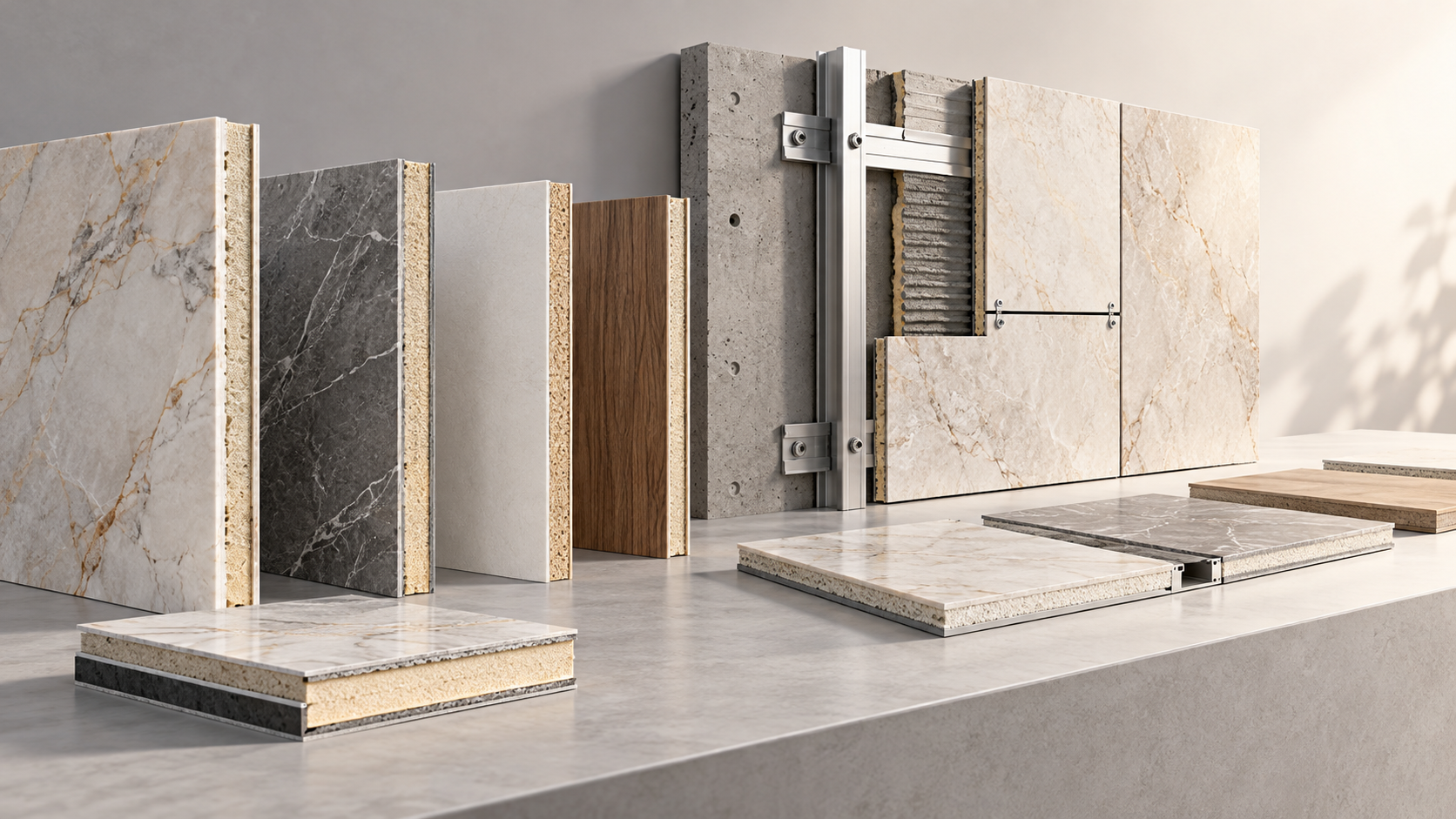
Interlocking profiles can help align panels and reduce visible gaps, but a tongue-and-groove connection is not necessarily watertight. Confirm whether the system requires sealant, a gasket, a joining profile, or another treatment. Where movement is expected, the joint must accommodate it without opening a water path.
Adhesive selection also matters. It must suit both the panel backing and the substrate, tolerate the expected environment, and be applied according to the specified method. Moisture-resistant panels cannot compensate for weak paint, dusty masonry, uncured plaster, or a damp substrate outside the adhesive manufacturer’s limits.
Do not cover an active leak or unexplained dampness. A new finish can conceal deterioration while moisture continues to accumulate behind it. Where the design requires a waterproof membrane, the decorative panel should not be assumed to replace that layer unless the complete system is documented for that purpose.
Vapor control requires care as well. A low-permeability finish can change how an existing wall dries. Exterior walls, cold surfaces, and air-conditioned interiors may need an assembly-specific condensation assessment; adding an impermeable layer is not automatically an improvement.
What evidence should a supplier provide?
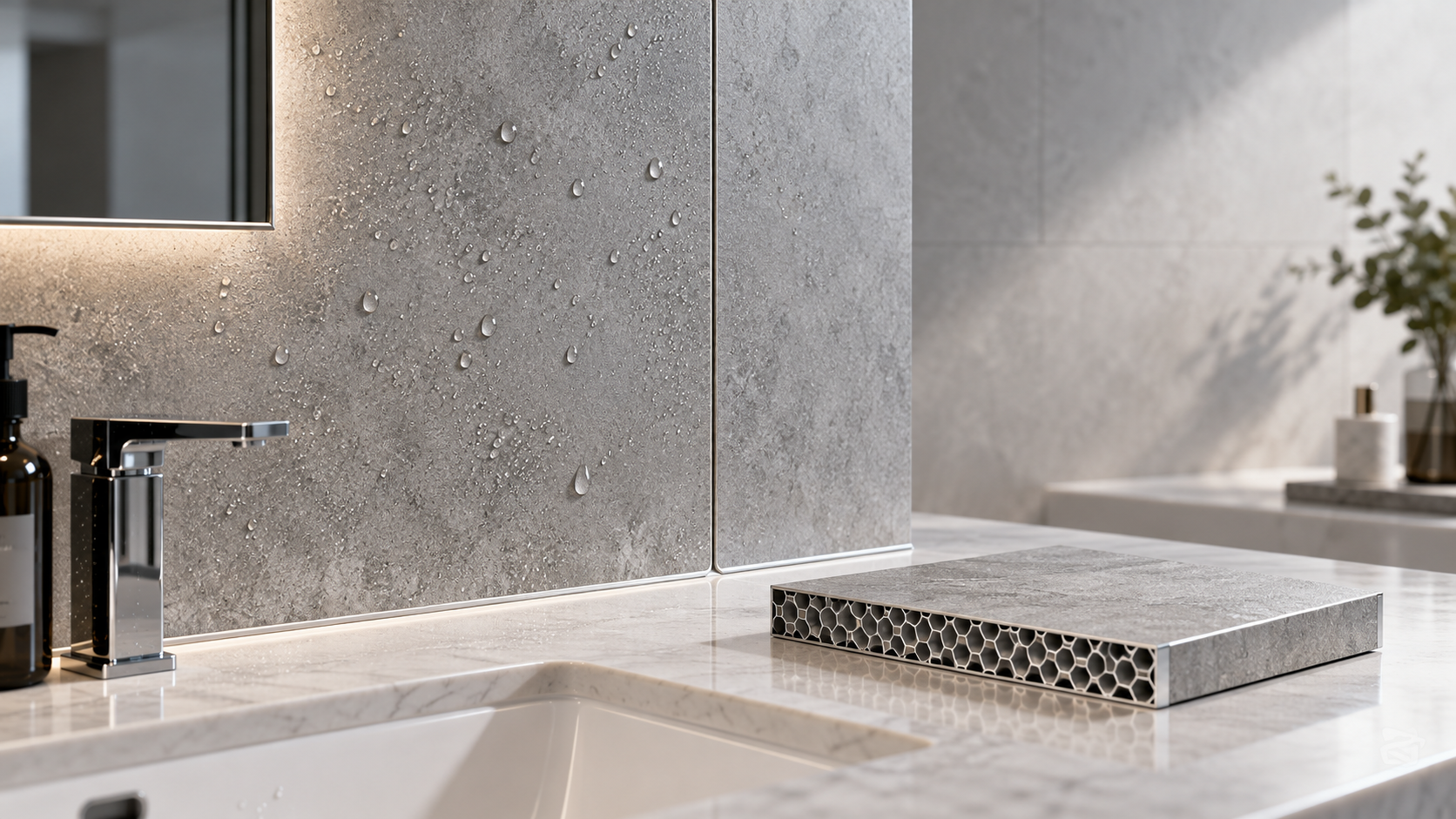
A useful technical discussion goes beyond a photograph of water beading on a sample. Surface beading shows limited information about absorption, swelling, or long-term bond integrity.
Request the exact product construction and relevant test reports. For water absorption or thickness swelling results, check the test method, conditioning, exposure duration, specimen thickness, and whether cut edges were exposed. Results obtained under different procedures should not be compared as though they were equivalent.
The report should identify a construction representative of the proposed supply, including the core and surface system. A result for a different thickness or finish may not answer the project question. If documentation is incomplete, ask for the applicable limitation rather than filling the gap with assumptions.
For commercial work, the submittal should also explain approved applications, installation accessories, cleaning restrictions, and warranty exclusions. Fire performance, emissions, and local building requirements remain separate checks. A moisture test is not evidence of fire safety, and a fire classification says little about resistance to water.
Maintenance conditions can change the material decision
Think about who will clean the wall and how. A hotel bathroom, restaurant service corridor, and residential cloakroom may use similar-looking finishes but experience very different cleaning routines. Repeated exposure to incompatible cleaners can dull a surface, damage a coating, or weaken sealants.
Confirm approved cleaning agents and methods before specification. Do not assume that pressure washing, steam cleaning, abrasive pads, or strong disinfectants are acceptable simply because the panel resists moisture. Cleaning instructions should cover joints and trims as well as the decorative face.
Mold resistance also needs careful wording. A panel may offer little nourishment for mold, yet dust, soap residue, sealants, or damp material behind it can still support growth. Ventilation, leak prevention, and drying remain necessary. Watch for lifting edges, stained joints, persistent odors, or soft backing materials rather than waiting for visible damage across the whole wall.
Specify an assembly, not a reassuring label
For a project involving several finishes, coordination can be as important as panel selection. Shenyang Shengshi Meilin Technology Co., Ltd., based in Shenyang, Liaoning Province, focuses on new-material research and application, with a portfolio spanning decorative materials, fireproof sealing materials, furniture, and home furnishings. That scope is relevant when discussing interfaces between finishes, but each proposed product still needs its own application evidence. Fireproof sealing materials, for example, should not be assumed to function as wet-area joint sealants.
Before approving a panel, define the exposure zone, identify the substrate, obtain the relevant performance documentation, and agree on joint and penetration details. For more demanding installations, review a mock-up that includes a corner, a cut edge, and a service opening—not just a flat decorative sample. A mock-up helps assess workmanship, but does not replace required testing.
Composite wall panels can be a practical choice for humid interiors and, where specifically supported, wet applications. The deciding question is not whether the surface repels a splash. It is whether the specified core, finish, joints, backing, and maintenance routine can handle the moisture the wall will actually encounter.
RECOMMEND

Oct 27, 2026
Are Aluminum Honeycomb Panels Moisture-Resistant Enough for Bathrooms?
Explore aluminum honeycomb panel moisture resistance for bathrooms. Learn how finishes, sealed edges, and waterproofing help you choose suitable panels for walls, ceilings, and showers.
Oct 27, 2026
How Are Custom Veneer Panels Color-Matched for High-End Interiors?
Explore custom veneer panels color matching for high-end design. Discover how veneer selection, finishes, and lighting create cohesive, luxurious interiors.
Oct 26, 2026
How Do You Choose Fire-Resistant Composite Panels for Commercial Use?
Choose fire resistant composite panels for commercial interior projects. Learn how to verify fire documentation, compare options, and avoid costly specification mistakes.
Oct 26, 2026
Are Meilin Board Custom Panels Suitable for Luxury Hotel Lobbies?
Explore Meilin Board custom decorative panels for luxury hotel lobbies. Discover design considerations and essential fire, emissions, and maintenance checks before specifying your project.