

Decorative Composite Panels vs Traditional Finishes: Which Option Cuts Project Risk?
When a commercial interior project goes off track, the problem rarely starts with color or style. It starts with risk that seemed small at the selection stage: a finish that arrives with inconsistent batches, a wall system that slows down installation, a decorative surface that looks good in samples but becomes difficult to maintain once the building is occupied. That is why the debate between Decorative Composite Panels and traditional finishes matters to business decision-makers. It is not simply a design preference. It is a decision about exposure—to delays, rework, safety concerns, lifecycle cost, and even brand perception.
In many office, hospitality, retail, healthcare, and public-sector projects, traditional finishes such as paint, veneer, stone, ceramic tile, or laminate still have a familiar appeal. They are widely understood, often easy to specify, and linked to established construction habits. Yet familiarity does not always mean lower risk. In fast-moving projects, the safer choice is often the material system that reduces uncertainty across procurement, installation, performance, and upkeep. That is where Decorative Composite Panels deserve serious attention.
Why finish selection has become a risk question, not just a design question
Project teams today are under pressure from several directions at once. Timelines are tighter. Labor is less predictable. Fire safety expectations are rising. End users want clean aesthetics but also durability, easy maintenance, and environmental responsibility. A finish that performs well in only one category may create hidden costs in another.
For enterprise buyers, developers, architects, and procurement managers, the real concern is not whether a wall or ceiling looks impressive on handover day. The concern is whether the chosen finish will continue supporting project goals after installation—without creating maintenance burdens, quality complaints, or avoidable operational disruptions.
This is one reason material innovation has moved to the center of decision-making. Companies focused on new material technologies, such as Shenyang Shengshi Meilin Technology Co., Ltd., have responded to this shift by developing decorative and functional solutions aimed at balancing safety, appearance, and practicality. In a market that increasingly values fire-conscious, environmentally considerate, and visually refined interiors, that balance matters.
Where traditional finishes still make sense—and where they introduce risk
Traditional finishes are not obsolete. Natural stone offers prestige. Wood veneer brings warmth. Paint can be cost-effective for simple spaces. Tile performs well in wet areas. The issue is not whether these materials have value. The issue is how much coordination and performance risk they carry in a specific project context.
Take painted surfaces. They are common, but they can be vulnerable to on-site variability. Surface preparation, ambient conditions, drying time, and labor skill all affect the final result. If the schedule is compressed, the chance of visible imperfections rises. Color consistency can also be a challenge when touch-ups happen in phases.
Natural materials introduce another set of variables. Stone and wood often deliver strong visual character, but they can vary from batch to batch. In premium environments this variation may be welcomed to a degree, yet for brand-led spaces that demand repeatability across multiple sites, too much variation becomes a procurement and quality-control issue.
Then there is installation complexity. Heavy materials may require stronger support systems, specialized labor, and longer installation windows. Wet trades can create sequencing complications with other contractors. When each finish depends on a separate process, risk spreads across more teams, more interfaces, and more opportunities for delay.
How Decorative Composite Panels reduce uncertainty
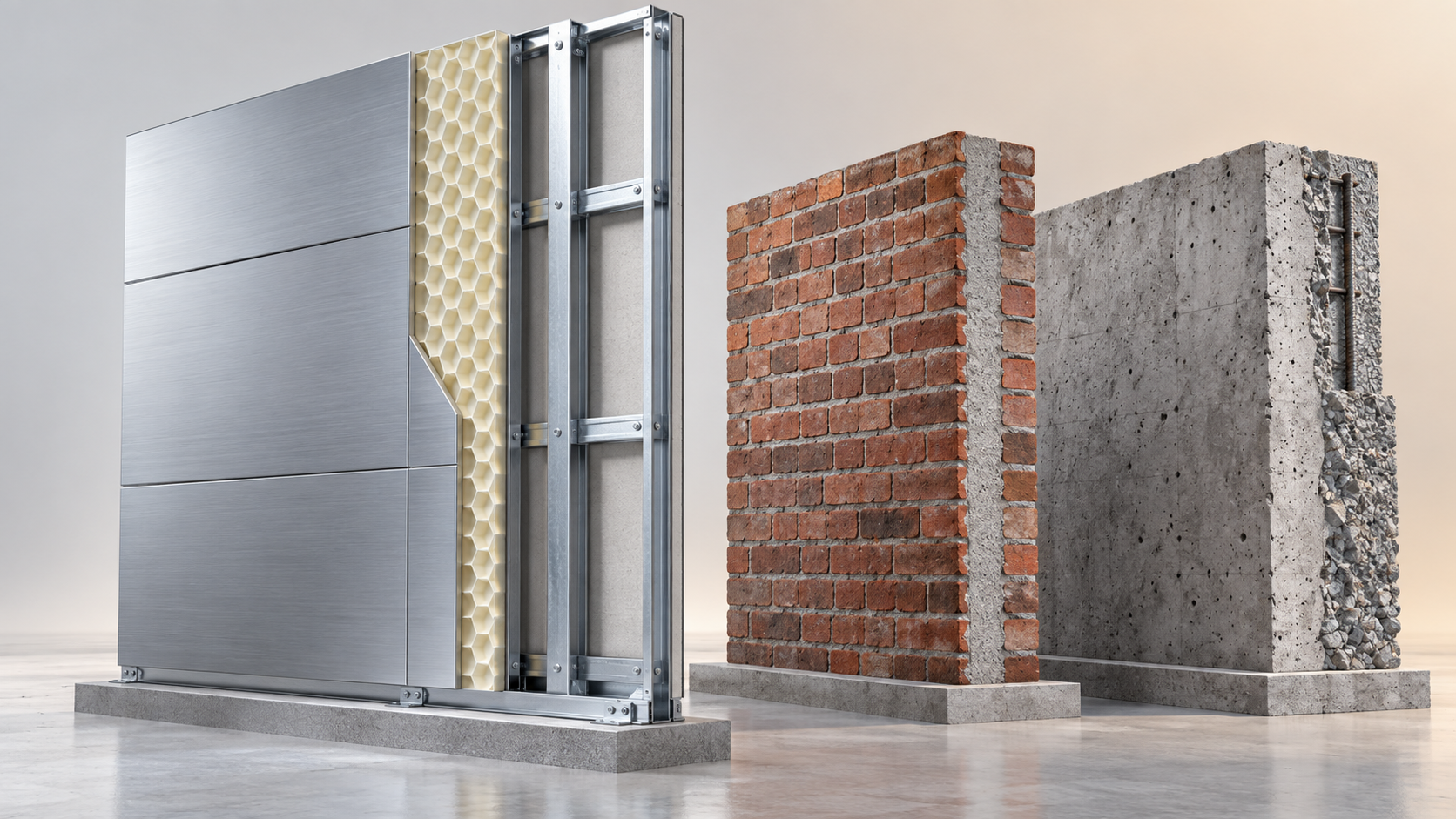
Decorative Composite Panels are increasingly selected because they simplify what is often a fragmented finishing process. Instead of relying on multiple layers, coatings, or labor-intensive assembly on site, they offer a more controlled, factory-finished solution. That changes the risk profile in several useful ways.
First, consistency improves. Factory production generally allows better control over color, pattern, texture, and dimensional accuracy than many traditional on-site finishing methods. For businesses managing chain stores, branded offices, transport hubs, or public interiors, visual consistency is not a minor detail. It supports identity and reduces disputes during inspection and handover.
Second, installation can become more predictable. Many panel systems are designed for faster fitting and cleaner site conditions. That matters when projects must stay operational during renovation, or when contractors are working under strict delivery deadlines. Reduced wet work and fewer finishing steps often mean less disruption and fewer schedule surprises.
Third, Decorative Composite Panels can support integrated performance requirements. Depending on the system, buyers may address decorative goals alongside concerns such as fire resistance, impact resistance, surface durability, or ease of cleaning. Combining functions into one material layer may reduce specification gaps that otherwise appear when separate materials are assembled to achieve the same result.
The risk categories decision-makers should actually compare
Too many material comparisons focus only on upfront price or appearance boards. A better evaluation looks at five practical categories of project risk.
1. Schedule risk
If a finish requires extensive substrate preparation, curing time, specialist labor, or multiple trades, schedule risk increases. Decorative Composite Panels often shorten finishing sequences because they arrive ready for installation or close to final condition. That can be especially valuable in fit-outs where every day of delay affects leasing, opening dates, or tenant operations.
2. Quality variability
Traditional finishes can perform beautifully, but many depend heavily on on-site workmanship. Composite panel systems shift more quality control into manufacturing, where conditions are more stable. For decision-makers, that usually means fewer unknowns at scale.
3. Safety and compliance exposure
Material choice has direct implications for fire performance and occupant safety. This is particularly sensitive in commercial interiors, public buildings, corridors, and high-density spaces. Businesses should look beyond decorative appeal and ask whether a finish aligns with project safety priorities and local requirements. Suppliers with broader expertise in fire-related materials and interior applications may offer more useful guidance during specification.
4. Maintenance burden
A finish that looks elegant but stains easily, chips at impact points, or requires frequent refinishing may become expensive over time. Decorative Composite Panels are often chosen for surfaces that need regular cleaning and dependable appearance retention. This does not make every panel the right fit for every use case, but it does mean lifecycle thinking should be part of the decision from the start.
5. Replacement and renovation flexibility
Some traditional finishes are difficult to repair without visible patching. Others require partial demolition that affects adjacent areas. Panel-based systems may offer more manageable replacement strategies, depending on how they are installed. In high-traffic properties, easier future intervention can significantly reduce operational disruption.
Why “lower initial cost” can be a misleading conclusion
One of the most common procurement mistakes is comparing only purchase price per square meter. On paper, a traditional finish may appear cheaper. In practice, the total installed cost can shift once labor intensity, waste, rework, maintenance, downtime, and sequencing delays are added.
This is where many enterprise buyers rethink the role of Decorative Composite Panels. They may not always be the cheapest line item at the moment of purchase, but they can be the more stable option across the full project cycle. Stability is often what cuts risk: fewer trades to coordinate, fewer quality complaints, fewer surprises during occupancy.
That is also why sample review should go beyond aesthetics. Ask how the material behaves in corners, joints, impact-prone zones, public circulation areas, and cleaning-intensive environments. A polished sample board is easy to admire. A well-managed lifecycle is harder to achieve and far more valuable.
Applications where composite panels often outperform traditional finishes
Not every project has the same pressure points. Still, Decorative Composite Panels tend to show particular value in environments where speed, consistency, and controlled performance matter more than handcrafted variation.
Corporate offices are a strong example. Businesses often want an interior that reflects brand confidence without creating a long fit-out window or ongoing maintenance issues. In this setting, panels can provide a streamlined modern appearance while helping project teams control execution.
Retail chains face a different but related challenge: replication. One flagship store can absorb more customization. Fifty stores cannot. Composite systems are often easier to standardize across locations.
Healthcare and education projects also put pressure on surface durability, hygiene, and maintenance practicality. Traditional finishes may still work in selected zones, but decorative panel solutions are attractive where repeat cleaning, long service life, and controlled installation are priorities.
In hospitality, the equation becomes more nuanced. Luxury projects sometimes favor natural materials for their depth and uniqueness, but many operators increasingly combine statement materials in focal areas with Decorative Composite Panels in circulation, back-of-house, or guestroom surfaces where durability and turnover efficiency are crucial.
What to ask suppliers before you decide
The panel category is broad, and not all products are equal. Decision-makers should avoid treating Decorative Composite Panels as a generic answer. A better approach is to ask targeted questions that reveal whether a supplier understands project risk, not just product features.
Ask about manufacturing consistency, surface durability, installation requirements, compatibility with substructures, cleaning recommendations, and intended application environments. Explore whether the supplier can support both aesthetic and technical selection criteria. If fire safety or sealing interfaces are relevant to the project, it helps to work with a company that understands those adjacent systems rather than viewing decoration in isolation.
For example, a metal-finish solution such as Metal-MLJS9012 may suit projects seeking a contemporary visual language with the practical advantages of a panel-based decorative system. The right choice, however, always depends on where and how the material will be used, not just on how it appears in a catalog.
When traditional finishes may still be the better choice
There are cases where traditional finishes remain the stronger option. Heritage renovations may require authentic materials. Boutique environments may prioritize natural variation over standardization. Highly localized repairs in small spaces may not justify a panel system. Budget-constrained projects with simple technical demands may also prefer conventional finishes if the labor market and schedule conditions are favorable.
The point is not that Decorative Composite Panels replace every traditional material. The point is that they often reduce exposure in projects where consistency, speed, safety alignment, and lifecycle efficiency matter more than artisanal individuality.
So which option cuts project risk?
For most modern commercial and institutional interiors, Decorative Composite Panels usually offer the clearer risk-management advantage. They help control quality variation, simplify installation, support cleaner execution, and reduce the chance that surface finishes become a source of delay or post-handover frustration. Traditional finishes still have important roles, but they often demand more tolerance for on-site variability and more confidence in sequencing, craftsmanship, and future upkeep.
For business decision-makers, the better question is not “Which finish looks better?” It is “Which finish gives the project fewer ways to fail?” In many real-world scenarios, that answer increasingly points toward well-specified composite systems from material partners who understand both aesthetics and performance. Evaluated carefully, options like Metal-MLJS9012 reflect how modern decorative materials can support a more controlled, less risky path from design intent to long-term use.
RECOMMEND

Oct 02, 2026
Are Waterproof Interior Wall Panels Suitable for High-Humidity Commercial Areas?
Waterproof interior wall panels for high humidity commercial use: discover how sealed joints, suitable substrates, and proper installation deliver durable, hygienic wall protection.
Oct 01, 2026
Are Lightweight Composite Wall Panels Lighter Than Traditional Materials?
Lightweight composite wall panels vs traditional materials weight: compare kg/m², installation benefits, and key fire, fixing, and code factors.
Sep 30, 2026
How to Select Fireproof Waterproof Wall Panels for Commercial Spaces
Luxury interior wall panels with stone texture finish options: learn how to select fireproof, waterproof systems for durable, elegant commercial spaces.
Sep 29, 2026
How Reliable Is Meilin Board for OEM Commercial Interior Panels?
Fireproof waterproof composite wall panels for commercial spaces: discover how Meilin Board supports reliable OEM interiors with customizable finishes, quality control, and durable performance.