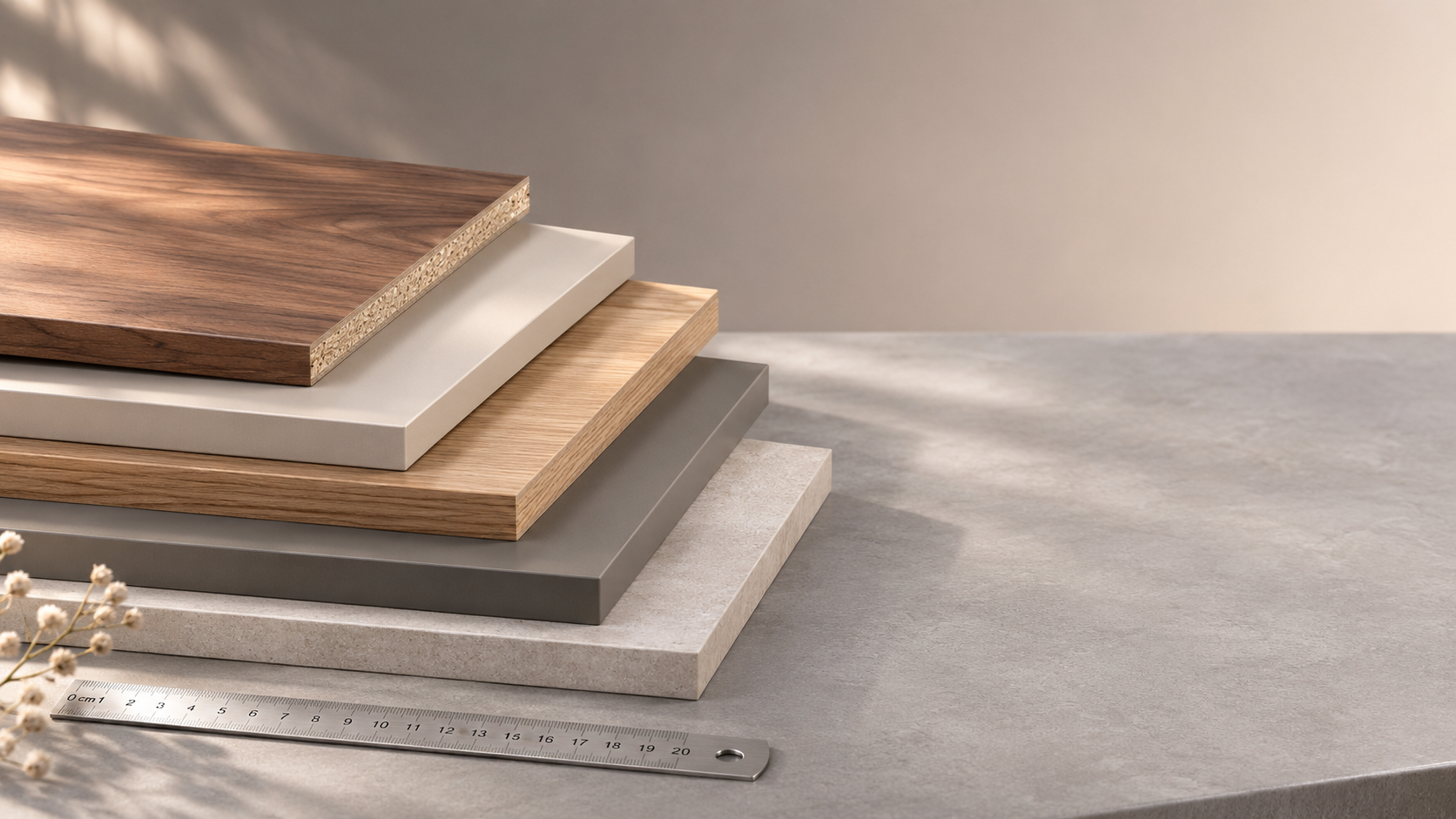
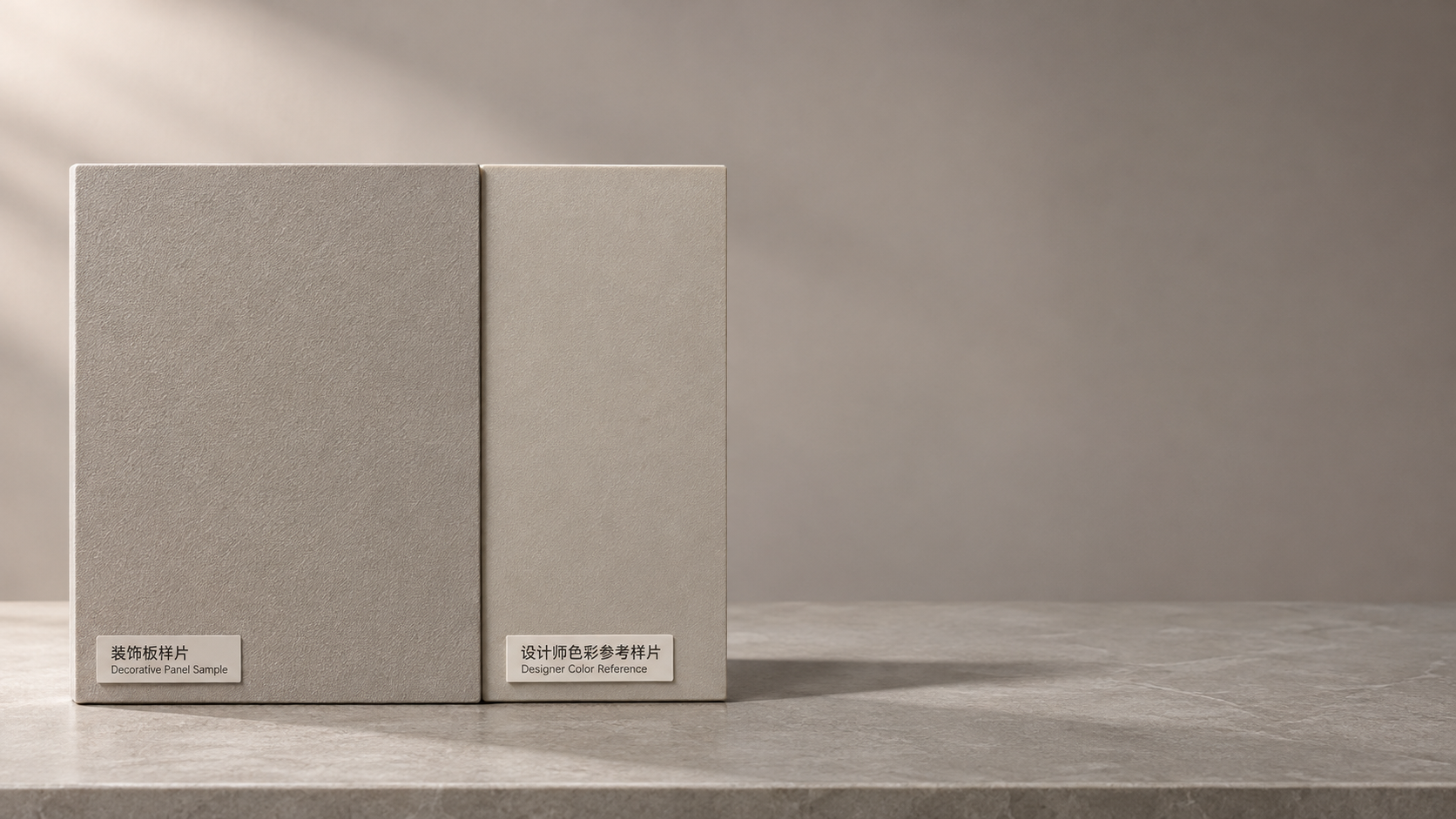
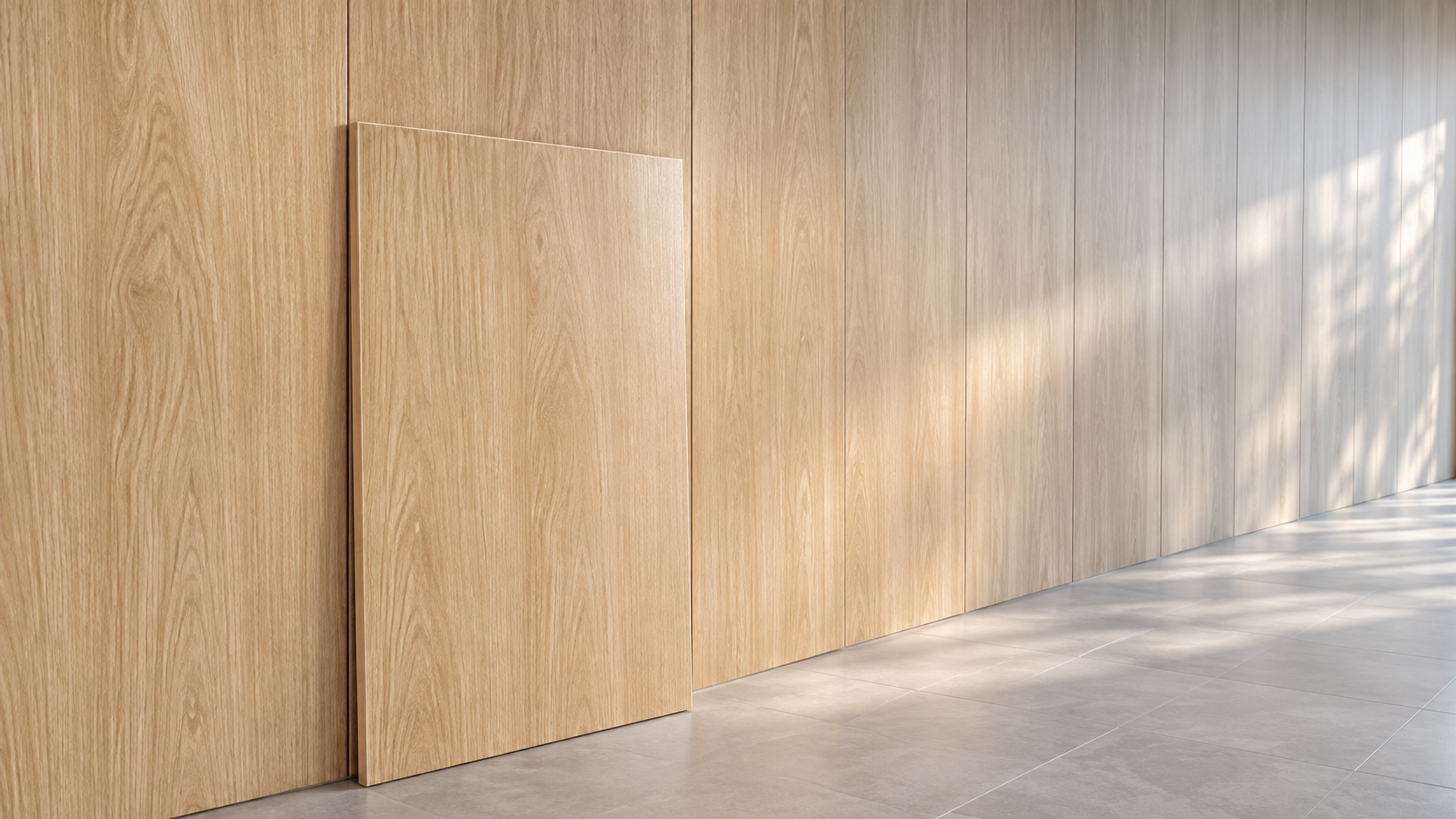
How Long Does It Take to Make a Custom Panel Sample?
How long does a custom panel sample take to make? The answer depends on the panel’s material, finish, dimensions, and design complexity, as well as the availability of raw materials and production equipment. For architects, interior designers, and purchasing teams, understanding these factors makes it easier to plan approvals without discovering too late that a seemingly small sample needs several production steps.
As a general planning guide, a straightforward decorative panel sample using available materials and an existing finish may take several working days to around two weeks to produce. A sample requiring a new color match, special surface treatment, custom tooling, or materials that must be sourced can take several weeks or longer. These are illustrative ranges, not a supplier commitment. Shipping, testing, and revisions may add time beyond production.
What does the sample timeline actually include?
When asking for a lead time, it helps to establish where the clock starts and stops. One supplier may count from the moment it receives an inquiry; another may begin only after the drawing, finish reference, payment terms, and material specifications are confirmed. Similarly, “sample ready” can mean ready for dispatch rather than delivered to your office.
A useful timeline separates the following stages:
- Specification review: The supplier checks the intended material, dimensions, surface, and any performance requirements.
- Material preparation: Stock is allocated, or the required substrate, coating, film, or other components are sourced.
- Sample production: The panel is cut and finished using the agreed process.
- Inspection and packing: The sample is checked against the brief and prepared for shipment.
- Delivery and review: Transit, internal evaluation, feedback, and any revised sample are handled separately.
These steps do not always happen in isolation. A supplier might check equipment availability while reviewing the drawings, for example. The important point is to confirm which steps are included in the quoted lead time and which depend on action from your team.
A practical guide to decorative panel sample lead times
The ranges below are intended for early scheduling only. Actual timing varies by supplier, workload, location, and specification. They refer to sample preparation and production, not guaranteed delivery dates.
These categories can overlap. A panel may use a standard substrate but still require a new color match, making it closer to the third scenario than the first. Before placing an order, ask for a written estimate based on the complete specification rather than the product name alone.
Why can one sample take much longer than another?
Material availability is often the first constraint
A supplier can usually assess a request more quickly when the substrate and finish are already in stock. If a project calls for a less common core, surface layer, adhesive, or coating, the supplier may need to check availability or wait for materials from another source.
The construction matters too. A decorative panel may be a single sheet, a coated board, or a layered assembly. Each additional layer can introduce preparation, bonding, pressing, or drying steps. Even a small sample may need to pass through much of the same process as a larger panel.
Finishes need more than a name
“Warm oak,” “matte white,” or “stone effect” gives a useful starting point, but each description leaves room for interpretation. Color tone, grain direction, sheen, texture, and the scale of a pattern all influence the result.
If the supplier is matching a physical reference, allow time for it to be received and assessed. A digital file can communicate intent, but screen settings and lighting may make it unreliable as the sole color standard. A new finish may also require adjustments after the first trial, particularly when the desired appearance depends on several layers or a specific surface texture.
Size, shape, and tooling change the work involved
A small rectangular swatch is often simpler than a large-format sample with shaped edges, perforations, grooves, or a repeating pattern that must align across the panel. Unusual dimensions can affect cutting, handling, packing, and access to production equipment.
Where a design requires a new mold, plate, cutting program, or other tooling, confirm whether that work is included in the sample estimate. Ask who reviews the tooling details and whether a revision would require additional preparation. A realistic schedule accounts for these decisions before the sample reaches the production floor.
Drying, curing, and inspection cannot always be compressed
Some coatings, adhesives, and layered constructions need time between operations or after processing. Moving a sample too quickly can affect its surface or bonding. The exact waiting period depends on the materials and production method, so it should be confirmed with the supplier rather than assumed from a general estimate.
Inspection matters as well. For a project where the panel will be viewed close up, the team may need to examine surface consistency, edges, and visible defects. A sample that leaves immediately after production may not give everyone enough confidence in the finish they are approving.
How to request a sample without unnecessary back-and-forth
A clear brief is one of the simplest ways to protect the schedule. It does not need to be a long document, but it should answer the questions a supplier needs before checking feasibility and lead time.
- Application: Explain whether the panel is intended for a wall, furniture, cabinetry, or another interior use, and describe relevant exposure conditions.
- Construction: Specify the preferred substrate, thickness, surface layer, backing, and edge treatment if known. Identify anything that is still open to recommendation.
- Appearance: Provide a finish reference, target sheen, color expectations, texture, pattern direction, and any area where visual variation would be unacceptable.
- Dimensions and quantity: State the sample size, number of pieces, and whether the sample must show a complete pattern or joint.
- Performance needs: Describe any relevant fire, moisture, durability, or environmental requirements and the evidence needed to assess them.
- Schedule: Give the date by which the sample must arrive, the delivery location, and the planned approval date.
It is also worth naming one person who can consolidate feedback. If an architect requests a warmer tone while the purchasing team separately asks for a different substrate, the supplier may be working from conflicting instructions. A single, agreed response after each review keeps the next step clear.
Sample production is not the same as project approval
A finished sample can answer important questions, but it may not settle every detail. A small swatch is useful for an initial color and texture check; it may not show how a large pattern repeats, how adjacent panels align, or how a surface looks across an entire wall. For a prominent installation, a larger sample or mock-up may be more appropriate before final approval.
Review the sample under lighting similar to the intended setting. Daylight, warm interior lighting, and cooler office lighting can make the same finish look different. Check the face, edges, thickness, and any visible joining details, and record comments against the original brief rather than relying on memory.
If performance is important, distinguish a visual sample from evidence of compliance. A decorative sample does not by itself establish a fire rating or other performance result for the final installed assembly. Ask what documentation or testing is relevant to the exact construction and local project requirements, and allow for that process separately.
What if the first panel sample is not right?
A revision is not necessarily a sign that something has gone wrong. For a new finish or an unfamiliar material combination, the first sample may reveal details that were difficult to judge from a description. The delay comes when the project plan assumes there will be no review or adjustment.
Give specific feedback wherever possible. “The color is too dark” is helpful; “the color is too dark and too red compared with the approved reference, viewed under warm lighting” is more actionable. Keep the original sample and reference available so that everyone is discussing the same comparison.
Before requesting a revised sample, confirm whether the change affects only appearance or also the construction. A different sheen may be a finish adjustment; changing the core or thickness may require a broader reassessment. Ask the supplier for a revised lead time rather than assuming it will be identical to the first.
Can a custom panel sample be made faster?
Sometimes. The most effective approach is usually to reduce uncertainty rather than simply ask production to rush. Consider an existing finish, an available substrate, a standard thickness, or a smaller initial swatch if those choices still answer the design question. If the project needs both a quick visual check and a detailed mock-up, discuss whether they can be planned as separate stages.
Speed should not obscure what is being approved. A close alternative may be useful for early discussions, but it should be clearly identified as an alternative. If the final panel will use a different material or process, check whether a further representative sample is needed before committing to production.
Shenyang Shengshi Meilin Technology Co., Ltd. works with new material technologies and products for construction and home furnishing. For a decorative material inquiry, sharing the intended application, sample specification, and required arrival date gives the company a practical basis for discussing the available options and an estimated schedule.
Questions to ask before confirming the timeline
- Are the specified materials and finish available, or do they need to be sourced?
- Does the estimate start after all specifications are approved?
- Does it include tooling, color matching, curing, inspection, and packing where applicable?
- Is shipping included, and when is the sample expected to arrive?
- How will the sample compare with the intended production panel?
- What is the process if a revision or additional testing is required?
The most useful answer to “How long does a custom panel sample take to make?” is therefore a project-specific one. Start with an indicative range, confirm the specification and delivery expectations, and leave room for review. That approach makes the sample more than a date on a schedule: it becomes a reliable step toward choosing a finish with confidence.
Next:No more content
RECOMMEND

Nov 15, 2026
How Long Does It Take to Make a Custom Panel Sample?
How long does a custom panel sample take to make? Explore typical lead times, key production factors, and practical tips to plan your project with confidence.
Nov 14, 2026
Can a Panel Supplier Match a Designer's Color Reference?
Can a panel supplier match a designer's color reference? Discover how samples, finishes and lighting affect the result—and how to get a reliable match.
Nov 13, 2026
How Do You Clean Spa Wall Panels Without Damaging the Finish?
How do I clean spa wall panels without damaging the finish? Discover gentle cleaning methods, residue removal tips, and ways to protect decorative surfaces.
Nov 12, 2026
How Can You Get Matching Replacement Panels After a Project?
How can I get matching replacement panels after a project is completed? Discover how to identify your panels, compare samples, and find the right fit.