How Do You Clean Spa Wall Panels Without Damaging the Finish?
How Do You Clean Spa Wall Panels Without Damaging the Finish?
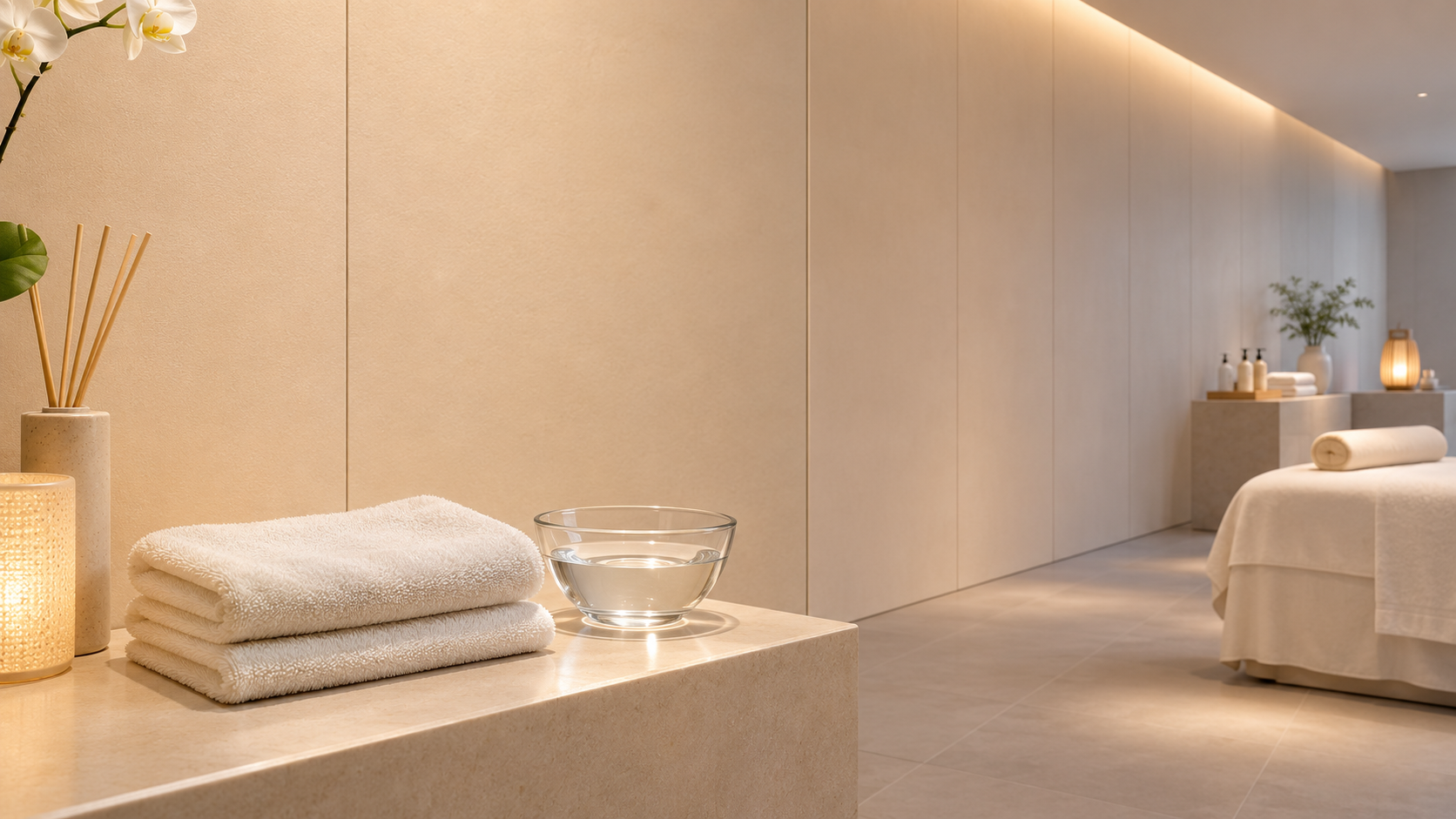
Spa wall panels bring a clean, polished look to relaxing spaces, but moisture, soap residue, and harsh cleaning products can take a toll on their finish. If you’re asking, “How do I clean spa wall panels without damaging the finish?” the answer starts with choosing gentle products and the right cleaning method for the panel material. This guide explains how to remove everyday buildup, protect the surface, and keep your spa walls looking their best.
For a commercial spa, the question goes beyond appearance. A wall may need to withstand daily cleaning, disinfectant exposure, splashes from treatment products, and humid conditions. The right routine must remove the soil that is actually present without gradually dulling a decorative coating or forcing moisture into vulnerable joints.
Start with the surface, not the stain
“Spa wall panel” describes an application, not a single material. Panels may have a PVC, acrylic, laminate, composite, or coated surface. Some have a printed decorative layer protected by a clear finish; others have a textured face or a different core beneath the visible surface. Two panels that look similar may react differently to the same chemical.
Check the manufacturer’s care instructions before selecting a cleaner. Look for the permitted product type, dilution, contact time, rinsing requirements, and any restrictions on solvents or disinfectants. If the original documentation is missing, ask the installer or supplier for the panel specification. A product name alone may not identify the finish accurately enough.
Until compatibility is confirmed, use the least aggressive practical method: a soft cloth, lukewarm water, and a small amount of mild, non-abrasive detergent. Test the solution on a discreet area, then allow it to dry fully before checking for discoloration, cloudiness, softening, or a change in gloss. A successful spot test reduces uncertainty, but it does not replace the manufacturer’s guidance for repeated use.
A gentle routine for everyday buildup
The most effective routine is often a simple one carried out before residue hardens. Soap film and body oils are easier to remove when they have not been left to accumulate around panel joints or behind fixtures.
- Remove loose dust with a clean, dry microfiber cloth. Grit trapped under a wet cloth can scratch a glossy finish.
- Prepare a mild detergent solution according to its label. More detergent is not necessarily better; excess product can leave a film.
- Dampen a soft cloth rather than soaking the wall. Wipe a manageable section with light pressure, paying attention to splash zones and areas touched by users.
- Wipe again with a separate cloth dampened with clean water, unless the panel and cleaner instructions specify otherwise. Avoid directing water into seams, open edges, or penetrations around fittings.
- Dry the surface with a soft, clean cloth. This helps limit water spots and lets staff see whether any residue remains.
Change or rinse cloths as they pick up soil. Using the same cloth across an entire treatment area can spread oils and leave streaks, especially on dark or high-gloss panels. For textured finishes, a soft, non-abrasive brush may help lift residue from shallow grooves, but only if the panel manufacturer permits it. Avoid stiff bristles and aggressive scrubbing.
Match the method to the residue
A stronger cleaner is not automatically the answer when a mark remains. Identify whether the problem is soap film, mineral buildup, oil, staining, or actual finish damage. Each calls for a different response.
Soap film and oily deposits
For ordinary soap residue or massage-product splashes, try a second pass with the approved mild detergent solution. Give the solution enough time to loosen the deposit as directed on its label, but do not let it dry on the panel. A soft cloth held against the affected area can help keep it damp without flooding a joint.
If oil remains, ask the panel supplier whether a particular non-abrasive degreaser is suitable for the finish. Some products intended for heavy-duty cleaning can attack coatings or leave a haze. Rinse and dry as directed by both the cleaner and panel manufacturer.
Hard-water marks
Mineral deposits often appear as pale spots or a rough film near shower fittings. Do not assume that vinegar, acidic descalers, or limescale removers are safe simply because they work on taps. Acid sensitivity varies, and metal trims, sealants, decorative printing, or adjacent stone may have different restrictions from the panel itself.
Use a descaler only when it is approved for all surfaces it may contact. Follow the stated dilution and exposure time, test a discreet area, and rinse as required. If compatibility cannot be established, seek the panel manufacturer’s advice rather than experimenting with concentrated household products.
Mold-like marks and damaged sealant
Dark marks along a joint may be surface contamination, staining within the sealant, or a sign of moisture getting behind it. Wiping the visible surface does not resolve a failing seal. Inspect for gaps, peeling, persistent dampness, loose trim, or a soft area around the joint.
Use a panel-compatible treatment where appropriate, and follow the product’s safety instructions. If staining returns quickly or moisture appears to be trapped behind the panel, arrange an inspection. Deteriorated sealant may need to be removed and replaced with a suitable product after the area has been properly assessed and prepared. The repair should address the source of moisture, not just conceal the mark.
Cleaning and disinfection are different jobs
A clean-looking wall is not necessarily disinfected. Cleaning removes soil; disinfection uses an appropriate product under specified conditions to reduce or inactivate organisms according to its label. In facilities where disinfection is required, the procedure should reflect the intended use of the area, the disinfectant label, and applicable local requirements.
The difficulty is that a disinfectant suitable for a facility’s hygiene plan is not automatically suitable for every decorative finish. Check compatibility before introducing it into a daily schedule. Confirm the dilution, required contact time, method of application, and whether the surface must be rinsed afterward. Leaving a product on for longer than instructed can damage a finish without improving the intended result.
Never mix cleaning or disinfecting chemicals. Keep the area ventilated as directed, use the protective equipment specified on the label, and store products safely. If the required disinfectant is incompatible with an existing wall finish, involve the facility’s hygiene lead and panel supplier in finding a suitable procedure; do not simply skip a required step.
What tends to damage decorative panels?
Visible damage is not always caused by one dramatic mistake. It can develop through repeated exposure to a product that is slightly too aggressive, or through abrasion from a cloth carrying fine grit.
- Abrasive powders, scouring pads, and stiff brushes can scratch or alter the sheen, particularly on glossy or printed surfaces.
- Solvents and concentrated chemicals may soften, discolor, or cloud some finishes. Even a product safe for an adjacent fixture may not be safe for the panel.
- Steam and excessive heat can affect certain materials, adhesives, or joints. Use steam equipment only if the complete installed system is approved for it.
- High-pressure spraying and standing water can drive moisture into seams, cut edges, or penetrations, where the decorative face may offer little protection.
- Scrapers and blades can nick the protective layer. Once the surface is breached, later cleaning may make the defect more noticeable.
Also avoid judging a cleaner only by how quickly it removes a mark. A panel may look clean immediately but develop uneven gloss after repeated use. Trial any proposed change in a discreet location and review it over time under the facility’s actual cleaning conditions.
Build the cleaning plan into the panel specification
For a new spa or refurbishment, maintenance questions belong in the material-selection process. A panel chosen for its color and water-resistant appearance may still be unsuitable if its finish cannot tolerate the cleaning or disinfection products the facility needs to use.
Ask suppliers for the care instructions for the exact finish, not just the panel family. Provide the intended application, likely exposure to water and treatment products, proposed cleaning chemicals, and expected cleaning frequency. Clarify which joints, trims, sealants, and substrate details are part of the proposed system. Water resistance of the panel face alone does not establish that the entire installation is protected against moisture.
It is also useful to request a sample for a controlled compatibility check using the planned products and procedures. Agree on what will be assessed, such as color change, gloss variation, surface softening, or staining. A sample test is a practical screening step, not a guarantee of long-term performance in every installation.
Shenyang Shengshi Meilin Technology Co., Ltd., which works in new material technologies and construction and home-furnishing solutions, provides a relevant example of the broader materials perspective such discussions require. When assessing any supplier’s proposed decorative material, confirm the specific surface construction and maintenance guidance for the project rather than assuming that all products share the same chemical resistance.
A practical handover for maintenance teams
Once a routine is agreed, make it easy to follow. Keep the panel care instructions alongside the approved cleaner and disinfectant information. Identify which products are suitable for the wall, which are restricted to fixtures or floors, and what staff should do if a new stain does not respond to the normal method.
Inspect high-exposure areas periodically: around shower controls, near treatment beds, at lower edges, and wherever panels meet fittings. Early signs such as persistent streaking, a change in gloss, lifting sealant, or swelling at an edge warrant investigation before a more aggressive cleaning method is tried.
When in doubt, document the panel finish, the product used, its dilution and contact time, and the location of the problem. Those details give the installer or supplier a useful basis for advice—and help distinguish removable residue from damage that cleaning cannot reverse.
Next:No more content
RECOMMEND

Nov 13, 2026
How Do You Clean Spa Wall Panels Without Damaging the Finish?
How do I clean spa wall panels without damaging the finish? Discover gentle cleaning methods, residue removal tips, and ways to protect decorative surfaces.
Nov 12, 2026
How Can You Get Matching Replacement Panels After a Project?
How can I get matching replacement panels after a project is completed? Discover how to identify your panels, compare samples, and find the right fit.
Nov 12, 2026
How Much Extra Panel Stock Should You Order for Future Repairs?
How much extra panel stock should I order for future repairs? Discover the 5–10% guideline, calculate your reserve, and avoid costly mismatches.
Nov 11, 2026
What Should You Do if Cut-to-Size Panels Arrive the Wrong Size?
What should I do if cut-to-size panels arrive with incorrect dimensions? Learn how to document the issue, contact your supplier, and secure the right remedy.