Can a Panel Supplier Match a Designer's Color Reference?
Can a panel supplier match a designer's color reference? In many cases, yes—but the final result depends on the reference material, panel substrate, surface finish, and production process. For designers and project teams, understanding these factors is essential to achieving a consistent look across decorative applications. This article explores how color matching works, what to provide to a supplier, and how sample approval can help reduce surprises before production.
What does a successful color match actually mean?
A successful match is not necessarily a perfect reproduction of the original object. It is a result that meets the project’s agreed visual and technical requirements when the panel is viewed in its intended setting. That distinction matters because a designer may be comparing materials with very different surfaces: painted plaster, fabric, stone, wood veneer and decorative panels do not reflect light in the same way.
A supplier may be able to produce a panel that looks close to a reference under one light source but noticeably different under another. The color itself may be acceptable while the gloss, texture or depth of the surface makes the overall appearance feel wrong. Conversely, a slight color difference may be unobjectionable if the materials are separated by a shadow line or installed in different rooms.
Before asking for a match, decide where the panels will be used and what they need to coordinate with. A feature wall next to a painted door requires a different level of visual agreement from panels installed throughout a corridor. If the reference and the panel will sit directly beside each other, say so early: adjacent surfaces make differences easier to notice.
The reference you send shapes the result
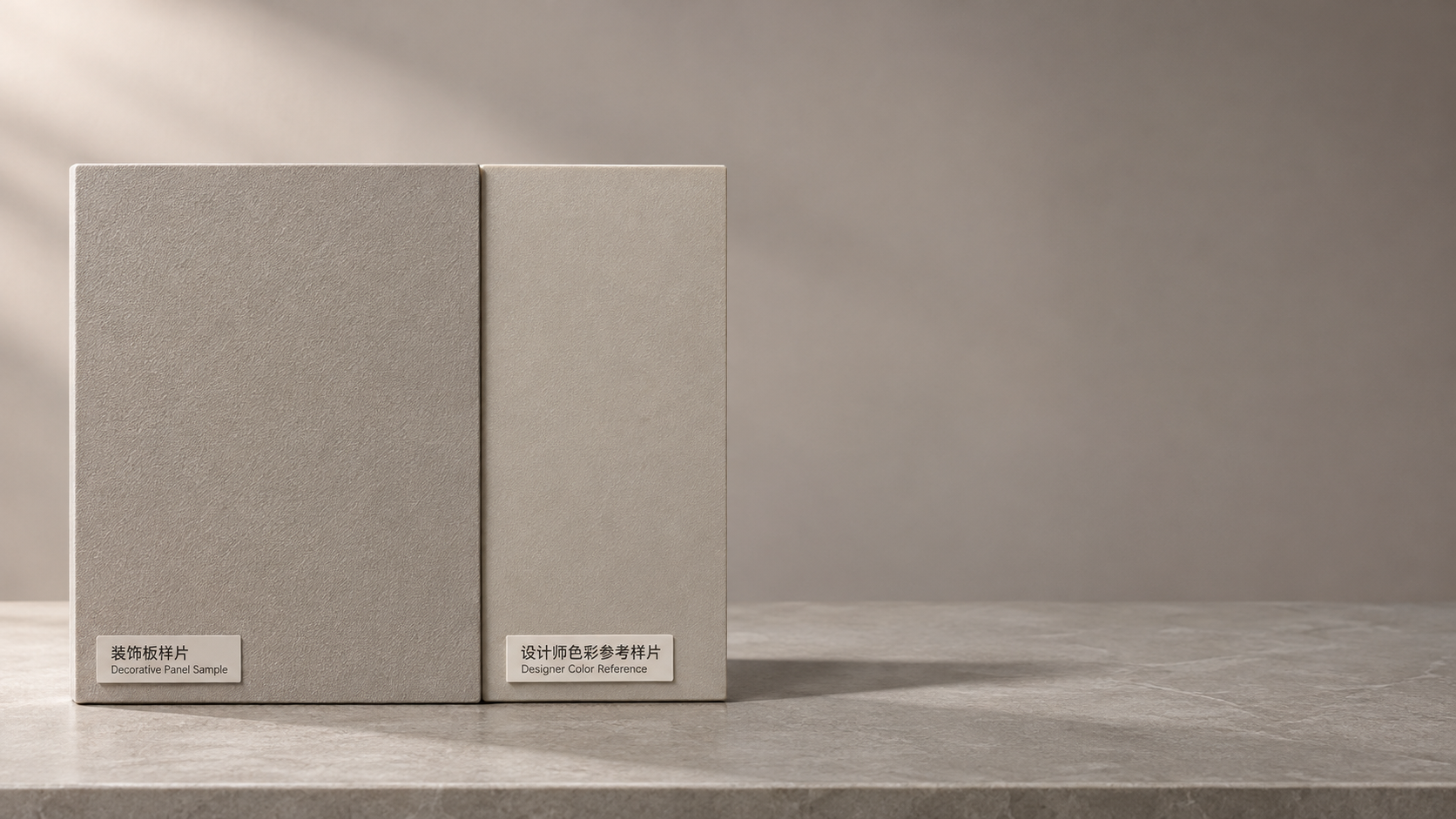
A physical sample is generally a stronger starting point than a screen image. Photographs can help explain the design intent, but camera settings, compression, display calibration and ambient light all affect the apparent color. An image of a warm gray panel, for example, does not reliably tell a supplier whether the intended undertone is brown, green or violet.
A named color or recognized color-system reference can provide a useful starting point, especially when a physical sample is difficult to send. It still does not fully define the finish. A color specified on paper may look different when reproduced on a textured or glossy panel. Tell the supplier which reference takes priority if the physical sample and the color code do not appear identical.
When providing a physical reference, check that it is representative. A small offcut may contain only a light portion of a woodgrain, while the full design has dark streaks. A weathered sample may have changed with exposure. If the reference has a directional pattern, mark its intended orientation and identify the face to be matched.
It also helps to distinguish between a target and an inspiration. A target sample is the basis for acceptance; an inspiration sample communicates the desired mood but allows interpretation. Confusing the two can lead to unnecessary revisions, or to a production sample that is technically close but creatively unsatisfactory.
Why substrate and finish can change the appearance
Decorative panels can achieve their appearance through different combinations of substrates, printed or decorative layers, coatings and surface treatments. The practical options depend on the supplier and the panel construction. A color that works on one product is not automatically transferable to another without adjustment.
Base color and opacity
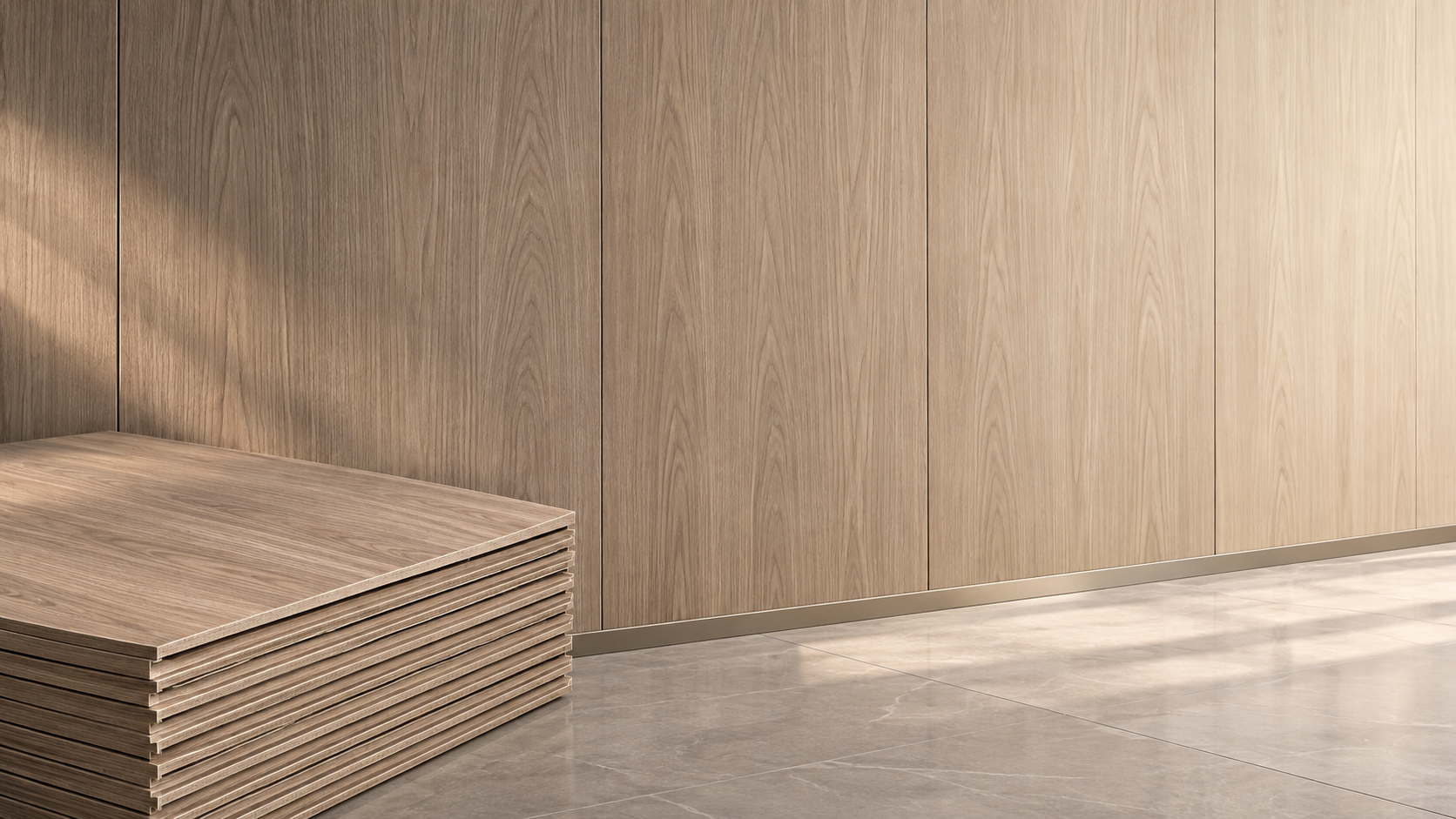
The underlying material can influence the final appearance, particularly when a finish is translucent or has limited opacity. Edges, cutouts and joints may reveal another material or color even when the panel face is well matched. Ask how exposed edges will be finished and request an edge sample if they will remain visible.
Gloss and texture
A matte finish scatters reflected light differently from a glossy one. Embossing adds highlights and shadows that change as the viewing angle moves. For this reason, a flat color chip may be insufficient approval for a deeply textured panel. Evaluate the proposed color on the intended texture and finish whenever possible, rather than approving those elements separately.
Pattern scale and direction
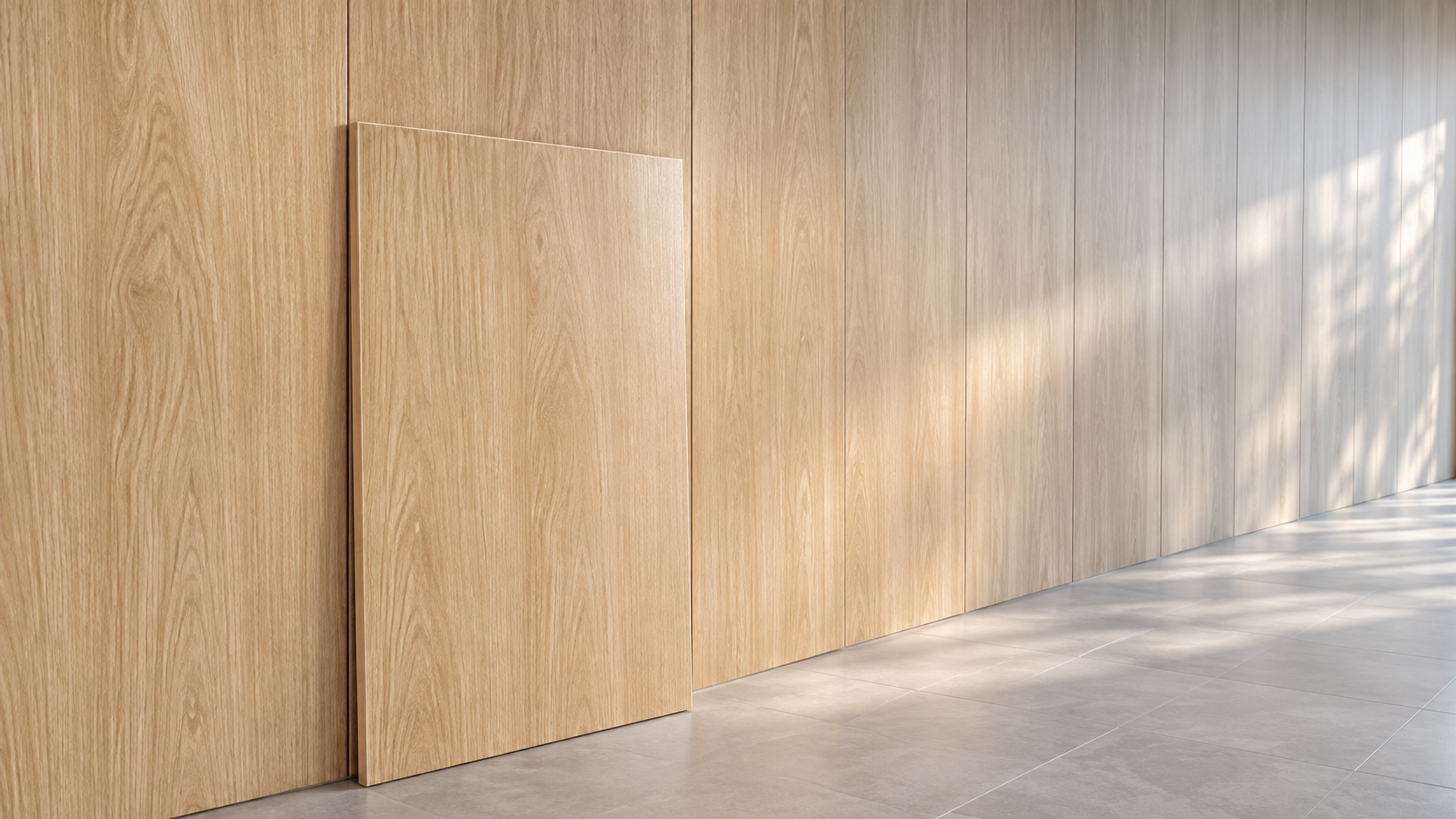
For wood, stone or other patterned designs, the question is larger than color. Grain size, contrast, repetition and direction all affect whether a panel feels convincing at room scale. A small sample may show the palette but conceal an obvious repeat across a long wall. Ask to review a larger sample or production representation where available, and discuss how panels should be oriented during installation.
Agree on how the match will be judged
“Match this color” leaves too much open to interpretation. A better instruction describes the reference, the viewing conditions and the permitted variation. The project team and supplier should also agree on who has final approval before production begins.
Start by comparing samples under a consistent light source, then check them under the lighting expected in the finished space. Daylight, warm interior lighting and cooler artificial lighting can reveal different undertones. Two materials can look similar under one source and diverge under another; this effect is known as metamerism. It is especially relevant when matching different material types or colorants.
Viewing angle matters too. Place the samples in the same plane, with their surfaces oriented as they will be installed. A panel viewed flat on a desk may look different when mounted vertically beside a wall. If the design includes strong directional lighting, reproduce that condition as closely as practical during review.
Instrumental color measurement can support a visual assessment. Suppliers may discuss color difference using a Delta E value, but the number is meaningful only when the measurement method, conditions, formula and acceptance limit are agreed. There is no single tolerance that is appropriate for every decorative finish or project. Texture, gloss and patterned surfaces can also complicate measurement, so an instrument reading should not automatically replace a visual review.
For a demanding installation, agree on a signed approval sample and, where appropriate, acceptable limit samples showing the lightest, darkest or otherwise permitted visual variation. Keep the approved reference in suitable conditions and make sure both parties know which sample controls the order.
From initial match to production approval
A practical matching process begins with the supplier reviewing the reference against the proposed panel construction. The supplier can then advise whether an existing finish is close, whether a custom development is feasible, or whether the target needs adjustment. Custom work may involve sample charges, minimum order quantities or additional lead time; these terms should be confirmed rather than assumed.
The first sample is a discussion tool, not necessarily the final answer. Feedback such as “too dark” is useful, but “the lightness is close; the undertone looks too green under the project lighting” gives the supplier a clearer direction. Provide comments on color, gloss, texture and pattern separately where possible. Otherwise, a revised sample may correct one issue while introducing another.
Before signing off, confirm whether the sample was made using the intended production materials and process. A hand-prepared laboratory sample can help establish direction, but it may not reproduce every feature of a full production run. If the application is visually sensitive, discuss whether a larger production-representative sample or mock-up is available and how any differences will be handled.
Approval should cover more than the face color. Record the panel construction, thickness, finish, pattern orientation, edge treatment and any protective film requirements. Keep the approved sample and the written specification linked to the purchase documentation so that an attractive sample does not become detached from the actual order.
Plan for batches, installation and future replacements
A match approved today does not remove every risk later. Normal production variation can occur between runs, and future replacement panels may be made with different raw-material lots or under changed conditions. For large visible areas, ask how the supplier identifies batches and whether panels intended for the same elevation can be supplied from the same production run.
On delivery, inspect panels before cutting or installing them. Compare them with the approved sample under agreed conditions, and check for variation between packs. Installation crews should also follow the agreed grain direction and layout. Rotating a patterned or directional finish can change its appearance even when every panel comes from the same batch.
Consider retaining spare panels for repairs, subject to the supplier’s storage guidance. If exact future continuity is important, discuss reorder expectations in advance rather than assuming a later batch will be indistinguishable. The same applies to adjacent products from different manufacturers: matching a panel to a cabinet, door or painted trim requires coordination across suppliers, not just approval of each item in isolation.
Color is only one part of the specification
A visually successful panel still has to suit its location. A reception wall, furniture application and area exposed to frequent cleaning may require different levels of abrasion resistance, cleanability or moisture tolerance. Fire performance, emissions requirements and installation conditions may also need review against the relevant project documents and local requirements. A color-matching exercise should not be treated as evidence that a panel meets any of those criteria.
Shenyang Shengshi Meilin Technology Co., Ltd., based in Shenyang, focuses on the research, development and application of new material technologies, with activities spanning decorative materials, fireproof sealing materials, furniture and home furnishings. For a project considering a decorative panel, the useful next step is to discuss the intended application and reference alongside the proposed construction; the availability of a specific finish, matching process or performance documentation must be confirmed for the product under consideration.
Bring a representative reference, describe where the panel will sit, and identify the lighting and adjacent finishes. Then agree on the approval sample, acceptance method, production timing and replacement strategy. Those details give a supplier a workable brief—and give the design team a sounder basis for deciding whether the match is good enough.
Next:No more content
RECOMMEND

Nov 14, 2026
Can a Panel Supplier Match a Designer's Color Reference?
Can a panel supplier match a designer's color reference? Discover how samples, finishes and lighting affect the result—and how to get a reliable match.
Nov 13, 2026
How Do You Clean Spa Wall Panels Without Damaging the Finish?
How do I clean spa wall panels without damaging the finish? Discover gentle cleaning methods, residue removal tips, and ways to protect decorative surfaces.
Nov 12, 2026
How Can You Get Matching Replacement Panels After a Project?
How can I get matching replacement panels after a project is completed? Discover how to identify your panels, compare samples, and find the right fit.
Nov 12, 2026
How Much Extra Panel Stock Should You Order for Future Repairs?
How much extra panel stock should I order for future repairs? Discover the 5–10% guideline, calculate your reserve, and avoid costly mismatches.