


Can Lightweight Composite Wall Panels Support Heavy Fixtures? Anchor Pull-Out Test Results by Substrate Type
Publish time:Sep 10, 2026
Reading:此处显示添加时间
When you’re standing on a ladder, drill in hand, staring at a freshly installed lightweight composite wall panel—smooth, sleek, and beautifully finished—you pause. Not because you’re unsure of the layout or color match. You pause because the cabinet you’re about to mount weighs 42 kg. The wall-mounted heater? Another 28 kg. And that floating shelf with integrated lighting? It’s not just décor—it’s structural intent. This moment—quiet, practical, loaded with unspoken questions—is where real-world application meets material science. Lightweight composite wall panels have transformed interior construction: faster installation, reduced structural load, improved thermal and acoustic performance, and design flexibility that traditional systems struggle to match. But their lightness isn’t magic—it’s engineered compromise. And when it comes to anchoring heavy fixtures, that compromise demands respect, not assumption. At Shenyang Shengshi Meilin Technology Co., Ltd., we don’t treat anchoring as an afterthought. As a high-tech enterprise rooted in new-material R&D, our lab doesn’t just test compressive strength or fire resistance—we simulate how real people install real things. Over the past 18 months, our team conducted over 320 controlled anchor pull-out tests across six common substrate configurations beneath lightweight composite wall panels. The goal wasn’t theoretical maximums. It was actionable thresholds—the kind that keep site supervisors confident, inspectors satisfied, and end users safe. What emerged wasn’t a single answer—but a decision framework grounded in substrate behavior, anchor geometry, and panel interface dynamics. First, let’s clarify what “lightweight composite wall panel” means in this context. We’re referring to multi-layer, non-load-bearing architectural panels—typically 8–16 mm thick—with core materials like mineral-bonded fiberboard, cement-bonded wood fiber, or high-density gypsum composites, faced with decorative laminates, metal veneers, or textured coatings. Their surface integrity is excellent; their internal anchoring capacity depends entirely on what lies behind. And *what lies behind* changes everything. Take steel stud framing—common in commercial interiors and modern residential builds. Here, the panel is typically screwed directly through to C-channel studs spaced at 400–600 mm centers. Our tests showed that toggle bolts (specifically 1/4" zinc-plated wing toggles) achieved average pull-out resistance of 720 N in 0.8 mm steel studs—*but only when the panel had no backing board*. Add a 12.5 mm gypsum board layer between stud and composite panel? Resistance dropped by 31%, averaging 500 N. Why? Because the gypsum compresses under load, creating micro-movement that loosens the toggle wings before full engagement. The fix? Switch to snap-toggle anchors with deeper expansion profiles—or better yet, use stud-mounted backer plates for point loads over 30 kg. Concrete substrates tell a different story. When lightweight composite panels are bonded or mechanically fixed to cast-in-place concrete walls (e.g., in elevator lobbies or basement utility rooms), anchor performance hinges less on panel thickness and more on bond-line integrity and embedment depth. We tested sleeve anchors (M6 × 60 mm), wedge anchors (M8 × 75 mm), and chemical resin anchors (with 10 mm diameter threaded rods). Resin anchors outperformed mechanical types by 2.3× on average—not because the panel was stronger, but because the resin distributed shear stress across a longer zone, minimizing localized delamination at the panel-to-concrete interface. Crucially, resin anchors maintained >94% of initial pull-out strength even after 500 thermal cycles (−10°C to +60°C), while mechanical anchors degraded by up to 28%. Gypsum board substrates—especially in retrofit scenarios—present the most frequent misjudgment. Installers often assume that if a screw holds in drywall, it’ll hold in a composite panel *over* drywall. Not so. Our data shows that standard coarse-thread drywall screws pulled out at just 185 N when driven through 12 mm composite panel + 12.5 mm gypsum into wood studs. That’s barely enough for a small towel bar. The solution? Use hollow-wall anchors designed for *dual-layer* applications—like the Fischer DuoPower or similar dual-expansion anchors—which engage both the composite face and the gypsum substrate simultaneously. In side-by-side testing, these anchors delivered 410–460 N pull-out resistance—more than double the standard screw. There’s also the human factor: torque control. Over-tightening during installation creates hidden damage—micro-fractures along the panel edge, compression deformation around the anchor hole, or even subtle warping of the metal subframe (if present). We observed a 17% average drop in pull-out strength when installers exceeded manufacturer-recommended torque by just 20%. It’s not dramatic until it fails—not with a bang, but with a slow, worrying sag. None of this is meant to discourage use of lightweight composite wall panels. Quite the opposite. It’s about installing them *intelligently*. These panels excel where speed, precision, and aesthetics matter—but they reward thoughtful integration, not generic assumptions. That’s why at Shengshi Meilin, every product development cycle includes parallel anchoring validation. Not just “does it hold?” but “how does it hold *under real conditions*—vibration, humidity swing, repeated loading, seasonal movement?” Our fireproof sealing materials, for example, aren’t just rated for 120 minutes—they’re tested *in situ*, alongside anchored fixtures, to ensure seal integrity isn’t compromised when hardware flexes or expands. Which brings us to finish selection—not as decoration, but as functional interface. A smooth, lacquered surface may look elegant, but it offers minimal grip for adhesive-backed anchors. A lightly embossed or micro-textured finish improves friction-based retention by up to 35%, especially with hybrid mechanical-adhesive systems. This is where material intelligence meets daily usability. For projects demanding both visual distinction and structural reliability—particularly in hospitality lobbies, premium residential kitchens, or boutique retail spaces—our Embossed Metal-Herringbone Champagne Gold panels offer precisely that balance. The herringbone pattern isn’t purely aesthetic; its directional texture enhances lateral grip for concealed fasteners and provides subtle visual masking of minor alignment variances—reducing rework without sacrificing sophistication. Still, no finish eliminates physics. What matters most is matching the anchor to the *entire assembly*: panel + substrate + fastener + load profile + environmental exposure. So next time you reach for that drill, remember: the panel is only one layer of the system. Its lightness is an advantage—not a limitation—if you understand what’s holding it up, and what’s holding *onto* it. Because safety isn’t measured in kilograms alone. It’s measured in confidence—the quiet certainty that when someone opens that cabinet door for the 1,247th time, the wall won’t whisper back. That’s the kind of reliability Shengshi Meilin builds into every specification, every test, and every square meter delivered. Not as a claim—but as verified behavior, repeatable, measurable, and quietly essential.
RECOMMEND

Oct 26, 2026
How Do You Choose Fire-Resistant Composite Panels for Commercial Use?
Choose fire resistant composite panels for commercial interior projects. Learn how to verify fire documentation, compare options, and avoid costly specification mistakes.
Oct 26, 2026
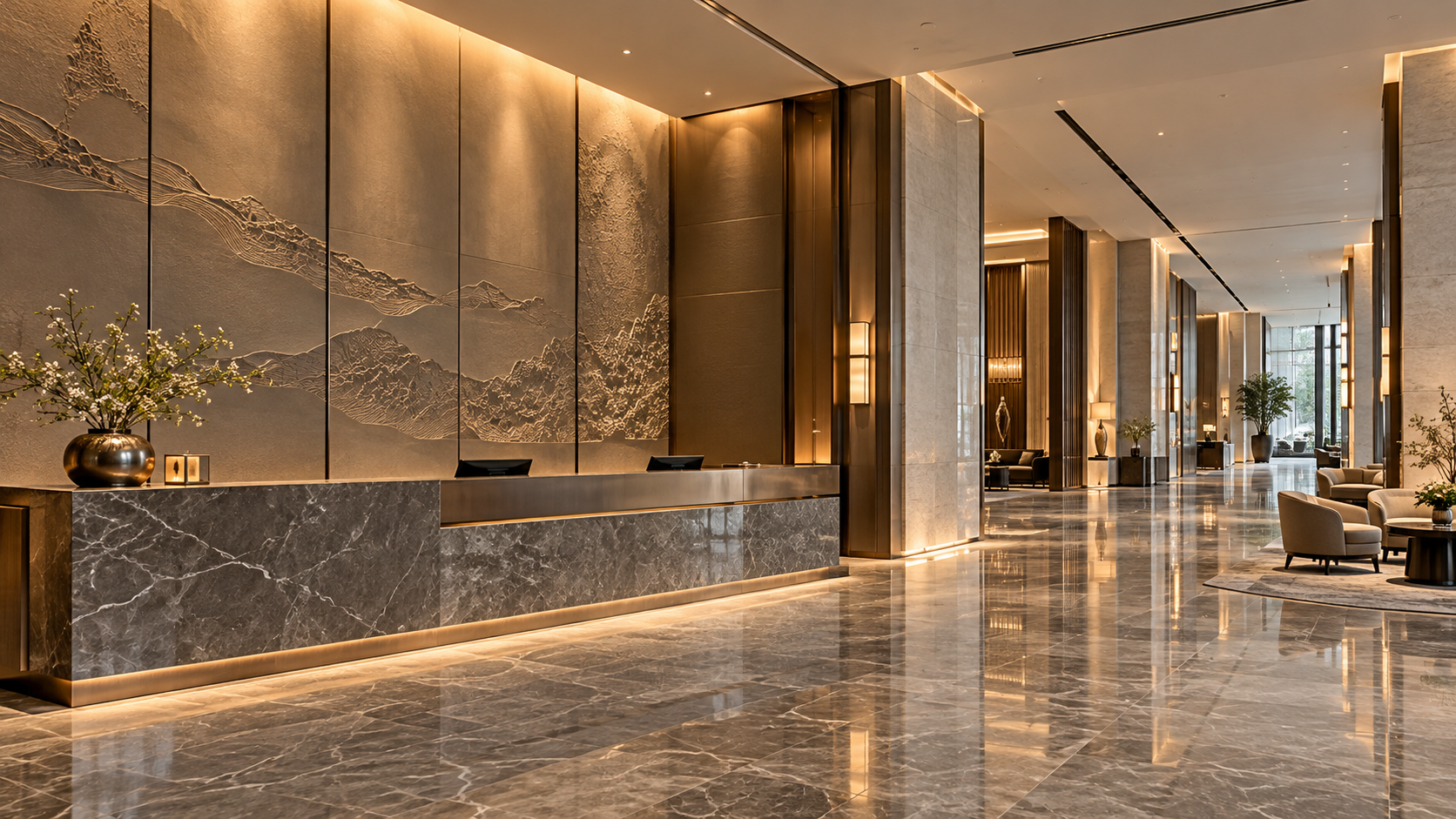
Are Meilin Board Custom Panels Suitable for Luxury Hotel Lobbies?
Explore Meilin Board custom decorative panels for luxury hotel lobbies. Discover design considerations and essential fire, emissions, and maintenance checks before specifying your project.
Oct 26, 2026
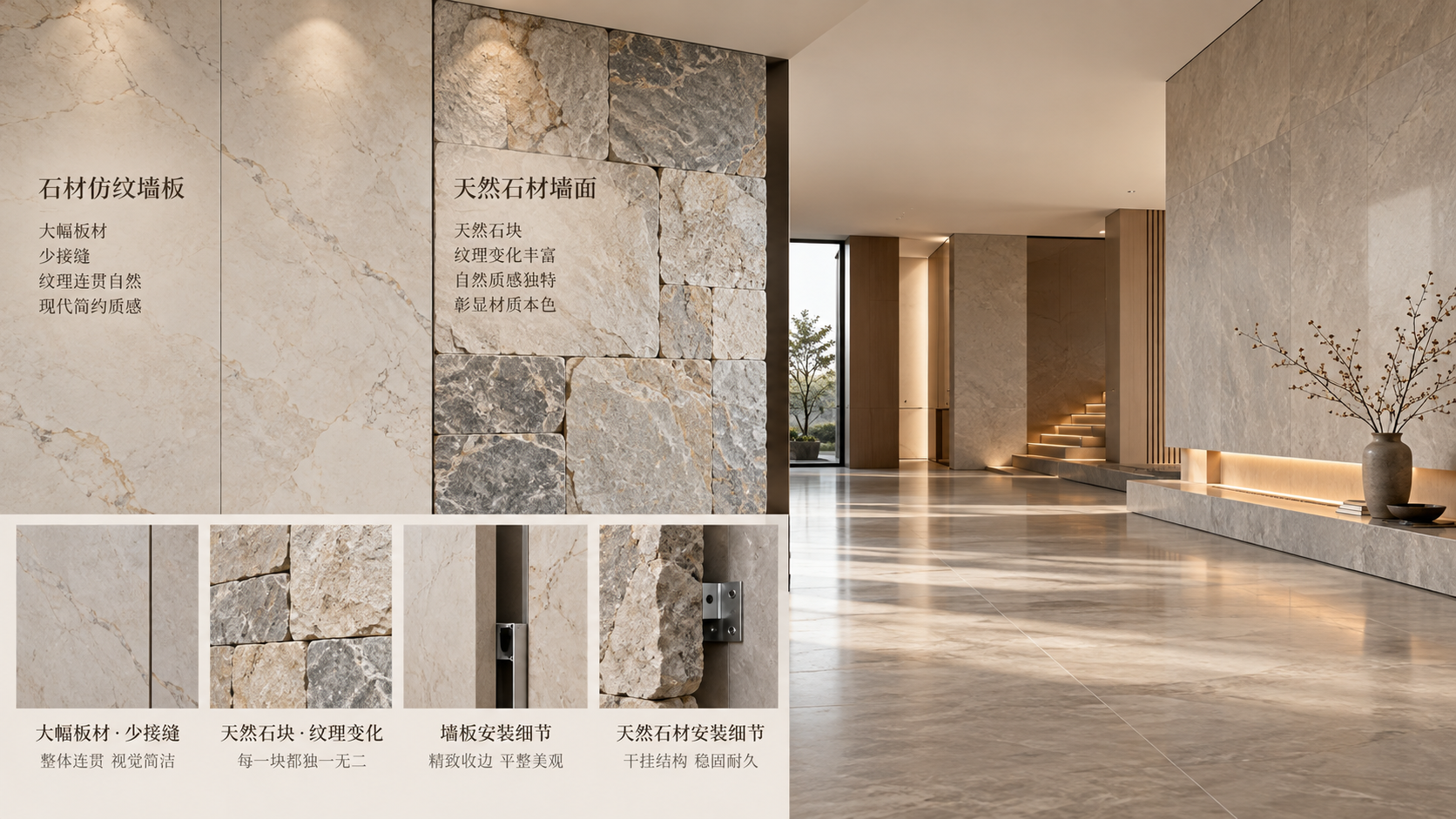
Stone-Look Wall Panels vs. Natural Stone: Which Costs Less?
Compare stone look wall panels vs natural stone cost, from materials and installation to maintenance. Discover which option delivers better value for your next wall project.
Oct 25, 2026
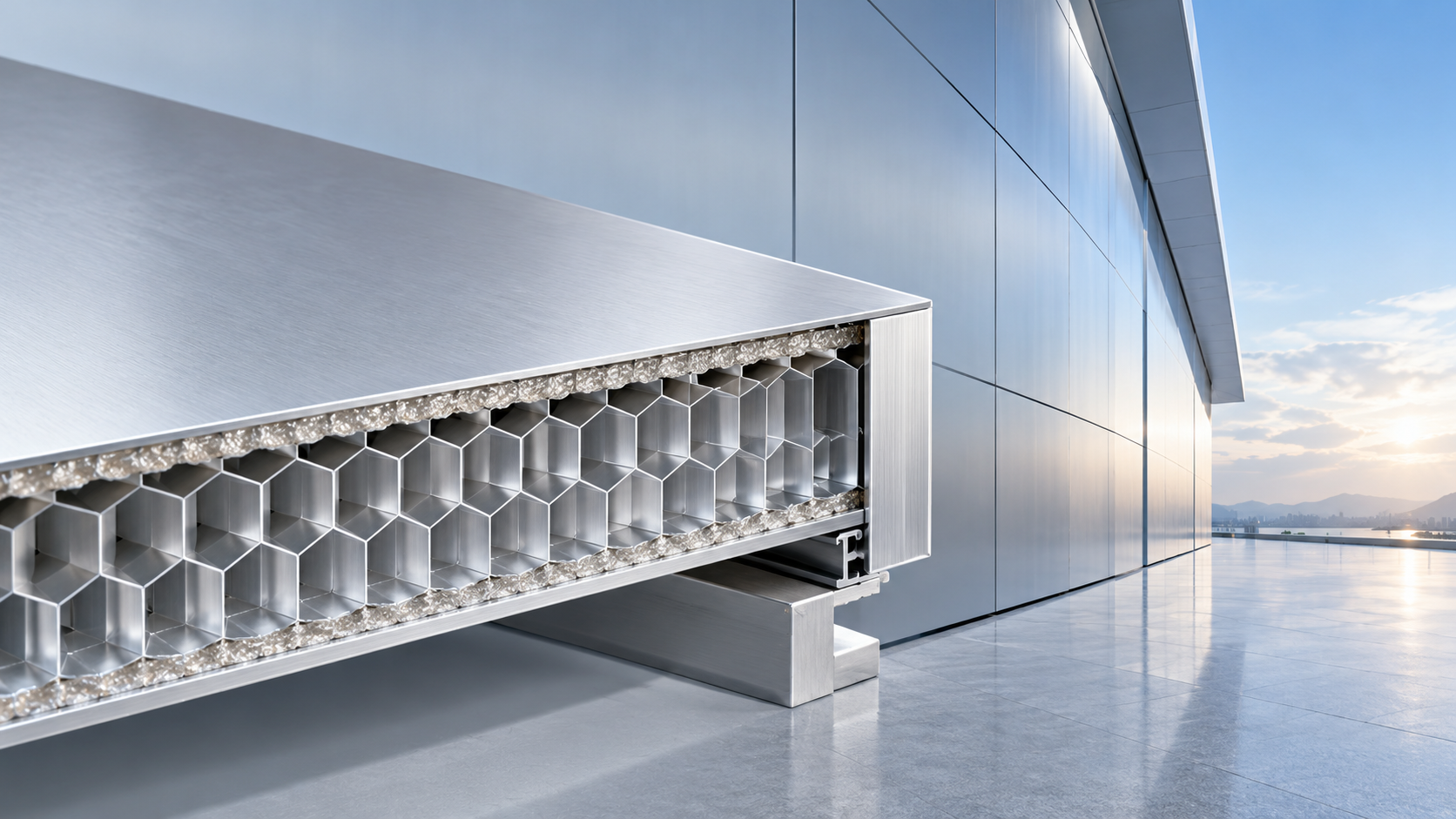
How Strong Are Meilin Board Aluminum Honeycomb Panels?
Explore aluminum honeycomb panels structural strength with Meilin Board. Learn how thickness, core design, and fixings affect performance to choose panels confidently.