Are overseas-sourced cut-to-size panels certified for EU/US building compliance?
When “Cut to Size” Means More Than Just Dimensions
Sourcing decorative panels overseas isn’t just about price or aesthetics anymore. It’s about whether a panel ordered in Shenyang arrives on-site in Berlin or Boston with the right fire rating, dimensional stability, surface consistency—and, crucially, documented compliance with local building regulations. That question—Are overseas-sourced cut-to-size panels certified for EU/US building compliance?—isn’t theoretical. It’s what holds up timelines, triggers rework, and determines liability when inspectors arrive.
Compliance Isn’t Stamped on the Box—It’s Embedded in Process
A CE mark or UL listing doesn’t automatically apply to every batch of cut-to-size panels. Certification covers specific material formulations, core structures, fire-retardant treatments, and assembly methods—not just generic product categories. If your supplier cuts, laminates, or edge-finishes panels after certification testing, those post-certification steps may fall outside the scope of original approval. That’s why asking “Is it reliable to order cut to size decorative panels from overseas?” leads directly to questions about traceability: Who performed the fire test? Was it done on the exact substrate-and-veneer combination you’re ordering? Does the certificate reference the actual production line—or just a lab sample?
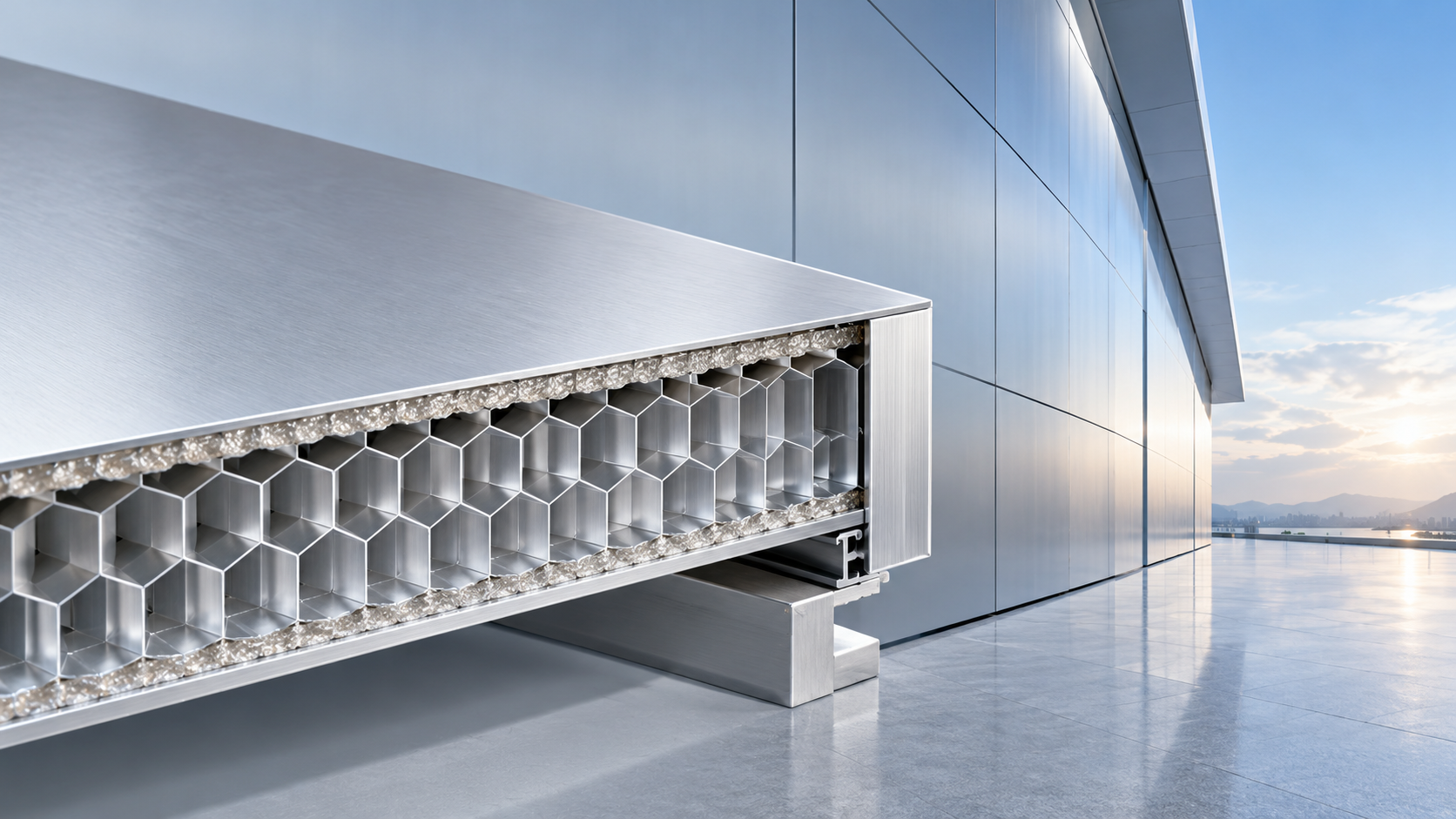
Shenyang Shengshi Meilin Technology Co., Ltd., as a high-tech enterprise focused on new material applications, treats certification as part of R&D—not an afterthought. Their fireproof sealing materials and aluminum honeycomb wall panels undergo third-party testing aligned with EN 13501-1 (EU) and ASTM E84 (US), but only where the full production workflow—from raw material batching to final surface treatment—is included in the scope. That means no “certified base material + unverified finishing.”
The Real Cost of “Almost Right” Sizes
“Will non-standard panel sizes cause on-site rework delays?” Yes—especially when tolerance stacking meets real-world installation. A 2 mm deviation per panel might seem negligible until you install 42 panels across a 12-meter wall. Suddenly, you’re compensating with filler strips, grinding edges, or re-cutting onsite—costing time, labor, and finish integrity. Overseas suppliers often quote ±1.5 mm tolerances, but that assumes stable humidity during transit and precise CNC calibration at origin. In practice, moisture shifts in shipping containers can swell MDF cores; aluminum honeycomb panels may flex slightly under long-haul vibration.
That’s where integrated door-and-wall systems—like those developed by Shengshi Meilin for commercial interiors—add measurable value. When doors, jambs, and adjacent wall panels share the same substrate, expansion coefficient, and edge-band material, thermal and hygric movement stays synchronized. Installation time drops not because parts are lighter, but because alignment logic is built-in—not guessed at onsite.
Texture, Color, Weight: Not Just Spec Sheet Entries
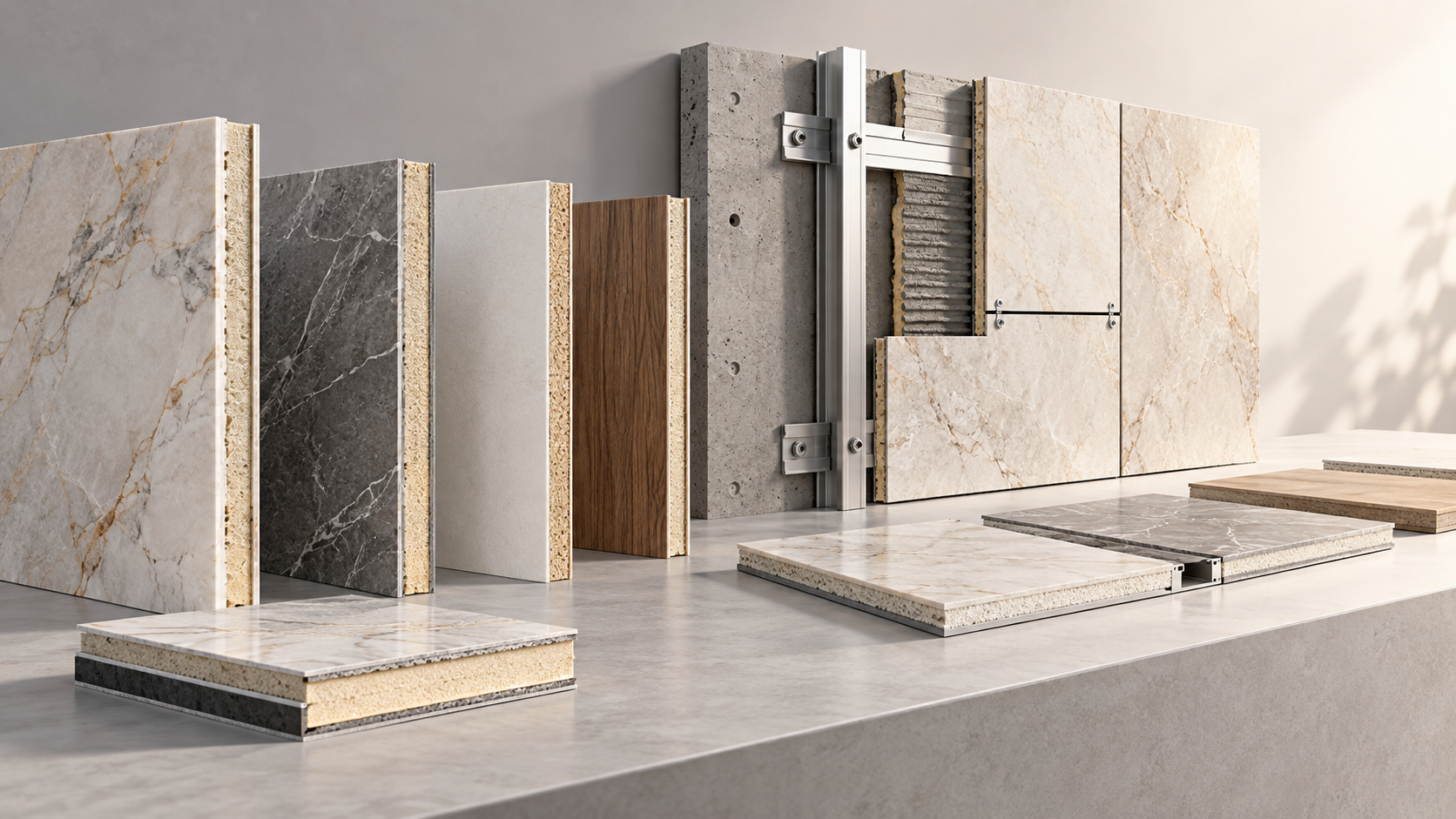
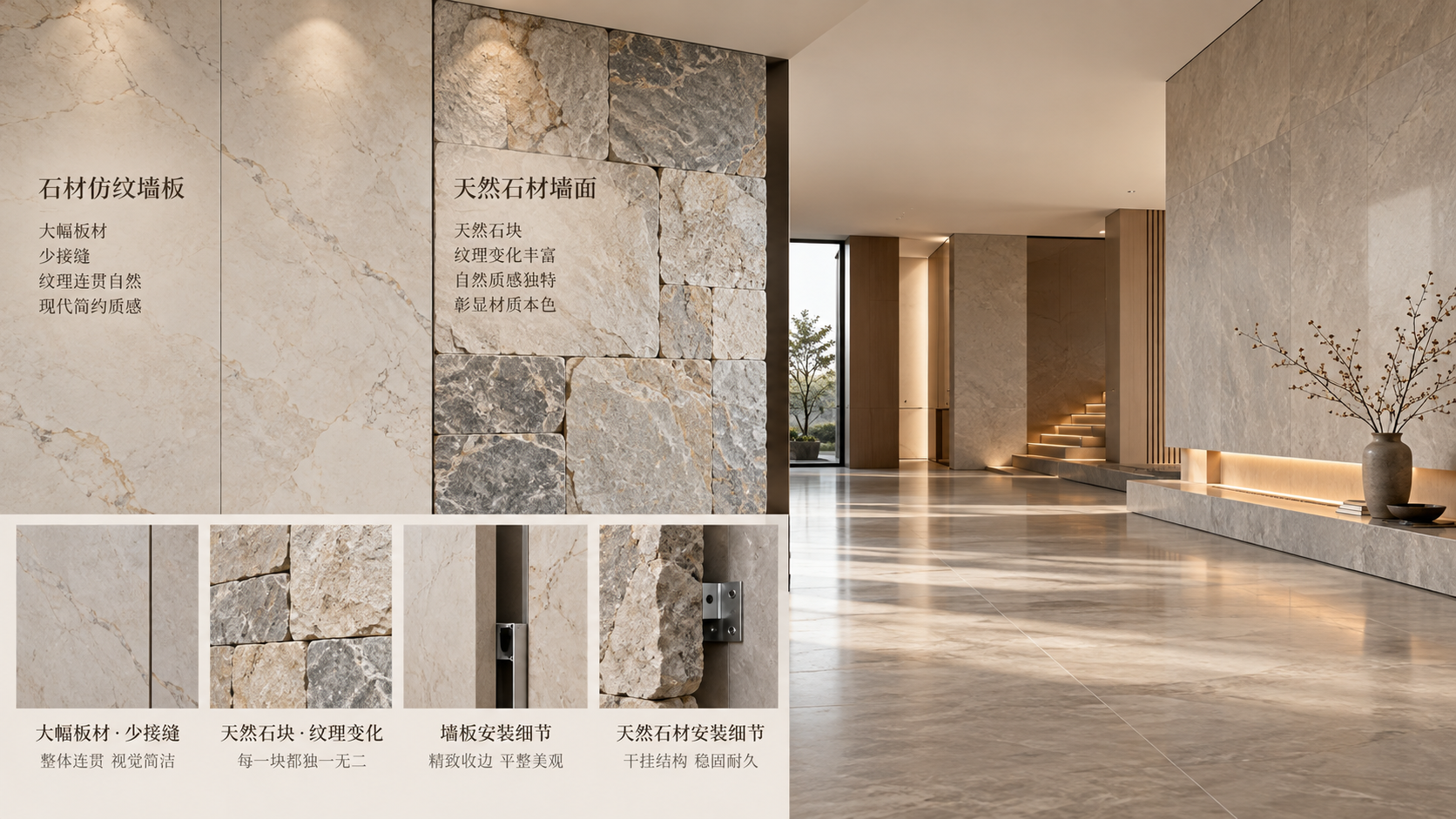
Surface texture availability matters less than repeatability. You can choose from brushed metal, stone-look embossing, or matte wood grain—but if your 200-panel order spans three production runs, will the stone-look wall panel color hold consistent? Pigment dispersion, roller pressure in lamination, and even ambient temperature during curing affect visual uniformity. High-volume orders require batch-controlled pigment lots and spectral measurement—not just “same formula.”
Weight is another silent constraint. Aluminum honeycomb wall panels from Shengshi Meilin typically weigh between 4.8–6.2 kg/m² depending on thickness and face material—light enough to reduce structural load on existing walls, yet dense enough to dampen sound and resist denting. But “lightweight” alone isn’t enough: if rigidity drops too far, fastener pull-out becomes a risk, especially on hollow-core partitions. The balance lies in core geometry and face-sheet adhesion—not just raw mass.
How to Verify Real Production Capability—Before You Commit
“How to verify if an OEM panel supplier has real production lines?” Start with specificity. Ask for photos—not of a showroom, but of CNC nests mid-cut, edge-banding machines with visible tooling wear, or laminators with temperature logs. Request the serial number of the machine used for your first sample run. Then cross-check: does that machine appear in their latest equipment depreciation schedule? Are maintenance records available for review?
“How fast can custom decorative panel OEM deliver first sample?” depends entirely on whether tooling exists. For standard veneer panels with pre-calibrated rollers and stock edging profiles, 7–10 days is realistic. For custom textures requiring new embossing rolls or hybrid substrates needing adhesive validation, 3–4 weeks reflects actual process validation—not just shipping speed.
What to Check Before Ordering—A Shortlist, Not a Checklist
Don’t default to “MOQ, lead time, FOB.” Prioritize what prevents downstream friction:
- Fire test reports referencing the exact panel construction—not just “similar to”
- Tolerance documentation signed off by QC, not sales
- Batch tracking system showing material lot numbers tied to each shipment
- Sample approval protocol that includes edge finish, corner radius, and mounting hardware fit
- Clarity on who bears cost if rework is needed due to dimensional drift—not just “subject to inspection”
Shenyang Shengshi Meilin operates with registered capital of 30 million yuan and anchors its work in three values: Innovation, Quality, Service. But those aren’t slogans—they’re reflected in how they treat certification (as a live process, not a static document), how they manage texture consistency (through controlled pigment batches and spectral verification), and how they define “lightweight” (as structural efficiency, not just low kg/m²).
If you’re evaluating overseas-sourced cut-to-size panels for EU or US projects, start by mapping which compliance requirements are enforced locally—not just which standards exist on paper. Then ask your supplier: Where exactly does certification end and customization begin? That boundary is where reliability is decided.
RECOMMEND

Oct 26, 2026
How Do You Choose Fire-Resistant Composite Panels for Commercial Use?
Choose fire resistant composite panels for commercial interior projects. Learn how to verify fire documentation, compare options, and avoid costly specification mistakes.
Oct 26, 2026
Are Meilin Board Custom Panels Suitable for Luxury Hotel Lobbies?
Explore Meilin Board custom decorative panels for luxury hotel lobbies. Discover design considerations and essential fire, emissions, and maintenance checks before specifying your project.
Oct 26, 2026
Stone-Look Wall Panels vs. Natural Stone: Which Costs Less?
Compare stone look wall panels vs natural stone cost, from materials and installation to maintenance. Discover which option delivers better value for your next wall project.
Oct 25, 2026
How Strong Are Meilin Board Aluminum Honeycomb Panels?
Explore aluminum honeycomb panels structural strength with Meilin Board. Learn how thickness, core design, and fixings affect performance to choose panels confidently.