

Are Composite Panels Better Than Gypsum for Boutique Hotels?
Are Composite Panels Better Than Gypsum for Boutique Hotels?
Is it worth switching to composite panel solutions over traditional gypsum wall systems for boutique hotels? Sometimes, yes—but not as a blanket replacement. The better choice depends on where the material will be installed, how the hotel operates, what level of finish the design requires, and how much disruption the owner can tolerate during construction or future renovations.
Boutique hotels are unusually demanding interiors. A guest may only stay for one or two nights, yet will notice a chipped corridor wall, a warped bathroom partition, a hollow-sounding headboard wall, or poorly aligned decorative joints immediately. At the same time, owners have to think beyond the opening date: housekeeping wear, luggage impacts, humidity, fire compartmentation, maintenance access, replacement cycles, and the cost of taking rooms out of service.
Composite panels and gypsum board systems can both work well. The mistake is treating them as interchangeable wall finishes. Gypsum is usually part of a built-up partition or lining system. Composite panels are a broad category that may combine decorative surfaces, mineral or other cores, structural skins, insulation layers, or factory-finished facings. Their performance varies considerably by construction, substrate, joint design, and installation method.
The Short Answer: Use Each Material Where It Performs Best
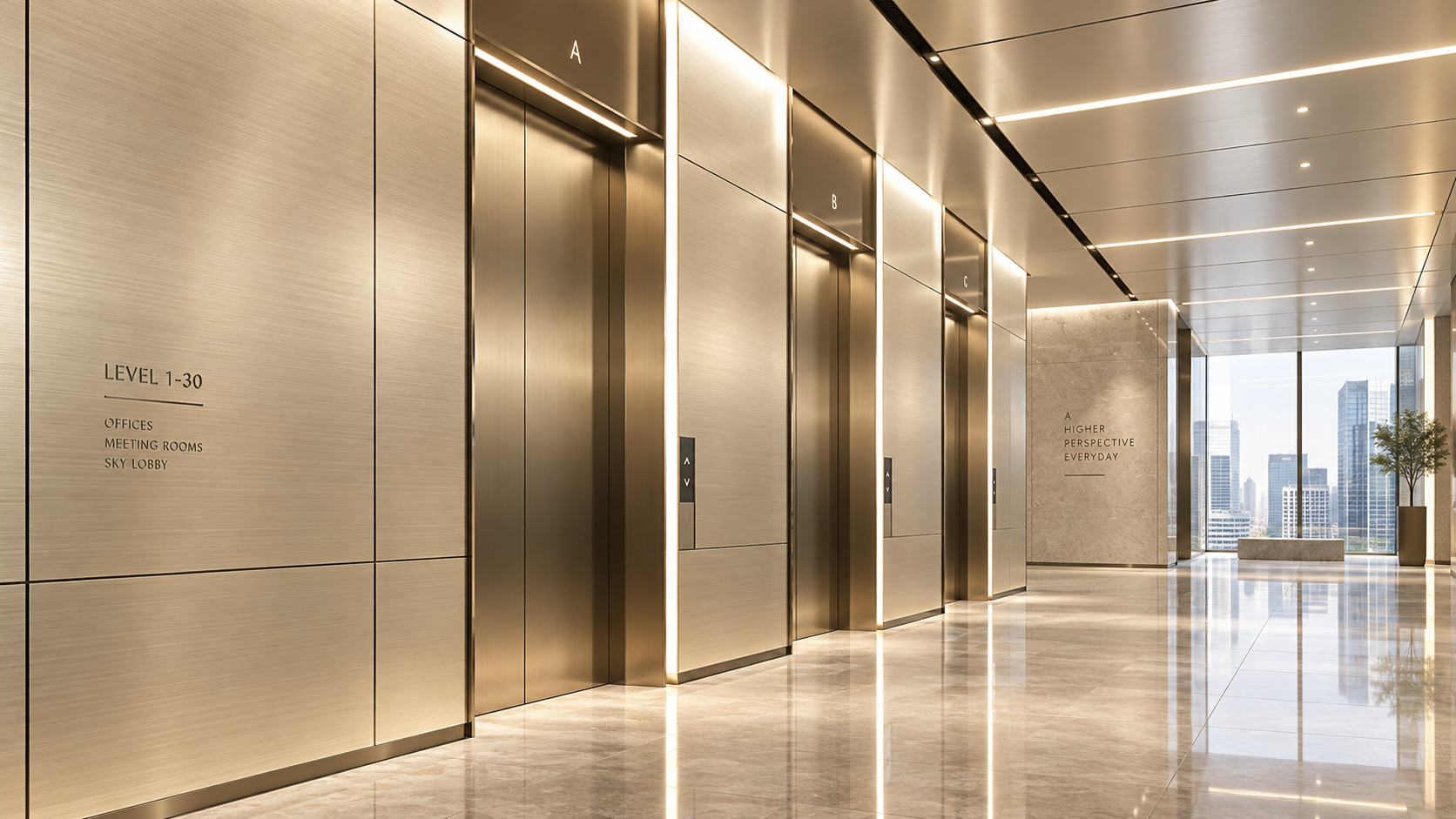
For a boutique hotel with a strong design identity, composite panels are often attractive in high-visibility and high-wear locations: reception desks, feature walls, corridor wainscoting, lift lobbies, restaurant partitions, room entry portals, and selected wet-area wall cladding. A factory-finished surface can provide more consistent color, texture, and joint control than a painted gypsum wall, especially when the design calls for wood grain, stone-like finishes, metal effects, or clean large-format planes.
Gypsum remains practical for many guestroom walls, ceilings, concealed service zones, and areas that need frequent coordination with electrical, plumbing, HVAC, or bespoke joinery. It is familiar to most interior trades, easy to patch after minor changes, and can form part of tested fire-rated and acoustic partition assemblies when specified and built correctly.
In other words, the real question is rarely “composite panels or gypsum everywhere?” It is which wall zones deserve a more durable, finished panel solution, and which zones benefit from the flexibility of a conventional gypsum system.
Where Composite Panels Can Make a Noticeable Difference
1. Corridors, entrances, and other impact-prone surfaces
Hotel corridors receive more punishment than design boards suggest. Housekeeping carts, luggage wheels, vacuum equipment, room-service trolleys, and guests brushing past walls all leave marks over time. Painted gypsum can be repaired, but repeated patching often creates visible changes in texture or sheen. If the corridor is narrow or dark, even a small repair can stand out.
A suitable composite panel with a durable face can reduce the frequency of cosmetic repairs. It may also allow damaged sections to be replaced more cleanly than a large area of skimmed, painted wall—provided the panel module, trims, and spare material have been planned in advance. That last condition matters. A panel system without retained spare stock or a documented color batch can become difficult to repair several years later.
2. Fast-track refurbishment work
For an operating hotel, installation speed is not merely a construction issue. It affects room closures, dust control, noise, and revenue interruption. Composite panels can reduce wet trades and painting where factory-finished surfaces are used. This can be valuable in lobby upgrades, restaurant refreshes, or phased corridor renovations where the hotel cannot close an entire floor for long.
That does not mean panel installation is automatically faster. Accurate site measurement, substrate flatness, delivery access, cutting requirements, and coordination around doors, sprinklers, sockets, and signage can slow the work down. Panels tend to reward careful detailing before fabrication; gypsum tends to be more forgiving of late design adjustments.
3. Bathrooms, spa-adjacent spaces, and humid interiors
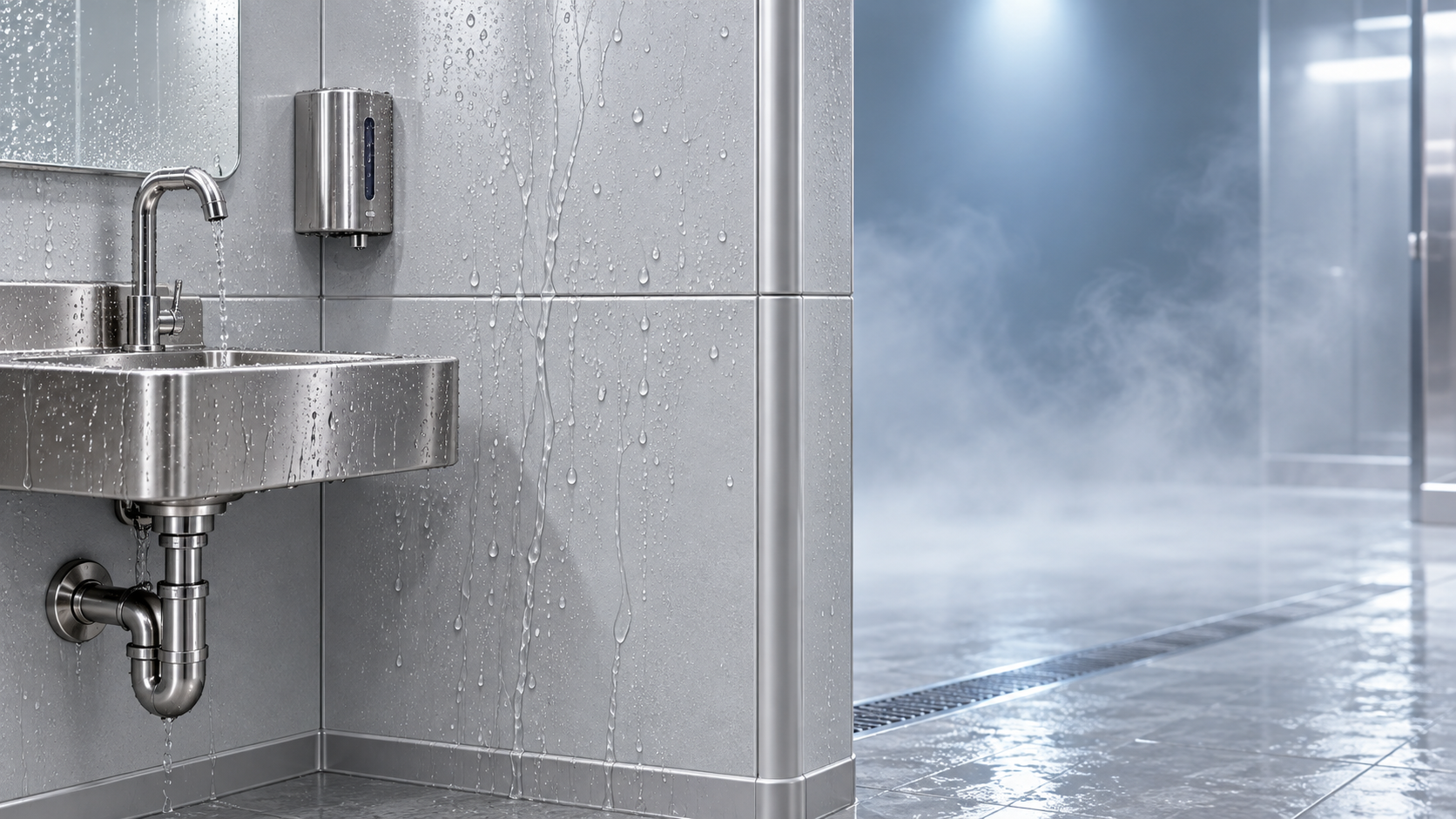
Moisture is one of the strongest reasons to consider a panel solution, but it is also where specification errors are most expensive. Standard gypsum board is not appropriate as an exposed finish in persistently wet areas. Moisture-resistant gypsum products exist, yet they still need the correct waterproofing, joint treatment, tile backing strategy, ventilation, and detailing at floor and sanitary junctions.
A composite panel used in a wet or humid zone should not be judged only by its face finish. Ask how the edges are sealed, how joints behave, whether penetrations can be reliably detailed, and what happens if water reaches the backing or cavity. A decorative surface that looks waterproof but has vulnerable cut edges is a common source of later swelling, staining, or hidden deterioration.
Fire Safety Is a System Question, Not a Material Label
Hotel projects should be particularly careful with broad claims such as “fireproof panel” or “fire-resistant wall.” Fire performance depends on the complete assembly: panel composition, core, facing, adhesive, framing, cavity treatment, insulation, fixing method, joint treatment, sealants, doors, service penetrations, and interface with the building structure.
A gypsum partition can be designed as part of a fire-rated system. Some composite products may also be suitable for applications requiring specific fire performance, but their suitability must be verified against the applicable project requirements and local building rules. Decorative fireproof sealing materials are equally important at joints and penetrations; a well-performing wall surface does not compensate for poorly sealed service openings.
Before selecting either option, the project team should request documentation for the proposed assembly rather than relying on a sample board. The key practical questions are simple: What wall build-up is being approved? Which components cannot be substituted? How are sockets, access panels, pipe penetrations, and ceiling void interfaces handled? These details are where a visually impressive fit-out can lose its intended fire performance.
Acoustics: Do Not Assume a Denser Panel Means a Quieter Room
Guest complaints about sound travel are one of the quickest ways for a boutique hotel to lose its sense of comfort. But acoustic performance is often misunderstood during material selection. A wall’s sound insulation is influenced by mass, cavity depth, resilient separation, insulation, airtightness, doors, outlets, structural connections, and workmanship. The facing material alone is only one part of the equation.
Gypsum board systems are commonly used in acoustic partitions because multiple layers, insulation, and framing arrangements can be designed into the build-up. Composite panels may contribute useful surface mass or improve a decorative lining, but they should not be presumed to solve inter-room acoustic separation without an engineered wall design.
There is also a difference between sound insulation and room acoustics. A hard decorative panel may create a sharper, more reflective atmosphere in a small lobby, restaurant, or guestroom. That can suit a polished modern concept, but it may be tiring in a breakfast area or lounge unless softer finishes, furnishings, ceilings, or acoustic treatments balance it.
Maintenance Is Usually the Real Cost Decision
Initial material cost rarely tells the whole story. A lower-cost gypsum wall may be the sensible choice in a back-of-house room where easy access and simple patching matter more than decorative durability. In a lobby or signature corridor, however, recurring repainting, guest-facing defects, and work performed during operating hours can make a tougher panel finish more attractive over the life of the interior.
Hotel operators should ask a few unglamorous questions before approving a finish: Can housekeeping use its normal cleaning products on it? Will rubbing from luggage leave permanent marks? Can a single damaged panel be removed without dismantling adjacent areas? Are replacement panels expected to match after several years? How are fingerprints, scratches, and edge damage treated?
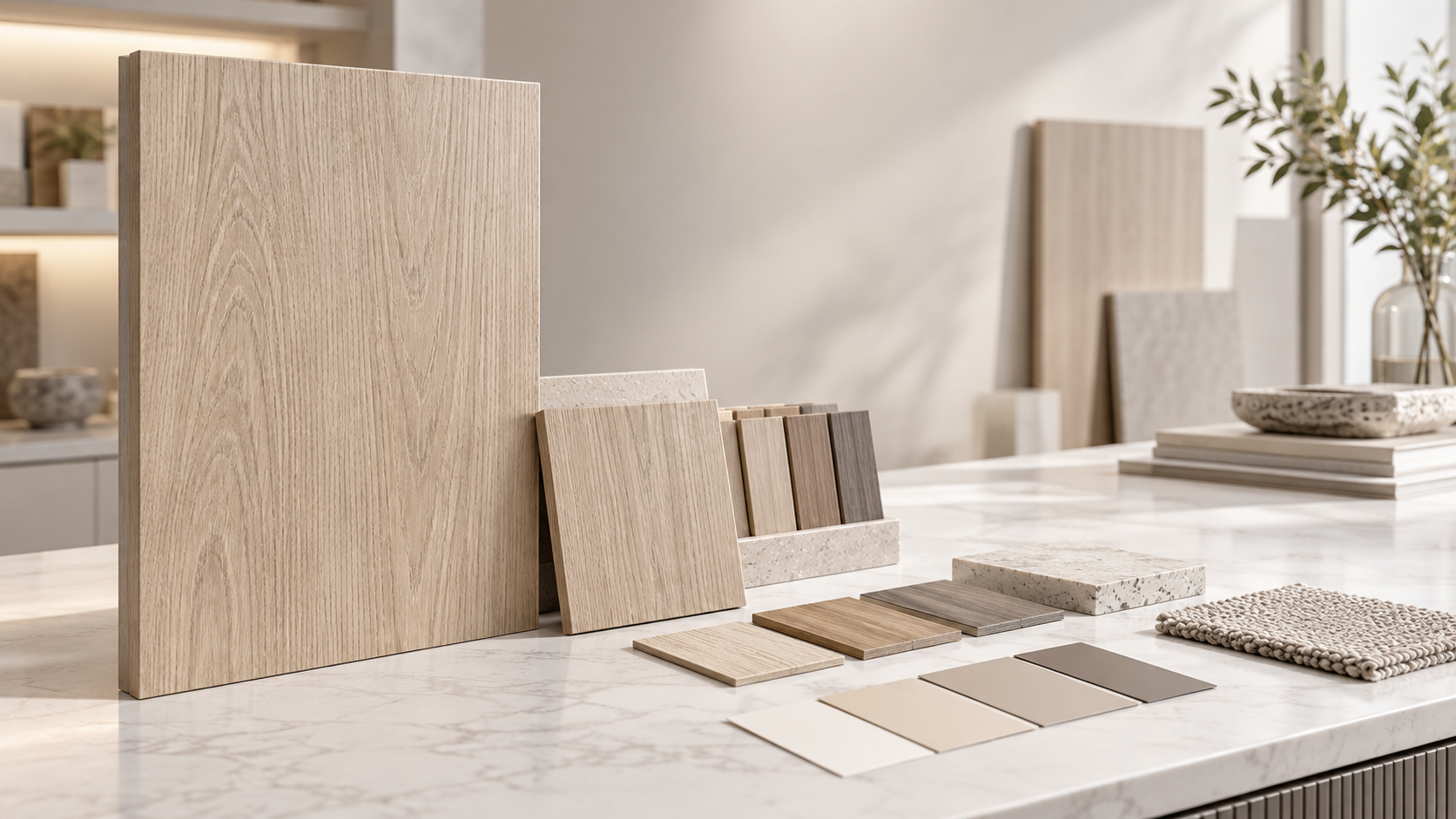
A glossy or deeply textured material may look memorable on opening day but can be unforgiving under daily cleaning. Samples should be assessed under the hotel’s actual lighting, not just in a supplier showroom. They should also be tested with the likely cleaning routine and viewed after repeated handling. Boutique hospitality is very visual; it is also relentlessly practical.
Environmental Claims Need a Closer Look
Both gypsum-based systems and composite materials can support more environmentally conscious fit-outs, but neither category is automatically the greener choice. The meaningful comparison includes expected service life, repairability, waste created during installation, transport distance, material composition, emissions documentation where required, and end-of-life options.
A durable panel that avoids repeated replacement may be a responsible choice in a high-wear area. Conversely, a complex multi-layer panel can be harder to separate or recycle than a simpler construction. For hotel interiors, low-emission considerations should also be discussed early because guestroom turnover, enclosed spaces, and installation schedules can make indoor air quality a practical handover issue rather than an abstract sustainability target.
Companies working in new-material development, such as Shenyang Shengshi Meilin Technology Co., Ltd. in Liaoning, increasingly approach interior solutions as a combination of decorative performance, safety, sealing detail, and long-term usability rather than as isolated boards. That perspective is useful for hotel teams: the surface, substrate, sealing materials, furniture interfaces, and installation method should be reviewed together.
A Practical Specification Approach for Boutique Hotels
Rather than selecting one material category for the whole hotel, map the interior by exposure and function. Guestroom partitions may need proven acoustic and fire performance. Bathrooms need moisture management. Corridors need impact resistance and repairability. Public spaces may prioritize visual identity, cleanability, and rapid installation. Back-of-house areas often benefit from simple, maintainable systems.
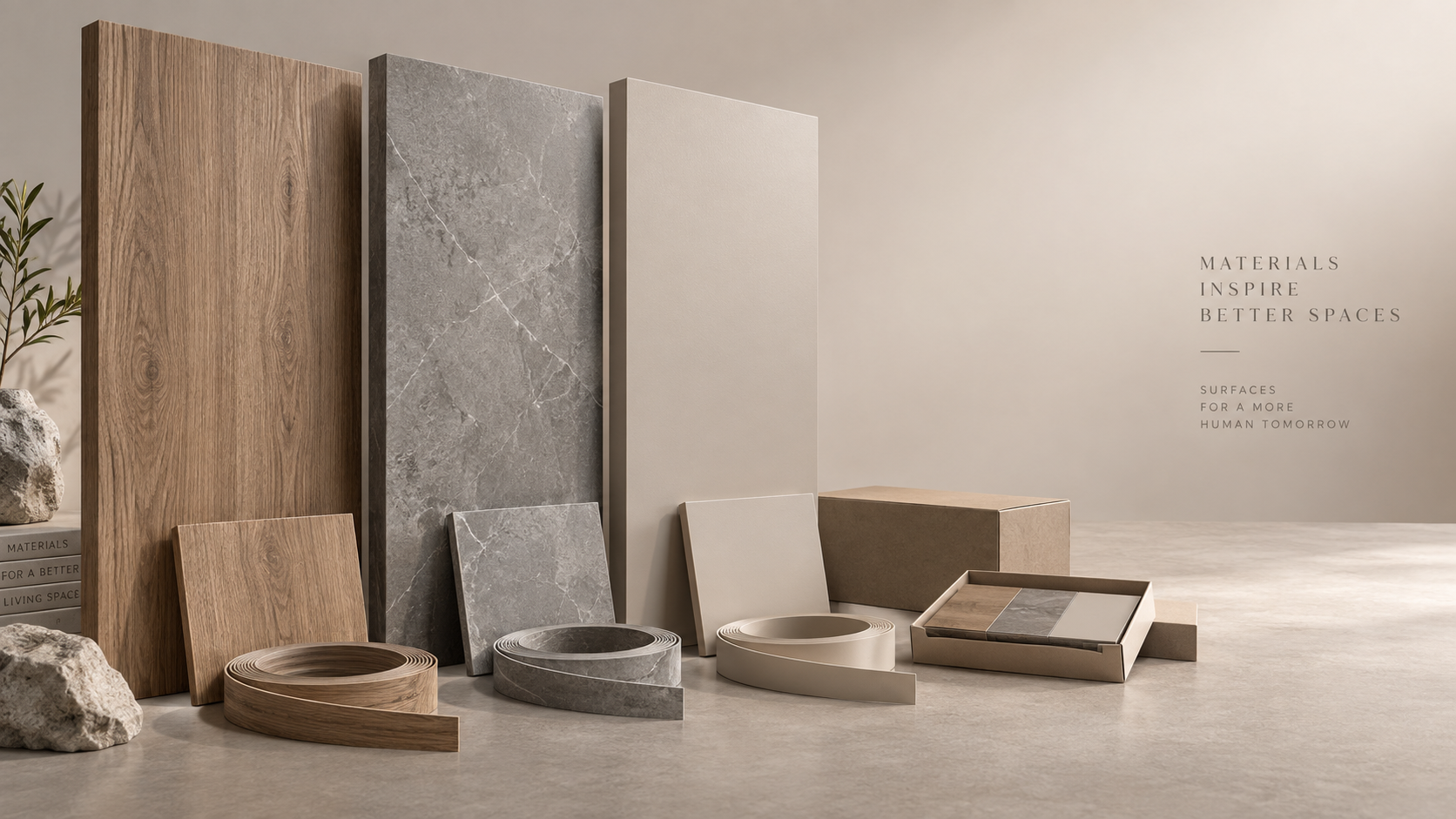
Then review full-size mock-ups, not only small swatches. Include a corner, a door frame, an electrical outlet, a joint, a skirting detail, and any likely service penetration. A beautiful panel face tells very little about whether the finished wall will stay aligned, cleanable, sealed, and code-compliant once installers begin working around real building conditions.
Composite panels are not inherently better than gypsum for boutique hotels. They are often better for selected areas where durability, visual consistency, moisture tolerance, or reduced finishing work justify the added planning. Gypsum remains hard to beat where adaptable construction, concealed services, straightforward repairs, and established wall assemblies are the priority. The strongest projects usually combine both deliberately—and make sure that fire sealing, acoustic junctions, and maintenance access are resolved before the first wall is closed.
RECOMMEND

Oct 05, 2026
How Long Does Custom Panel Prototyping Take to Reach Sample Approval?
How long does custom decorative panel prototyping usually take from submission to sample approval? Explore key timeline factors and speed approval with expert planning.
Oct 04, 2026
Are Aluminum Honeycomb Panels Suitable for High-Rise Interiors?
Aluminum honeycomb composite panels for high-rise interiors offer lightweight strength, flatness, and design flexibility. Explore fire, installation, and specification insights.
Oct 03, 2026
Can Designers Order Private-Label Decorative Panels?
Private label decorative panel production for designers creates distinctive, repeatable finishes. Explore customization, sampling, performance, and branding options.
Oct 02, 2026
Are Waterproof Interior Wall Panels Suitable for High-Humidity Commercial Areas?
Waterproof interior wall panels for high humidity commercial use: discover how sealed joints, suitable substrates, and proper installation deliver durable, hygienic wall protection.