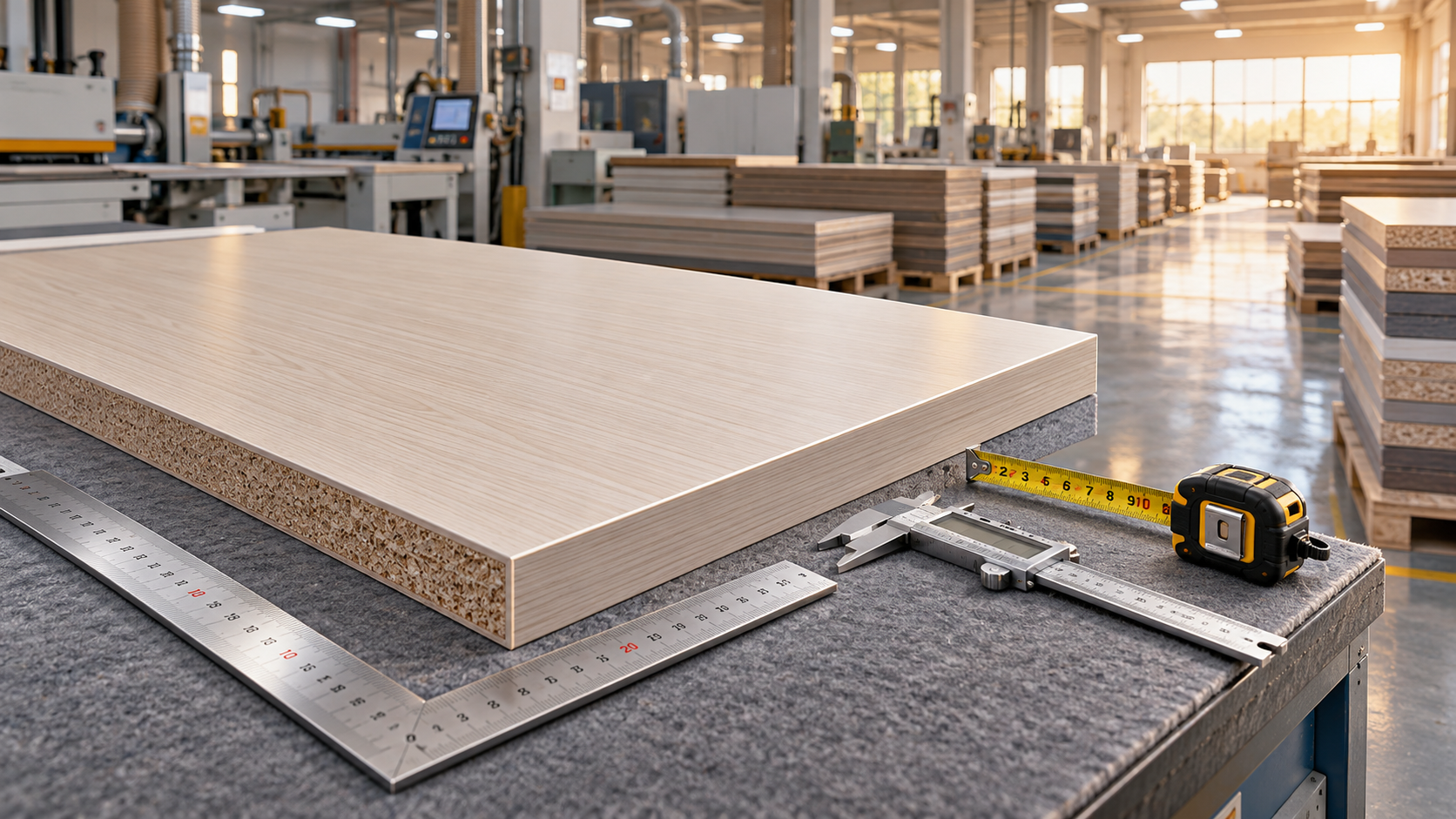
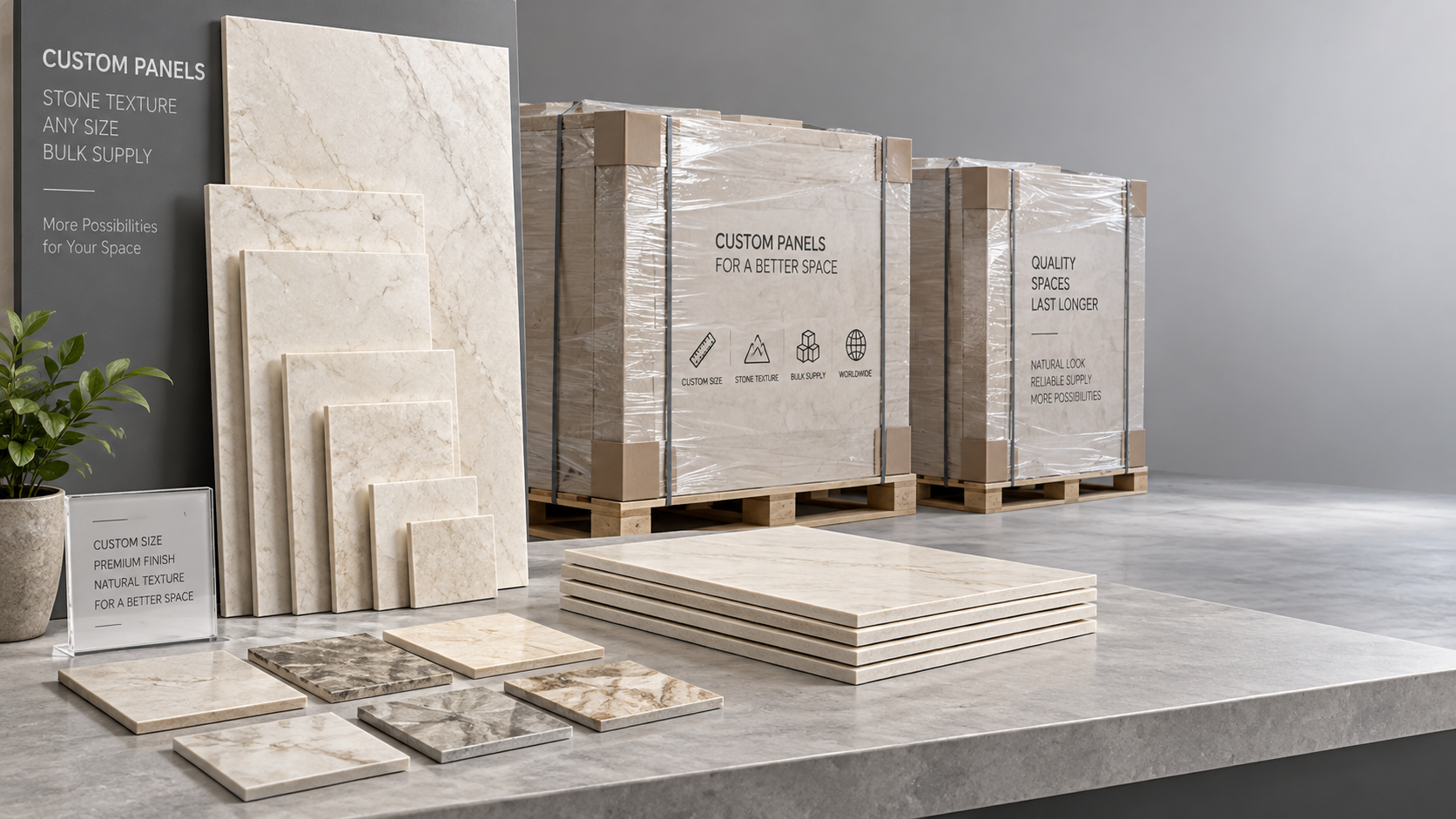
What Advantages Do Decorative Composite Panels Have Over Plywood?
Decorative composite panels can outperform plywood in surface consistency, maintenance, and moisture resistance. The strongest advantages depend on the panel’s core, finish, and intended application.
Choosing the right decorative material influences interior appearance, installation costs, and long-term upkeep. Designers, builders, furniture manufacturers, and homeowners therefore need more than a general comparison.
So, what are the advantages of decorative composite panels over plywood? Factory-finished products can reduce finishing work, while selected constructions offer better dimensional stability or fire performance.
However, plywood often remains preferable for structural strength and dependable fastening. The practical choice starts with identifying what each panel must withstand throughout its service life.
First, Compare the Actual Panel Systems
“Decorative composite panel” describes a broad category, including laminated wood-based boards, polymer composites, mineral-core panels, and aluminum-faced products. These materials have substantially different strengths and limitations.
Plywood also varies by veneer quality, adhesive, thickness, and exposure classification. Comparing a premium composite with inexpensive interior plywood can produce misleading conclusions about overall performance.
A useful comparison considers complete systems: panel core, decorative face, backing layer, exposed edges, fixings, and joints. Weakness in any component can compromise the finished installation.
Also distinguish bare plywood from decorative plywood. A factory-laminated plywood panel may provide many surface benefits commonly associated with composites while retaining a plywood core.
Before choosing either option, define whether the panel serves as visible cladding, a furniture component, or structural support. That distinction determines which advantages actually matter.
Will Composite Panels Handle Moisture Better?
Moisture resistance is often the most valuable advantage in kitchens, washrooms, hospitality interiors, and utility areas. However, it depends heavily on the specific core material.
Some polymer and mineral-based cores absorb less water than conventional wood panels. This can reduce swelling, edge distortion, and deterioration when products are appropriately specified.
A decorative laminate can protect a panel’s face, but it does not automatically protect the core. Cut edges, drilled holes, and joints remain potential entry points.
Wood-based composite panels can still swell after water exposure, particularly if their cores are unsuitable for damp conditions. “Composite” should never be interpreted as “waterproof.”
Exterior-grade plywood uses adhesives suitable for its stated exposure conditions, but the wood still requires appropriate protection. Adhesive durability alone does not prevent moisture absorption.
For wet locations, request water absorption and thickness swelling data, plus approved detailing instructions. Use shower-zone panels only when the manufacturer explicitly supports that application.
Can They Deliver a More Consistent Decorative Finish?
Factory-produced decorative surfaces can offer consistent colors, patterns, and textures across large installations. This helps designers achieve a coordinated appearance across walls, cabinetry, and furniture.
Compared with unfinished plywood, prefinished panels can eliminate sanding, staining, and painting stages. They also reduce the variability associated with finishing conditions and workmanship on-site.
Available finishes may reproduce timber, stone, concrete, or solid colors. These options can simplify design coordination when natural materials exceed a project’s budget or weight allowance.
Consistency still requires checking production batches, pattern direction, gloss levels, and sample approvals. Woodgrain repeats and mismatched edges can undermine an otherwise convincing decorative surface.
For premium projects, review full-size samples under the intended lighting. Small swatches rarely reveal pattern repetition, reflected glare, joint visibility, or the appearance of edge treatments.
How Much Easier Are Cleaning and Maintenance?
Smooth, sealed decorative surfaces are often easier to clean than unfinished plywood. Routine marks may be removable without repainting, refinishing, or applying additional protective coatings.
This advantage is particularly useful in offices, retail interiors, rental properties, and hospitality spaces, where cleaning frequency and acceptable downtime influence material selection decisions significantly.
However, resistance to scratches, stains, abrasion, and cleaning chemicals varies by finish. A decorative film should not be assumed to perform like a high-pressure laminate.
Ask suppliers which cleaning agents are permitted and whether disinfectants affect color or gloss. Test the proposed maintenance routine on a sample before placing large orders.
Consider repairability alongside cleanliness. Painted plywood can sometimes be refinished locally, while damaged decorative laminates or films may require replacement to restore a consistent appearance.
Will Installation Be Faster or Easier?
Prefinished composite panels can shorten installation by combining the substrate and decorative finish in one product. This can reduce site labor, curing delays, and finishing equipment.
Some lightweight constructions also make handling easier, especially for large wall panels. Nevertheless, weight varies substantially; dense mineral-core products can be heavier than comparable plywood.
Compare weight per square meter at the required thickness, rather than relying on product labels. Include the supporting framework and attachment system in the assessment.
Installation requirements may offset labor savings. Certain panels need specialist blades, approved adhesives, ventilation gaps, movement joints, or mechanical clips to achieve their intended performance.
Check thermal expansion, panel flatness, and fixing instructions before fabrication. Tight joints or unsuitable adhesives can cause buckling, visible distortion, or bond failure after installation.
Do Composite Panels Offer Better Fire Performance?
Selected mineral-core and other tested composite panels can offer improved reaction-to-fire performance compared with ordinary plywood. This can be valuable where interior finishes face strict requirements.
However, composite construction does not automatically indicate low combustibility. Polymer cores, decorative coatings, and adhesives may contribute to flame spread or smoke production during fire exposure.
Request classification reports against the standards applicable to the project’s location. Confirm that the documentation matches the exact panel construction, thickness, finish, and intended mounting arrangement.
Reaction-to-fire classification concerns a material’s contribution to fire. Fire resistance concerns an assembly’s ability to maintain functions, such as integrity or insulation, for a specified period.
A panel rating cannot establish the performance of an entire wall. Where required, obtain assembly evidence covering substrates, fixings, joints, cavities, and associated fireproof sealing materials.
When Is Plywood Still the Better Choice?
Plywood remains useful where panels must carry loads, span between supports, or hold screws securely. Its layered veneer construction provides practical advantages in many furniture applications.
Some decorative composites are designed primarily as surface materials and need a supporting substrate. Substituting them directly for plywood can create deflection or fastening problems.
For shelving, cabinet carcasses, and frequently operated doors, compare bending stiffness, screw withdrawal resistance, creep behavior, and recommended spans. Appearance alone cannot establish suitability for use.
Fastener performance also varies by location. Screws placed near edges, hinges under repeated loading, and heavy wall attachments may require reinforcement or a different panel construction.
If plywood supplies the necessary strength, a decorative face applied over it may offer a sensible compromise. Material selection does not require choosing one category exclusively.
Are Composite Panels Better for Indoor Air Quality?
Low-emission composite panels can support indoor air quality goals, but environmental performance depends on binders, coatings, adhesives, and manufacturing controls. Category names provide limited guidance.
Some wood-based composites contain formaldehyde-based resins, while other constructions use different bonding systems. Plywood emissions likewise vary with adhesive formulation and the applicable product standard.
Request relevant formaldehyde and volatile organic compound documentation for the supplied product. Check whether reports cover the finished panel rather than only its core material.
Installation adhesives and sealants also affect the completed interior. Selecting a low-emission panel offers less benefit if the installation introduces products unsuitable for occupied indoor spaces.
Environmental comparisons should consider verified sourcing, service life, repair options, and local disposal routes. Mixed-material panels can be difficult to recycle despite containing recycled ingredients.
Which Option Costs Less Over the Project’s Life?
Decorative composite panels may cost more per sheet than basic plywood but less as a finished installation. Their value depends on which subsequent operations they eliminate.
Compare equivalent finished areas, including panel purchase, delivery, cutting waste, edge finishing, installation labor, coatings, and maintenance. Sheet prices alone leave major project costs hidden.
For example, unfinished plywood may require sanding, primer, multiple finish coats, and drying time. A suitable prefinished composite could replace several of those operations entirely.
Conversely, specialist fixings, expensive trims, or additional support can reduce composite savings. Damage during handling may also be costly when matching replacement panels are unavailable.
For commercial projects, include downtime and replacement access in the calculation. An inexpensive panel can become costly if routine damage requires closing occupied areas for repairs.
Where Do These Advantages Matter Most?
For decorative wall cladding, surface consistency, cleaning performance, and suitable fire classification often dominate. Structural capacity may matter less when a separate framework supports the panels.
For kitchen cabinet fronts, prioritize finish durability, edge protection, hinge compatibility, and moisture exposure. Cabinet carcasses require separate assessment of load-bearing capacity and fastening performance.
In bathrooms, distinguish humid air from repeated splashing and direct water exposure. Panels suitable for general bathroom walls may be unsuitable inside an actively used shower.
Retail and hospitality projects often benefit from coordinated finishes and reduced installation time. Their specification should also address impact damage, frequent cleaning, and future replacement availability.
For shelves, worktops, or heavily loaded furniture, evaluate the whole component rather than the decorative face. A strong substrate may be essential beneath an attractive surface.
What Should You Ask a Supplier Before Ordering?
Start with the exact product construction, including core composition, face material, backing, thickness, and tolerances. This establishes whether different quotations describe genuinely comparable panel systems.
Next, request evidence for the performance your application needs: moisture resistance, abrasion resistance, emissions, fire classification, or mechanical strength. Prioritize relevant results over broad promotional claims.
Obtain installation and fabrication guidance before finalizing drawings. Confirm approved adhesives, fixing distances, movement allowances, edge treatments, and any restrictions on cutting or drilling panels.
Ask about batch consistency, minimum order quantities, lead times, and replacement supply. These details influence whether the selected finish remains practical throughout construction and later maintenance.
Review warranty exclusions and maintenance instructions together. A warranty offers limited reassurance if foreseeable moisture exposure, cleaning chemicals, or installation methods fall outside its stated conditions.
For Shengshi Meilin products, request current specifications and supporting reports for the exact panel proposed. Claims about other products cannot establish that panel’s suitability or compliance.
Choose the Panel That Solves Your Project’s Main Problem
The clearest advantages of decorative composite panels are ready-to-use finishes, consistent appearance, and potentially easier maintenance. Selected constructions also improve moisture resistance or fire performance.
Those benefits are most persuasive when they address a defined project need, such as reducing finishing labor, simplifying cleaning, or limiting moisture-related damage in suitable applications.
Plywood remains a practical option when strength, fastening, flexibility in fabrication, or refinishing matters most. Decorative plywood can also combine structural usefulness with a factory-applied surface.
Choose by verified specifications, installation requirements, and total installed cost. The best material is the one whose documented performance matches the environment and component it serves.