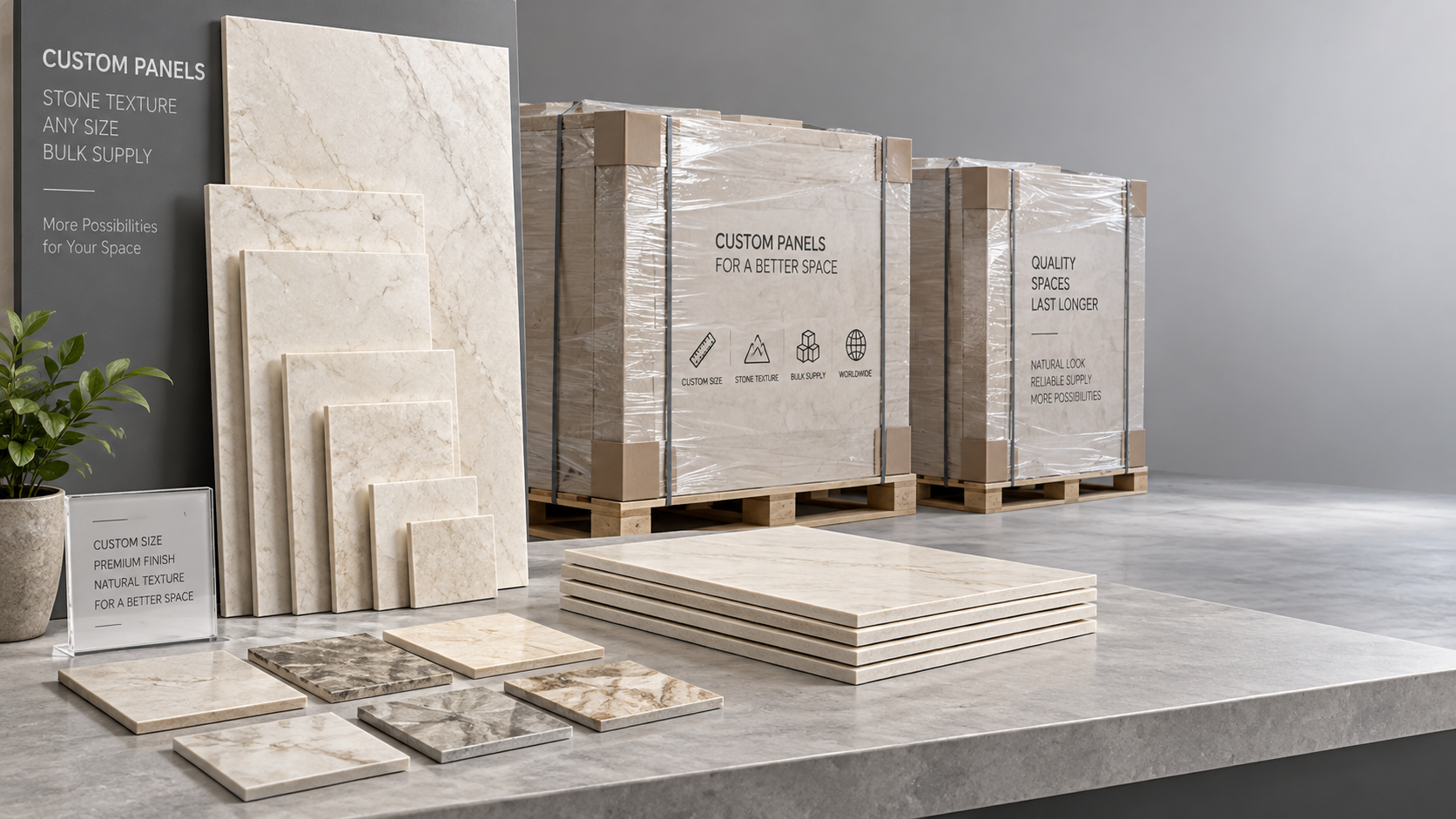
How Do Crystal Stone Panels Compare With Quartz Surface Panels?
How Do Crystal Stone Panels Compare With Quartz Surface Panels?
Choosing decorative panels means balancing visual appeal with durability, maintenance, and project costs. So, how do crystal stone panels compare to quartz surface panels when selecting materials for walls, furniture, or interior finishes? The answer depends on each product’s composition, manufacturing process, and intended application—not its name alone. This guide explores key differences in appearance, scratch and stain resistance, installation requirements, and long-term value, while highlighting why product-specific test data matters. Whether you are planning a residential upgrade or specifying commercial interiors, these comparisons can help you select a surface that suits your design goals and practical needs.
The practical distinction is this: engineered quartz is generally an established choice for demanding horizontal surfaces, while a product sold as “crystal stone” needs closer identification before its suitability can be judged. That does not make crystal stone inferior. It means the purchasing decision must start with the construction of the panel rather than the impression created by its trade name.
Start With the Material Behind the Name
“Crystal stone panel” is not a consistently defined material category across suppliers and markets. It may describe a crystallized glass-based surface, a mineral-and-resin composite, or a decorative panel with a stone-like finish over another substrate. These constructions can differ substantially in weight, brittleness, heat response, and repair options. A showroom sample alone will not tell you which one you are buying.
For this comparison, quartz surface panels means engineered quartz: mineral aggregates bound together with resin and other formulation components. It does not mean natural quartzite. Engineered quartz also varies by manufacturer, so general category strengths should not replace the technical documentation for the selected product.
Ask the supplier to identify the exposed surface, the panel body, any backing, and any protective coating. Establish whether the decorative appearance runs through the material or exists only at the face. This affects exposed edges, drilling, refinishing, and what happens when the surface is chipped. A coated panel and a through-body slab can look similar from the front but behave very differently in service.
Appearance: Judge the Finished Assembly, Not Just the Sample
Engineered quartz offers a broad range of solid colors, aggregate patterns, and stone-inspired veining. It is often selected where the designer wants coordinated worktops, vanity surfaces, or furniture components. However, repeat patterns and changes between production batches can still be visible, particularly across large adjoining pieces.
Crystal stone products may appeal for a glass-like gloss, luminous appearance, or a particular decorative finish. None of those qualities should be assumed from the name. Translucency, for example, needs to be confirmed on the actual thickness and backing proposed for the project. A material that looks luminous in a small sample may not be suitable for a backlit installation.
Large feature walls expose details that small samples conceal: joint spacing, vein alignment, edge color, reflections, and slight differences in panel flatness. Review a full-size panel or a representative assembly under the intended lighting. Strong grazing light can make minor surface or installation variations much more noticeable.
For furniture, inspect the edge as carefully as the face. If the core differs from the decorative surface, edge banding or a separate trim may be necessary. That changes the appearance, fabrication work, and potential maintenance points.
Durability Is More Than a Scratch-Resistance Claim
Engineered quartz generally offers good scratch resistance for interior applications, but it is not scratch-proof. Its mineral content does not make the entire composite immune to damage. Resin, finish, edge geometry, and abrasive contamination all influence performance. Cutting boards and suitable cleaning tools remain sensible precautions.
For crystal stone panels, the exposed layer determines much of the wear performance. A hard glass-based surface may resist abrasion well yet remain vulnerable to edge chipping. A coated decorative panel may depend on a relatively thin wear layer that cannot be polished back after damage. These are different failure modes and need different maintenance plans.
Stain resistance also needs a more careful question than “Is it waterproof?” A face may resist liquid absorption while joints, cut edges, or backing remain moisture-sensitive. Ask for test conditions covering relevant substances—such as coffee, cosmetics, cooking oils, or cleaning agents—and check the exposure time and cleaning procedure. Results from one finish should not automatically be applied to another.
Impact deserves separate attention. A reception counter edge, luggage-contact area, or restaurant tabletop faces different abuse from a wall panel above reach. Hardness alone does not establish impact resistance. Thin sections, unsupported edges, and poorly positioned cutouts can become weak points even when the face performs well in a scratch test.
Heat, Sunlight, and Fire Need Separate Checks
Resin-bound quartz can be damaged by excessive heat or thermal shock, so hot cookware should not be placed directly on it. Outdoor exposure also requires explicit manufacturer approval because ultraviolet light and weathering may affect the binder or appearance. Crystal stone products need the same application-specific review; a mineral-looking finish is not proof of heat or weather resistance.
For commercial wall linings, request the fire classification required by the project and check what the report actually covers. Adhesives, substrates, backing layers, and installation arrangements may affect the assembly’s fire performance. A test for an unbacked panel does not necessarily establish compliance for the installed wall system.
Installation Can Change the Economics
A lower panel price can disappear into substrate preparation, difficult handling, or fabrication waste. Engineered quartz slabs can be heavy and require suitable transport equipment, trained fabrication, and adequate support. For vertical installations, panel weight must be considered alongside fixing design and the capacity of the receiving wall.
Some crystal stone panels may be lighter than a conventional quartz slab, particularly where they use a composite core. Others may not be. Compare declared weight per unit area at the specified thickness, not a general statement that one material is “lightweight.” A thinner product may also require closer support or a flatter substrate.
The proposed installation method should address adhesive compatibility, mechanical restraint where needed, movement joints, cutout clearances, and edge protection. Large-format panels leave little room for improvisation on site. Confirm these details before ordering, especially when the material will be installed over an existing wall or incorporated into furniture made by another contractor.
Fabrication safety is another procurement issue. Cutting or grinding silica-containing materials can generate hazardous respirable crystalline silica. Do not assume a crystal stone product is silica-free. Obtain its safety data and use fabricators with appropriate exposure controls, following applicable local requirements. Unplanned dry cutting on site should not be treated as a routine adjustment.
Match the Surface to the Actual Application
For kitchen worktops and heavily used horizontal surfaces, engineered quartz is often the more straightforward starting point because products are commonly offered specifically for those uses. Still, confirm suitability for the selected thickness, support arrangement, sink cutouts, and expected cleaning regime. A quartz wall panel is not automatically a countertop product.
For decorative walls, the decision may lean toward appearance, panel dimensions, installed weight, and joint design rather than maximum scratch resistance. A crystal stone panel can be worth considering if its documented construction supports the intended application. In wet areas, assess the complete wall build-up, including waterproofing and penetrations, rather than relying on the panel face alone.
Furniture introduces another set of constraints. Fastener holding, edge finishing, attachment to the frame, and movement between materials may matter more than surface hardness. For hospitality interiors, also consider whether damaged components can be replaced without dismantling surrounding joinery or closing an entire area.
Compare Installed Value, Not Just Price per Panel
A useful cost comparison includes material yield, fabrication, packaging, freight, access equipment, installation, and maintenance. Panel dimensions can influence waste substantially: a cheaper format may require extra joints or leave unusable offcuts. Pattern matching can further reduce the amount of usable material.
Repairability should be discussed before purchase. Some chips may be filled, but repairs can remain visible, especially on glossy or translucent surfaces. Coated finishes may need a manufacturer-approved repair method or complete replacement. Keeping spare material from the original batch can reduce future color-matching problems, provided suitable storage is available.
Environmental claims require the same discipline as performance claims. Ask for relevant emissions information where binders or coatings are used, documented material content, and any available lifecycle evidence. “Natural-looking,” “mineral-based,” and “eco-friendly” describe different things; none alone establishes environmental performance.
What to Confirm Before Approving a Material
A short approval package is more useful than a long brochure. It should connect the supplied product to the project conditions:
- Product identity, composition, backing, finish, thickness, dimensional tolerances, and weight.
- Performance reports identifying the tested product, method, conditions, and relevant limitations.
- Written installation and fabrication guidance for the intended application.
- Approved cleaning products, repair options, warranty exclusions, and replacement availability.
- Batch-control arrangements, packaging requirements, delivery schedule, and sample approval process.
This coordinated review is relevant when working with a materials-focused business such as Shenyang Shengshi Meilin Technology Co., Ltd. Based in Shenyang, Liaoning, the company focuses on new-material technology research and application, with a business scope spanning materials, fireproof sealing materials, furniture, and home furnishings. That breadth makes compatibility across finishes, joints, and furniture components a useful discussion—not evidence that any particular panel automatically meets a project specification.
The choice comes down to which documented product fits the job. Quartz may be the simpler route for a demanding work surface; a well-specified crystal stone panel may better suit a particular decorative effect or wall assembly. Before committing, approve the actual construction, inspect the finished edge and joint, and confirm who is responsible for fabrication and installation. Those checks matter more than either material name.
RECOMMEND

Oct 23, 2026
Construction Materials for Coastal Interiors: Moisture and Corrosion Checks
Choose Construction Materials for coastal interiors with confidence. Explore moisture, corrosion, and compatibility checks to protect finishes and reduce costly repairs.

Oct 22, 2026
Choosing Home Furnishing Materials for Humid Homes: MDF, Plywood, or PVC?
Choosing Home Furnishing Materials for a humid home? Compare MDF, plywood, and PVC for moisture resistance, strength, and cost—and discover how to avoid costly cabinet damage.
Oct 21, 2026
Furniture Materials Procurement: Comparing Cost per Finished Cabinet
Compare Furniture Materials by cost per finished cabinet—not sheet price. Explore yield, machining, finishes, and rejects to uncover hidden costs and make smarter procurement decisions.
Oct 20, 2026
New Material Technology: Low-Emission Binder Trends in Decorative Panels
Explore how New Material Technology is advancing low-emission binders for decorative panels. Compare key trends, durability factors, and testing essentials to make smarter sourcing decisions.