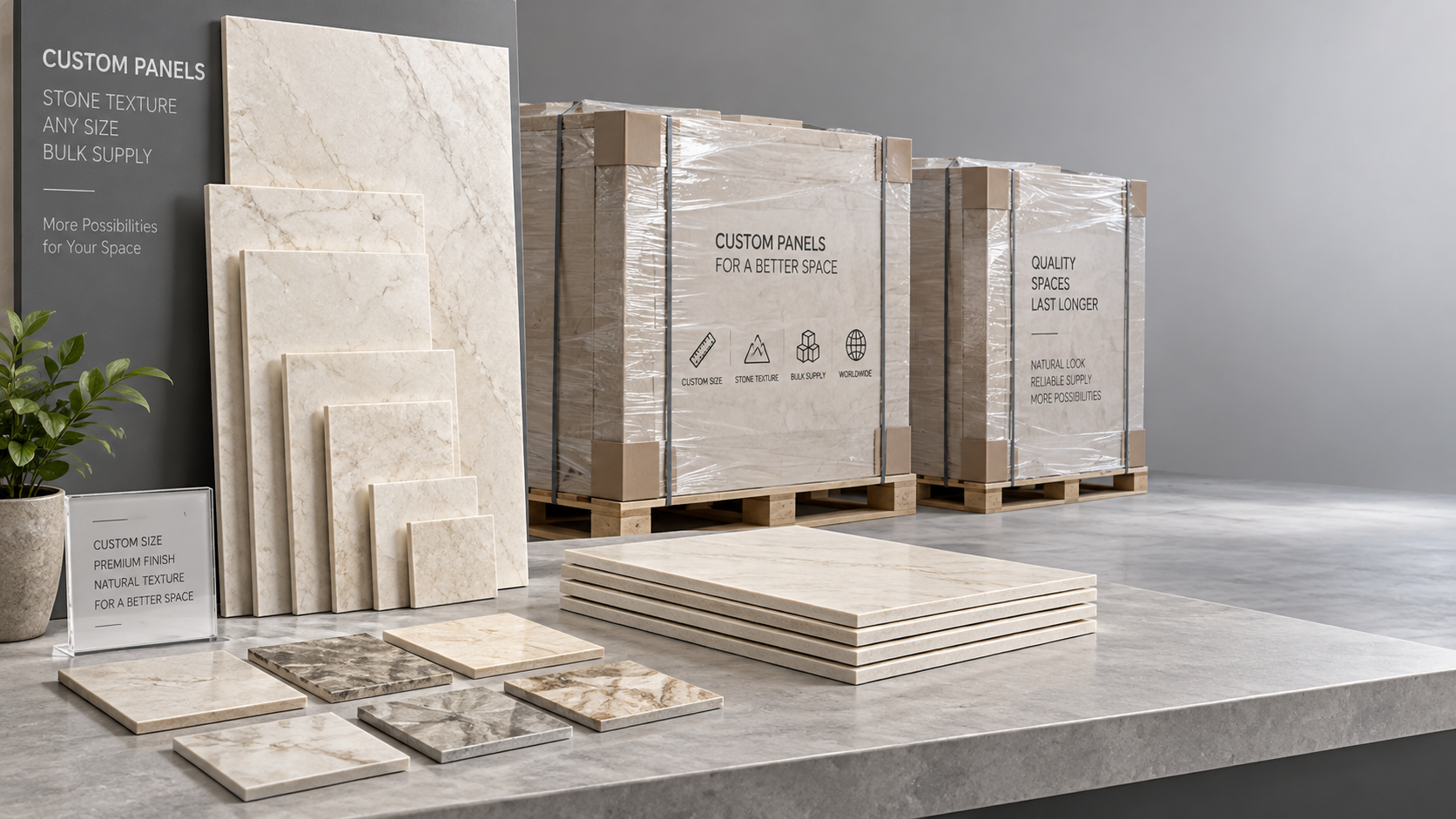
Coastal interiors expose finishes, fixings, and concealed assemblies to persistent humidity and salt-laden air. Material selection therefore requires technical risk assessment alongside aesthetic evaluation.
The strongest specification matches verified material performance to actual exposure conditions. A moisture-resistant surface alone cannot protect vulnerable cores, adhesives, cut edges, or concealed fasteners.
For technical evaluators, Construction Materials require checks on moisture absorption, dimensional stability, corrosion resistance, and compatibility. Product claims provide a starting point, rather than sufficient evidence.
This article explains which documents, tests, and installation details support defensible decisions, helping evaluators reduce premature deterioration and specify more durable coastal interior assemblies.
Define the Exposure Before Comparing Materials
Begin by separating conditioned living spaces from bathrooms, kitchens, entrance areas, and rooms opening directly toward the sea. These locations impose different moisture and salt loads.
Record expected temperature and relative humidity ranges, ventilation arrangements, cleaning methods, and periods without air conditioning. Seasonal shutdowns can change conditions substantially in coastal properties.
Distance from the shoreline helps describe exposure, but does not establish it. Wind direction, open windows, building orientation, and maintenance practices influence salt deposition.
Determine whether assemblies face humid air, occasional splashes, repeated wetting, or condensation. Materials suitable for intermittent humidity may fail when moisture accumulates behind decorative finishes.
Identify cold surfaces and thermal bridges where condensation could develop. An apparently dry room can contain persistently damp cavities around cooling pipes or poorly insulated walls.
Translate these observations into an exposure schedule for each room and assembly. Use that schedule to select relevant evidence and establish project-specific acceptance criteria.
Request Evidence That Matches the Supplied Product
Ask suppliers for technical data sheets, installation instructions, warranty conditions, and relevant test reports. Marketing descriptions such as “waterproof” or “marine quality” need supporting definitions.
Check that reports identify the tested product, thickness, substrate, coating system, and manufacturing configuration. Results for one construction do not automatically validate a visually similar alternative.
Review specimen conditioning, exposure duration, test temperature, humidity, and assessment criteria. A favorable result under mild laboratory conditions may provide limited evidence for demanding applications.
Confirm whether testing covers individual materials or complete assemblies. A compliant face layer does not establish the performance of its adhesive, backing board, or fixing system.
Where available, examine independent laboratory accreditation and its scope. Accreditation strengthens confidence in testing competence, while application suitability still depends on the method and conditions.
Maintain a comparison sheet linking every important claim to evidence and limitations. Mark missing information explicitly, so procurement decisions do not conceal unresolved technical assumptions.
Check Moisture Absorption and Dimensional Movement Together
Water absorption measures moisture uptake under stated conditions, but does not describe every failure mechanism. Evaluate swelling, warping, bond integrity, and recovery after drying alongside absorption.
For wood-based panels, request thickness swelling and dimensional stability results appropriate to the product category. Pay particular attention to exposed edges, machined profiles, and penetrations.
EN 317 addresses thickness swelling after water immersion for particleboards and fibreboards. Its results require interpretation against product requirements and intended exposure, rather than universal thresholds.
ASTM D1037 includes methods for evaluating properties of wood-based panels. Specify the relevant procedure and acceptance criteria instead of requesting a generic reference to the standard.
For plastics, ASTM D570 can support water absorption assessment. However, specimen geometry, conditioning, and immersion conditions affect results, so compare products only on equivalent test bases.
Prefer evidence covering repeated moisture changes when service conditions fluctuate. A material that recovers after one exposure may accumulate distortion or bond damage over successive cycles.
Evaluate Decorative Veneers as Complete Panel Systems
Decorative veneers require evaluation of the face material, backing, adhesive, finish, and supporting board. Their coastal suitability depends on how these components perform together under exposure.
A product such as High-End Custom Veneer-High-End Custom Veneer No.2 can enter a finishes shortlist, but its name alone provides no evidence of moisture resistance.
Before specifying it, request the actual construction details and applicable test data. Establish the veneer type, substrate grade, adhesive classification, finish system, and approved environmental conditions.
Ask whether both faces need treatment and how edges should be sealed. Unequal moisture exchange can contribute to curvature, even when the visible surface remains attractive.
Review details for sockets, handles, hinges, and site-cut openings. These interruptions can expose the core and create moisture pathways that factory-applied face coatings cannot control.
Use a representative assembly sample where documentation leaves uncertainty. Assess appearance, movement, and adhesion after agreed exposure cycles, while recognizing the limits of small-scale testing.
Select Metals for the Actual Salt and Moisture Load
Salt deposits can attract moisture and sustain local corrosion conditions. Inspect the entire metal package, including visible trims, brackets, screws, hinges, clips, and concealed support members.
Stainless steel grades differ in resistance to chloride attack. Grade 316 often offers better chloride resistance than grade 304, but neither guarantees freedom from corrosion.
Crevices, retained deposits, surface contamination, and poor drainage can undermine stainless steel performance. Require suitable fabrication, cleaning, and access for maintenance where exposure warrants them.
For coated steel, assess the substrate preparation, metallic coating where applicable, primer, topcoat, and protection of damaged areas. Coating descriptions alone do not establish system durability.
Aluminum also needs exposure-specific evaluation, including finish quality and contact details. Anodized or coated surfaces may perform well, while damaged edges and incompatible connections remain vulnerable.
Avoid prescribing one metal across every interior location without assessment. Use exposure severity, inspectability, replacement difficulty, and documented performance to determine where higher resistance is justified.
Read Corrosion Test Results Without Overestimating Them
ASTM B117 and ISO 9227 describe salt spray testing used to assess corrosion behavior under controlled conditions. They do not directly predict installed service life.
A statement such as “passed 1,000 hours” is incomplete without failure criteria. Determine whether evaluation covered red rust, blistering, pitting, coating delamination, or corrosion at scribes.
Check whether specimens included cut edges, joints, or deliberate coating damage. Intact flat coupons may overlook weaknesses that arise during fabrication and installation of components.
Compare reports only when test conditions, specimen preparation, and evaluation methods align. Longer exposure in a different procedure does not necessarily demonstrate a better product.
Where relevant, request cyclic corrosion testing or service history from comparable environments. These can add context, although neither eliminates the need to evaluate installation details.
Agree acceptable appearance and functional performance separately. Cosmetic staining may be unacceptable on prominent trims, while corrosion affecting load-bearing fixings creates a different consequence altogether.
Check Interfaces Where Materials Can Accelerate Failure
Galvanic corrosion can occur when dissimilar metals are electrically connected in the presence of an electrolyte. Moisture containing deposited salts can provide that conductive environment.
Evaluate metal combinations at screws, brackets, trims, and supporting frames. Consider relative exposed areas, because a small vulnerable component connected to a larger surface may deteriorate quickly.
Specify compatible combinations or suitable electrical isolation where needed. Isolation washers and sleeves must remain effective after tightening, movement, cleaning, and long-term exposure to moisture.
Check adhesive and sealant compatibility with coatings, plastics, veneers, and substrates. Some combinations can stain finishes, weaken adhesion, or create conditions that encourage local corrosion.
Request written compatibility confirmation for critical interfaces and conduct adhesion trials when warranted. A product approved for one substrate may behave differently on another finish.
Ensure joint design accommodates expected movement without trapping water. Sealants need appropriate joint geometry, preparation, and curing conditions to deliver the performance described in documentation.
Control Moisture Behind the Visible Finish
Moisture-resistant decorative panels cannot correct leaks, wet substrates, or condensation within cavities. Resolve the moisture source before installation, or deterioration may continue behind the finish.
Check substrate moisture using methods appropriate to the material and finish system. Record readings and compare them with the adhesive or flooring manufacturer's installation limits.
For concrete floors, in-situ relative humidity testing under ASTM F2170 may be relevant. Surface readings alone may not establish moisture conditions deeper within the slab.
Determine vapor-control placement from climate, conditioning strategy, and assembly design. Applying an impermeable layer without assessment can restrict drying and trap moisture inside the construction.
Provide ventilation or drainage where the assembly requires it, while maintaining fire and acoustic requirements. Detail access for inspecting vulnerable cavities, connections, and service penetrations.
Assess mold risk through moisture control, cleanability, and assembly design. A mold-resistance claim for one component does not demonstrate that the completed system will remain unaffected.
Keep Fire Performance and Installation Requirements in the Review
Coastal durability does not replace fire safety requirements. Decorative finishes, backing boards, adhesives, and cavity arrangements must satisfy applicable regulations for their intended building use.
Review whether fire classification applies to the proposed substrate, thickness, mounting method, and air gap. Changing these details can place the installation outside the tested scope.
Where service penetrations require fire stopping, select a tested system compatible with the opening and surrounding construction. Verify environmental limits for the specified sealing materials.
Include indoor emissions and chemical resistance where relevant to occupied interiors. Frequent cleaning, disinfectants, and household chemicals can affect finishes and seals independently of salt exposure.
Define delivery storage, acclimatization, handling, and installation conditions. Materials exposed to rain or excessive humidity before fitting may already carry damage into an otherwise suitable assembly.
Require installers to record edge sealing, coating repairs, substrate readiness, and fastener selection. These checks address practical failure pathways that laboratory product testing cannot prevent.
Turn the Assessment into a Clear Procurement Decision
Group findings into mandatory requirements, acceptable limitations, and unresolved questions. Reject unsupported critical performance claims, while considering manageable limitations through detailing, maintenance, or restricted use.
Prioritize concealed components with high replacement costs or safety consequences. Improving corrosion resistance in inaccessible fixings may offer greater value than upgrading an easily replaceable decorative trim.
For shortlisted Construction Materials, document approved applications and exclusions. State whether each product suits conditioned rooms, splash zones, intermittent occupancy, or locations receiving direct salt deposition.
Use mock-ups to assess joints, edge details, cleanability, and visible corrosion risks. Define observation criteria beforehand so approval reflects repeatable evidence rather than general impressions.
Specify maintenance procedures that match the selected materials, including appropriate cleaning agents and inspection intervals. Establish who will inspect concealed or difficult-to-access components after occupancy.
When sourcing from Shenyang Shengshi Meilin Technology Co., Ltd., request product-specific documentation for the proposed decorative and sealing materials. Assess each submitted system against project requirements.
Specify Coastal Interiors Around Verified Assembly Performance
The most reliable coastal specification connects exposure conditions with evidence for the complete assembly. Moisture uptake, dimensional change, corrosion, and interface compatibility deserve coordinated review.
Approve products when relevant documentation and installation details support their intended use. Where evidence is incomplete, define additional assessment or limit the application before procurement.
A defensible decision also records maintenance needs and practical access for repairs. Durability depends on continued moisture management as well as the initial choice of materials.
For technical evaluators, the key question is whether the supplied system can tolerate the documented environment. Answering it clearly supports durable finishes and more predictable ownership costs.