Will a PUR-Laminated Panel Delaminate in a Humid Room?
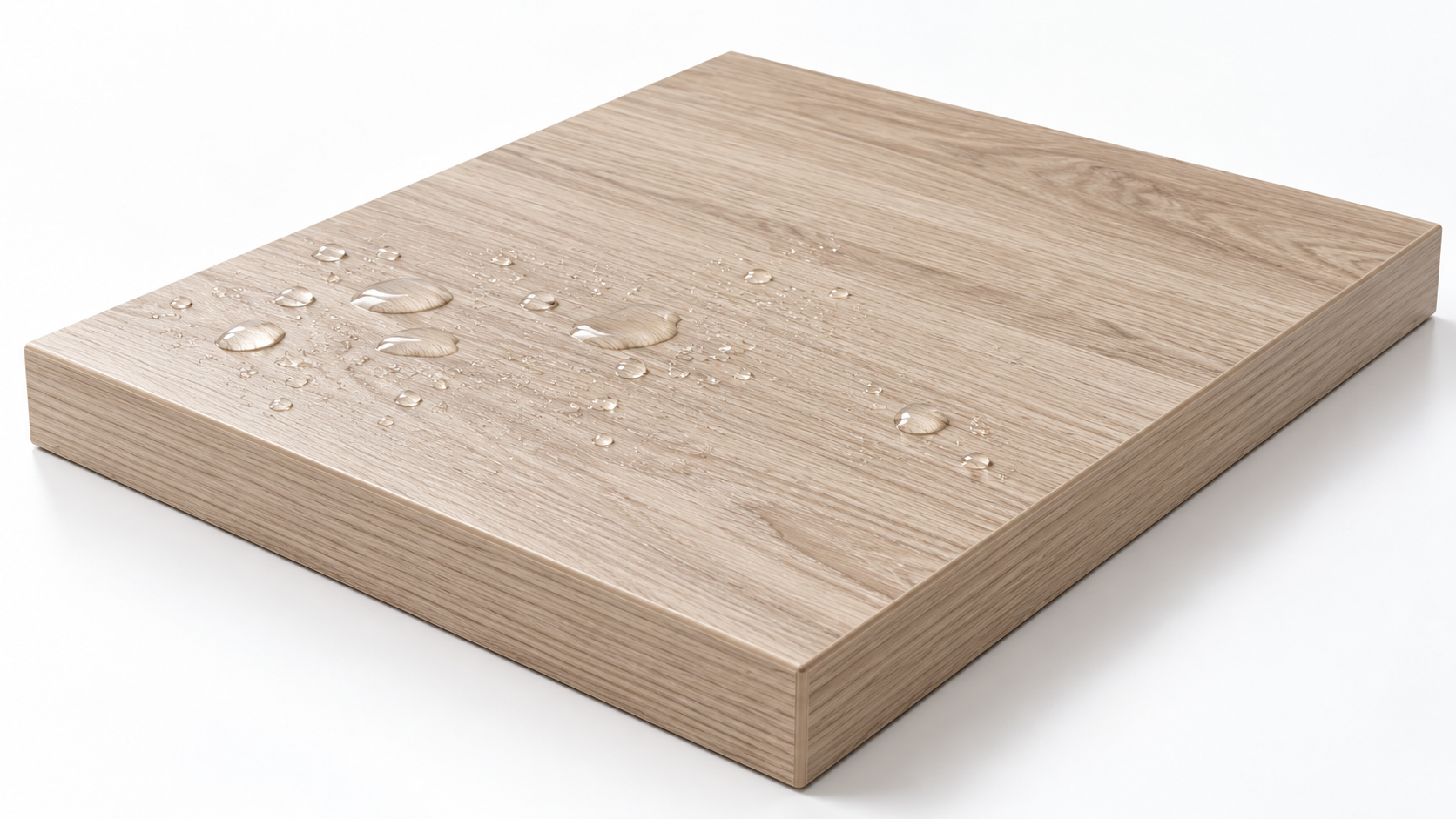
Will a PUR laminated panel delaminate in a humid room? It can, but humidity alone does not mean that peeling is inevitable. A properly manufactured PUR-laminated panel generally offers good resistance to moisture compared with many conventional bonding systems. Its long-term performance, however, also depends on the core material, edge protection, installation quality, and whether the panel is exposed to occasional damp air or repeated direct wetting.
That distinction matters when you are choosing a cabinet finish for a steamy bathroom or a decorative surface near a kitchen sink. A panel may look flawless in a showroom, yet the places you cannot easily see—cut edges, joints, and the substrate beneath the surface—often determine how well it will age.
What PUR lamination protects—and what it does not
PUR stands for polyurethane reactive adhesive. In panel lamination, it is used to bond a decorative layer, such as a film or other surface material, to a substrate. The adhesive reacts with moisture as it cures, forming a crosslinked bond that can provide good resistance to heat and moisture when correctly applied and fully cured.
Delamination occurs when that bond or another layer in the panel assembly fails. You might notice a lifted corner, a blister beneath the finish, or a loose strip along an edge. These signs do not always mean the adhesive itself has failed: a swollen or deteriorating substrate can also pull the surface out of shape.
PUR is a bonding system, not a waterproofing treatment for the entire panel. It does not automatically seal exposed board edges, protect screw holes, or make a moisture-sensitive core suitable for standing water. Think of the finished panel as an assembly whose performance is limited by its most vulnerable component.
Humid air versus direct water: the comparison that matters
A humid room is not necessarily a wet surface. A vanity cabinet in a ventilated bathroom may experience temporary increases in humidity after a shower, while a panel beside an unsealed basin joint may be repeatedly exposed to splashes and trapped water. Both are in a bathroom, but they present very different risks.
The practical question is therefore not simply, “Is the room humid?” It is, “Where will moisture reach the panel, how long will it remain there, and can the assembly dry?”
How PUR compares with other panel bonding and surface options
Adhesive names can help narrow a search, but they should not be treated as complete product ratings. Manufacturing conditions, surface preparation, substrate properties, and finished-panel design all influence the outcome.
PUR versus conventional hot-melt adhesives
Some conventional hot-melt adhesives, including EVA-based systems, soften when reheated and may offer less resistance to heat and moisture than a properly cured PUR system. This can make PUR attractive for decorative furniture panels exposed to the temperature and humidity changes common in kitchens and bathrooms.
That does not mean every PUR-bonded panel will outperform every panel made with another adhesive. Adhesive formulation, application, and the materials being joined matter. Ask about the performance of the finished panel rather than assuming that one ingredient tells the whole story.
PUR-laminated panels versus panels with more water-tolerant cores
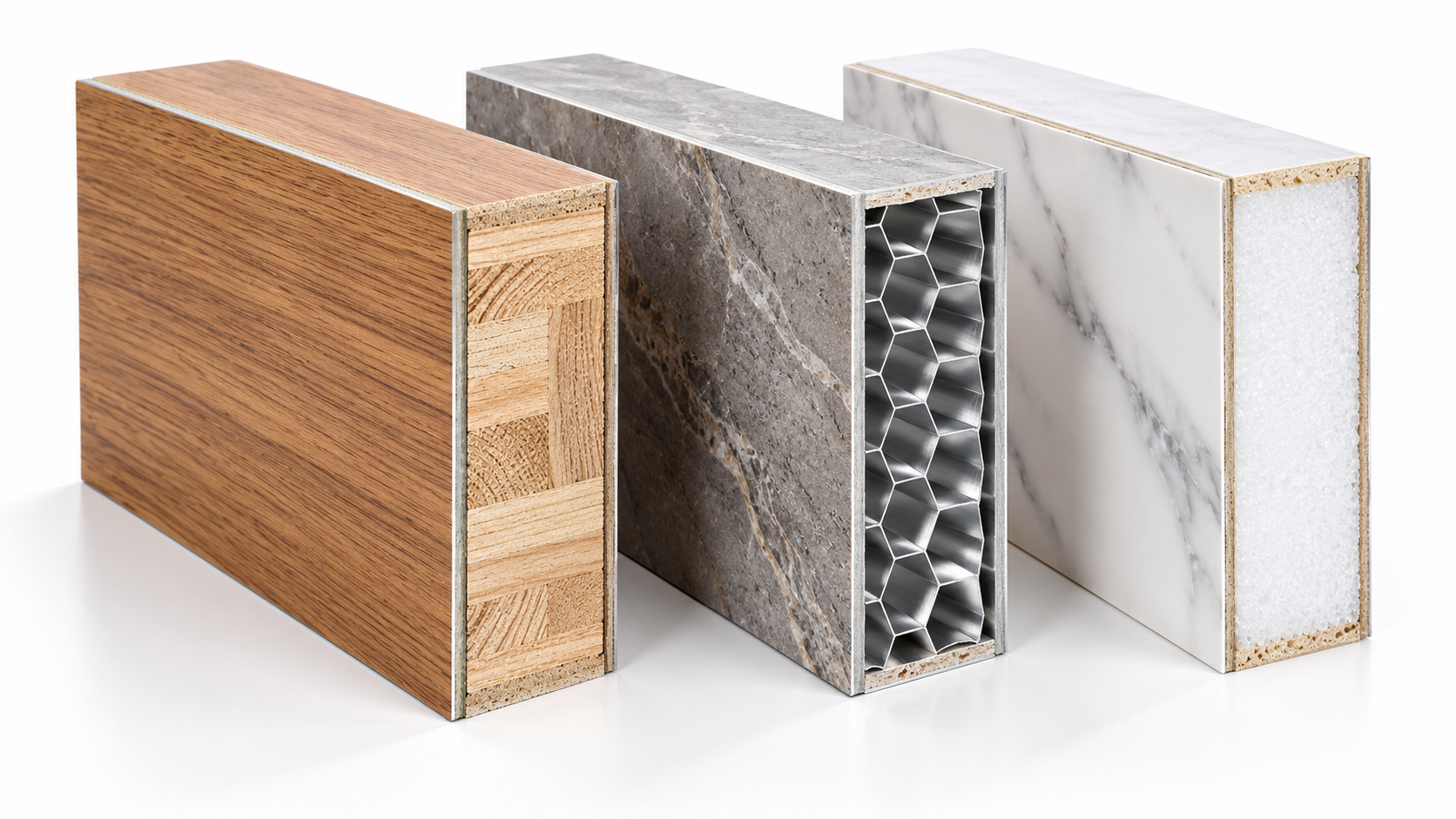
Two panels may have similar decorative surfaces but behave differently when water reaches a cut edge. A standard wood-based board can absorb moisture and swell, whereas a moisture-resistant board or a suitable non-wood core may provide better tolerance under the conditions for which it was designed.
Moisture-resistant is not the same as waterproof. A moisture-resistant MDF or particleboard core can still be damaged by prolonged wetting. Conversely, a water-tolerant core does not guarantee that its decorative layer, joints, and adhesive will withstand every cleaning chemical or temperature change.
PUR lamination versus a surface designed for direct wet areas
A PUR-laminated decorative panel can be a practical choice for furniture and interior surfaces in humid rooms when the assembly is specified and installed appropriately. A shower enclosure or another area subject to regular direct spray calls for a different level of protection.
In those locations, compare complete wall or surface systems intended for wet areas, including their joint treatments and installation requirements. A decorative finish that works well on a bathroom cabinet should not automatically be used as a substitute for a system designed for continuous or frequent wetting.
Where delamination risk usually begins
When a panel peels, the problem often starts with a small detail rather than a dramatic failure across the whole surface.
- Unsealed cut edges: Holes for taps, hinges, handles, and fittings can expose the core. If water reaches these areas repeatedly, the board may swell and strain the laminate.
- Weak edge banding: A gap at an edge gives moisture a path into the assembly. Corners and edges near sinks or floors deserve particular attention.
- Poor bonding during manufacture: Contamination, unsuitable application conditions, insufficient adhesive coverage, or incomplete curing can compromise a bond. The finished panel should be supplied ready for its intended use.
- Trapped moisture: Water sitting behind a panel or beneath a cabinet can cause more damage than a splash that is promptly removed. Leaks and condensation should be addressed at their source.
- Unsuitable substrate: A decorative surface and a strong adhesive cannot fully compensate for a core that is poorly matched to the environment.
- Mechanical damage: A chipped corner or lifted edge may let water reach layers that were protected when the panel was new.
It is also worth distinguishing a surface bubble from edge lifting. A localized blister may point to a bonding issue or damage within the surface layer; swelling along an exposed edge suggests that moisture may have reached the core. The appearance alone is not always enough to identify the cause, but it can guide the inspection.
Choosing a PUR-laminated panel for a bathroom or kitchen
Start with the exact location, not just the room name. A wall cabinet away from the shower has different needs from a vanity side panel next to a wet floor. Describe the expected exposure to the supplier, including nearby sinks, cooking equipment, cleaning routines, and ventilation.
Then ask for information about the complete panel construction:
- Substrate: What is the core, and is it recommended for the expected humidity and occasional wetting?
- Decorative surface: Is the face material appropriate for the location, cleaning products, and temperatures it may encounter?
- Bonding and curing: Is PUR used for the relevant lamination process, and are there handling or curing requirements before installation?
- Edges and cutouts: How should exposed edges, drilled holes, and joints be protected after fabrication?
- Application limits: Is the panel intended for general humid interiors, splash-prone locations, or direct wet areas?
- Performance evidence: Can the supplier provide relevant test information, installation guidance, or care instructions for the finished assembly?
Pay attention to what the documents actually cover. A test on an adhesive or face film alone may be useful, but it does not necessarily establish the performance of a complete panel with cut edges and installed fittings. Compare products using the same intended application wherever possible.
Shenyang Shengshi Meilin Technology Co., Ltd. works in new material technologies and construction and home-furnishing solutions. When discussing decorative materials with a supplier, providing details of the intended setting and asking about substrate, edge treatment, and installation requirements can lead to a more useful recommendation than requesting a “waterproof panel” without further context.
Installation and everyday care can change the outcome
Even a well-made panel can struggle if it is installed where water has nowhere to go. Keep it away from prolonged contact with wet floors, follow the supplier’s requirements for joints and sealants, and protect freshly cut edges using compatible materials. Fittings should not leave unprotected openings in splash-prone areas.
Ventilation also matters. Running an appropriate extractor or allowing the room to dry after bathing reduces the time surfaces spend in damp conditions. In a kitchen, wiping spills around sink cutouts and seams is more useful than relying on the decorative face alone to keep water out.
For routine cleaning, use the method recommended for the surface material. Avoid leaving puddles on horizontal surfaces or along joints, and check whether strong solvents, abrasive pads, or steam-cleaning equipment are permitted. Different films and laminates have different limitations, even when they are bonded with the same type of adhesive.
What if an edge has already started to lift?
Do not assume that pressing the laminate back down will solve the problem. Look for the reason it lifted: a leaking fitting, a damaged edge, a swollen core, or a loose joint. Stop the moisture source and allow the area to dry as appropriate before deciding on a repair.
A small lifted section on an otherwise sound panel may be repairable with a compatible method recommended by the manufacturer or a qualified fabricator. If the substrate is swollen, soft, or crumbling, rebonding the decorative layer may conceal rather than fix the damage. Replacement of the affected panel can be the more reliable choice, particularly near a recurring water source.
So, will a PUR-laminated panel delaminate in a humid room?
Not necessarily. A properly made and installed PUR-laminated panel can perform well in a humid interior, especially where moisture is intermittent and the assembly is allowed to dry. The risk rises when water enters through poorly protected edges, remains trapped, or reaches a substrate that cannot tolerate the exposure.
For a confident choice, compare the whole panel—not just the adhesive—and match it to the actual location. Good edge detailing, suitable materials, ventilation, and prompt attention to leaks are what help a decorative surface stay attractive long after the initial installation.
Next:No more content
RECOMMEND

Nov 02, 2026
Will a PUR-Laminated Panel Delaminate in a Humid Room?
Will a PUR laminated panel delaminate in a humid room? Discover what affects moisture resistance and how to choose the right panel for your bathroom or kitchen.
Nov 02, 2026
How Do I Choose the Right Core for a Custom Composite Panel?
How do I choose the right core for a custom composite panel? Compare fire performance, weight, moisture resistance and cost to find the best fit for your project.
Nov 01, 2026
Which Wall Panel Finish Is Easiest to Clean in a Jewelry Store?
Which wall panel finish is easiest to clean in a jewelry store? Compare laminate, glass and metal to find a low-maintenance finish that complements your displays.
Nov 01, 2026
How Do I Choose Wall Panels for a Temporary Exhibition?
How do I choose wall panels for a temporary exhibition? Compare materials, safety, setup and reuse to find the right display solution for your event.