How Do I Choose the Right Core for a Custom Composite Panel?
How do I choose the right core for a custom composite panel? The answer depends on where the panel will be used and what it needs to withstand. Core materials influence weight, stiffness, fire performance, moisture resistance, and cost, making them a critical part of any decorative or construction project. By comparing these properties with your design requirements and applicable safety standards, you can select a core that balances performance, appearance, and budget.
The core is only one part of that decision. A composite panel works as an assembly: the facings, core, adhesive, edges and fixing system all affect the result. A material that performs well in a small sample may behave differently when made into a large wall panel, drilled for hardware or installed in a humid space.
Start with the panel’s actual job
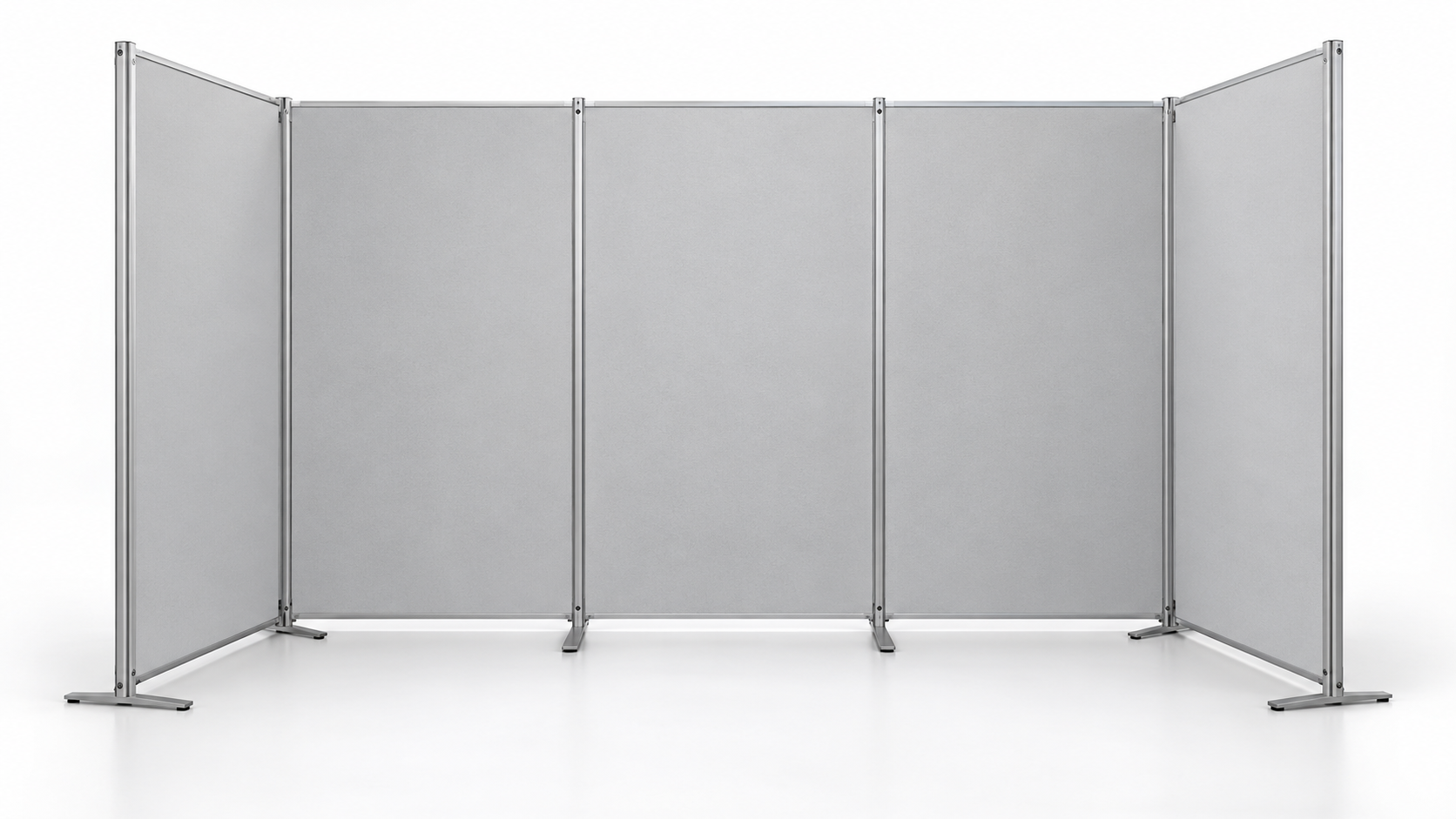
Before comparing materials, define what the panel must do. Is it a decorative wall lining supported over most of its area, a cabinet door hanging from hinges, or a large partition fixed only at its edges? These applications put very different demands on the core.
For a wall lining, surface flatness, impact resistance and fire requirements may drive the choice. For a door or furniture component, screw retention, edge durability and repeated movement become more important. A suspended panel introduces another concern: weight affects not just handling, but also the load carried by anchors and the supporting structure.
Write down the finished panel dimensions, allowable thickness, facing material, support spacing and expected exposure. Include details that are easy to miss, such as cutouts for switches, handles or ventilation. A core selected before those details are known may require costly reinforcement later.
How common core materials compare
The following comparison is a starting point, not a substitute for product data. Each category includes grades with different densities, treatments and manufacturing methods.
Wood-based boards: practical, but not interchangeable
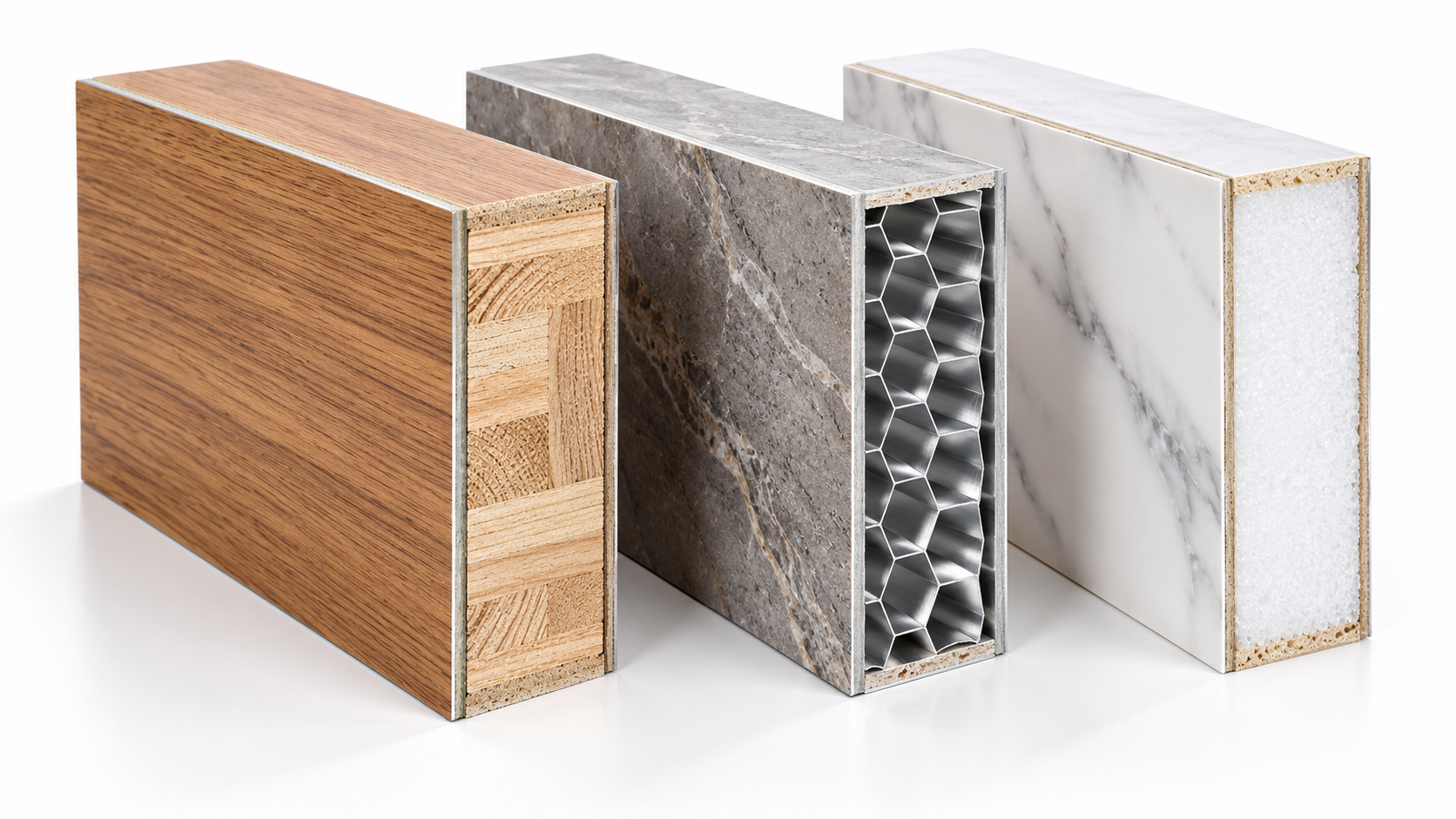
Plywood, particleboard and medium-density fiberboard are familiar choices for decorative panels and furniture. They can be cut and finished with common woodworking equipment, and many hardware systems are designed around them. That familiarity can simplify fabrication and repair.
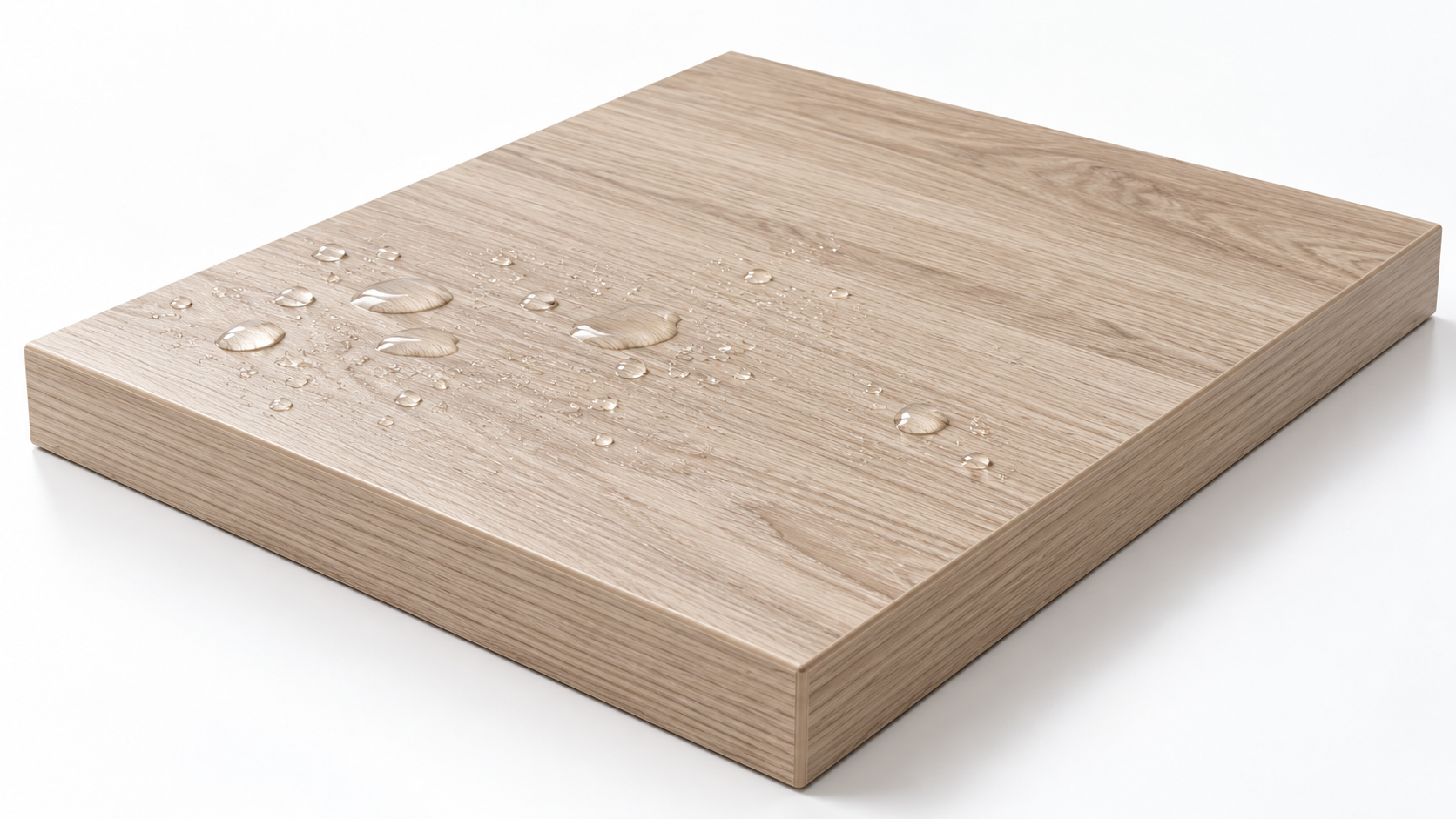
It does not mean every board handles moisture or fasteners equally. A sink-area cabinet panel, for example, needs attention at cut edges and around penetrations, where water can reach the substrate. Moisture-resistant grades may be suitable for particular exposures, but they should not automatically be treated as waterproof. Ask for the intended service conditions and the board manufacturer’s guidance.
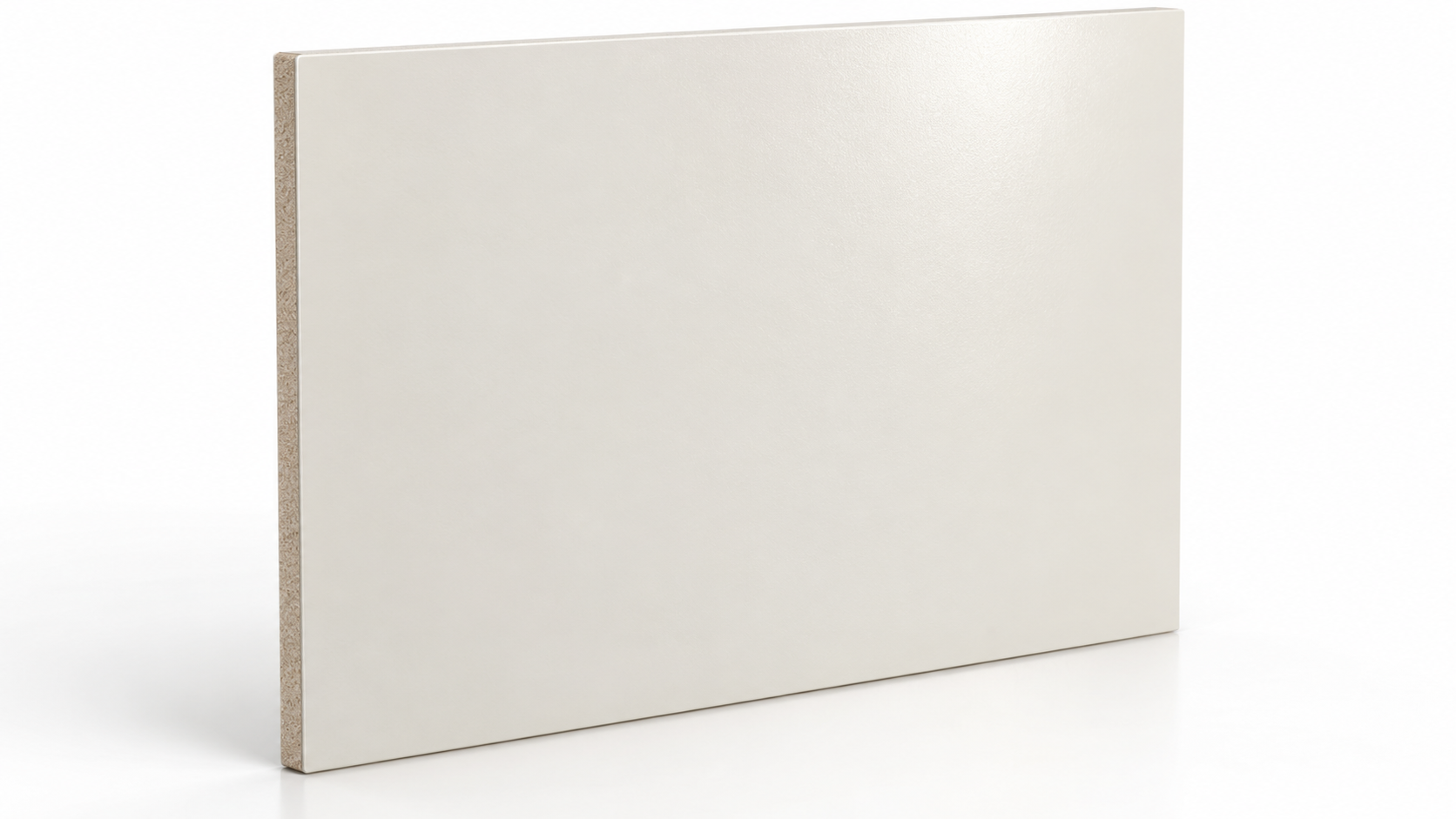
For painted or laminated decorative faces, surface uniformity matters too. A smooth core can help produce a consistent finish, but the facing and bonding process still determine whether surface defects or telegraphing become visible.
Honeycomb and foam: light weight comes with detailing work
Honeycomb cores, made from materials such as aluminum or paper, can help create lightweight panels with good bending stiffness when bonded to suitable facings. They are worth considering for large-format decorative elements that installers need to lift and position. The trade-off appears where the panel is cut, compressed or fastened: an open cellular core often needs edge closures or solid inserts at hardware locations.
Foam cores cover a broad range, so “foam” alone tells a buyer very little. Density, chemistry and cell structure influence compression behavior, water exposure and bonding. Some foams can provide thermal insulation, but insulation value should be checked for the complete product rather than assumed from the core name. Solvent-based adhesives or certain processing temperatures may also be unsuitable for a particular foam.
A useful question for either option is: what happens when someone leans on the panel or tightens a fixing? A panel can feel stiff across its full span yet dent or crush locally. Test representative attachment details, not just a flat, uncut sample.
Mineral-based cores: assess the whole assembly
Mineral-based cores are often considered when a project has demanding fire requirements. Their suitability depends on the specific formulation and construction. Some are heavier or more brittle than lightweight cellular alternatives, which can affect transport, edge finishing, drilling and support design.
Do not assume that a mineral core makes every finished panel noncombustible or fire-rated. Facings, coatings, adhesives and joints can change how an assembly performs. Confirm that the evidence supplied covers the proposed configuration and its intended application.
Stiffness, thickness and weight are connected
For a sandwich panel, separation between the facings contributes to bending stiffness. Increasing panel thickness can therefore help control deflection without simply making the facings heavier. But a thicker panel is not automatically the right answer: it may no longer fit a frame, align with adjacent finishes or accommodate the specified hardware.
Core shear strength, facing stiffness, bond quality, support conditions and load duration also matter. A wide decorative panel fixed at its corners may bow or vibrate even if the same construction works well when fully supported. Ask the fabricator to evaluate the actual span and mounting method, especially for overhead installations or panels expected to carry accessories.
Weight should be considered as installed, including facings, inserts, brackets and finishes. A lighter core can reduce handling demands, but it may need reinforcement that changes the final weight and cost. Compare complete constructions rather than core sheets alone.
Fire requirements: request evidence for the intended use
Fire performance is not a single property. Reaction to fire, fire resistance and smoke behavior address different questions, and the requirements depend on the jurisdiction and application. An interior wall finish, a fire-resisting partition and an exterior cladding system should not be treated as if they need the same evidence.
Ask which test method or classification the project requires, then compare it with the supplier’s documentation. Check the panel build-up, thickness, facing, adhesive, mounting arrangement and any stated limits on use. A report for a different construction may be informative, but it does not automatically establish compliance for your panel.
Changes made to save money deserve particular scrutiny. Replacing a facing, adhesive or core after approval can invalidate the basis on which the original assembly was evaluated. Involve the project’s qualified fire or building-code professionals when the requirements are unclear.
Moisture and exposure: look beyond the front face
A decorative surface may be easy to wipe clean while the core beneath it remains vulnerable. Bathrooms, kitchen splash zones and frequently cleaned commercial interiors can expose edges, fixing holes and joints to moisture. The rear of a panel can also experience condensation or trapped humidity, depending on the wall construction.
Map the likely path of water before choosing a core. If the design includes open joints, confirm whether the system needs drainage, ventilation or a water-resistant substrate behind it. For cut panels, establish how exposed edges and penetrations will be sealed on site. A factory-applied finish cannot protect an edge that is cut later and left untreated.
Exterior exposure adds movement, ultraviolet exposure and more severe wetting cycles. An interior decorative panel should not be moved outdoors merely because its facing looks durable. Verify the suitability of the complete system for the climate and installation.
The bond and fixing details can decide the outcome
A panel is only as reliable as the bond between its layers. The adhesive must suit both the core and the facing, as well as the manufacturing process and expected service conditions. Metal, wood-based board, mineral materials and plastics do not necessarily bond the same way. Surface preparation, pressure and curing conditions can make a significant difference.
Differential movement is another issue. When a metal facing and a different core expand or contract at different rates, the assembly and its fixings must accommodate that movement. Poor detailing can show up as bowing, surface distortion or bond failure. Ask for a representative sample and, where the application warrants it, testing under conditions relevant to the project.
For hinges, brackets and handles, specify the fixing method early. A cellular core may need inserts; a board core may need hardware matched to its density and edge distance. If a future user might mount shelves or equipment on the panel, decide whether the load will transfer to the structure behind it. The decorative skin should not be assumed to be a structural support.
Compare the delivered solution, not just the core price
The least expensive core is not always the least expensive panel. Edge banding, inserts, special adhesives, fire documentation, machining and installation can change the total. A heavier board may be economical in a small cabinet component but less attractive for an oversized panel that needs additional labor or stronger supports.
Appearance also has a cost. Thin, glossy facings tend to reveal unevenness more readily than textured finishes. If a premium surface is important, agree on flatness expectations and inspect a sample made with the intended core, facing and process. A hand sample of the decorative finish alone will not reveal how a full-size panel behaves.
For environmental and indoor-use requirements, request product-specific documentation rather than relying on terms such as “green” or “low emission.” Wood-based boards, adhesives and finishes can each affect the information needed for an indoor air quality assessment. Recycled content and end-of-life options should likewise be checked for the actual construction; bonded layers may be difficult to separate.
Shenyang Shengshi Meilin Technology Co., Ltd. works across new material applications, fireproof sealing materials and home furnishing. That breadth reflects a useful principle for decorative projects: panel selection should be coordinated with the surrounding construction and finish, rather than made solely on the appearance of the exposed face.
What to confirm before placing an order
Send potential suppliers the same brief: panel size and quantity, facing and finish, location, expected moisture exposure, fixing layout, support spacing and any required fire or emissions documentation. Request the proposed layer build-up, edge treatment, tolerances, fabrication limitations and lead time. If substitutions may be necessary, ask how they will be approved.
Then review a representative sample or mock-up with the people who will fabricate and install it. Check the edge after cutting, the appearance near fixings and the way the panel meets adjacent materials. For a demanding application, agree on relevant testing before production. The right core is the one that still works after those details are accounted for—not simply the one with the most appealing material description.
RECOMMEND

Nov 02, 2026
Will a PUR-Laminated Panel Delaminate in a Humid Room?
Will a PUR laminated panel delaminate in a humid room? Discover what affects moisture resistance and how to choose the right panel for your bathroom or kitchen.
Nov 02, 2026
How Do I Choose the Right Core for a Custom Composite Panel?
How do I choose the right core for a custom composite panel? Compare fire performance, weight, moisture resistance and cost to find the best fit for your project.
Nov 01, 2026
Which Wall Panel Finish Is Easiest to Clean in a Jewelry Store?
Which wall panel finish is easiest to clean in a jewelry store? Compare laminate, glass and metal to find a low-maintenance finish that complements your displays.
Nov 01, 2026
How Do I Choose Wall Panels for a Temporary Exhibition?
How do I choose wall panels for a temporary exhibition? Compare materials, safety, setup and reuse to find the right display solution for your event.