Which Wall Panel Finish Works Best in a Sales Center?
A matte or low-sheen wood-look panel is often the most versatile finish for a sales center: it creates a welcoming atmosphere, works with a wide range of furniture, and conceals minor marks better than a glossy surface. For a more formal reception area, a stone-look finish can make a stronger visual statement. Neither appearance guarantees durability, however. The protective surface, panel core, edge treatment, and installation system determine how well the wall performs.
The best choice is rarely one finish applied everywhere. A presentation wall may justify a distinctive surface, while the areas around chairs, counters, and circulation routes need finishes that tolerate contact and regular cleaning. Comparing options by location, rather than by appearance alone, makes the decision more reliable.
Wood-look finishes: the adaptable choice
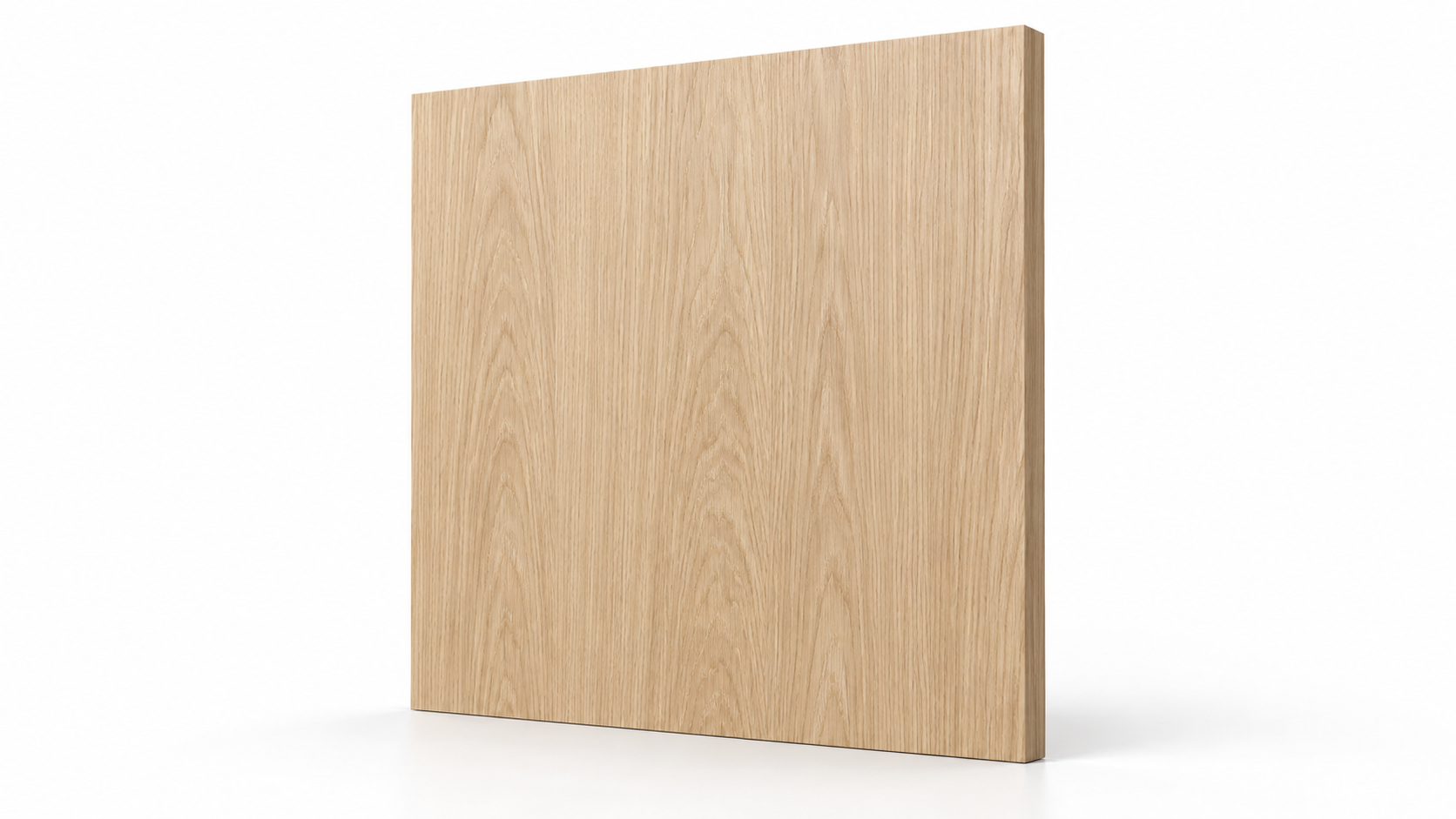
Wood-look panels suit sales centers where the intended atmosphere is warm, residential, or approachable. They can soften a space dominated by glass, metal, and large digital displays without requiring the maintenance associated with some natural wood finishes. Light oak and ash tones create a different effect from darker walnut tones, but the practical considerations are similar: surface protection matters more than the printed or veneered grain.
Wood-look panels are available as natural wood veneer, decorative laminate, and printed or coated surfaces on various substrates. These are not interchangeable. A genuine veneer has natural variation and can offer visual depth, but its resistance to scratches, sunlight, and cleaning chemicals depends on the coating. Depending on the product and thickness of the veneer, refinishing may be limited.
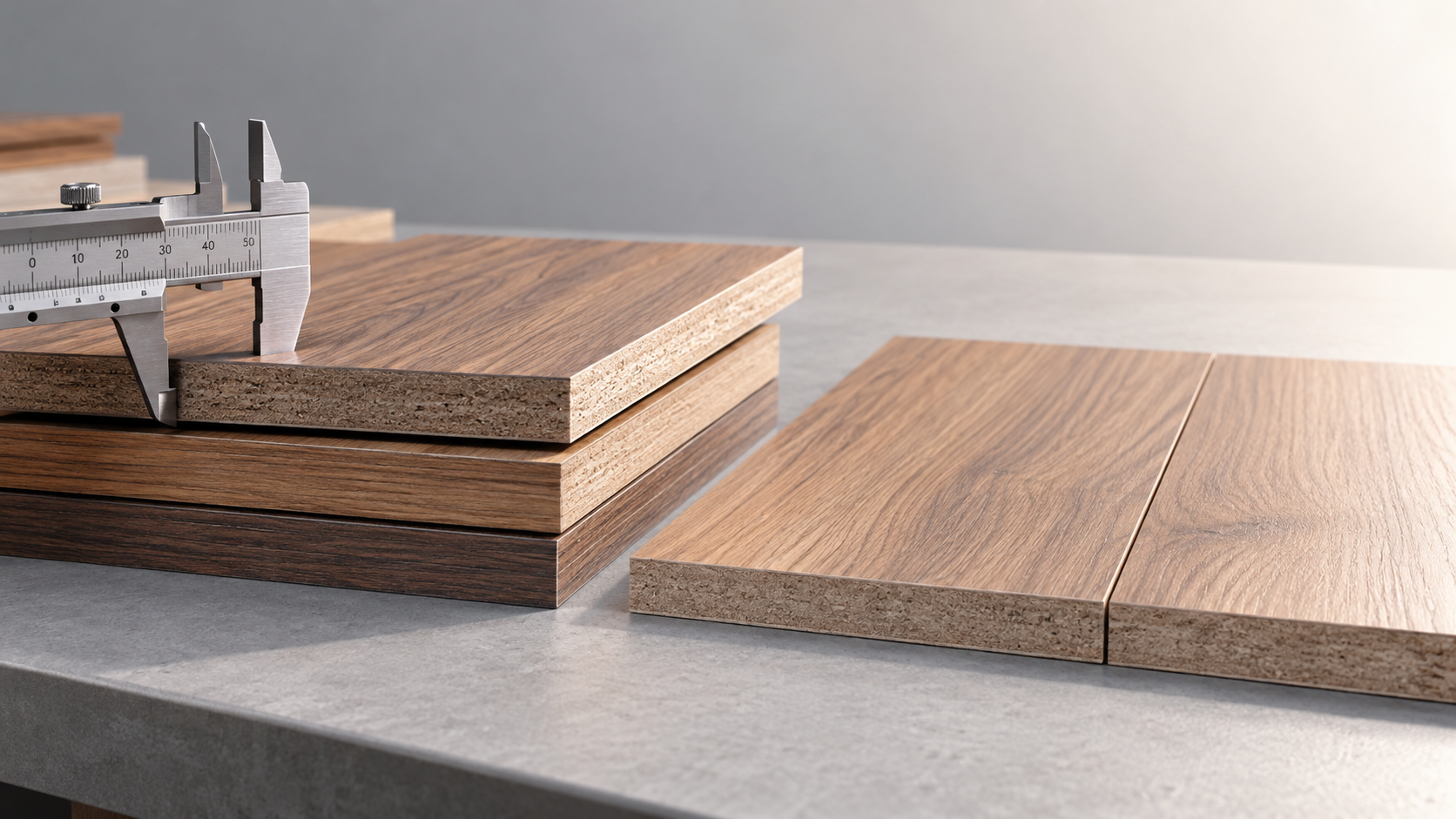
A decorative laminate or other factory-finished wood effect can provide a more consistent appearance across a large wall. Its suitability for a high-contact area still depends on the specific surface grade and construction. Exposed edges deserve particular attention: a resistant face does not prevent damage if moisture enters through poorly sealed joints or if edge banding lifts.
Wood-look finishes work especially well behind consultation desks, in meeting rooms, and along visitor routes. On a reception counter wall or a narrow corridor where bags and chairs may strike the surface, request a sample of the actual panel and inspect its edges as closely as its face.
Stone-look finishes: visual impact without assuming stone-like performance
Marble, limestone, and concrete effects are often selected for reception backdrops and feature walls because they can give a sales center a formal, architectural character. Large-format patterns also help a wall read as a continuous surface, particularly when joints are planned around the design.
The term stone-look describes an appearance, not a material. A printed decorative panel, a laminated board, a mineral-based panel, and natural stone can look similar from a distance while differing substantially in weight, impact resistance, installation requirements, and repair options. A lightweight imitation should not be specified on the assumption that it will resist impact like stone; natural stone should not be chosen without allowing for its support and handling requirements.
Pattern layout is a practical issue as well as an aesthetic one. Prominent marble-style veining can make repeated prints or poorly aligned joints conspicuous. Before ordering, review the available pattern repeat, panel dimensions, grain or vein direction, and treatment of corners. A small sample can confirm color and texture but cannot show whether a full wall will look repetitive.
Matte stone effects tend to be less visually demanding than polished ones under strong lighting. A glossy stone effect can create a dramatic focal point, but reflections, fingerprints, surface waviness, and installation irregularities may become more apparent. It is best reserved for a wall that receives limited physical contact and can be cleaned without disrupting visitor activity.
Solid-color and painted finishes: quiet backgrounds with visible maintenance demands
Solid-color panels are useful when the wall should support, rather than compete with, a scale model, property display, signage, or digital screen. Neutral finishes also make it easier to change graphics or furnishings without replacing the entire wall scheme. Their apparent simplicity can be deceptive: on a plain surface, small differences in color, gloss, and alignment are easier to notice than on a patterned finish.
Painted panels offer flexibility in color selection, but their performance depends on the paint system and the substrate beneath it. A coating intended for decorative use is not necessarily suitable for repeated scrubbing. Ask for the cleaning instructions and relevant performance information for the complete finish, rather than assuming that any painted surface can be touched up invisibly.
Touch-up work on a solid wall can leave a visible patch because the repaired area differs in sheen, texture, or color from the surrounding surface. Keeping a record of the coating specification and batch can help with future maintenance, but it does not guarantee an exact match after exposure and aging. Where localized damage is likely, removable panels or a joint layout that allows an individual section to be replaced can be more useful than relying on paint repair alone.
Metallic and high-gloss finishes: effective accents, demanding large surfaces
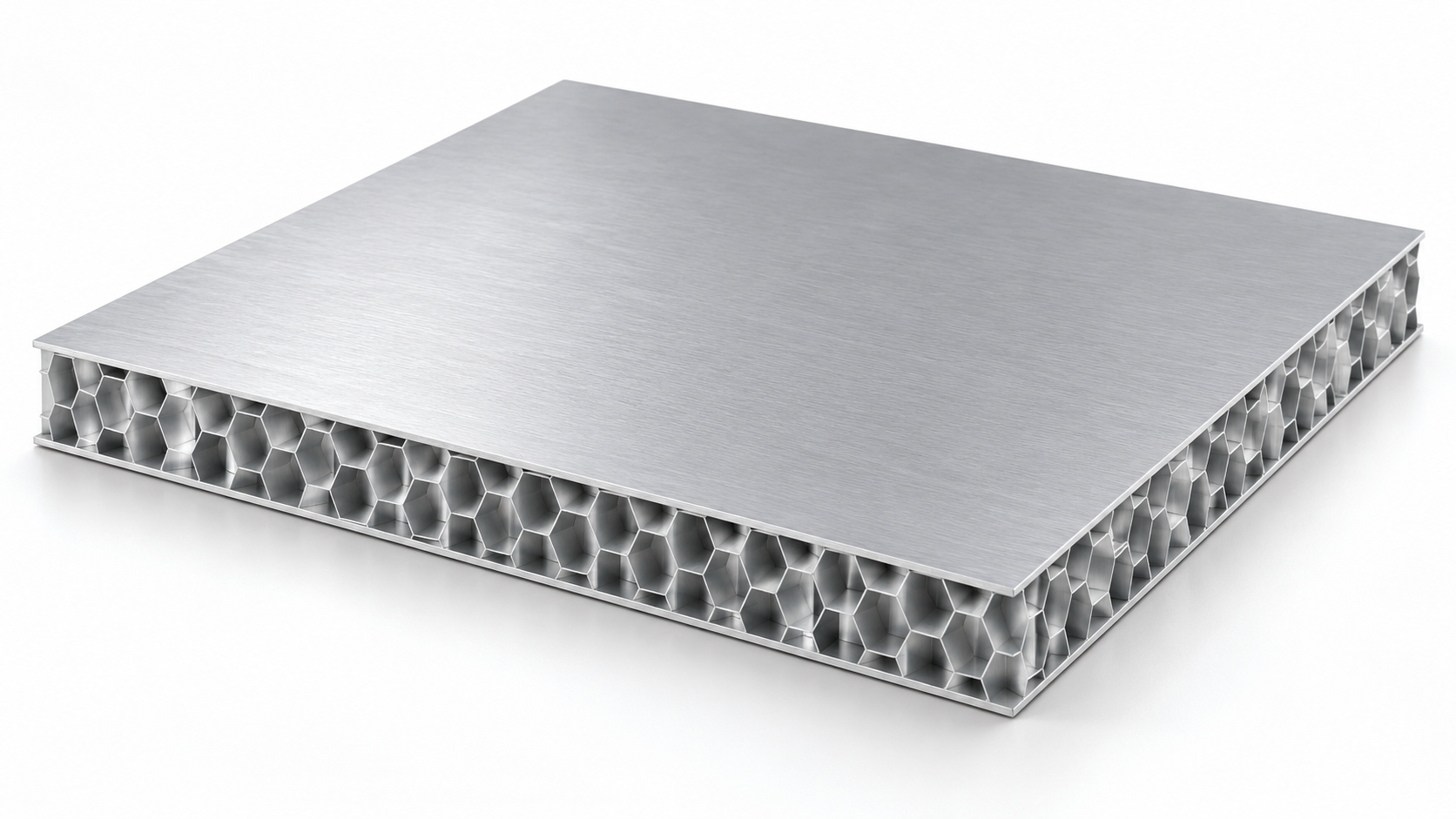
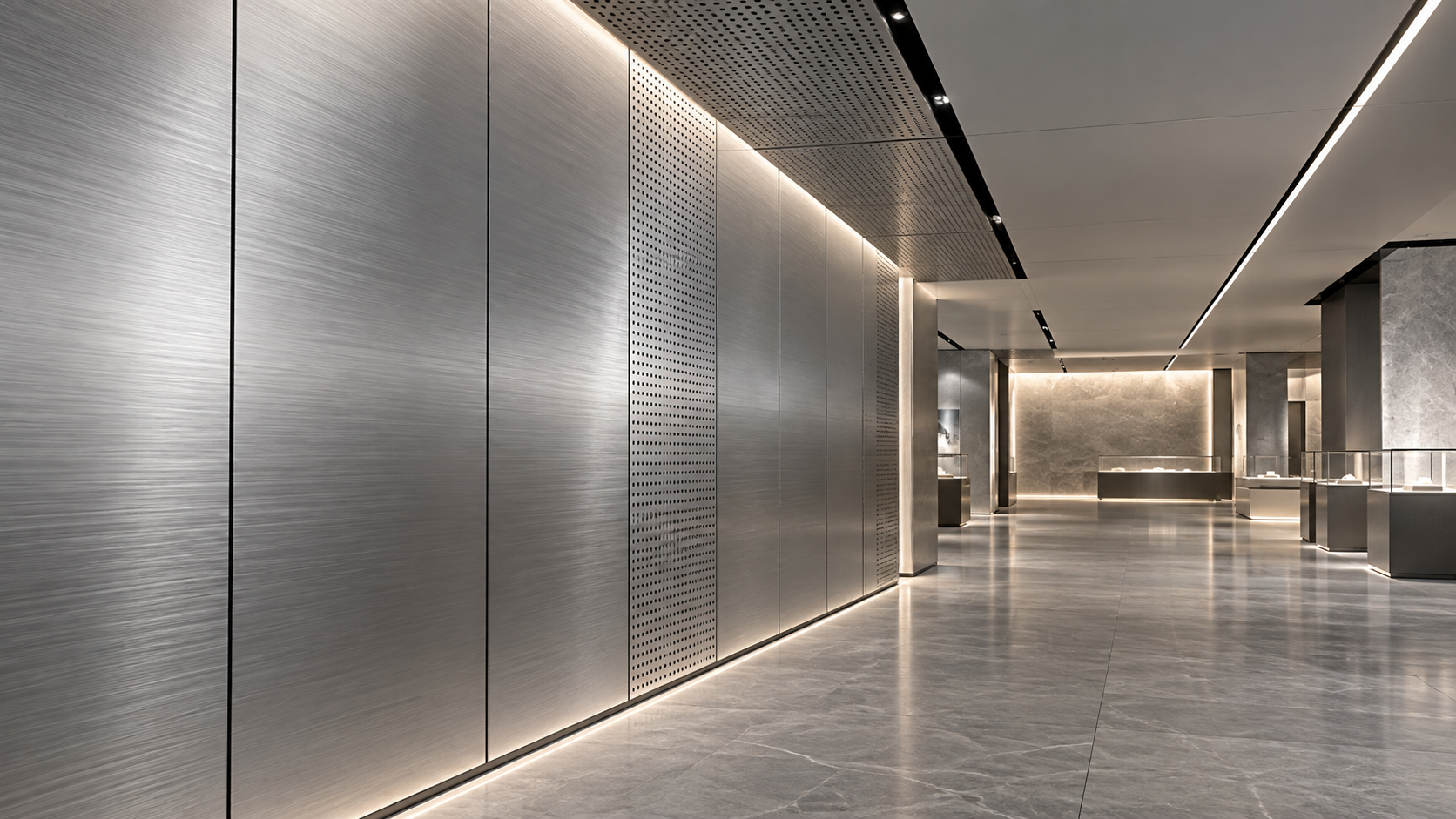
Brushed metal effects, metallic laminates, and high-gloss finishes can reinforce a contemporary or premium interior. They are particularly effective in controlled amounts, such as a reception logo panel, a display niche, or trim around a feature wall.
On a broad wall, the same qualities that make these surfaces visually striking can increase maintenance demands. Gloss reveals fingerprints and may emphasize unevenness in the panel or supporting wall. Brushed finishes can hide some marks when viewed from certain angles, but scratches that cut across the brushing direction may remain noticeable. Metallic decorative films and laminates also vary in their resistance to abrasion, so appearance alone is not a basis for comparison.
Lighting should be tested before approval. A finish that looks subtle under diffuse showroom lighting may produce strong glare beside a window or under directional spotlights. Place a full-size or representative sample vertically, in the intended position, and view it from the reception entrance and seating areas during the relevant lighting conditions.
Textured and fabric-like finishes: useful for atmosphere, but check cleaning and acoustics
Textured panels can give meeting areas a softer appearance and reduce the starkness of hard surfaces. Options range from embossed decorative panels to fabric-faced or felt-like systems. Their practical differences are significant: a shallow embossed surface may be wiped clean, while a porous textile face may retain dust or absorb a spill.
Texture alone does not make a wall acoustic. Meaningful sound absorption depends on the complete assembly, including the facing, backing, thickness, and installation arrangement. If speech comfort is a project requirement, request acoustic test information for the specified assembly and its intended mounting method. A decorative panel with a fabric-like print should not be treated as an acoustic solution without supporting evidence.
For consultation rooms, consider where people will lean against the wall and whether stains can be removed without leaving a ring or altering the texture. Around drinks stations or at chair-back height, a smoother, cleanable finish or a protective lower wall section may be more practical.
How the finishes compare in different parts of a sales center
Look beyond the visible surface before specifying a panel
Confirm the complete construction. The same decorative finish can be supplied on different cores, and those cores affect weight, moisture response, fixing methods, and fire performance. A panel described as water-resistant on its face may still be vulnerable at cut edges, screw holes, or unsealed joints. This distinction matters near beverage areas and wherever wet cleaning is expected.
Check fire requirements for the installed assembly. Interior wall requirements depend on the project location, building use, applicable rules, and the way the product is installed. Ask for relevant fire test or classification documents covering the actual product and, where required, its substrate and mounting arrangement. A fire-related claim for a coating or core alone should not be assumed to apply to every finished panel system.
Review emissions documentation. Adhesives, resins, coatings, and composite wood cores can affect indoor air quality. Where the project specifies emissions limits or certification, request documentation applicable to the supplied product and destination market. A general description such as “eco-friendly” does not establish compliance with a particular requirement.
Plan joints and replacements. Panel dimensions influence the number and position of seams. Adhesive-fixed panels can create a clean appearance, but removing a damaged section may disturb the wall or neighboring panels. A mechanical or demountable system may simplify replacement, provided its joints and fixings are acceptable visually. Decide how a damaged panel will be accessed before approving a seamless-looking design.
Compare installed cost, not just panel price. A lower-priced face material can require more substrate preparation, edge finishing, skilled labor, or waste allowance. Large-format patterns may increase cutting waste if veins must align. Heavy panels can require additional support and handling. Include those elements, along with likely cleaning and replacement needs, when comparing options for the expected life of the center.
Use samples to resolve the decision
Request samples in the actual finish, sheen, and panel construction, not just a printed color chip. Compare them vertically against the planned flooring, furniture, and lighting. For patterned finishes, also review a larger layout or full panel so that repeat patterns and joint positions are visible. Inspect a finished edge and corner detail, because these are frequent points of visual and physical weakness.
For a busy sales center with no unusual design constraints, a low-sheen wood-look finish is a practical starting point for the main visitor areas. Add a stone-look or metallic accent where visual impact matters and contact is limited. The final selection should follow the documented performance of the specific panel and the demands of each wall—not the appearance implied by the finish name.
Next:No more content
RECOMMEND

Oct 31, 2026
Which Wall Panel Finish Works Best in a Sales Center?
Which wall panel finish works best in a sales center? Compare wood-look, stone-look and other finishes to create a welcoming, practical space.
Oct 31, 2026
How Much Does an Aluminum Honeycomb Panel Weigh?
Discover aluminum honeycomb panel weight, typical ranges, and easy calculation methods. Find the right panel for your project with practical supplier tips.
Oct 30, 2026
How Can You Assess the Quality of Shengshi Meilin Custom Panels?
Assess Shengshi Meilin custom decorative panels quality with expert tips on samples, construction, test reports, and delivery checks. Discover how to choose panels that meet your project needs.
Oct 30, 2026
Why Do Designers Choose Metal Panels for High-End Exhibition Halls?
Why do designers prefer metal decorative panels for high-end exhibition halls? Discover premium finishes, durability benefits, and specification tips to elevate your next project.