




What Affects the Cost of Exhibition Hall Wall Panels?
Exhibition hall wall panel costs depend on more than the material price. The final budget also reflects the size and shape of the walls, the finish, fire-safety requirements, structural preparation, installation labor, and the amount of cutting and detailing the design requires. A modestly priced panel can become expensive if it needs a complex support system or extensive on-site adjustment.
The most useful comparison is the cost of a finished wall, including its supporting framework and installation. For projects seeking jewelry store wall panel finishes, the same principle applies: a refined appearance may come from the surface treatment, but the substrate, joint layout, lighting, and maintenance requirements also shape the investment.
What makes up the cost of an exhibition hall wall?
A panel quote may cover only the visible boards, while another includes the framework, edge trims, delivery, and installation. Comparing the two as if they cover the same work can lead to an inaccurate budget.
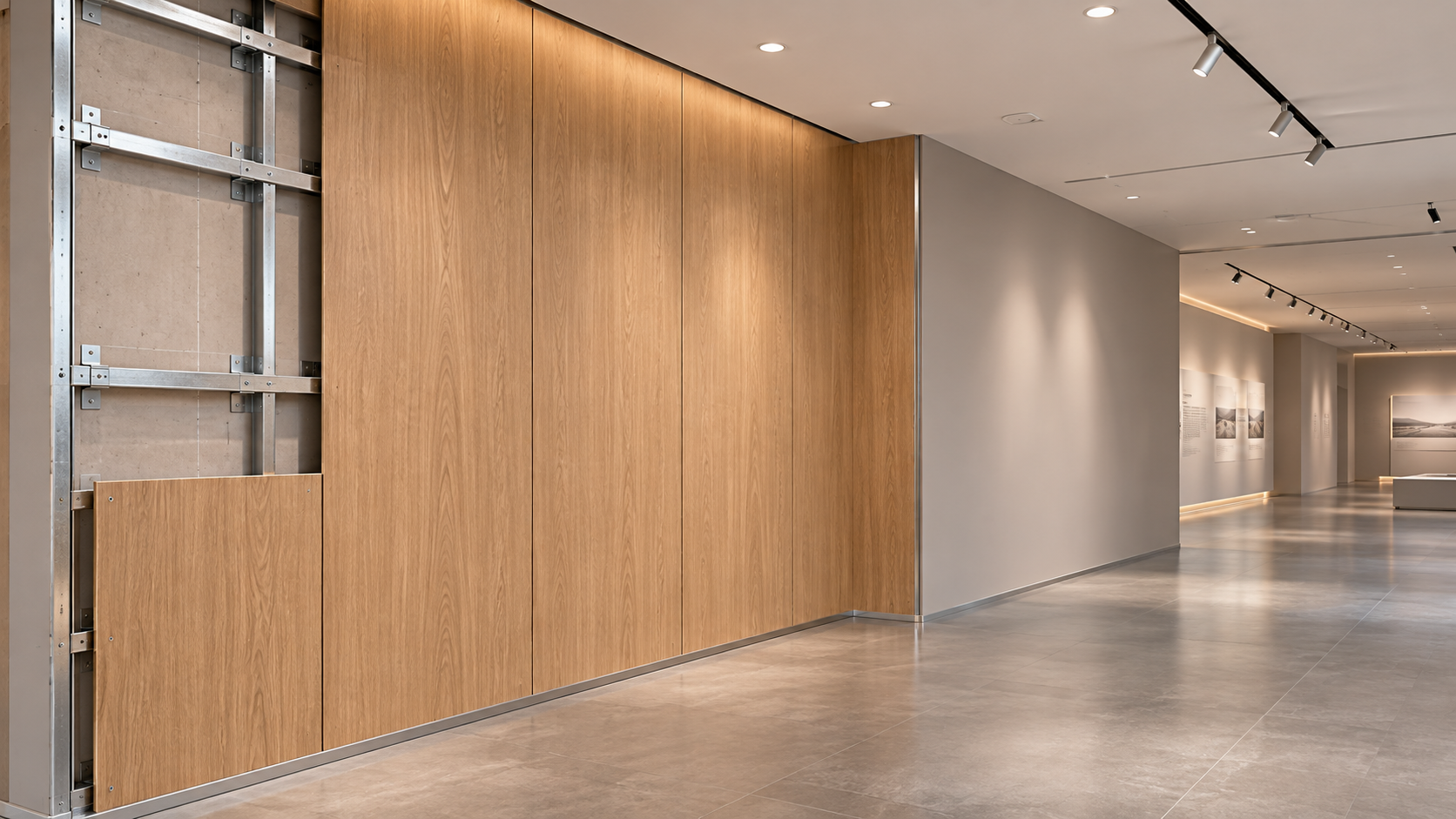
The finished wall typically involves a substrate or structural wall, a fixing system, the decorative panels, and details such as corners, skirting, joint treatments, and openings. Depending on the design, the project may also require insulation, fire-related construction measures, access panels, or reinforcement for displays. Each layer has a purpose, and changes to one can affect the others.
Start with the installed wall assembly, not the panel alone. A lower-cost surface may still be a sensible choice, but only if its mounting method, expected maintenance, and appearance meet the project’s requirements.
How material and surface finish affect the budget
Wall panel materials differ in how they are manufactured, handled, cut, and maintained. The appropriate choice depends on the space: a short-term exhibition wall has different priorities from a permanent hall exposed to frequent visitors, cleaning, and repeated changes of display.
These categories are not fixed price tiers. A detailed painted wall can require more labor than a straightforward decorative panel installation, and products within the same category can vary considerably in construction and finish.
Finish selection also affects future costs. A surface that hides fingerprints and allows damaged sections to be replaced may suit a busy exhibition route. A delicate or highly reflective finish may be appropriate behind a protected display, but less practical where visitors, carts, or temporary fixtures frequently contact the wall.
When jewelry store wall panel finishes make sense in an exhibition hall
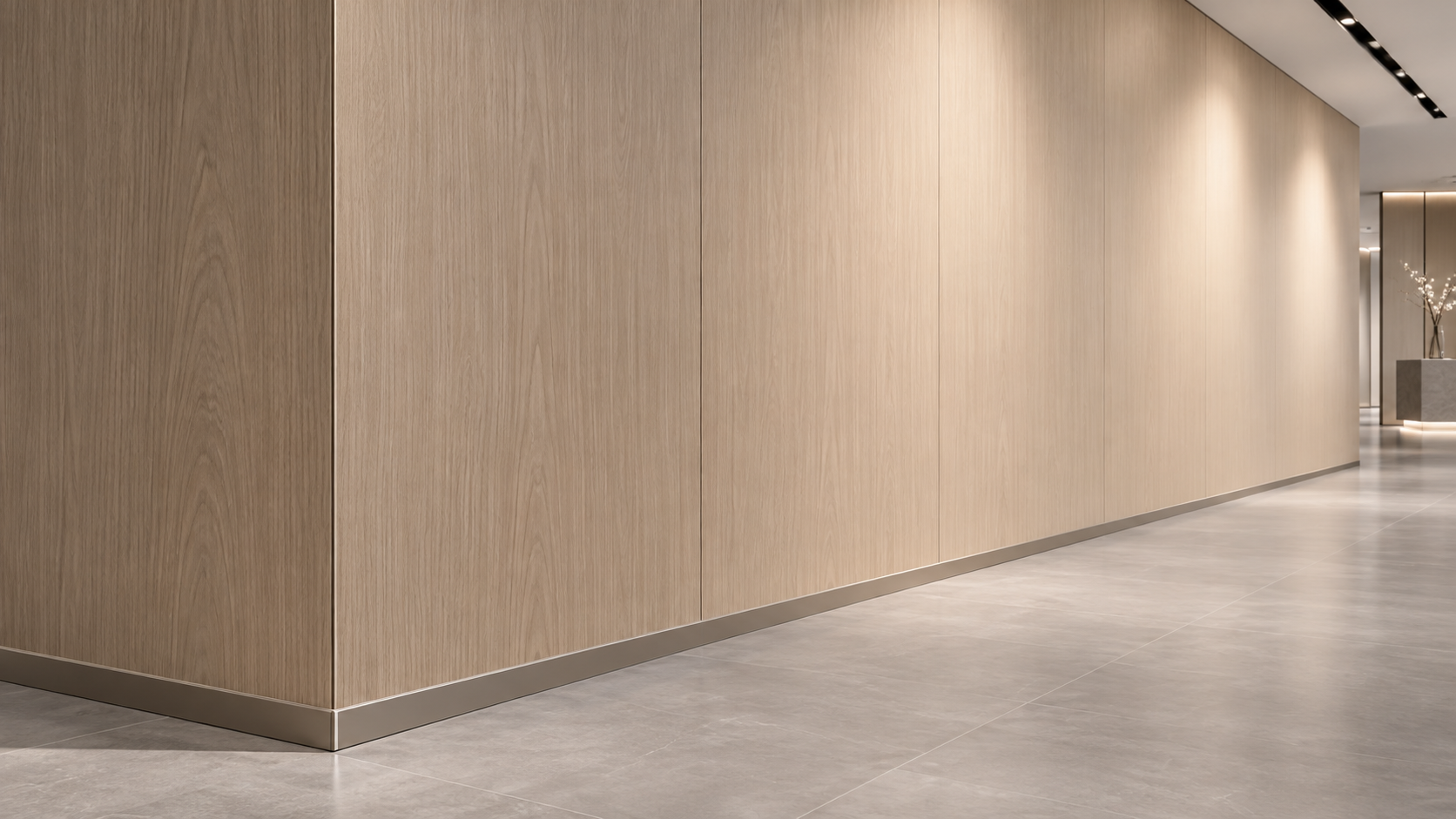
Finishes associated with jewelry stores often aim for a controlled, refined backdrop: consistent colors, subtle textures, precise joints, and surfaces that complement display lighting. They can work well in premium product showcases, reception areas, and exhibition spaces where the wall is part of the presentation.
The cost implication lies in the execution. Reflective surfaces can make uneven joints or substrate defects more visible, while textured or patterned finishes may need careful alignment across panels. If the wall sits behind temporary graphics or is likely to be altered frequently, spending heavily on a continuous premium finish may add little value. A more practical approach is to reserve it for the most visible display zones and use a simpler, compatible finish elsewhere.
Panel dimensions, layout, and waste
Panel dimensions affect how much cutting is needed and how many joints appear on the wall. A layout that makes good use of standard sheet sizes can reduce offcuts and simplify installation. By contrast, narrow strips, irregular wall shapes, and frequent openings can increase waste and labor even when the total wall area is modest.
Larger panels may create a cleaner appearance with fewer visible joints, but they can also be harder to transport, maneuver, and install. A small service entrance, a crowded exhibition schedule, or restrictions on moving materials through the building can make a large format less efficient. Smaller panels may be easier to replace individually, although the additional joints and fixings can increase installation work.
Before selecting a format, review the proposed joint pattern against the actual wall dimensions, doors, corners, and display locations. For patterned finishes, consider how the design will continue across adjacent panels. A visually balanced layout can reduce awkward cuts, but it may require extra material for alignment.
Why installation complexity can outweigh panel savings
Two halls using the same panel can have very different installation costs. A straight, accessible wall with a suitable substrate is generally simpler to finish than a curved wall with many corners, recessed displays, and integrated lighting. Uneven existing walls may need preparation or an adjustable framework before panels can be installed cleanly.
Fixing methods matter too. A system designed for accessible fixings or removable panels may cost more to procure, but it can make sense where the operator expects to update displays or reach services behind the wall. A permanent adhesive-based approach may suit a stable layout, provided the substrate and panel are compatible; it is less attractive when panels are likely to be removed and reused.
Coordination with other trades is a common source of hidden cost. Lighting, electrical outlets, signage, security devices, and display supports need locations and fixing details before the panels are closed. Late changes can mean removing finished sections, making additional cuts, or repairing a surface that was already complete.
Wall-mounted showcases and heavy displays deserve particular attention. Decorative panels should not automatically be treated as structural supports. The wall assembly may need reinforcement behind the finish, planned around the weight and position of the items being mounted.
Fire safety and other performance requirements
Exhibition halls can contain large numbers of visitors, temporary structures, electrical installations, and varied display materials. Fire-safety requirements can therefore influence the choice of panel, substrate, fixing system, and joint treatment. The applicable requirements depend on the building, its use, and the location of the wall within it.
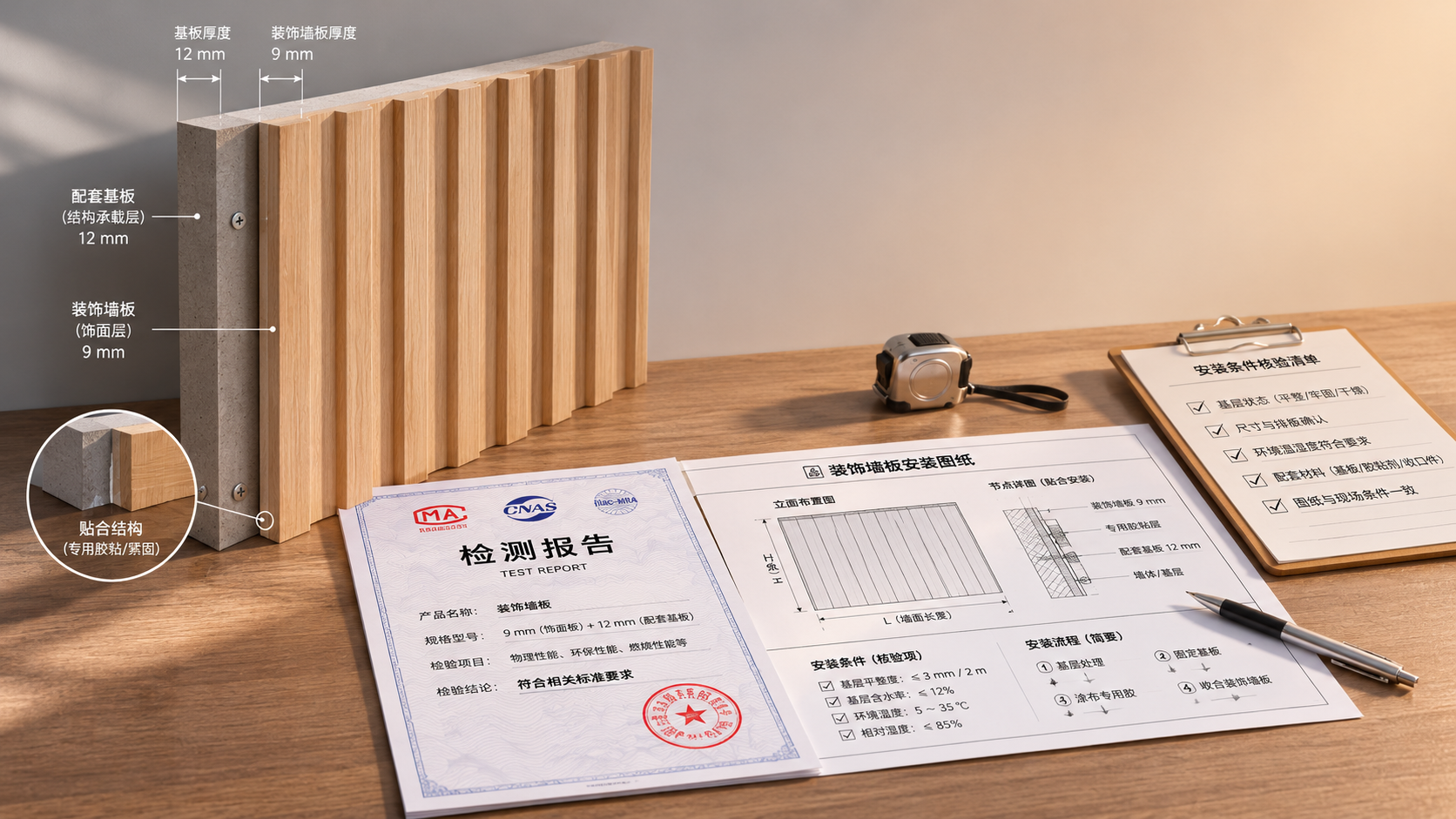
A panel’s decorative face is only one part of the assembly. Changing the backing material, adding an air gap, or using a different installation method can alter how the completed wall is assessed. For budgeting, define the required wall construction early and request documentation relevant to the proposed materials and assembly. This reduces the risk of selecting a finish that later requires a different substrate or installation approach.
Other performance needs should be matched to the location. Impact resistance may matter along circulation routes, while cleanability may be more important near entrances or food areas. Acoustic treatment can be useful in spaces with presentations or substantial visitor traffic, but it should be evaluated as part of the wall design rather than assumed from the appearance of a decorative surface.
Temporary and permanent walls need different budgets
For a short exhibition, speed of installation, transport, and dismantling may be more valuable than a finish designed for many years of use. A modular system can be attractive if its dimensions suit the venue and the components can be stored and used again. Reuse is less certain when panels are cut for one unusual layout, damaged during removal, or finished with branding that will not suit the next event.
Permanent exhibition halls usually benefit from a longer view. The initial investment should be weighed against cleaning, repair, replacement, and the likelihood of future display changes. A panel with a replaceable section may be preferable in a busy area, while a continuous finish may be justified on a protected feature wall where visual consistency matters more than frequent access.
Availability of matching material also affects maintenance planning. Keeping a suitable quantity of spare panels or agreeing on a replacement strategy can help address localized damage without refinishing a much larger area.
How to compare quotes and control the final cost
Ask suppliers and installers to price the same wall dimensions, finish, substrate, fixing method, and required details. A useful quotation identifies what is included in the installed assembly and separates items that could change after the site is measured.
- Define the finished area. Provide wall dimensions, drawings, heights, openings, and any curved or irregular sections. Distinguish decorative coverage from areas that need backing or reinforcement.
- Set the performance requirements. Identify the intended use, fire-safety requirements, expected contact with visitors or equipment, and any need for removable access.
- Specify the visual details. Include the finish, panel orientation, joint width, edge treatment, corners, and relationship to lighting or displays. Review a sample in representative lighting when appearance is critical.
- Compare the full scope. Check whether each quote includes the framework, preparation, trims, cutting, delivery, installation, waste handling, and relevant supporting documentation.
- Plan for changes and repairs. Establish how variations will be priced and how individual damaged panels can be replaced after installation.
If quotes differ substantially, look for differences in scope before judging the material itself. One proposal may assume an existing wall is ready for installation; another may include leveling, backing, and edge finishing. Clarifying those assumptions makes the comparison more useful and gives the project team a better basis for controlling cost.
Shenyang Shengshi Meilin Technology Co., Ltd. works in new material technologies and offers materials and fireproof sealing products, alongside furniture and home furnishings. For a project considering material options, the relevant discussion is how each proposed component fits the specified wall assembly and its intended use.
The strongest budget decisions connect the finish to the conditions of the space. Spend where visitors will see and touch the wall, simplify areas that are covered or frequently altered, and resolve the substrate, safety requirements, and installation details before comparing the final prices.
Next:No more content
RECOMMEND

Nov 23, 2026
What Affects the Cost of Exhibition Hall Wall Panels?
Jewelry store wall panel finishes can elevate exhibition halls. Discover how materials, installation, and safety requirements affect costs and plan a smarter budget.
Nov 22, 2026
How Durable Are PUR-Laminated Panels?
Compare exhibition hall wall panel cost and PUR-laminated panel durability. Discover what affects wear, moisture resistance, and long-term value.
Nov 21, 2026
How Do You Verify a Wall Panel's Fire Rating for Your Project?
How do I verify a wall panel's fire rating for my project? Discover which reports to request, how to check installation details, and avoid costly specification errors.
Nov 21, 2026
How Do You Repair a Scratch on a Stone-Look Panel?
How do I repair a scratch on a stone look panel? Discover safe, material-specific repair tips and learn when to seek expert help or replace the panel.