

How to Prevent Moisture Damage in Composite Wall Panels
Moisture is one of the most underestimated failure factors in decorative wall systems. Buyers often focus on appearance, fire performance, price, and installation speed, while moisture control is treated as a secondary detail. In practice, it is often the issue that determines whether composite wall panels still look stable and clean after two years, or start showing swelling, staining, delamination, mold, edge deformation, and premature joint failure.
If the question is how to avoid moisture damage with composite wall panels, the answer is not a single product feature. It is a system decision. Material composition, panel structure, storage conditions, substrate preparation, sealing details, climate exposure, and maintenance all affect the outcome. A panel marketed as “water-resistant” can still fail if the edge treatment is weak, if the wall traps condensation, or if installation leaves pathways for water intrusion.
For importers, contractors, and procurement teams, this matters beyond technical quality. Moisture-related claims are expensive. They create rework, damage brand reputation, delay fit-outs, and complicate cross-border after-sales responsibility. Preventing moisture damage therefore starts before purchase and continues through installation and operation.
Why composite wall panels fail in wet conditions
Composite wall panels are not a single material category. They may combine wood fiber, PVC, polymer layers, mineral cores, aluminum skins, decorative laminates, or other substrates. Because of this, “moisture resistance” is often misunderstood. Many panels resist surface splashes, but that does not mean they can tolerate trapped humidity, repeated wet-dry cycles, or long-term exposure at joints and cut edges.
Most moisture failures happen through one of five routes:
- Water entering through seams, corners, screw penetrations, or unsealed edges
- Condensation forming behind the panel because of temperature difference or poor ventilation
- Capillary absorption from damp substrates such as unfinished concrete or masonry
- Material swelling in hygroscopic core layers
- Sealant or adhesive breakdown that allows progressive infiltration
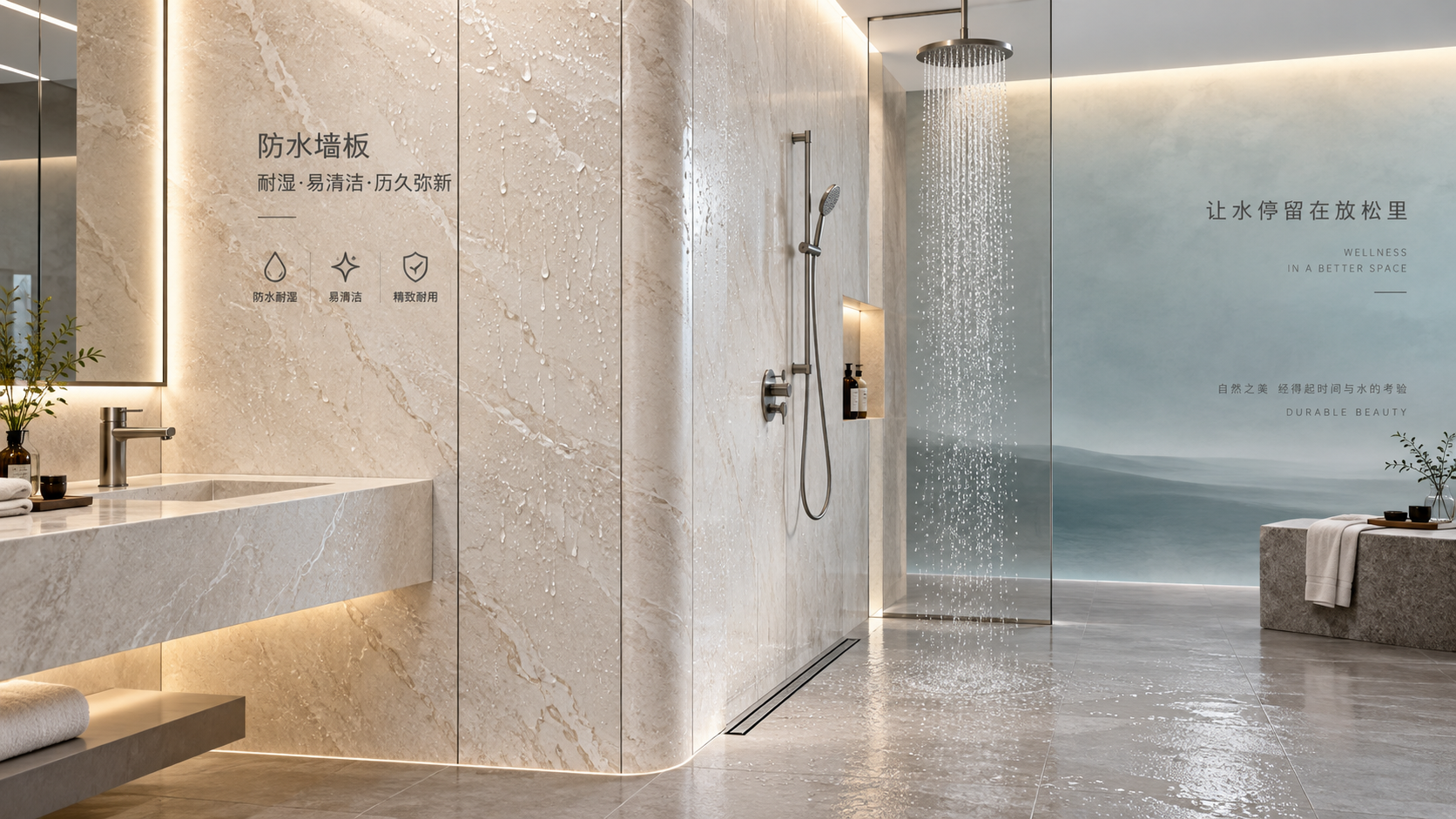
This is why visible water exposure is only part of the risk. In many commercial interiors, the more serious issue is not direct leakage but hidden moisture migration. Bathrooms, kitchens, laundry areas, basements, coastal buildings, and buildings with intermittent HVAC operation are especially vulnerable.
Start with the right panel, not just a decorative finish
One of the most common procurement mistakes is selecting composite wall panels based mainly on color, texture, and unit price. That approach may work in dry decorative applications, but it is risky where humidity fluctuates or cleaning is frequent.
When evaluating panels for moisture-prone environments, buyers should ask for technical information on the full panel build-up, not only the visible face layer. Key points include:
- Core material and whether it absorbs moisture
- Edge density and edge sealing performance
- Water absorption behavior over time, if tested
- Dimensional stability under humidity cycling
- Compatibility with wet-area sealants and adhesives
- Surface resistance to cleaning chemicals and repeated wiping
In practical terms, panels with highly moisture-sensitive fiber-based cores need more careful detailing than panels built around more stable polymer or mineral-based structures. That does not automatically make one category better than another in every case. It means the installation design must match the panel’s limitations.
For sourcing teams, samples alone are not enough. A panel can look dense and solid in hand, yet still perform poorly at cut edges or under cyclic humidity. If the project is in a wet or semi-wet area, request documented test data where available and clarify whether performance claims apply to the face only or to the full panel assembly.
Do not ignore the substrate behind the panel
Many moisture problems blamed on wall panels actually begin in the wall behind them. If the substrate contains residual construction moisture, if waterproofing is incomplete, or if vapor movement is poorly managed, the decorative layer becomes the visible point of failure rather than the true cause.
Before installation, the substrate should be checked for:
- Residual moisture in concrete, screed, plaster, or masonry
- Cracks that may allow water ingress
- Flatness and structural stability
- Existing mold, efflorescence, or salt contamination
- Whether a vapor barrier or waterproof membrane is required
In refurbishment projects, this step is often skipped because the wall looks dry on the surface. That is a costly assumption. A visually dry wall can still be releasing moisture internally. In export and project supply business, suppliers should make clear that panel performance depends on substrate readiness; otherwise warranty disputes can become difficult to resolve.
Sealing details matter more than broad “waterproof” claims
In most real projects, panel fields survive better than panel joints. The weak points are transitions: corners, base connections, window returns, plumbing cut-outs, ceiling lines, and interfaces with floors or countertops.
Good moisture prevention depends on treating these details as part of the system. That usually includes:
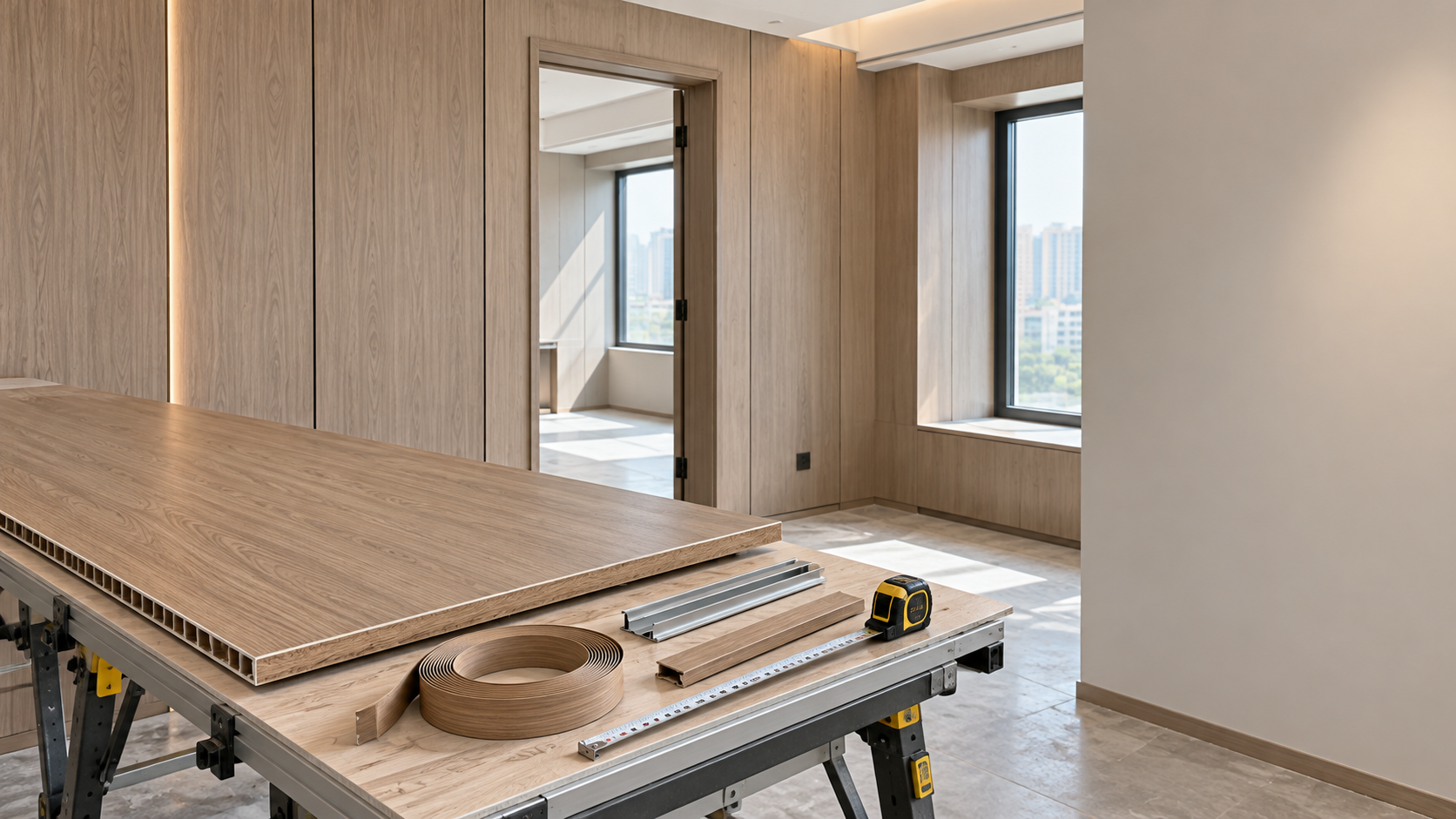
- Sealing cut edges where required by the panel specification
- Using compatible sealants at movement joints and perimeter joints
- Leaving proper expansion allowance where panel systems require it
- Preventing direct water pathways into cavities
- Using trims or profiles designed for wet-area transitions
A frequent mistake is over-tight installation. Installers sometimes try to eliminate all visible gaps for cosmetic reasons. But some panel systems need controlled expansion space. Without it, the panel may buckle, stress the joints, or crack the seal line as humidity changes.
Another mistake is using generic sealants. Not all sealants bond reliably to composite surfaces, and some may stain decorative finishes or lose adhesion in wet service. Compatibility should be confirmed with the panel manufacturer or through project testing when conditions are demanding.
Choose adhesives and fasteners for the actual environment
Adhesive failure is one of the quieter causes of moisture damage. The panel may not visibly absorb water, but if the adhesive softens, loses bond, or traps moisture against the substrate, the installation will deteriorate. The same applies to metal fasteners that corrode in humid spaces and stain the surface.
Procurement and technical teams should verify:
- Whether the adhesive is suitable for high-humidity or wet-area use
- Cure conditions, especially temperature and substrate moisture limits
- Whether mechanical fixing is also required
- Fastener corrosion resistance in coastal or wet-cleaning environments
- Interaction between adhesive, panel backing, and substrate coating
This is particularly relevant in international supply chains. A panel may perform well in the supplier’s reference market but fail elsewhere because the locally sourced adhesive is different, the climate is more humid, or installers substitute materials on site. Moisture control depends on assembly integrity, not on the panel in isolation.
Ventilation and condensation control are part of wall panel performance
When people think about water damage, they usually imagine leaks or splashes. In many buildings, condensation is the more persistent problem. Warm humid indoor air meeting a cold wall surface or poorly ventilated cavity can lead to hidden moisture accumulation behind decorative panels.
This risk is higher in:
- Exterior-facing walls with temperature differentials
- Buildings in coastal or tropical climates
- Interiors with intermittent occupancy and unstable HVAC use
- Bathrooms, kitchens, and utility rooms without adequate exhaust
- Retrofit projects where insulation and vapor control are inconsistent
Composite wall panels should not be expected to solve condensation problems on their own. If the building envelope design is poor, moisture will eventually find the weak point. In some applications, ventilated cavities or proper vapor management layers may be necessary. The exact approach depends on climate zone, wall construction, and intended use, so project-specific review is more reliable than broad product claims.
Storage and handling can damage moisture resistance before installation
Panels can lose dimensional stability or edge integrity before they ever reach the wall. This is a recurring issue in international shipping and distribution, especially when containers face large temperature swings or materials are stored at site in uncontrolled conditions.
To reduce risk:
- Store panels flat, dry, and protected from direct ground contact
- Avoid prolonged exposure to rain, condensation, or open-air humidity
- Allow acclimatization if the panel specification requires it
- Inspect packaging damage immediately on receipt
- Protect machined edges and decorative surfaces during site handling
Buyers sometimes focus on factory quality and overlook logistics exposure. Yet container condensation, wet pallets, or delayed customs storage can introduce moisture before installation begins. For importers, packaging quality and shipping method are therefore relevant parts of moisture-risk assessment.
Where the application is located changes the right prevention strategy
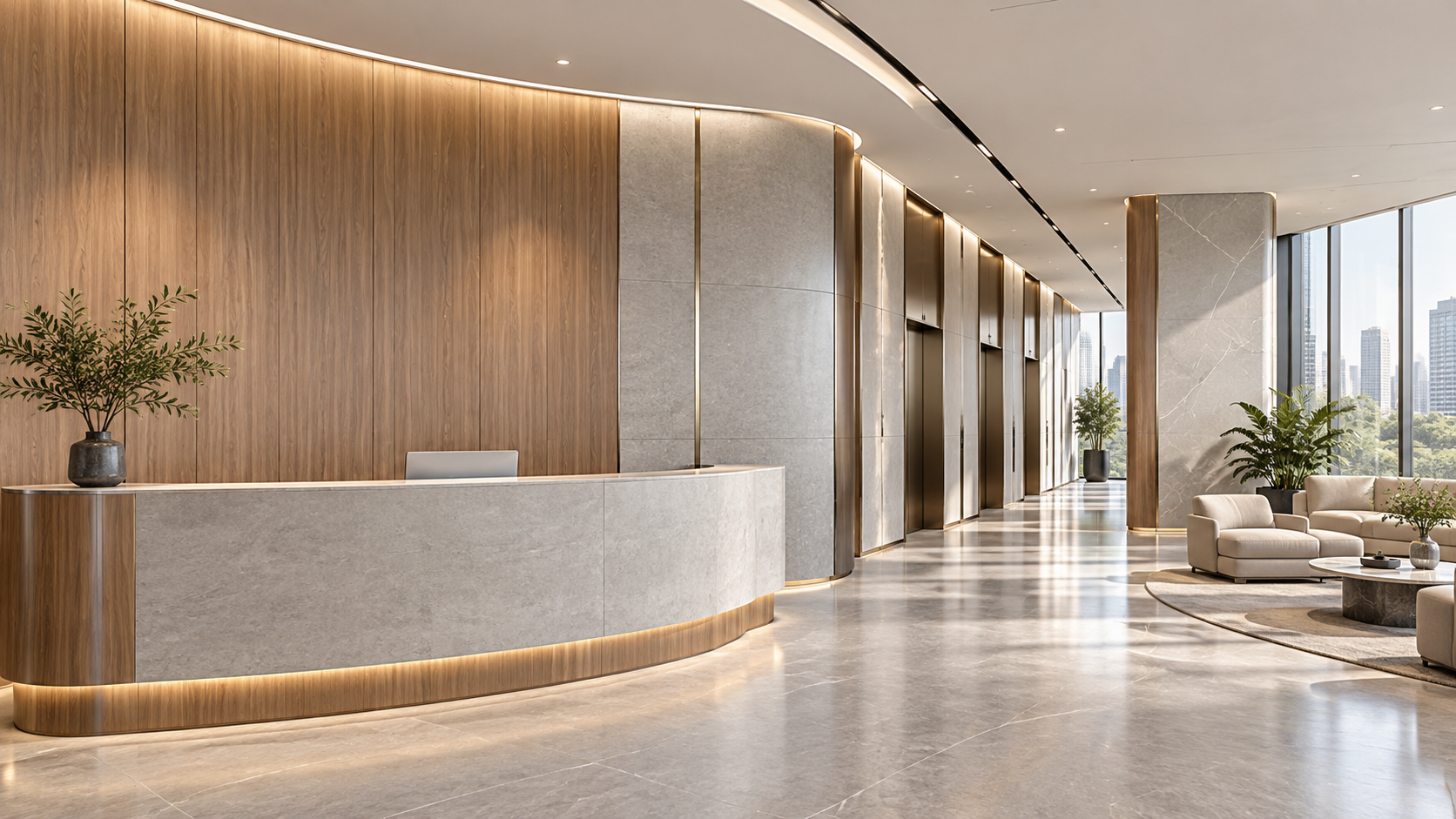
There is no single best approach for all projects. A composite wall panel used in a hotel corridor does not face the same moisture stress as one used in a spa changing room or a semi-covered exterior façade zone.
In dry interior spaces, the priority is usually avoiding incidental moisture ingress and maintaining stable joints. In high-humidity interior zones, the focus shifts to sealing, ventilation, and cleaning resistance. In semi-exposed exterior applications, UV, thermal movement, wind-driven rain, and freeze-thaw conditions may become equally important. Buyers should therefore assess panels by service environment rather than by generic category labels.
This is where experienced specification review adds value. Instead of asking only whether a panel is “moisture-proof,” ask what moisture conditions the panel system is designed to handle, for how long, and with what installation method.
Common misconceptions that lead to failure
Several assumptions repeatedly cause problems in the market:
- “Water-resistant” means waterproof. It usually does not.
- If the surface is sealed, the panel is safe. Edges and joints are often the real risk.
- Interior wall panels do not need substrate checks. Hidden dampness is a major cause of failure.
- Any silicone or adhesive will work. Compatibility and service environment matter.
- Moisture damage is only a product defect. Many cases result from installation or building-condition issues.
For commercial decision-makers, these misconceptions also affect cost forecasting. The cheapest panel is rarely the cheapest wall system if rework, complaints, and shortened service life are considered.
A practical evaluation checklist before purchase or specification
For teams comparing suppliers or preparing project approval, a few questions can reduce moisture-related risk significantly:
- What is the panel core made of, and how does it behave under humidity?
- Are edges, joints, and trims part of a defined installation system?
- Is there documented guidance for wet or high-humidity areas?
- What substrate conditions are required before installation?
- Which adhesives and sealants are approved or recommended?
- What packaging and storage controls are needed during transport and at site?
- Are there project references in similar climate and use conditions?
- What limitations or exclusions apply to the warranty?
These questions are more useful than relying on broad catalog language. They help distinguish between decorative suitability and real long-term performance.
Preventing moisture damage is a system discipline
The most effective way to prevent moisture damage in composite wall panels is to stop treating moisture as a minor installation detail. It is a specification issue, a materials issue, a logistics issue, and a building-performance issue at the same time.
Quality panels matter, but they are only one part of the answer. Reliable results come from selecting a panel matched to the service environment, preparing a dry and stable substrate, sealing critical details correctly, using compatible adhesives and fasteners, and managing ventilation and condensation risk. For buyers and project teams, that is the difference between a decorative surface that simply looks good at handover and one that remains stable through real use.
In other words, how to avoid moisture damage with composite wall panels is not mainly about finding a product with the strongest marketing claim. It is about understanding where moisture enters, how it moves, and which part of the wall system is most likely to fail first. Teams that make decisions on that basis usually achieve better durability, fewer claims, and lower lifecycle cost.
RECOMMEND

Oct 10, 2026
Choosing Spa Wall Panels for Humid Rooms, Hygiene, and Easy Maintenance
Spa Wall Panels for humid rooms: compare moisture resistance, hygiene, chemical durability, fire compliance, and easy-maintenance system details for lasting spa interiors.
Oct 10, 2026
Jewelry Store Wall Panels That Enhance Lighting, Security, and Luxury Displays
Jewelry Store Wall Panels: discover how refined finishes improve lighting, security integration, durability, and luxury displays for a polished retail experience.
Oct 10, 2026
Can Decorative Panels Be Cut to Non-Standard Dimensions?
Cut to size decorative panels for non-standard dimensions—discover how precise measuring, clean cuts, and edge finishing deliver a flawless custom fit.
Oct 10, 2026
How to Select Decorative Wall Panels for Commercial Interiors
Decorative wall cladding panels commercial interior guide: compare durability, fire performance, moisture resistance, acoustics, and finishes for smarter project choices.