How Do You Match Wood Grain When Ordering Replacement Panels?
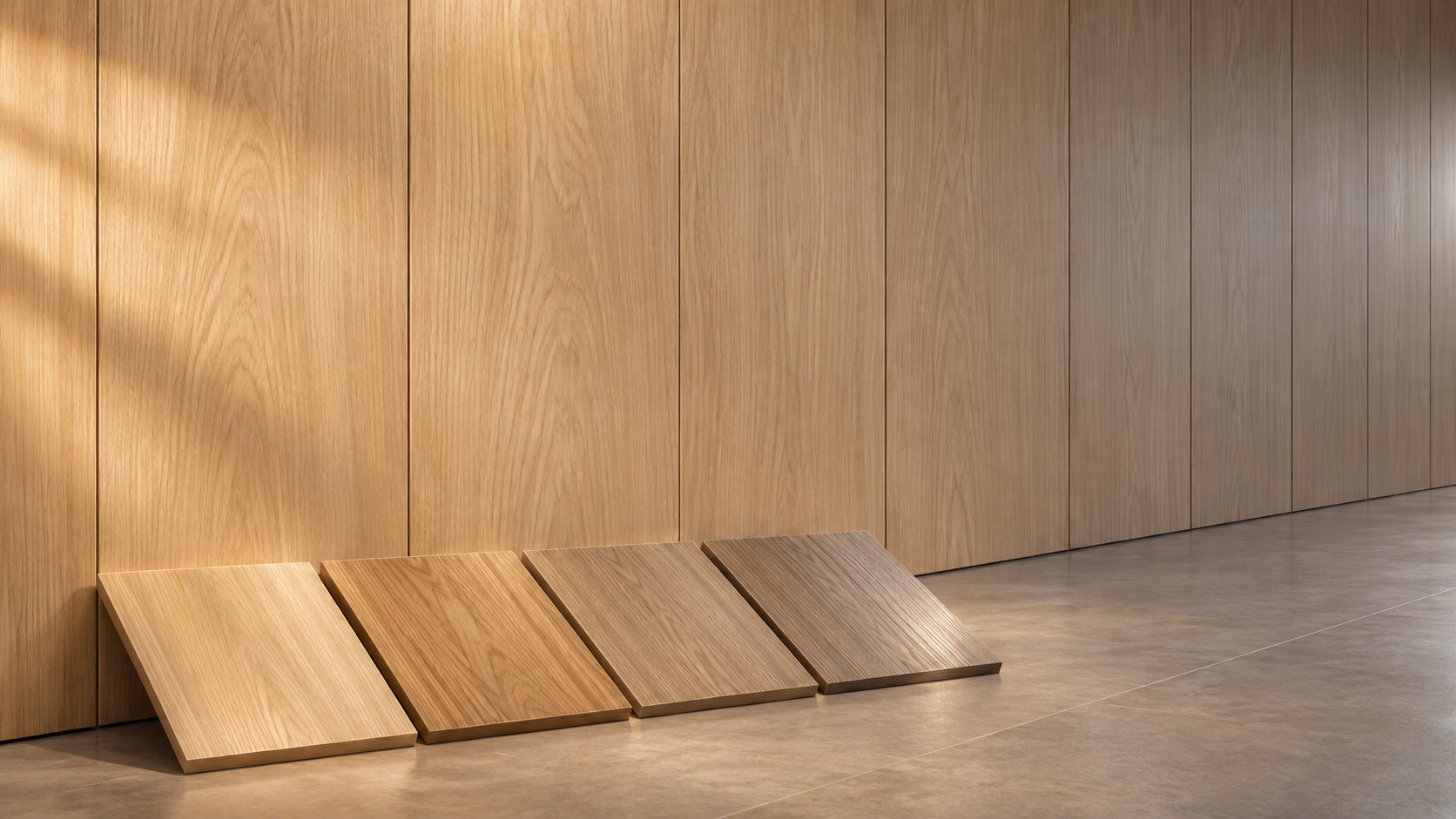
To match wood grain when ordering replacement panels, start with the material already installed: identify its surface type, document the grain direction and color, and compare physical samples in the room where the replacement will be fitted. An original product code or leftover panel can narrow the search, but neither guarantees an invisible repair after the surrounding surface has aged.
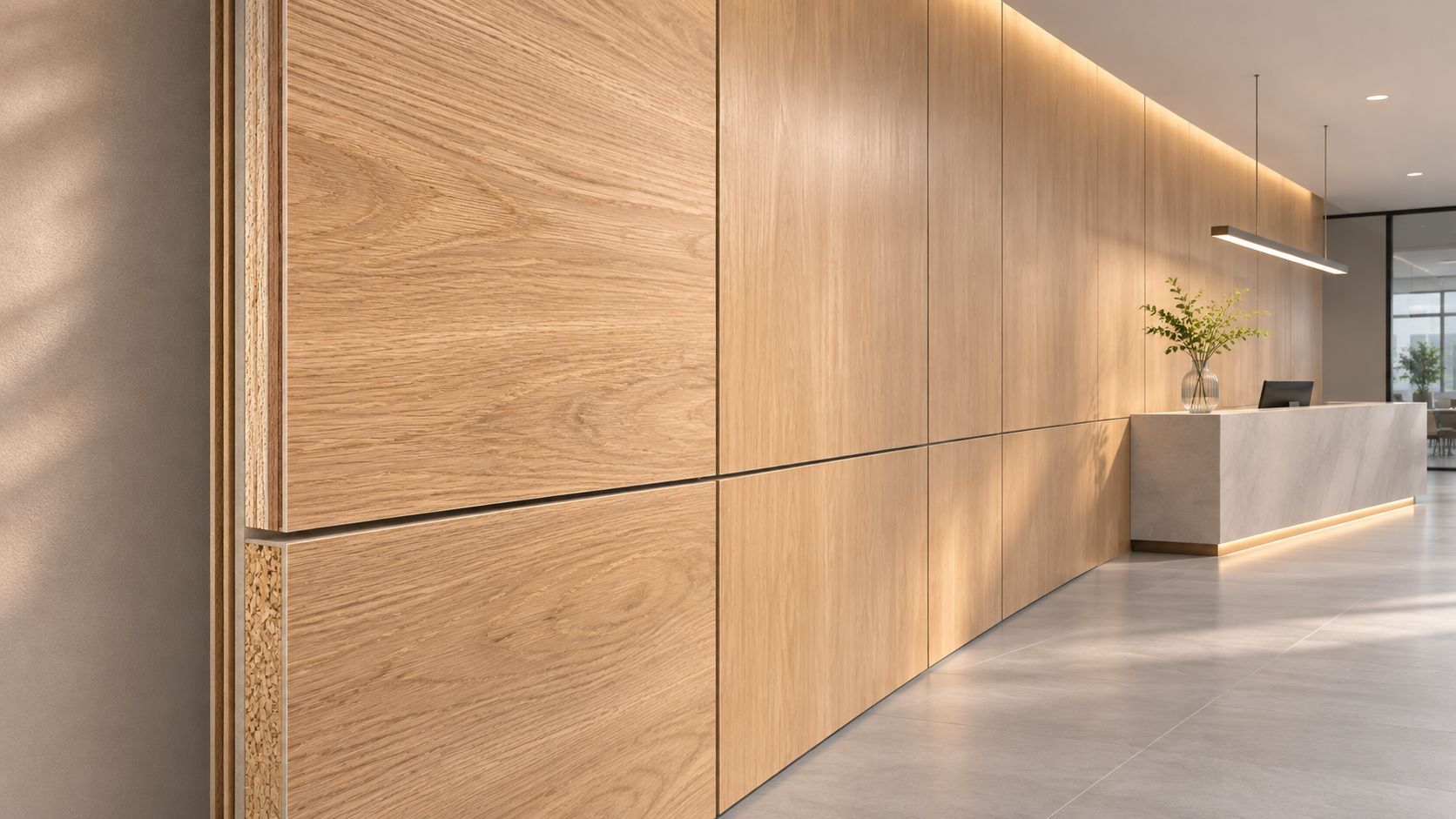
The level of match you need depends on where the panel sits. A close color and sheen match may be enough for a separate cabinet side. A panel in the middle of a continuous reception desk or wall feature is more demanding: grain scale, pattern placement and the way the finish reflects light can all make the replacement conspicuous.
What should you identify before contacting a supplier?
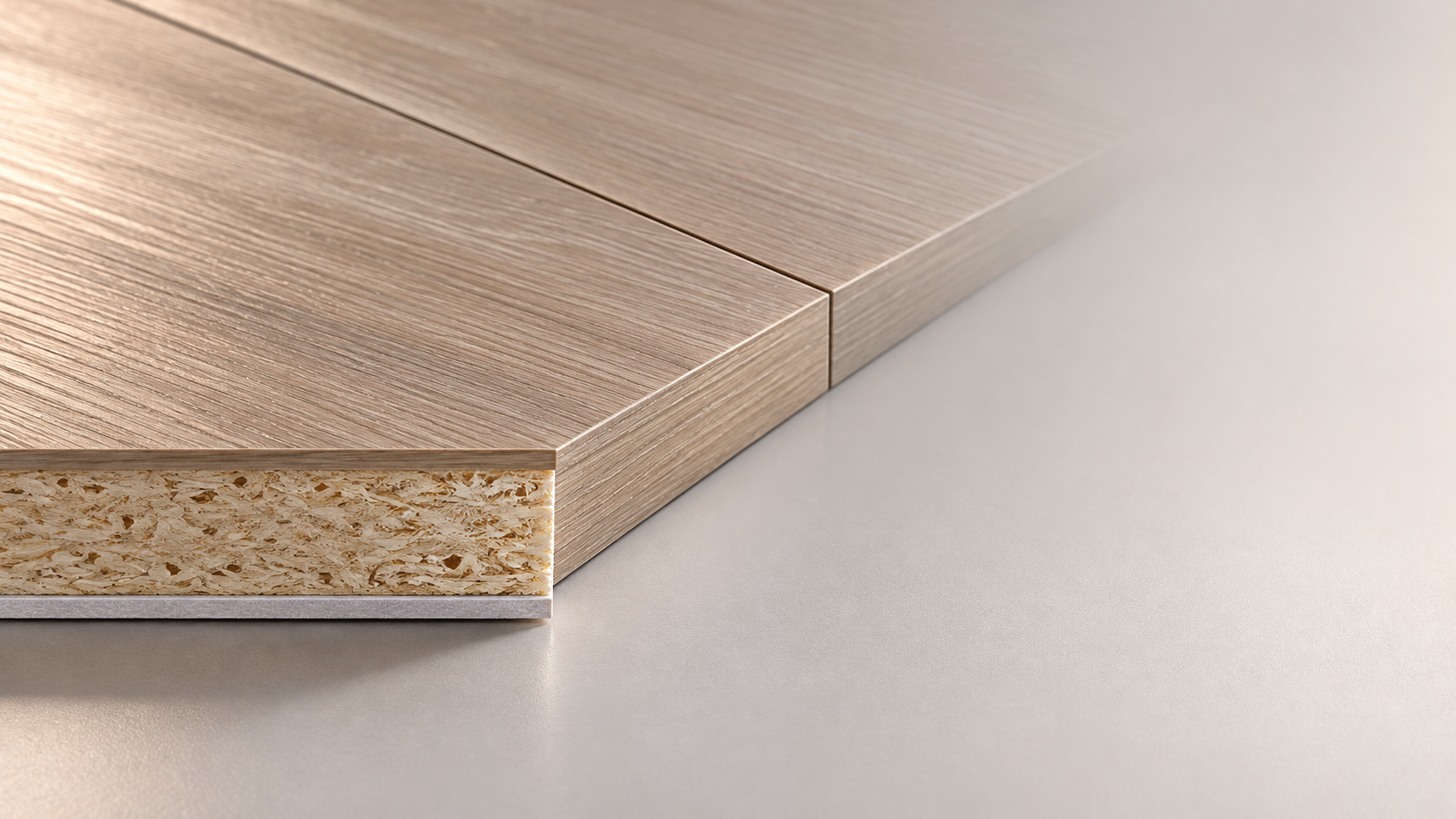
First, determine whether the visible face is solid wood, real wood veneer, or a decorative surface such as melamine, laminate or a printed film. These materials can resemble one another in a photograph, but they offer different routes to a match.
Solid wood and veneer have natural variation. Even when the species is known, another piece can differ in color, figure and grain spacing. The way a log was cut also matters: a straight, relatively uniform grain will look different from a face with broad arches or “cathedral” patterns. Veneer may have been selected and arranged across adjacent panels, so the sequence can be as important as the species.
Decorative laminates and printed surfaces reproduce a wood appearance rather than using the visible grain of a piece of timber. A manufacturer, product range, decor name or code can be particularly useful here. However, a matching name alone may not establish that the texture, gloss or color of a newly supplied sheet will match an older installation.
Look for labels on the back or edges of removable panels, original drawings, invoices or installation records. Note the panel thickness and edge treatment while you are checking. If the face material is uncertain, describe what you can see rather than guessing: a supplier can work with clear photographs and an offcut, but a confident yet incorrect material identification can send the search in the wrong direction.
Which details make the biggest visual difference?
Color attracts attention first, but grain and finish often determine whether a replacement blends in once it is installed. Assess the existing surface as a whole and then look closely at the area around the missing or damaged panel.
Grain direction and pattern placement
Record whether the grain runs vertically, horizontally or at an angle in the installed position. Mark the top of the panel on your photographs and measurements. A sheet that looks suitable when viewed horizontally may look quite different after it is turned.
Then look at grain scale. Are the lines fine and closely spaced, or broad and open? Are there knots, dark streaks, pale bands or prominent arches near the neighboring panel edges? A replacement does not have to repeat every detail, but a large knot beside an otherwise quiet surface can draw the eye immediately.
Where adjacent panels form a deliberate sequence, check whether the grain appears to continue across the joints or mirror around them. A single replacement cut from an unrelated sheet may match the species and color yet interrupt that arrangement. Ask the supplier whether the proposed face can be selected or positioned to suit the neighboring panels; provide photographs showing both sides of the opening.
Color, sheen and texture
Compare the lightest and darkest areas of the existing surface, not just its average color. A sample with the right overall tone may still look wrong if its grain lines are much darker or its background is noticeably warmer. Compare against the exposed face that will remain visible, rather than relying only on a protected area behind a fitting: the two may have aged differently.
Sheen deserves a separate check. A glossy replacement beside a matt surface can stand out even when their colors are close. View samples from several angles, particularly where windows or overhead lights produce reflections. Also feel and inspect the texture: an embossed decorative surface, for example, may catch light differently from a smooth one.
Photographs help communicate the direction of the search, but screen settings, lighting and camera processing can alter apparent color. Use them to shortlist candidates, then make the final visual comparison with physical samples whenever possible.
What should you send with the replacement request?
A useful request gives the supplier enough information to identify both the construction and the visible target. For a project involving several panels, label each location so that dimensions and photographs cannot be confused.
- Overall photographs: Show the damaged area and the surrounding installation from a normal viewing distance, including adjacent panels and joints.
- Close-up photographs: Capture the grain, finish and any distinctive features near the replacement panel. Include a ruler or another scale reference.
- Orientation: Mark the top of each panel and indicate the installed grain direction.
- Dimensions and construction: Provide the required width, height and thickness, along with edge details, cutouts and fixing requirements where known.
- Product information: Share any manufacturer name, decor code, species, finish description or original order reference.
- Physical reference: Offer an offcut, spare panel or removable component if available, and identify which face and area are the visual reference.
Take photographs in neutral, even lighting as well as in the room’s normal lighting. Avoid relying on a flash-lit close-up alone. If sending a physical piece, protect its face during transit and tell the supplier whether it has been exposed to the same light and wear as the surrounding installation.
Separate the finished panel dimensions from the dimensions of the reference piece. This matters when a supplier is selecting a larger sheet: the position of the cut within that sheet can change which part of the grain appears on the finished panel.
How should you compare and approve samples?
Request samples of the actual proposed material and finish, not just a color swatch from a screen or a photograph of a similar product. For a large or prominent panel, ask whether a larger sample or a view of the proposed sheet is available. A small chip can show color and surface texture, but it may not reveal the scale or placement of a broad grain pattern.
Place each sample flat against, or immediately alongside, the existing surface in its intended orientation. Compare it in daylight and under the lighting normally used in the space. Step back to the distance from which people will usually see the installation, then move to the side to inspect reflections. A sample that looks close under one light or from one angle may separate visibly under another.
If the panel will receive stain, lacquer or another finish after fabrication, compare a finished sample using the proposed system. Raw veneer or timber can change appearance substantially after finishing. Ask whether the sample represents the finish and substrate intended for the order, and discuss how much variation should be expected between the sample and the supplied panel.
Before approving, agree on what the sample represents. Does it establish color and sheen only, or also the grain character? For a decorative sheet, can the specific decor and finish be identified on the order? For veneer, will the actual face or sheet be available for review before cutting? These details are especially useful when several parties are involved in purchasing, fabrication and installation.
Can an exact match always be achieved?
No. Even the original material can look different after exposure to light, cleaning, moisture and ordinary wear. The surrounding panels may also have varied from one another when installed. An exact original decor code, species name or finish description improves identification, but it does not remove those differences.
Availability can be another constraint. A decorative pattern may no longer be offered in the same finish, while a natural veneer with the same figure and color may be difficult to source. In such cases, decide which mismatch will be least noticeable in the installed setting. On a wall viewed straight on, color and grain scale may dominate; on a surface that catches strong side light, sheen and texture may be more apparent.
If a single panel remains conspicuous, consider replacing a complete visual section rather than one isolated piece. The boundary might be a corner, a change in plane, or a group of panels between existing joints. This can make variation look intentional, although it increases the material and installation scope. For a cabinet, moving a close but imperfect match to a less visible side may be another option, provided the panels are interchangeable and the construction permits it.
For a prominent feature where the existing grain flows across several panels, discuss the layout before ordering. A supplier may be able to propose a different cut position or a coordinated set of replacement faces. If continuity cannot be reproduced, knowing that before fabrication gives the buyer a chance to choose between an acceptable visible difference and a wider replacement.
What should be confirmed before the order is released?
Record the approved material, finish, panel orientation and dimensions in the order, along with any agreed grain-selection requirements. Identify the sample or reference photographs used for approval and specify whether the supplier is providing sheet material or finished, cut panels. For several replacements, associate each panel with its location and mark the required top edge.
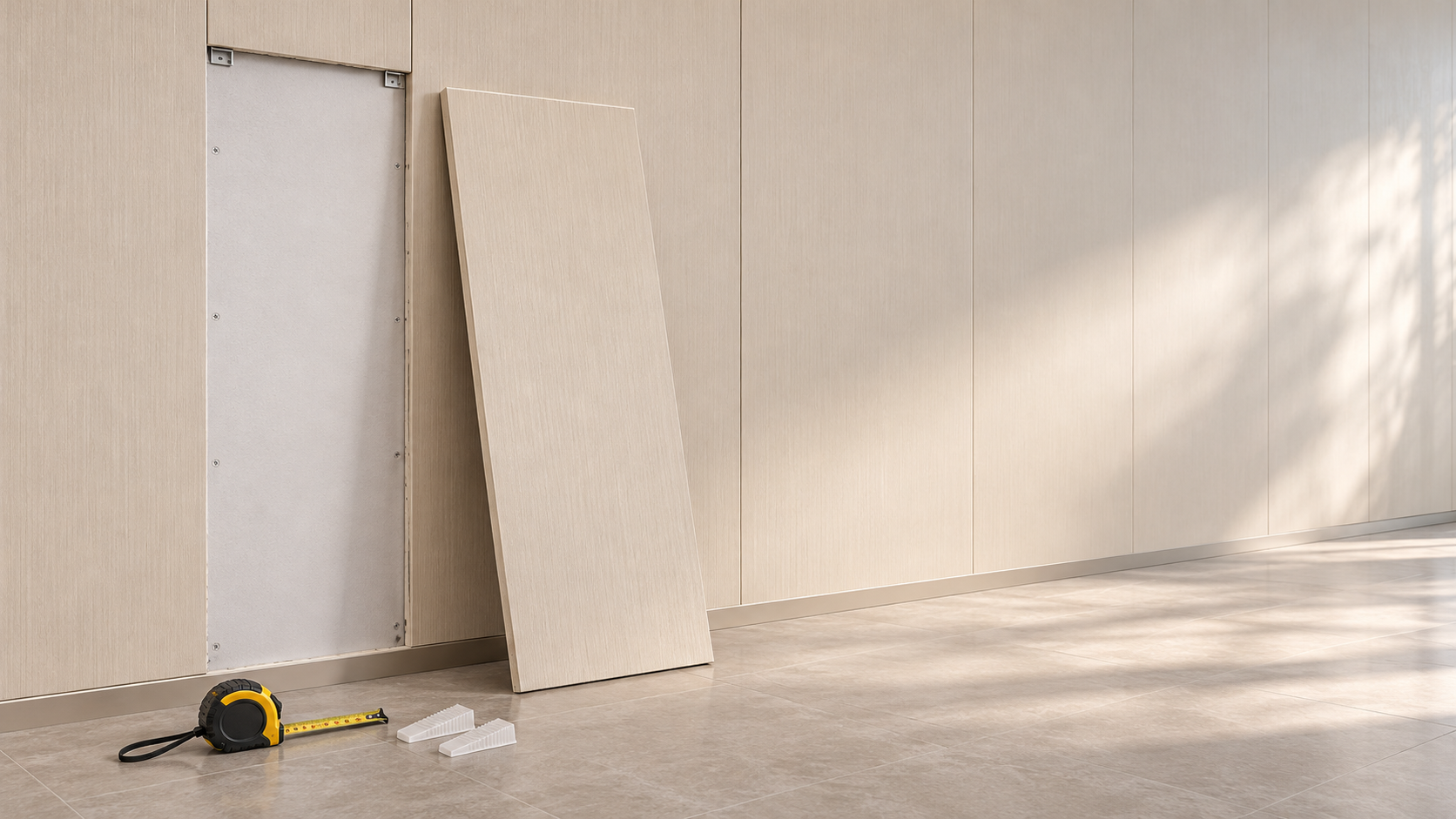
Visual approval should sit alongside a fit check. A convincing wood grain will not help if the panel is the wrong thickness, its edge finish is exposed differently, or the fixing positions do not align. Where possible, check the opening and neighboring panels again after the damaged piece has been removed, especially if its edges were concealed.
Finally, agree on what will be reviewed before cutting or finishing and what happens if the supplied material differs materially from the approved reference. Natural grain and aged surfaces make some variation unavoidable; a clear reference and an agreed acceptance process make that variation easier to judge before the replacement reaches the installation.
Next:No more content
RECOMMEND

Nov 10, 2026
How Do You Match Wood Grain When Ordering Replacement Panels?
How do I match wood grain panels when ordering replacements? Discover how to compare grain, color and finish, and approve samples for a seamless-looking result.
Nov 10, 2026
Does Cutting a Fire-Rated Composite Panel Affect Its Rating?
Does cutting a fire rated composite panel affect its rating? Learn how cuts, edges and installation details can affect compliance before you start your project.
Nov 09, 2026
Can a Fire-Rated Composite Panel Have a Wood Finish?
Can a fire rated composite panel have a wood finish? Discover wood-look options, fire classifications, and expert tips for choosing the right panel.
Nov 09, 2026
How Do You Replace a Damaged Lightweight Wall Panel?
How do I replace a damaged lightweight wall panel? Learn safe removal, substrate repair, and installation steps for a seamless, lasting result.