Does Cutting a Fire-Rated Composite Panel Affect Its Rating?
Does cutting a fire-rated composite panel affect its rating? It can, particularly when cutting changes the panel’s tested dimensions, exposes its core, or alters how it is installed and sealed. A fire classification may describe a material’s reaction to fire or the resistance of a complete assembly; neither automatically approves every modification. Before cutting decorative composite panels for a construction or interior project, check the manufacturer’s instructions, relevant test documentation, and applicable building requirements.
That distinction matters when a panel reaches the real world. A sheet may need trimming around a doorway, fitting against a ceiling, or cutting to accommodate a service opening. The cut itself is often straightforward. Knowing whether the finished installation still matches an approved arrangement takes a little more care.
What does the panel’s fire rating actually cover?
“Fire-rated” is a useful shorthand, but it can refer to different types of performance. Before deciding whether a cut is acceptable, identify the claim that applies to your project.
- Reaction to fire: A classification may describe how a product contributes to fire under a specified test. Depending on the applicable system, factors such as flame spread, smoke, or burning droplets may be assessed. The result can depend on the product’s composition, thickness, facing, and conditions of end use.
- Fire resistance: A wall, ceiling, partition, or other assembly may be tested for its ability to maintain specified performance during fire exposure. The result belongs to the tested construction, including its panels, support structure, joints, fixings, and any protection around openings.
A decorative panel’s reaction-to-fire classification does not automatically mean that a wall containing it has a fire-resistance rating. Equally, a rated wall system does not mean that any replacement panel or installation method is acceptable. Cutting may affect the product, the assembly, or both, depending on what is changed.
Does trimming a panel to size always invalidate its rating?
No. Many panel systems are intended to be cut on site, and trimming within the manufacturer’s documented installation requirements may be permitted. However, permission to cut is not the same as permission to alter every detail around the cut.
For example, a full-size decorative panel might be approved for installation with particular edge treatments and fixing distances. A smaller piece cut from that panel may still be usable, but only if its dimensions, support, joints, and exposed edges comply with the relevant system requirements. In a fire-resistance-rated assembly, a cut panel must also fit within the tested or otherwise approved construction.
Do not assume that a panel retains a specific classification simply because the material looks unchanged. Check whether the product documentation addresses the intended thickness, substrate, mounting arrangement, and exposed edges. Where it does not, ask the manufacturer or the responsible design professional for clarification before installation.
Why can a simple cut make a difference?
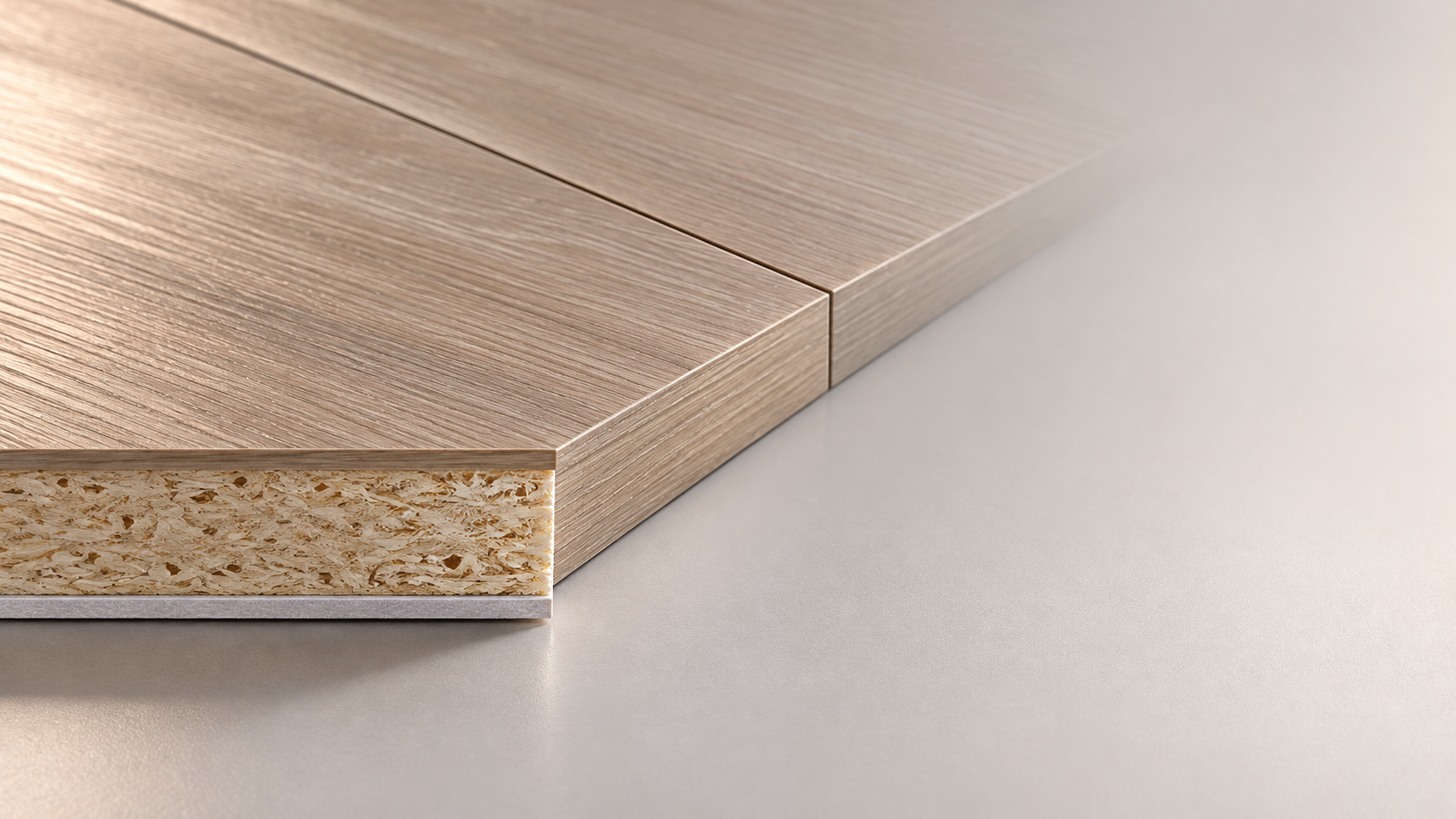
Composite panels combine materials that may respond differently to heat. The decorative surface visible to an occupant is only one part of the product; its core, adhesive layers, backing, and supporting structure can also matter.
Cutting exposes the core and inner layers
A factory-made edge may be covered by a facing or profile. Cutting can leave the core and adhesive layers exposed, changing the edge condition from the one described in the product documentation. Some systems require a specified edge treatment or trim; others may allow an exposed cut edge in certain positions.
Whether a cut edge needs treatment depends on the product and application. A generic edge band or decorative sealant should not be assumed to provide the same fire performance as a specified component.
New joints and gaps can change the assembly
Trimming a panel often creates or moves a joint. If that joint is wider than permitted, falls outside a support member, or lacks the required backing or seal, the installed assembly may differ from the tested design. In a fire-resistance-rated wall, joints can be important routes for heat, flames, or smoke to pass through if they are not constructed as specified.
The concern is not limited to large gaps. A narrow but continuous gap in the wrong place can also matter. Follow the documented joint width, support, and treatment requirements rather than filling the space with whatever is available on site.
Fixing positions may no longer work
After a panel is cut, a fixing that was correctly positioned on the full sheet may be too close to the new edge, or the remaining piece may not reach the intended framing. Small infill pieces can be especially awkward: they still need appropriate support and fixing, but may have limited room for both.
Review fixing type, spacing, edge distances, and support requirements for the cut piece. If the documented system does not address the proposed layout, get an approved detail instead of improvising.
What about holes for sockets, pipes, and other services?
A service opening is more than a cut in a decorative surface. It can affect the construction behind the panel, particularly where a cable, pipe, duct, or electrical box passes through a fire-resistance-rated wall or ceiling.
The correct detail depends on the assembly, the penetrating service, the size and shape of the opening, and the required fire performance. The penetration may need a tested or otherwise approved firestop system compatible with those conditions. A product labelled “fireproof sealant” is not, by itself, evidence that the finished penetration is compliant.
If a cutout is needed only in a decorative facing and does not penetrate the rated construction behind it, the requirements may be different. Even so, confirm that the facing, cavity, support, and opening arrangement remain consistent with the relevant documentation. Coordinate electrical and mechanical work before the panels are installed so that openings and sealing responsibilities are clear.
Can you seal a cut edge with fire-rated sealant?
Sometimes a specified sealant is part of an approved detail. It is not a universal remedy for every exposed edge, oversized gap, or unapproved modification.
Firestop and sealing products are selected and installed as part of a defined system. Their suitability can depend on the surrounding materials, joint dimensions, backing material, application depth, and intended movement. Applying a sealant over a cut edge does not automatically restore a panel’s classification or recreate a tested wall assembly.
Use the sealant, edge profile, cover strip, or other treatment identified in the manufacturer’s instructions or the approved project detail. If the required treatment is unclear, record the proposed dimensions and materials and request a written recommendation before proceeding.
How should you check a panel before cutting it?
A short review before the saw is switched on can prevent a difficult conversation after the wall is finished. Start with the exact product name, thickness, and intended location; documentation for a similar-looking panel may not apply.
- Identify the required performance. Determine whether the project calls for a reaction-to-fire classification, a fire-resistance-rated assembly, or both. Check the requirements relevant to the location and local jurisdiction.
- Read the installation instructions. Look for cutting guidance, permitted panel sizes, edge treatment, minimum support, fixing positions, and limitations on openings.
- Check the assembly documentation. Where the panel forms part of a rated wall or ceiling, compare the proposed framing, substrate, joints, fixings, and sealants with the applicable tested or approved detail.
- Plan the layout. Position joints and cut pieces so they can be supported and fixed as required. Consider door frames, corners, service openings, and interfaces with adjacent construction.
- Resolve deviations before installation. If the proposed cut or detail is not covered, consult the manufacturer and the project’s responsible fire-safety professional or authority having jurisdiction, as appropriate.
- Keep a record. Retain the relevant product information, approved details, and any project-specific clarification so the finished work can be checked against the correct requirements.
For workplace safety, also follow the manufacturer’s cutting instructions and applicable site precautions for dust extraction, ventilation, equipment, and personal protective equipment. Cutting methods suitable for one composite panel may not be appropriate for another.
What should you do if a panel has already been cut?
Pause before covering the edges or closing the wall. Establish what was changed: the panel dimensions, the number and location of joints, the exposed core, the fixing arrangement, or an opening through the construction. Photographs and measurements can help the manufacturer or project team understand the condition.
Then compare the work with the applicable installation and assembly details. If it matches documented provisions, the cut may be acceptable. If it does not, the remedy could involve a specified edge treatment, a revised joint or firestop detail, repositioning the piece, or replacing it. The appropriate response depends on the actual product and assembly; it should not be guessed from the appearance of the finished surface.
Does factory cutting make compliance easier?
Factory cutting can be useful when a project has a repeatable layout or needs consistent edge finishing. It may also reduce site adjustments. But a factory-cut panel is not automatically compliant in every installation. Its dimensions, edge condition, joints, support, and surrounding assembly still need to match the applicable requirements.
When ordering pre-cut decorative panels, provide the supplier with the intended application and ask how the supplied edges and tolerances relate to the documented installation. Confirm who will address any site changes around doors, corners, and services.
Who can confirm whether the modified installation is acceptable?
The panel manufacturer is a starting point for product-specific cutting and edge-treatment questions. The system supplier or design professional can help assess how the change affects the wider assembly. For regulated construction, the authority having jurisdiction may also need to accept the proposed approach. Any project-specific assessment should be based on the relevant evidence and local requirements, not a verbal assumption that the material is “fireproof.”
For decorative material projects, Shenyang Shengshi Meilin Technology Co., Ltd. works in new material technologies and offers materials including fireproof sealing materials. When discussing an application with a supplier, provide the panel identification, location, proposed cut, substrate, and required performance so the conversation can focus on the actual construction detail.
The practical answer: cutting a fire-rated composite panel is not automatically prohibited, but the finished installation must remain within the applicable documented or approved conditions. Treat the cut edge, joint, fixing, and surrounding assembly as part of the decision—not as details to solve after the panel is on the wall.
RECOMMEND

Nov 10, 2026
How Do You Match Wood Grain When Ordering Replacement Panels?
How do I match wood grain panels when ordering replacements? Discover how to compare grain, color and finish, and approve samples for a seamless-looking result.
Nov 10, 2026
Does Cutting a Fire-Rated Composite Panel Affect Its Rating?
Does cutting a fire rated composite panel affect its rating? Learn how cuts, edges and installation details can affect compliance before you start your project.
Nov 09, 2026
Can a Fire-Rated Composite Panel Have a Wood Finish?
Can a fire rated composite panel have a wood finish? Discover wood-look options, fire classifications, and expert tips for choosing the right panel.
Nov 09, 2026
How Do You Replace a Damaged Lightweight Wall Panel?
How do I replace a damaged lightweight wall panel? Learn safe removal, substrate repair, and installation steps for a seamless, lasting result.