E0, E1, ENF and CARB: Formaldehyde Standards Panel Buyers Should Know
E0, E1, ENF and CARB: Formaldehyde Standards Panel Buyers Should Know
Formaldehyde limits for wood-based panels are set in milligrams per cubic meter of air, and the ladder is specific: E1 ≤ 0.124 mg/m³, E0 ≤ 0.050 mg/m³, ENF ≤ 0.025 mg/m³ (China, GB/T 39600-2021). From 1 June 2026, China's mandatory GB 18580-2025 makes E0 the entry requirement for panel products — faced decorative panels, flooring, wood doors — while E1 remains the requirement for raw boards. If a supplier quotes you "E0 grade" on a faced panel without citing GB 18580-2025 and a test report, the claim is not verifiable.
The four systems side by side
One thing surprises buyers most often: ISO and EN standards have no E0 class at all. E0 is a Chinese classification. A European specifier asking for "E1 to EN" and an American specifier asking for "CARB/TSCA documents" are each asking for something an E0 certificate cannot replace.
What to ask for, depending on where the project is
- If the panels are going to the United States: the substrate needs CARB Phase 2 / TSCA Title VI compliance documentation. E0 does not substitute for it.
- If the panels are going to the EU: E1 under the relevant EN standard is the baseline; ask which EN standard the report cites and whether the lab is accredited.
- If the project is in China after June 2026: require E0 with the standard number GB 18580-2025 and a report from a CMA-accredited laboratory using the climate-box method. Beware quotes that list "E0" with no standard number — under the new rules that is not a grade, it is decoration.
- If the specification targets schools, hospitals or premium residential work: ENF may be requested; confirm the supplier can document it on the substrate actually being shipped.
What decides the grade: the board, not the film
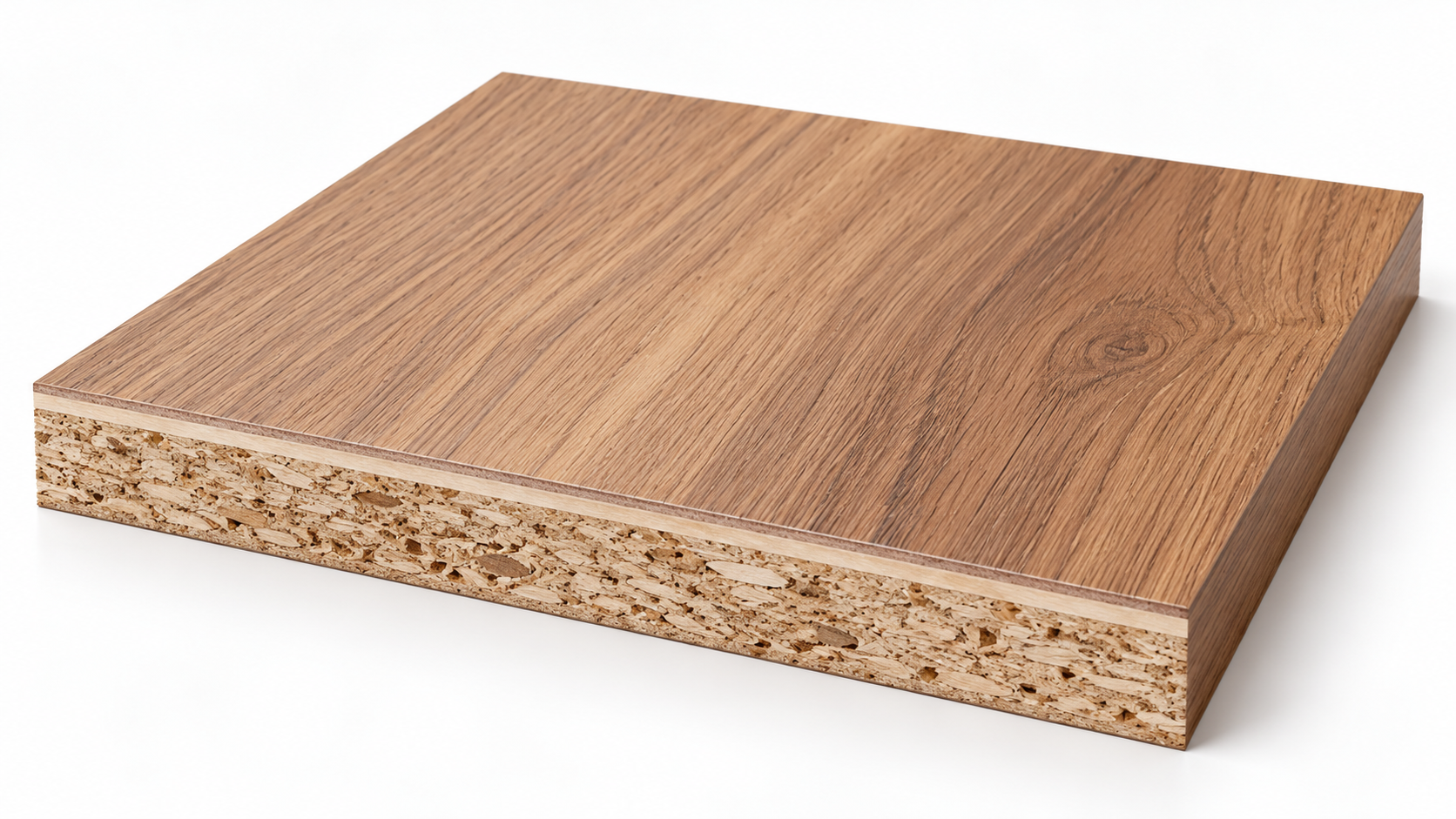
The formaldehyde class of a laminated decorative panel comes primarily from the substrate board. Film lamination changes surface properties, not the board's emission class. The lamination adhesive matters for overall VOC performance — solvent-free PUR hot-melt systems are specified precisely because they avoid adding solvent emissions on top of the board — but if the substrate is E0, the panel system's formaldehyde claim rests on that board and its test report. If a seller attributes the panel's E0 rating to the glue or the film, ask to see the board's own report.
One field reality buyers underestimate
Emission grades are measured on panels with intact surfaces and edges. Site cutting, drilling and edge exposure re-open the substrate. If panels will be cut on site, edge sealing and proper edge banding are part of keeping the installed result consistent with the lab report — the grade describes the product as tested and installed per its system.
FAQ
Q: Is E0 stricter than CARB Phase 2?
A: They are not directly comparable — different units, different test methods. A project in the US is governed by CARB/TSCA documents regardless of any E0 claim.
Q: Does E0 mean zero formaldehyde?
A: No. E0 means ≤ 0.050 mg/m³. Zero-formaldehyde claims belong to a different category of adhesives and substrates and need their own documentation.
Q: Our panels will be cut on site. Does the rating still hold?
A: The grade applies to the product as tested. Cut edges expose substrate, so follow the supplier's edge-sealing specification to keep the installed assembly consistent with the report.
Q: What document set should I ask for at order stage?
A: Standard number, laboratory accreditation, test method, and the substrate identification. Four items that make "E0" checkable instead of decorative.
Next:No more content
RECOMMEND

Nov 05, 2026
E0, E1, ENF and CARB: Formaldehyde Standards Panel Buyers Should Know
E1, E0, ENF, CARB and F4-star explained with actual limits — and why an "E0" claim without a standard number cannot be verified.
Nov 04, 2026
Fire Ratings for Decorative Wall Panels: B1, ASTM E84 Class A and Euroclass Explained
B1, ASTM E84 Class A and Euroclass B come from three different test systems. Which fire document a wall panel project needs depends on where it is built.
Nov 03, 2026
How to Keep Wall Panel Color Consistent Across Batches and Repeat Orders
Color drift between batches is a process problem, not luck. The batch-control workflow buyers should write into the order before a repeat purchase.
Nov 04, 2026
Does an E0 Rating Guarantee Low Emissions From the Finished Panel?
Does an E0 rating guarantee low emissions from the finished panel? Discover what it covers, why VOC testing matters, and how to choose decorative panels with confidence.