Do Stone-Look Wall Panels Cost Less Than Real Stone Cladding?
Do Stone-Look Wall Panels Cost Less Than Real Stone Cladding?
Stone-look wall panels often cost less than real stone cladding, but the true savings depend on material choice, installation requirements, and project scale. For homeowners, designers, and contractors, comparing purchase prices alone can overlook labor, transport, substrate preparation, and long-term maintenance costs. If you’re also asking “what is the minimum order for custom decorative panels,” order quantities can affect both customization options and your overall budget. This guide compares the key cost factors to help you choose a stone-inspired finish that balances appearance, performance, and value.
The short answer is yes, particularly for interior projects where a lightweight decorative finish can replace a heavier stone assembly. But a premium custom panel system may cost more than readily available local stone. The useful comparison is not “panel versus stone” in the abstract. It is two complete, suitable wall systems priced for the same finished area.
Define the materials before comparing their prices
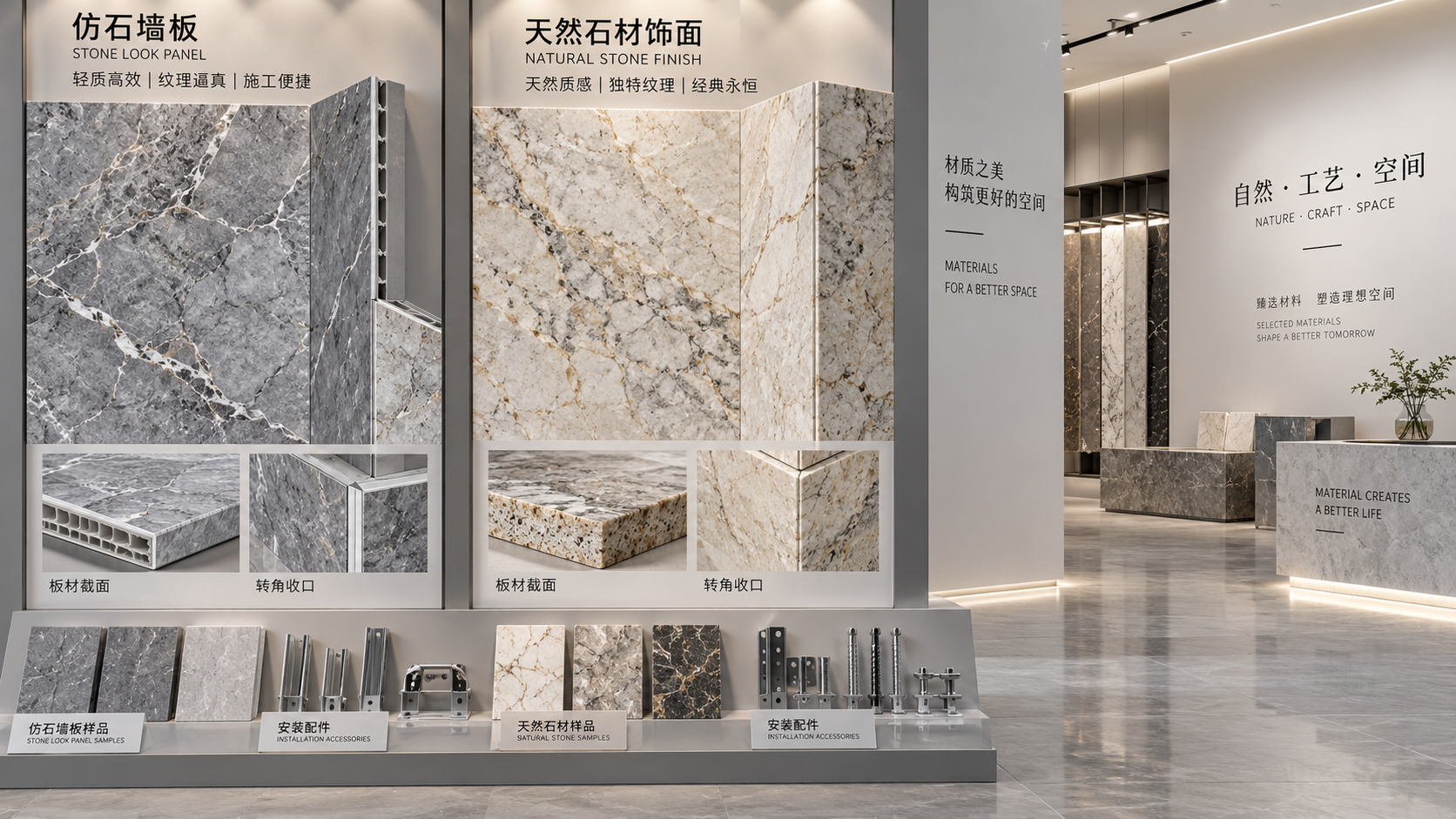
“Stone-look panel” describes an appearance, not a single material. The category can include polymer-based panels, mineral-filled composites, decorative sheets bonded to a core, and other engineered products. Their weight, stiffness, surface durability, fire behavior, and installation methods vary. A printed marble-effect sheet is not equivalent to a deeply textured panel designed to resemble split stone.
Real stone cladding also covers different systems. Thin stone veneer, cut limestone, slate pieces, and mechanically fixed stone slabs have different fabrication and support requirements. Comparing a basic interior decorative sheet with a thick exterior stone facade produces an impressive price difference, but not a meaningful specification decision.
Start with the application: interior or exterior, dry or wet conditions, expected impact, wall height, and desired finish. Then identify suitable products in each category. A material that cannot meet the project requirements is not a cheaper alternative; it is an unsuitable one.
Where the installed-cost difference comes from
Stone-look panels can reduce costs through simpler handling and installation, rather than through purchase price alone. Lightweight products may require less lifting effort, while larger formats can cover more area with fewer individual placements. Whether that produces a meaningful saving depends on panel dimensions, fixing requirements, crew familiarity, and the complexity of the wall.
Natural stone may involve more cutting, sorting, joint work, and handling protection. Some assemblies also require engineered anchors or additional support. However, thin stone veneer installed by an experienced local crew can be competitive, especially when the material is sourced nearby and the design is straightforward.
To compare quotations fairly, separate the following cost items:
- Delivered materials: panels or stone, packaging, freight, and applicable import charges.
- Wall preparation: leveling, repairs, backing, moisture control, and any necessary structural work.
- Installation: cutting, fixing, adhesives, anchors, labor, equipment, and access.
- Finishing details: corners, trims, joints, sealants, outlets, and transitions to adjacent materials.
- Project allowances: cutting waste, damaged pieces, approved spare material, and inspection requirements.
A practical calculation is: total installed cost equals delivered material cost plus preparation, installation, finishing, and project allowances. Divide that total by the completed wall area—not the purchased material area. This prevents unused stock and cutting waste from disappearing from the comparison.
Do not assume lightweight means no preparation
An adhesive-fixed panel still needs a sound, compatible substrate. Loose paint, dust, uneven plaster, or moisture can undermine adhesion. Large decorative sheets may reveal wall irregularities, while framed systems introduce their own backing and fixing costs. Ask the installer to inspect the existing wall before treating preparation as a minor allowance.
Renovation schedules matter too. Cutting methods, adhesive curing, joint finishing, and restricted working hours can affect installation time. Panels may simplify a refurbishment, but “fast installation” should be assessed against the proposed method and site conditions, not accepted as a universal product benefit.
Appearance and detailing can change the economics
On a flat wall, a stone-look panel may deliver the intended visual effect economically. At an outside corner, reception desk return, curved surface, or window reveal, the comparison becomes more demanding. Exposed edges can reveal a panel’s construction, while poorly matched trims can make an otherwise convincing surface look artificial.
Natural stone has its own detailing costs. Vein matching, selected color ranges, fabricated edges, and carefully arranged pieces can add work. Neither option should be priced as a plain rectangular surface when the finished design contains numerous interruptions.
For patterned panels, check repeat frequency and layout direction. A convincing sample may look repetitive across a long corridor. Aligning a marble-style pattern across joints can also increase offcuts. With stone, natural variation may be desirable, but sorting pieces to achieve a consistent tone can require extra time and material.
A small installed mock-up is often more useful than another brochure. Include a joint, an external corner, and the intended lighting. View it from normal walking distance and close up. This reveals whether the lower-cost option meets the design intent before fabrication or ordering becomes difficult to reverse.
What is the minimum order for custom decorative panels?
There is no universal minimum order quantity, or MOQ. It depends on the supplier, panel construction, and extent of customization. Selecting an existing finish in a standard size is different from requesting a new texture, proprietary pattern, special coating, or custom tooling.
Manufacturers may express the minimum in pieces, square meters, production batches, or order value. It may apply separately to each color, pattern, or size. A project’s total quantity therefore does not automatically satisfy the minimum for every finish included in its schedule.
Custom work can also carry separate development, sampling, or setup charges. These should be distinguished from the unit price. A low quoted price per square meter may become less attractive if the minimum forces you to purchase substantially more material than the project needs.
Before approving a custom finish, establish:
- Whether the minimum applies per design, color, thickness, or size.
- Which sampling and setup charges are separate from production pricing.
- Whether sample approval is required before the production lead time begins.
- How repeat orders are handled, including minimums and acceptable appearance variation.
- Whether an existing finish or standard module could meet the design with less surplus.
There is no verified custom-panel MOQ provided for Shenyang Shengshi Meilin Technology Co., Ltd., so a specific quantity should not be assumed. A useful inquiry includes drawings, net wall area, preferred construction, finish requirements, and delivery destination. Those details allow an order threshold to be evaluated against the actual project rather than treated as an isolated number.
Do not trade required performance for a lower quotation
Fire performance deserves particular attention in commercial interiors. A stone appearance says nothing about how a panel behaves in a fire. Natural stone itself and an installed stone assembly are also different subjects: adhesives, backing, insulation, and other components may affect the assessment.
Request documentation relevant to the proposed product and installation. Check whether the tested thickness, core, surface layer, substrate, and fixing method correspond to the specification. Applicable classifications and acceptance requirements depend on the jurisdiction and building use; a general “fireproof” claim is not enough.
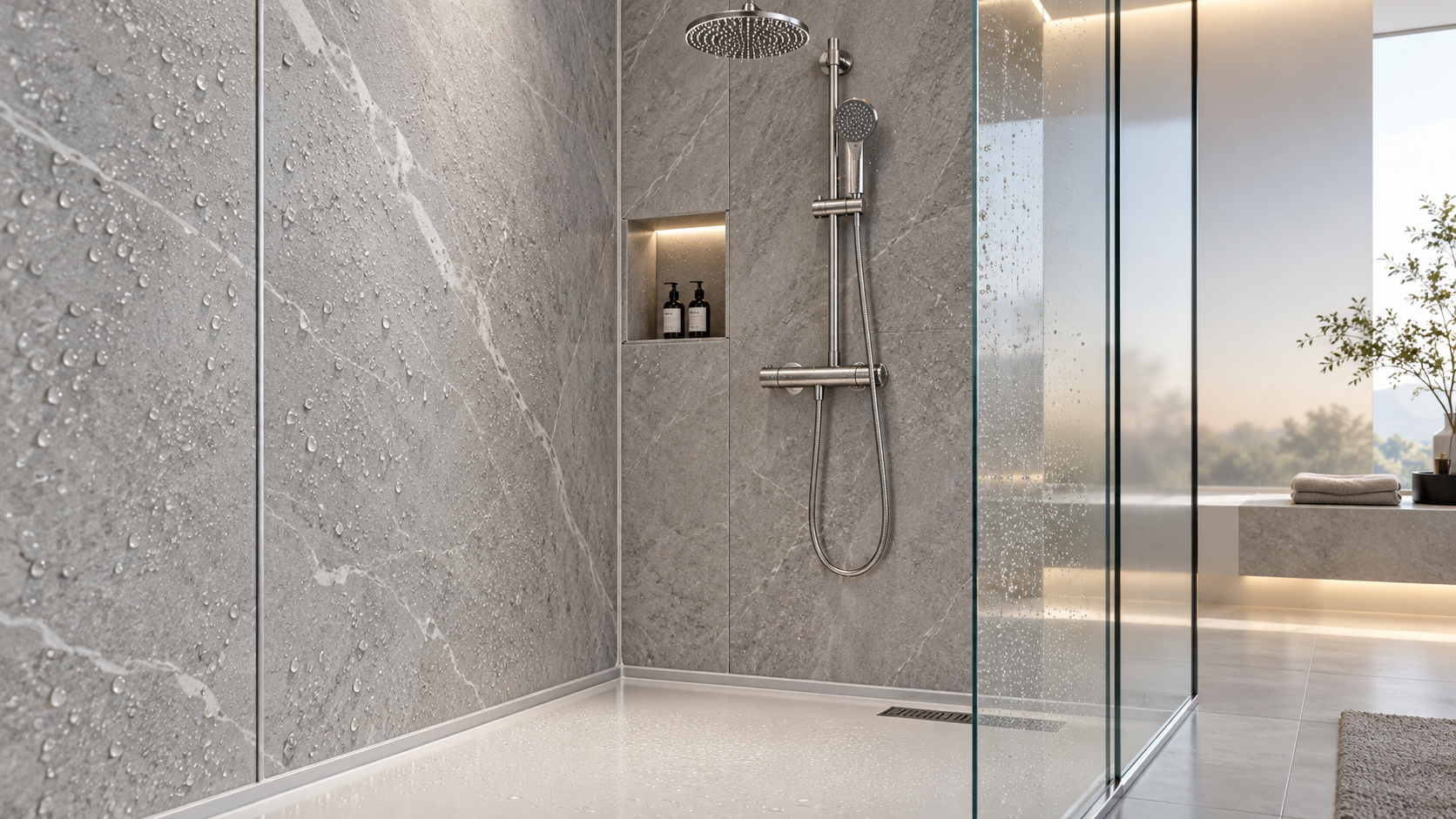
For wet areas, distinguish a water-resistant surface from a waterproof wall assembly. Joints, penetrations, adhesive compatibility, and moisture behind the finish still need consideration. For exterior installations, confirm suitability for ultraviolet exposure, temperature movement, wind loads, and any relevant freeze-thaw conditions. Interior suitability does not establish exterior suitability.
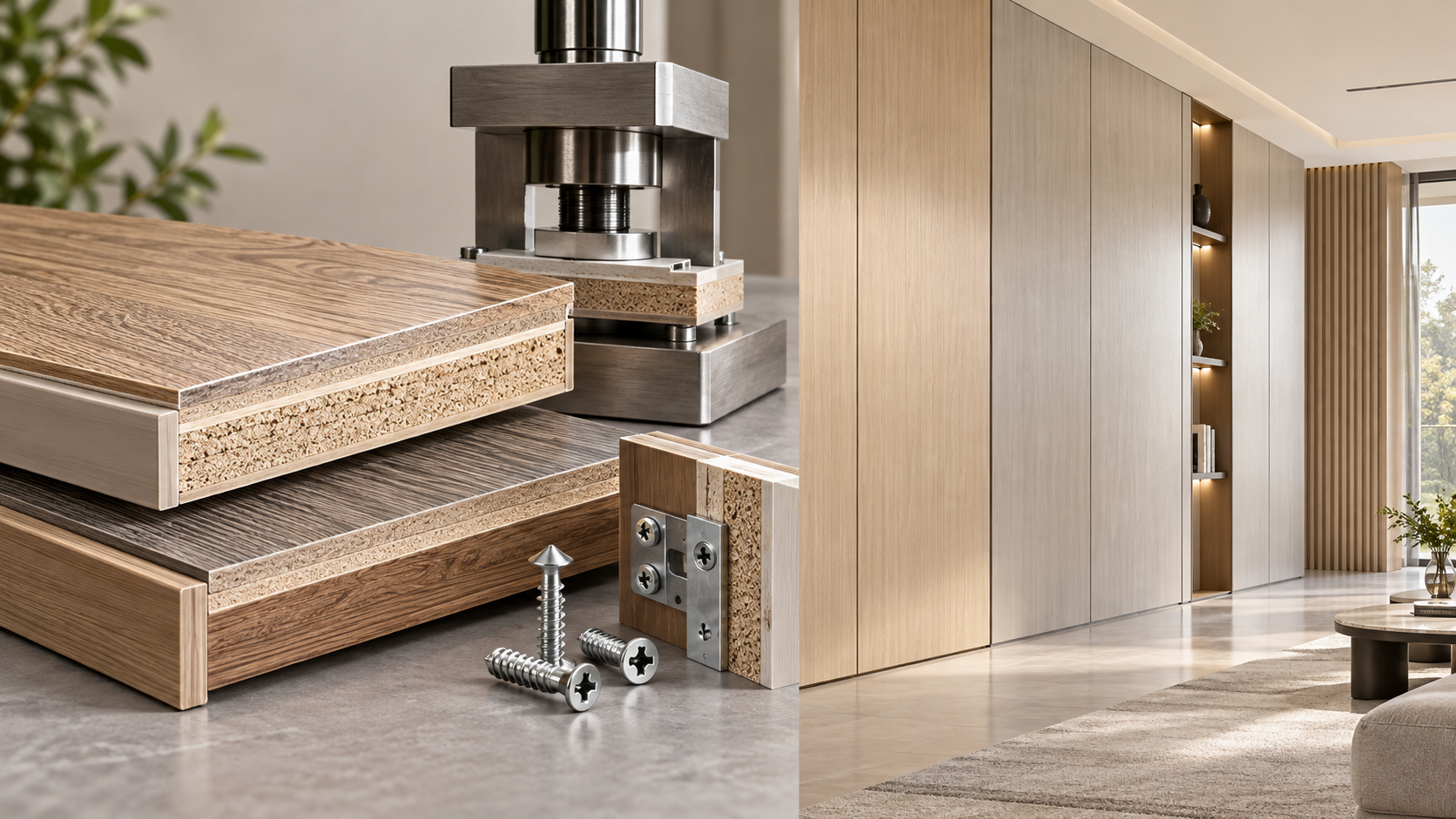
Shenyang Shengshi Meilin Technology Co., Ltd., based in Shenyang, Liaoning, focuses on new-material research and application, with a business scope spanning materials, fireproof sealing materials, furniture, and home furnishings. That scope makes compatibility between finishes and associated materials a relevant discussion. Its stated emphasis on innovation, quality, service, and environmentally friendly solutions should still be supported by product-specific documentation when evaluating a proposed system.
Maintenance and replacement belong in the decision
Neither option is automatically maintenance-free. Some natural stones require sealing or are sensitive to particular cleaners; requirements depend on stone type, finish, and exposure. Engineered panels may have restrictions involving heat, abrasive cleaning, solvents, or impact. Obtain care instructions for the actual finish.
Repairability can matter more than routine cleaning. A damaged coated panel may need replacement rather than refinishing. Stone repair may be possible, but a matching replacement is not guaranteed. In either case, ask whether one section can be removed without damaging adjacent work and whether the fixing method allows practical access.
Retaining spare pieces from the original production batch can reduce future matching problems. The quantity should reflect the layout, likely damage locations, storage conditions, and replacement lead time. Include that stock in the initial budget rather than discovering its cost after installation.
Which option offers better value for your project?
Stone-look panels are strong candidates when the design prioritizes a stone-inspired appearance, manageable weight, and straightforward interior installation. Their cost advantage can narrow when extensive customization, demanding corner details, special support, or high minimum orders are involved. Real stone deserves consideration when material authenticity, surface depth, repair options, or a particular architectural specification justifies the installed cost.
Ask for comparable quotations based on the same drawings, finished area, performance requirements, and delivery scope. Approve the visual details and verify the proposed assembly before deciding. The cheaper choice is the one that delivers the required wall without hidden preparation costs, avoidable surplus, or a foreseeable replacement problem—not simply the one with the lowest material price.
RECOMMEND

Oct 15, 2026
Composite Decorative Panels: How Core and Bond Quality Affect Delamination
Composite Decorative Panels: Learn how core strength, bond quality, and moisture affect delamination—and what to check before buying for lasting performance.

Oct 15, 2026
Do Stone-Look Wall Panels Cost Less Than Real Stone Cladding?
What is the minimum order for custom decorative panels? Compare stone-look panels with real stone cladding, uncover installation costs, and find the best value for your project.
Oct 15, 2026
Can Decorative Wall Cladding Panels Be Used in Wet Areas?
Can decorative wall cladding panels be used in wet areas? Discover approved options, shower suitability, and sealing essentials to choose confidently and avoid costly moisture damage.
Oct 14, 2026
How Can You Verify Decorative and Structural Panel Performance?
How to verify if engineered panel systems meet both decorative and structural performance standards? Discover practical checks for durability, strength, fire safety, and emissions before you specify.