Do E0 Decorative Boards Offer Enough Textures for Luxury Clubs?
Do E0 Decorative Boards Offer Enough Textures for Luxury Clubs?
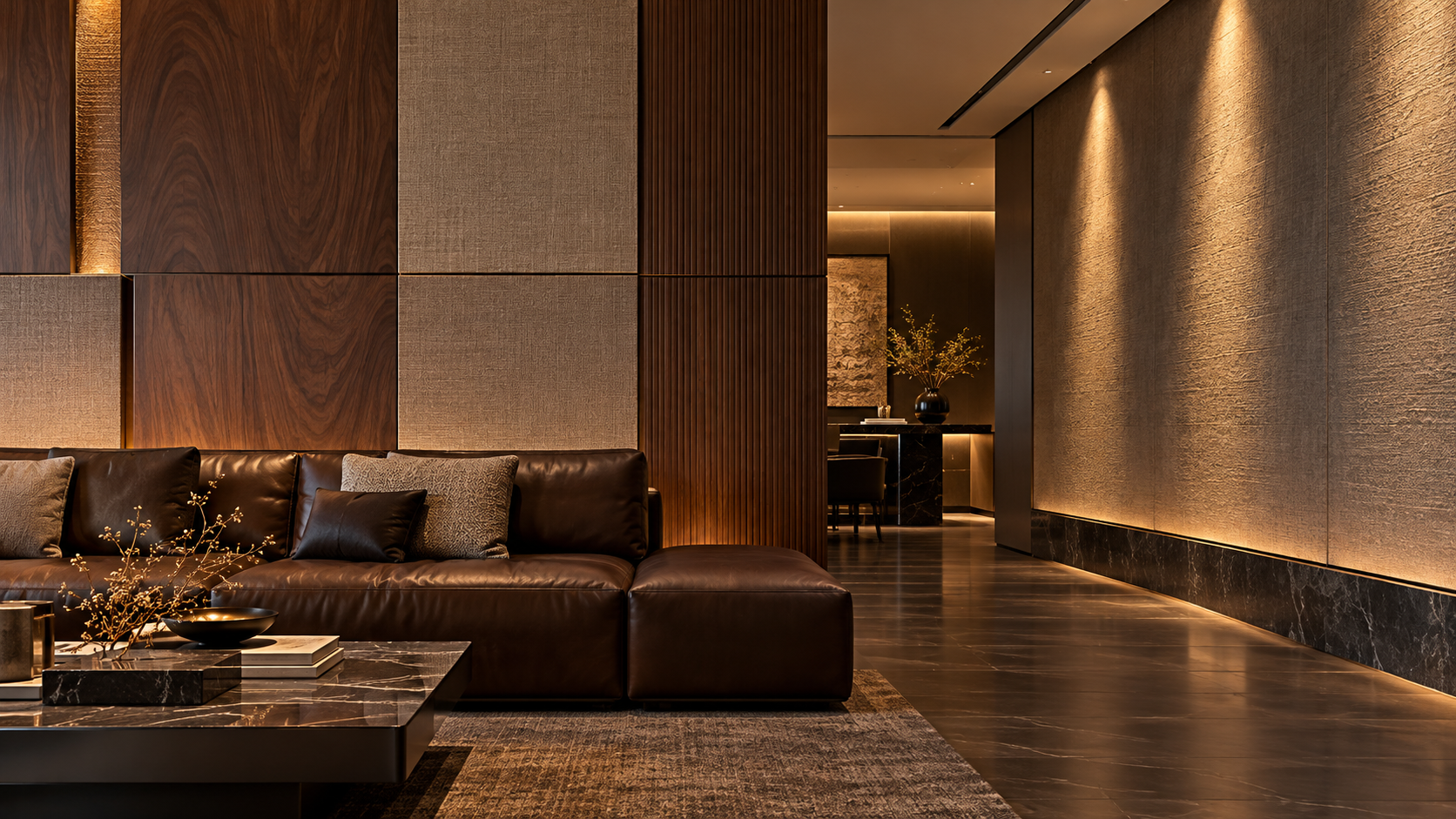
Do E0 decorative boards offer enough surface texture options for luxury clubs? For designers and club owners, the answer depends on more than visual variety: woodgrain realism, tactile depth, lighting response, and finish consistency all shape a premium interior. E0 refers to a formaldehyde-emission classification, not a texture range, so available finishes vary by manufacturer and product line.
A suitable collection can support anything from a restrained members’ lounge to an expressive entertainment venue. But a large finish catalogue is not proof that every option will work on a full-height wall, around a curved banquette, or beside a heavily used bar. The useful question is whether the available surfaces meet the club’s design brief without creating avoidable installation and maintenance problems.
Separate the emissions claim from the decorative surface
Decorative boards are layered products. The core might be MDF, particleboard, plywood, or another substrate, while the visible face may use resin-impregnated decorative paper, laminate, veneer, film, or a coated finish. That surface construction largely determines appearance and touch. The core and bonding system influence other characteristics, including emissions, machining behavior, and dimensional stability.
An E0 designation therefore does not tell you whether a board has convincing oak pores, a polished stone effect, or a brushed metallic texture. Nor should it be read as “formaldehyde-free.” Its meaning must be checked against the stated standard, test method, and product covered by the report. Emissions classifications and regulatory requirements are not interchangeable across markets.
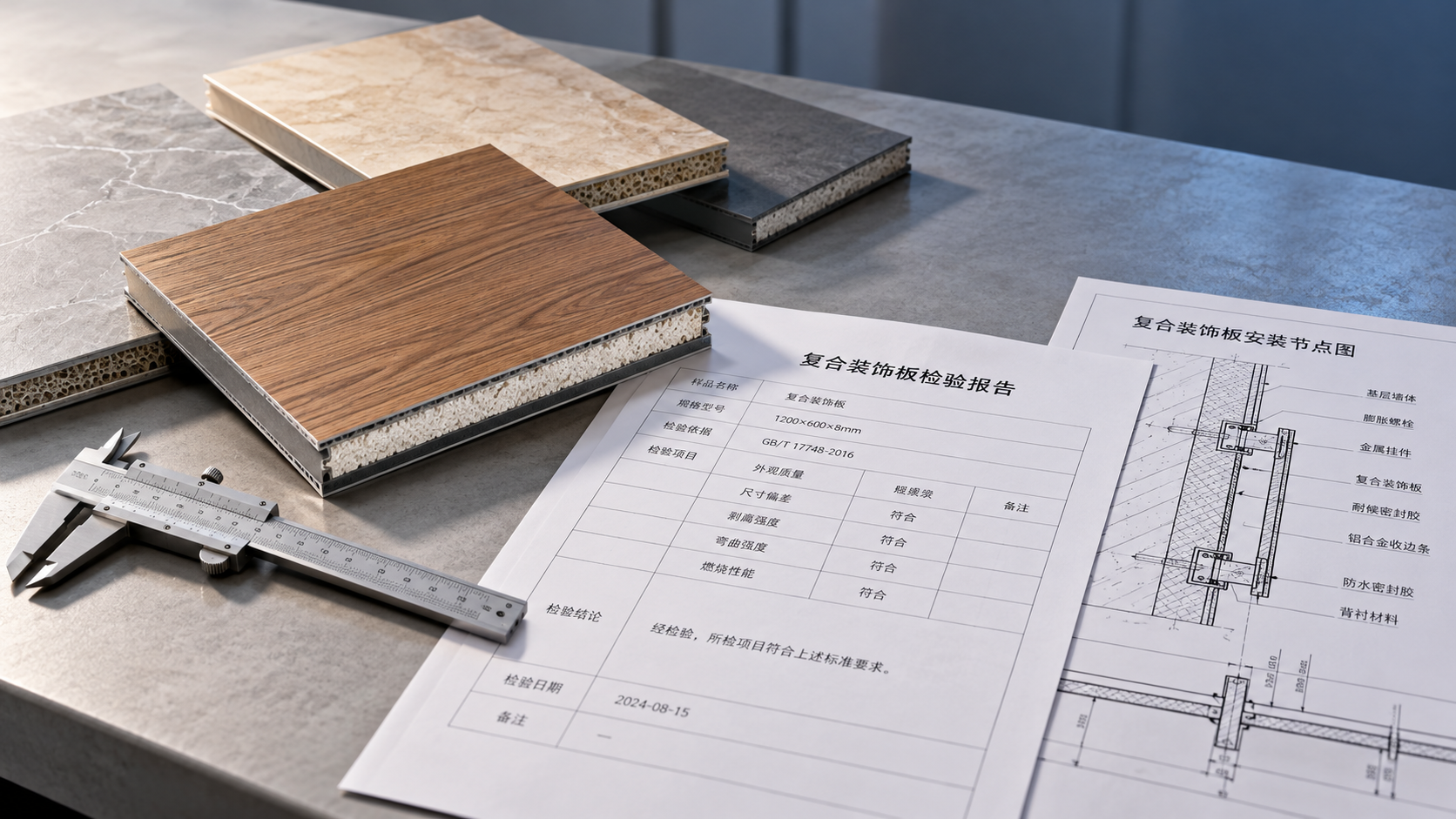
For specification purposes, ask whether the evidence applies to the raw substrate or the finished decorative board. Adhesives, backing layers, edge treatments, and installation materials also deserve attention. A low-emission core alone does not establish the indoor-air performance of a completed interior, which also depends on other materials and ventilation.
What makes a texture convincing in a luxury setting?
Luxury interiors expose weaknesses that are easy to miss in a sample folder. Guests sit close to wall panels, touch doors, and see surfaces under concentrated lighting. A pattern that looks attractive from across a showroom may feel flat or repetitive beside a lounge chair.
Woodgrain needs more than the right color
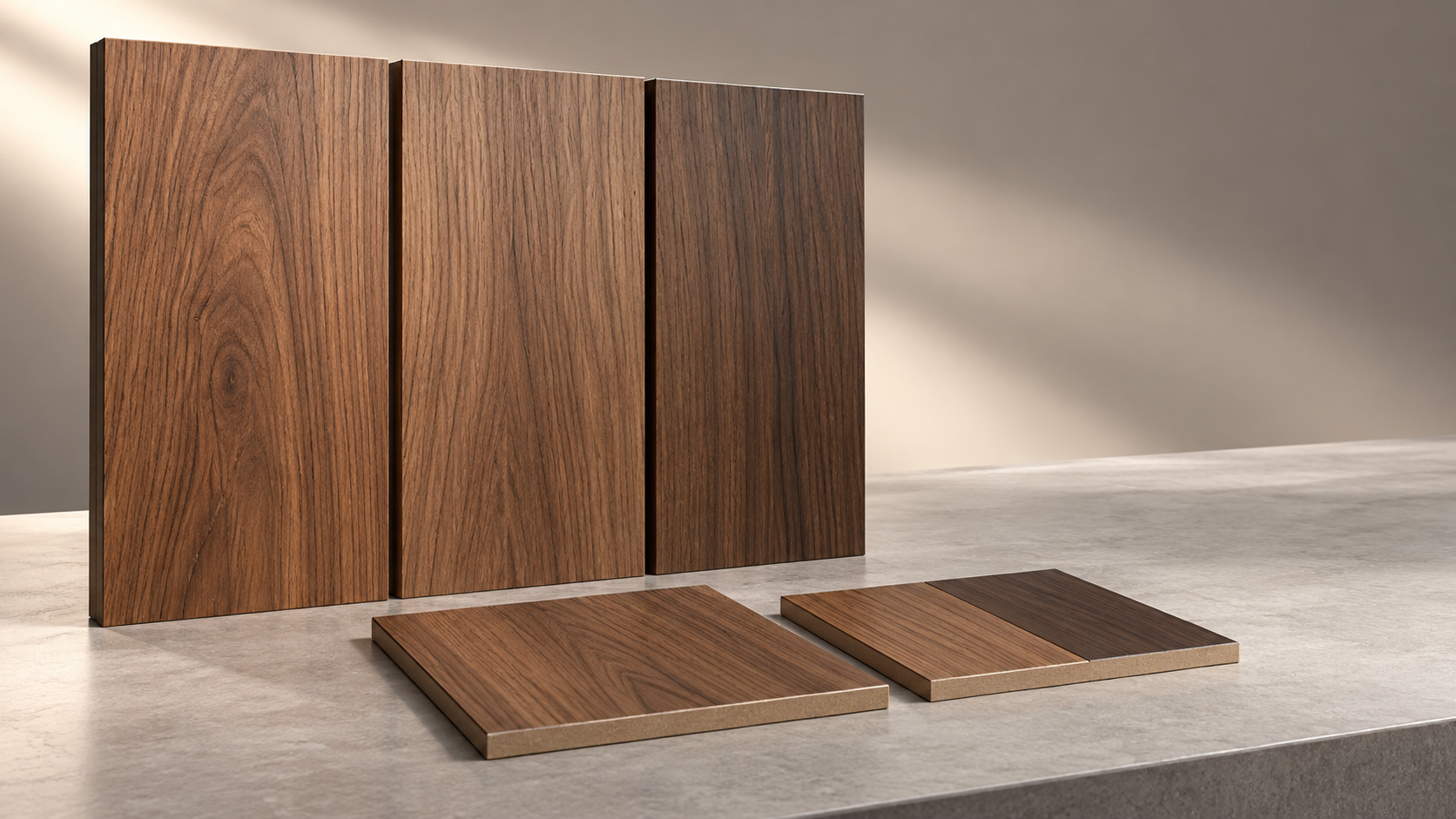
Timber effects can provide warmth without requiring solid wood throughout the project. When available, synchronized embossing aligns the tactile grain with the printed pattern, helping the surface read more naturally. Still, inspect the grain scale, pore detail, and repeat frequency. A dramatic knot repeated across neighboring panels can make a large installation look manufactured, regardless of how good one sample appears.
Grain direction also affects joinery. A board that works on a vertical wall may be awkward on long cabinet fronts if the required sheet orientation creates excessive waste or inconsistent patterns. Ask for a proposed panel layout before approving the finish.
Stone, textile, and metal effects have different limits
Stone-inspired surfaces can suit reception backdrops and feature walls, but visual continuity matters. Check whether adjacent sheets can be arranged convincingly; do not assume bookmatching or continuous veining is available. A decorative stone image also does not give a wood-based board the heat or moisture resistance of actual stone.
Linen-like, leather-inspired, and mineral textures offer quieter alternatives where an interior already contains expressive furniture or lighting. These are decorative effects, not substitutes for the physical properties of the materials they imitate. Likewise, a metallic-looking finish may be a printed or coated surface rather than a metal facing. That distinction affects cleaning, edge detailing, and acceptable wear.
Judge variety by the room, not the catalogue count
A club rarely benefits from using every available texture. More often, the challenge is finding a small family of surfaces that relate well: a principal wall finish, a quieter background, and an accent that adds contrast. Enough choice means enough compatible options for those roles—not simply hundreds of décor codes.
The same finish need not serve every zone. A reception wall is judged mainly for visual impact and detailing. A private lounge adds close-range touch and acoustic considerations. Circulation routes face luggage, cleaning equipment, and repeated contact. Around service areas, splash exposure and chemical cleaning may outweigh the appeal of a deeper texture.
- For large walls, prioritize controlled pattern repetition, consistent sheen, and a workable joint layout.
- For doors and cabinetry, check edge matching, machining quality, and compatibility with the proposed hardware.
- For touch-heavy surfaces, evaluate fingerprints, abrasion resistance, and cleaning rather than relying on a “premium matte” description.
- For curved elements, confirm the approved forming method and radius; a finish available on flat panels may not suit curved construction.
There is also a sensible boundary to the material. Decorative boards may work well on dry vertical surfaces while another material is more appropriate for a wet bar top or a hot service counter. A coordinated interior does not require a single product everywhere.
Lighting can change the decision
Clubs often combine warm ambient lighting, spotlights, concealed linear lighting, and daylight near entrances. These conditions can make the same board appear noticeably different. Deep embossing may create attractive shadows under one arrangement but look uneven under another. Glossy surfaces can reflect fittings or reveal minor installation irregularities.
Review samples under the proposed luminaires, including dimmed settings where relevant. Place them vertically if they will become wall panels, and inspect them from seated as well as standing positions. Viewing a sample flat on a desk misses much of what guests will actually see.
For prominent areas, a mock-up should include a joint, an outside corner, an exposed edge treatment, and the intended lighting direction. A larger sample is useful; an assembled detail is better. It reveals whether the surface still looks convincing once it becomes part of the architecture.
The texture must survive the cleaning routine
Deep texture is not automatically more luxurious in use. Grooves can retain dust or residues, while some dark, low-sheen finishes show skin oils despite appearing discreet when untouched. Conversely, a smoother surface may clean easily but expose fine scratches under grazing light.
Ask for the manufacturer’s cleaning instructions and relevant surface-performance information. Scratch, abrasion, stain, and chemical resistance describe different behaviors; one claim does not establish the others. Where test results are supplied, check the method and whether the tested construction matches the proposed product.
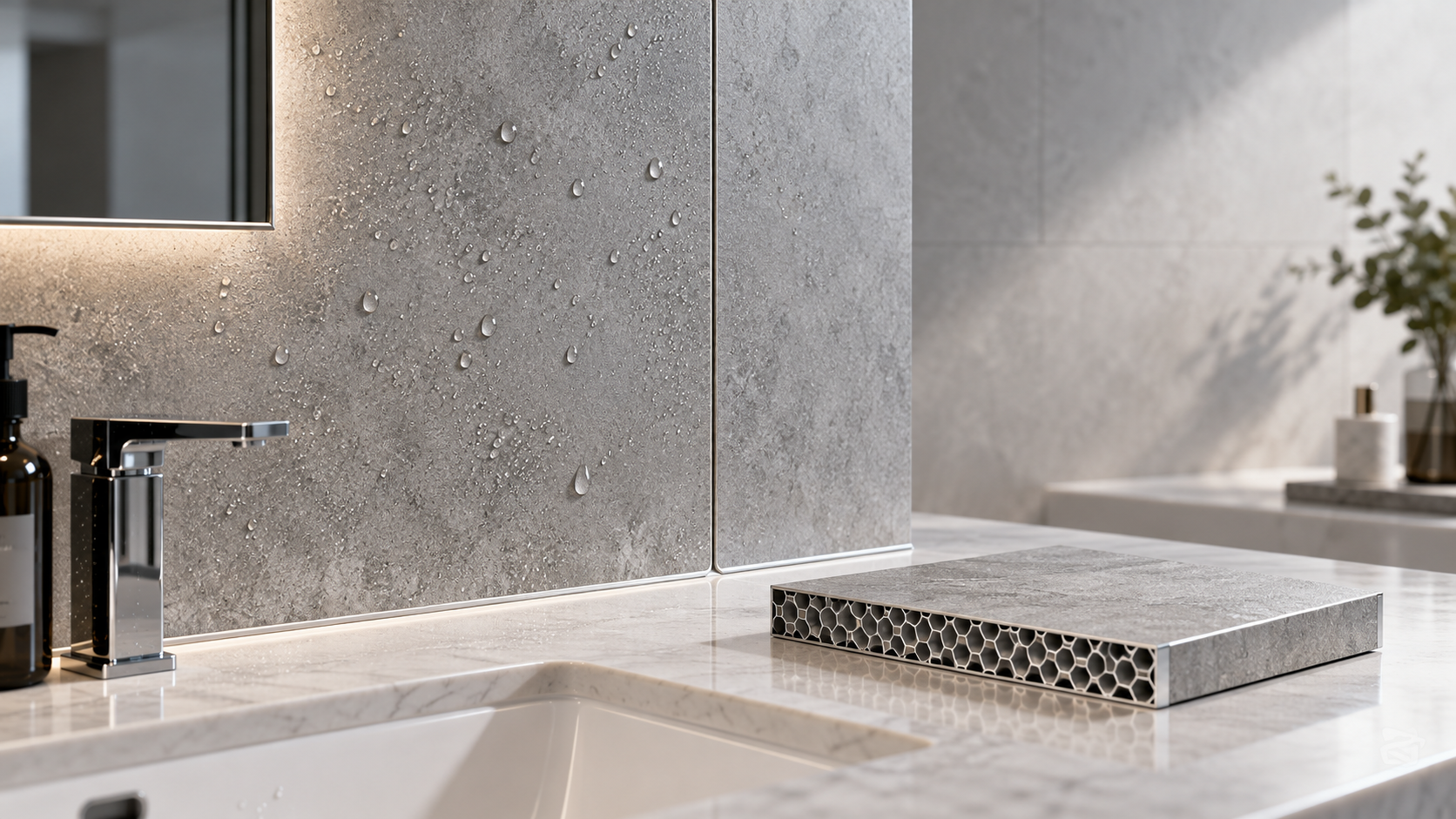
A practical assessment uses sample offcuts and the venue’s intended cleaning products, following the supplier’s guidance. Check for changes in color, sheen, or surface feel after cleaning. Pay particular attention to panel edges and joints near drinks service. Moisture-resistant substrates, where specified, should not be treated as waterproof, and face protection does not compensate for poorly detailed edges.
Check fire performance independently of E0
Low formaldehyde emissions and fire performance are separate requirements. An E0 claim does not establish flame spread, smoke behavior, or suitability for an escape route. Applicable requirements depend on the jurisdiction, building use, installation location, and specified construction.
For wall linings and other regulated applications, have the relevant project professional review the fire documentation against the intended assembly. Substrate, thickness, surface layer, adhesive, backing, air gap, and fixing method can affect whether evidence is applicable. A report for a different board configuration should not be accepted merely because the decorative face looks identical.
The same care applies to acoustic detailing. A textured board is not necessarily sound-absorbing. Perforated or slotted panels with acoustic backing require their own design review and performance evidence; the appearance of texture alone says little about reverberation control.
A finish is only useful if it can be delivered consistently
Before design approval, establish which finishes are stocked and which require a special production run. Confirm sheet sizes, thicknesses, minimum quantities, edge-band availability, and lead times. A compelling sample can become a poor project choice if its matching edging is unavailable or its format creates difficult seams.
Approve a physical control sample and clarify acceptable color and gloss variation. Where visual consistency is critical, discuss batch planning and inspect production material before fabrication. Retaining labeled spare panels and matching edging can make later repairs easier, although future batches may still differ.
Shenyang Shengshi Meilin Technology Co., Ltd., based in Shenyang, Liaoning, focuses on new-material research, development, and application, with a business spanning materials, fireproof sealing materials, furniture, and home furnishings. For a club project, that cross-category scope is relevant to discussions about interfaces between finishes and joinery. It does not replace product-specific verification: the selected board still needs its own samples, technical documents, and installation details.
Enough choice means a finish you can actually specify
E0 decorative boards can offer sufficient texture variety for many luxury club interiors, but the label itself provides no assurance of range or suitability. The stronger choice is a finish that looks right at full scale, feels convincing at close range, tolerates the intended maintenance, and comes with evidence appropriate to its application.
Shortlist a few coordinated surfaces, then request finished-board emissions documentation, relevant fire evidence, edge details, and production availability. Approve the critical surfaces under the actual lighting before committing to fabrication. If a finish cannot pass that review, adding more catalogue options will not solve the problem.
Next:No more content
RECOMMEND

Oct 28, 2026
Do E0 Decorative Boards Offer Enough Textures for Luxury Clubs?
Do E0 decorative boards offer enough surface texture options for luxury clubs? Explore finishes, lighting checks, and durability tips to choose a premium look with confidence.
Oct 28, 2026
How Do You Verify Composite Panel Fire Ratings for Public Spaces?
How to verify fire resistance rating of composite decorative panels for public spaces? Learn to authenticate test reports, match installed assemblies, and avoid costly compliance gaps.
Oct 27, 2026
Are Aluminum Honeycomb Panels Moisture-Resistant Enough for Bathrooms?
Explore aluminum honeycomb panel moisture resistance for bathrooms. Learn how finishes, sealed edges, and waterproofing help you choose suitable panels for walls, ceilings, and showers.
Oct 27, 2026
How Are Custom Veneer Panels Color-Matched for High-End Interiors?
Explore custom veneer panels color matching for high-end design. Discover how veneer selection, finishes, and lighting create cohesive, luxurious interiors.