5mm vs 8mm Wall Panel Thickness: Which Thickness Fits Your Project?
5mm vs 8mm Wall Panel Thickness: Which Thickness Fits Your Project?
Choosing between 5mm and 8mm wall panel thickness is not about which number is better — it is about what the wall has to do. Thickness changes three things: how flat a panel stays over an unsupported span, how it is handled and detailed at edges, and how much substrate the wall needs behind it. Here is how the decision actually breaks down, with the 5mm side backed by documented product data and the 8mm side framed as general engineering logic you should confirm against any supplier's test reports.
What thickness actually changes
The honest caveat on the right-hand column: "8mm-class" covers many different products (WPC, PVC composite, carbon-crystal boards) with different formulations. There is no universal 8mm specification — any claim about an 8mm panel should be verified against that exact product's test report, not against category averages.
Where a 5mm panel is the right call
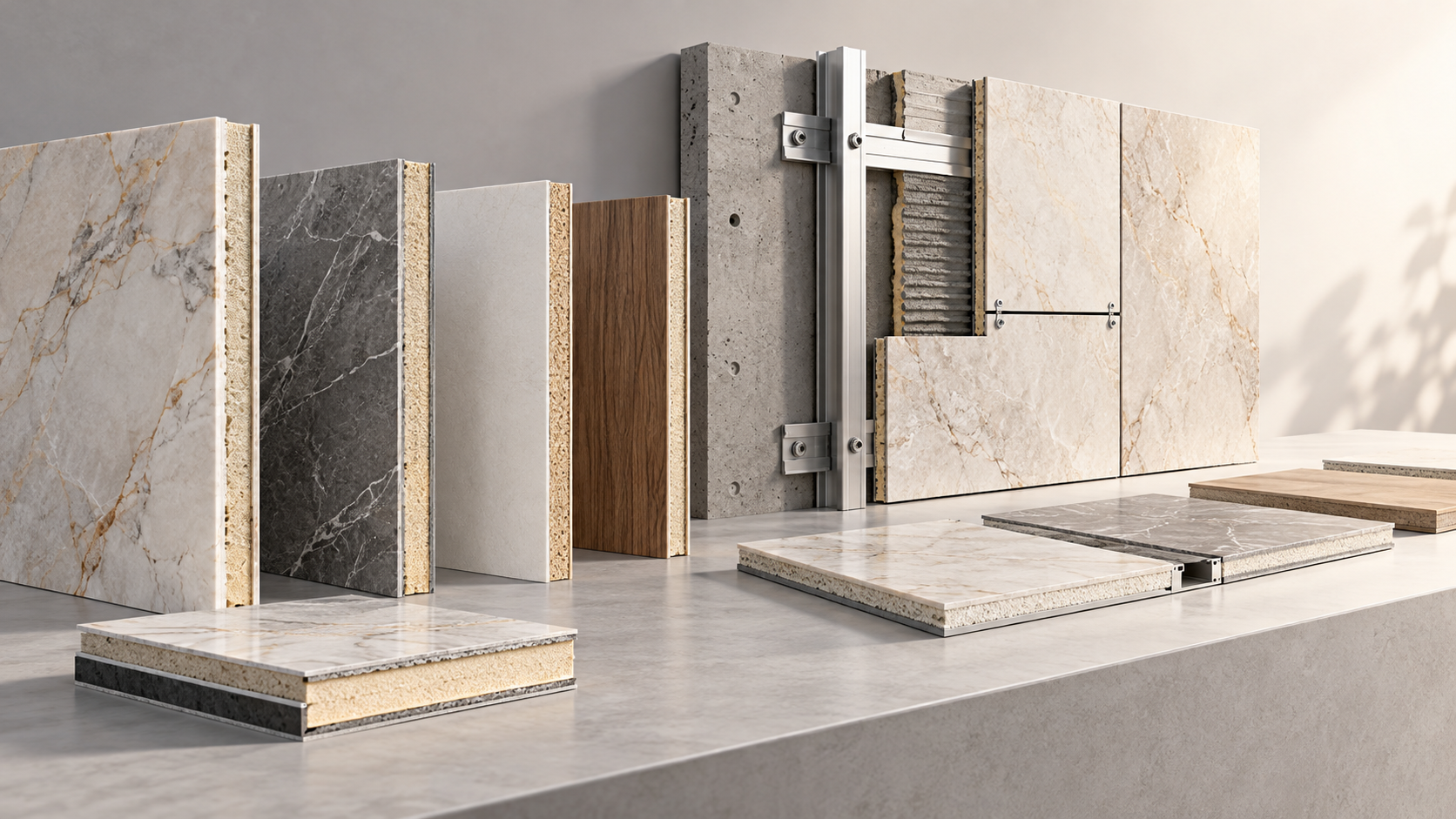
The documented 5mm class — for example, activated-carbon crystal decorative panels with E0 formaldehyde class, B1 fire rating, German PUR hot-melt lamination, and 1220 × 2440/3000 mm formats — covers most interior wall work:
- If the wall is a standard partition or prepared masonry wall: 5mm panels bond directly with adhesive (mechanical fasteners assisting at edges), which keeps the build-up thin.
- If the design needs seamless external corners: the grooved-back 90° fold works cleanly at this thickness, keeping the corner face unbroken.
- If the project is phased or repairable stock matters: lighter panels are easier to ship as replacements years later — which matters more than it sounds in brand-rollout projects.
- If fire and formaldehyde documentation is the constraint: the 5mm decorative class commonly carries E0/B1 test reports; verify the report matches the exact film and substrate you order.
Where a thicker panel earns its place
- If the run is long and uninterrupted — a full-height corridor elevation with no trim breaks — a stiffer panel reduces the risk of visible waviness, provided the wall behind it is flat. Thickness does not fix an uneven substrate; it only postpones the reveal.
- If the profile is fluted or slatted: grooved decorative profiles generally need more material to hold their geometry; that is a profile decision, not a quality ranking.
- If the surface takes impact — service corridors, back-of-house walls — check the specific product's impact data rather than assuming thickness equals toughness. Formulation matters as much as millimeters.
The decision, conditionally
- If the wall is standard height, standard framing, and the design values thin build-up and seamless corners → 5mm class, documented E0/B1.
- If the elevation is unusually wide or the profile demands stiffness → ask for the specific product's flatness and fixing data before choosing 8mm — do not choose by number alone.
- If the substrate is doubtful → fix the substrate first. No thickness rescues a wall that is out of plane or carrying moisture.
FAQ
Q: Is a thicker panel always higher quality?
A: No. Thickness is a fit-for-purpose parameter, not a grade. A 5mm panel with documented E0/B1 performance can be the better product for a partition wall than a heavier panel without current test reports.
Q: Does thickness affect the fire or formaldehyde rating?
A: Ratings apply to the tested product as a whole. A different thickness in the same family may need its own test report — confirm the report covers the exact thickness you order.
Q: Can a 5mm panel cover an uneven wall?
A: Minor unevenness, yes, within the adhesive build-up's tolerance. Real waves in the substrate will read through the panel face. Prepare or level the wall first.
Q: Which thickness is cheaper?
A: Compare installed cost, not sheet price: thinner panels usually mean lower freight, more area per crate and faster handling, while stiffer panels can reduce preparation work on some walls. Get quotes for both against the same wall schedule.
Q: What should I ask a supplier before deciding thickness?
A: Three things: the flatness recommendation for the unsupported span you have; the fixing specification for your substrate; and the test reports (fire, formaldehyde) for the exact thickness and film combination.
Related on this site: MLJS9012 5mm panel specification · panel installation notes · stone-look vs natural stone case study.
Next:No more content
RECOMMEND

Nov 07, 2026
5mm vs 8mm Wall Panel Thickness: Which Thickness Fits Your Project?
Choosing between 5mm and 8mm wall panel thickness is not about which number is better — it is about what the wall has to do. Thickness changes three things: how flat a panel stays over an unsupported span, how it is handled and detailed at edges, and how much substrate the wall needs behind it. Here is how the decision actually breaks down, with the 5mm side backed by documented product data and the 8mm side framed as general engineering logic you should confirm against any supplier's test reports.
Nov 06, 2026
How Does a Custom Wall Panel Go from Drawings to Installation?
Explore the five stages of a custom wall panel project, from concept review and shop drawings to mock-up approval, production and installation. Learn where to check dimensions, finishes and details to avoid costly site changes.
Nov 06, 2026
Stone-Look Wall Panels vs Natural Marble in Hotels: A Specifier's Comparison
Where stone-look panels beat marble (load, lead time, batch consistency) and where they can't (non-combustible code, authenticity).
Nov 05, 2026
E0, E1, ENF and CARB: Formaldehyde Standards Panel Buyers Should Know
E1, E0, ENF, CARB and F4-star explained with actual limits — and why an "E0" claim without a standard number cannot be verified.