




How Is Magnesium Oxysulfate Honeycomb Tested for Fire?
How Is Magnesium Oxysulfate Honeycomb Tested for Fire?
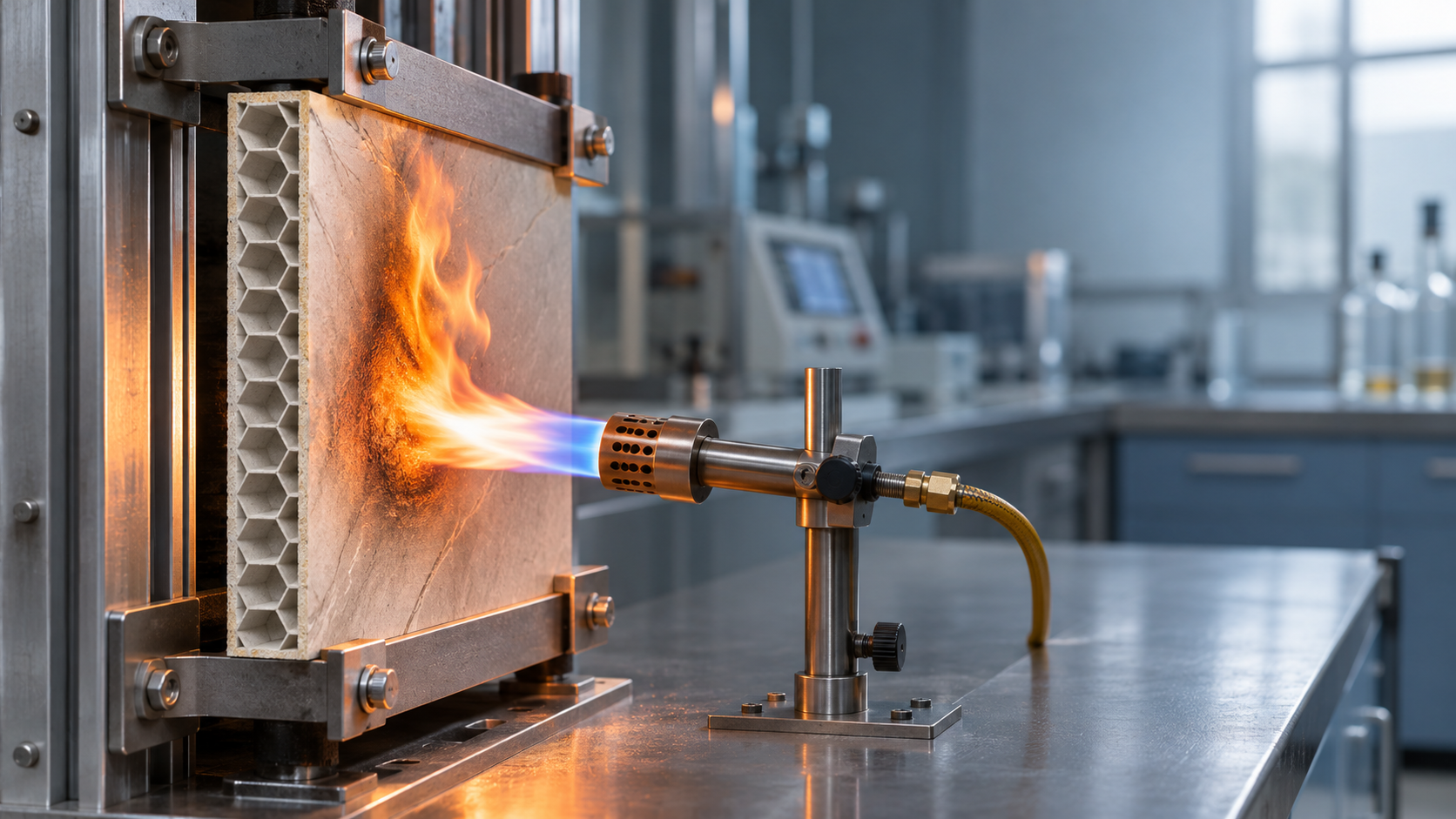
How can you tell whether a decorative panel will perform safely in a fire? A magnesium oxysulfate honeycomb fire test assesses how the material or finished panel responds to heat and flame under specified conditions. Depending on the application and relevant standard, testing may examine combustibility, flame spread, smoke production, or fire resistance. Understanding these methods helps architects, contractors, and material buyers interpret test reports and select products suited to their projects.
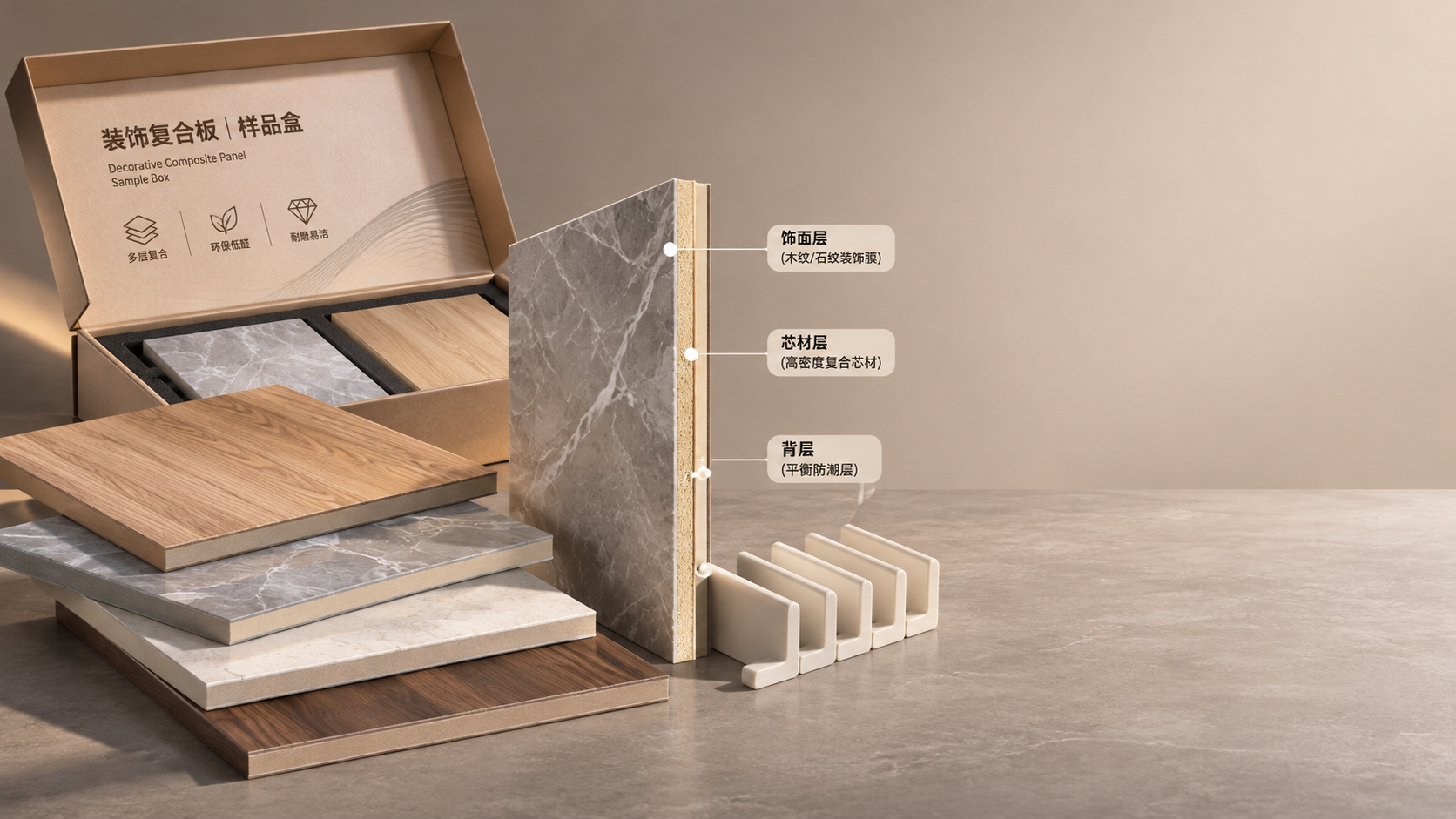
The distinction between the core and the finished panel matters from the start. A magnesium oxysulfate honeycomb core may be combined with metal facings, decorative films, coatings, adhesives, edge treatments, and joint systems. Each can affect the behavior of the finished assembly. A favorable result for one component is useful information, but it does not automatically establish how the installed product will perform.
What question is the fire test meant to answer?
“Fireproof” is often used as a general description, but it is not a precise test result. Before comparing reports, establish which performance question the project needs answered. The relevant test for a decorative wall finish may not be the same as the test for a partition required to resist fire for a specified period.
Reaction to fire describes how a material or product contributes to the development of a fire under a defined test scenario. Depending on the method, observations may include ignition, heat release, flame spread, smoke, or burning droplets. These results help assess surface and product behavior; they do not, by themselves, prove that a wall will contain a fire.
Fire resistance concerns the ability of a building element, such as a wall or partition, to perform specified functions during a standardized fire exposure. Relevant criteria can include integrity and insulation, and loadbearing capacity where applicable. A resistance result belongs to the tested construction and its permitted field of application—not simply to the core material inside it.
This difference is especially important when a buyer asks for a “one-hour panel.” A panel may form part of a tested one-hour assembly, but the supporting frame, joints, fixings, orientation, and other construction details must also be considered.
From sample preparation to a laboratory report
A meaningful test begins with a clear description of the intended use. Is the product a wall lining, a ceiling component, or part of a compartment wall? Will the decorative face be exposed to the room? Is it mounted directly to a substrate or over a cavity? These details help determine the applicable test route and how specimens should be prepared.
The laboratory then receives specimens representative of the product or assembly being evaluated. Depending on the method, preparation may include conditioning the samples, recording their construction, and mounting them on a specified substrate or frame. The specimen is exposed to the heat source described in the test standard, while the laboratory observes and measures the required performance characteristics.
For a honeycomb panel, the description should identify more than the core name. Facing material and thickness, core thickness, adhesive layers, decorative finishes, and the presence of joints can all be relevant. If the production panel differs from the submitted sample, the difference needs technical review rather than an assumption that the result still applies.
After testing, the report records the specimen, procedure, observations, and results within the limits of that method. A separate classification or listing may be needed for a particular market or application. A test report, a classification document, and a product certificate are not interchangeable: each answers a different question about evidence, interpretation, or ongoing control.
Common test routes and what they reveal
The correct standard depends on the destination market, the intended application, and the requirements set by the relevant authority or project specification. The following examples show why a single “fire test” cannot cover every concern.
Combustibility and contribution to fire
ISO 1182 and ISO 1716 are examples of methods used in assessing aspects of combustibility and potential heat release. EN 13501-1 provides a European reaction-to-fire classification framework that uses results from relevant test methods. Depending on the product and classification sought, other methods may also be required.
For a composite panel, the treatment of substantial and non-substantial components, as well as mounting and fixing rules, can affect the assessment. A mineral-based core does not remove the need to consider organic adhesives or surface finishes. Conversely, the presence of a particular component should not be used to predict a classification without the appropriate testing and assessment.
Surface burning, heat release, and smoke
EN 13823, commonly called the single burning item test, evaluates certain reaction-to-fire characteristics of construction products under its specified exposure conditions. In the United States, ASTM E84 is a method used to assess surface burning characteristics, including flame spread and smoke development indices, under the conditions of that test.
Neither method should be treated as a universal simulation of a real building fire. Results are influenced by specimen configuration and mounting. A panel tested with one facing, backing, or joint arrangement may behave differently when those details change. Smoke performance also deserves separate attention where occupants need time to find exits; a flame-spread result alone does not tell the whole story.
Fire resistance of an assembled wall
Where a partition or wall must provide fire resistance, a full assembly test may be relevant. Examples include EN 1364-1 for certain non-loadbearing walls and ASTM E119 for building construction and materials. The applicable standard, acceptance criteria, and required rating depend on the project and jurisdiction.
In this type of evaluation, the specimen is built as a wall rather than presented merely as a loose panel. The frame, panel orientation, joints, fasteners, perimeter details, and any insulation or sealant form part of the construction under assessment. The result cannot automatically be transferred to a different framing system or to openings and service penetrations that were not covered by the test or an applicable assessment.
Why decorative details can change the answer
A specification may identify a magnesium oxysulfate honeycomb core but leave the visible finish open for later selection. That can create a gap in the evidence. A different laminate, printed film, coating, or adhesive may alter the combustible content or the way the surface reacts to heat. Even a change made for appearance or cleaning performance should be checked against the tested construction.
Installation details deserve the same scrutiny. A cavity behind a lining can influence how fire and smoke move. Panel joints may expose edges or create paths through an assembly. Fixing spacing and support conditions can affect whether panels remain in place during heating. These are not reasons to reject a honeycomb panel; they are reasons to request evidence for the actual design rather than for an isolated material.
The same principle applies to fireproof sealing materials. A sealant used around a penetration or perimeter joint should be evaluated for that use within a suitable tested or assessed detail. A general claim that the sealant is fire resistant does not establish compatibility with every wall, gap size, or service.
How to read a report before approving a panel
Start with the complete document rather than a rating copied into a catalog. Check the issuing laboratory, test method and edition, report date, product identification, specimen construction, and stated results. Where accreditation is relevant, verify that the laboratory’s accreditation scope covered the method at the time of testing.
Then compare the report with the product that will actually be supplied. Useful questions include:
- Are the core, facings, finish, adhesives, and nominal thicknesses the same as those described in the report?
- Was the exposed face tested in the orientation proposed for the project?
- Does the mounting method reflect the intended substrate, cavity, supports, and joints?
- Is the stated result a test observation, a formal classification, or an assembly rating?
- Does the document state a field of application, and are the proposed changes within it?
- Can the supplier identify the production version represented by the submitted sample?
A report can be genuine and still be unsuitable for the decision at hand. For example, a core-only result may support an assessment of that core but say little about a decorative film added later. Likewise, a wall assembly result may not cover a ceiling installation. If the connection is unclear, ask the supplier and the relevant laboratory or qualified fire professional to clarify it in writing.
Plan the evidence before ordering
Fire documentation is easier to resolve before a finish and installation system are fixed. Share the intended building use, destination market, panel orientation, finish, substrate, and any required rating with the supplier early. Also identify who will review the evidence: the designer, code consultant, approving authority, or another party responsible for the project.
Shenyang Shengshi Meilin Technology Co., Ltd., based in Shenyang, works in new material technologies and offers products spanning construction materials, fireproof sealing materials, and furnishings. In discussions involving decorative materials and sealing details, the practical starting point is to establish exactly which product configuration and application need supporting documents, rather than relying on a broad fire-performance description.
Before approving a magnesium oxysulfate honeycomb panel, obtain the relevant test or classification documents, compare them with the proposed construction, and resolve any differences in writing. If the finish, joint, fixing, or intended use falls outside the available evidence, a project-specific assessment or additional testing may be necessary. That is a more dependable basis for selection than a rating stated without its test conditions.
Next:No more content
RECOMMEND

Nov 29, 2026
How Is Magnesium Oxysulfate Honeycomb Tested for Fire?
Magnesium oxysulfate honeycomb fire test methods explained: compare standards, interpret reports, and choose the right panel for your project.
Nov 28, 2026
How to Specify the Thickness of Custom Composite Panels
Explore PUR laminated panel durability and learn how to specify composite panel thickness for the right balance of strength, installation and cost.
Nov 27, 2026
How Long Does It Take to Get Decorative Panel Samples?
Custom composite panel thickness can affect sample delivery times. Discover what influences preparation and shipping, and plan ahead for project approval.
Nov 26, 2026
What Should a Custom Wall Panel Design Service Include?
Plan decorative panel sample lead time with confidence. Discover what a custom wall panel design service should include, from material selection to installation support.