




What Should a Custom Wall Panel Design Service Include?
A custom wall panel design service should take a project from the first brief through material selection, sampling, production planning, and installation support. An attractive pattern is only the starting point. Decorative panel sample lead time, finish consistency, fire performance, and design flexibility can determine whether a specification survives procurement and reaches the site on schedule.
For architects, contractors, distributors, and project owners, the service should produce clear decisions and usable documents at each stage. The following scope helps buyers assess what a supplier will deliver, where responsibilities sit, and which questions need answers before a panel design is approved.
Start with a project brief that exposes constraints
A useful consultation begins with the building and the installation conditions, not a catalogue of finishes. The supplier needs to understand the application, expected service life, procurement route, and approval process before recommending a panel construction.
Ask the design team and supplier to record the following in a shared brief:
- Application: Interior or exterior use, wall location, room function, expected traffic, and exposure to moisture, heat, sunlight, or cleaning chemicals.
- Design intent: Desired appearance, color range, texture, panel dimensions, joint layout, edge details, and acceptable variation between panels.
- Performance requirements: Applicable fire regulations, impact resistance, moisture behavior, acoustic needs, and any project-specific emissions or sustainability requirements.
- Site conditions: Substrate type, wall flatness, access restrictions, interfaces with doors and services, and whether the building is occupied during installation.
- Commercial boundaries: Budget basis, estimated quantities, delivery location, required installation date, and the people authorized to approve samples and drawings.
These details affect one another. A deep texture may suit a feature wall but complicate cleaning in a high-contact corridor. A large panel may reduce visible joints while increasing handling difficulty, transport risk, and waste around openings. A design service should explain such trade-offs before the buyer commits to a finish.
Define the panel system, not just the surface
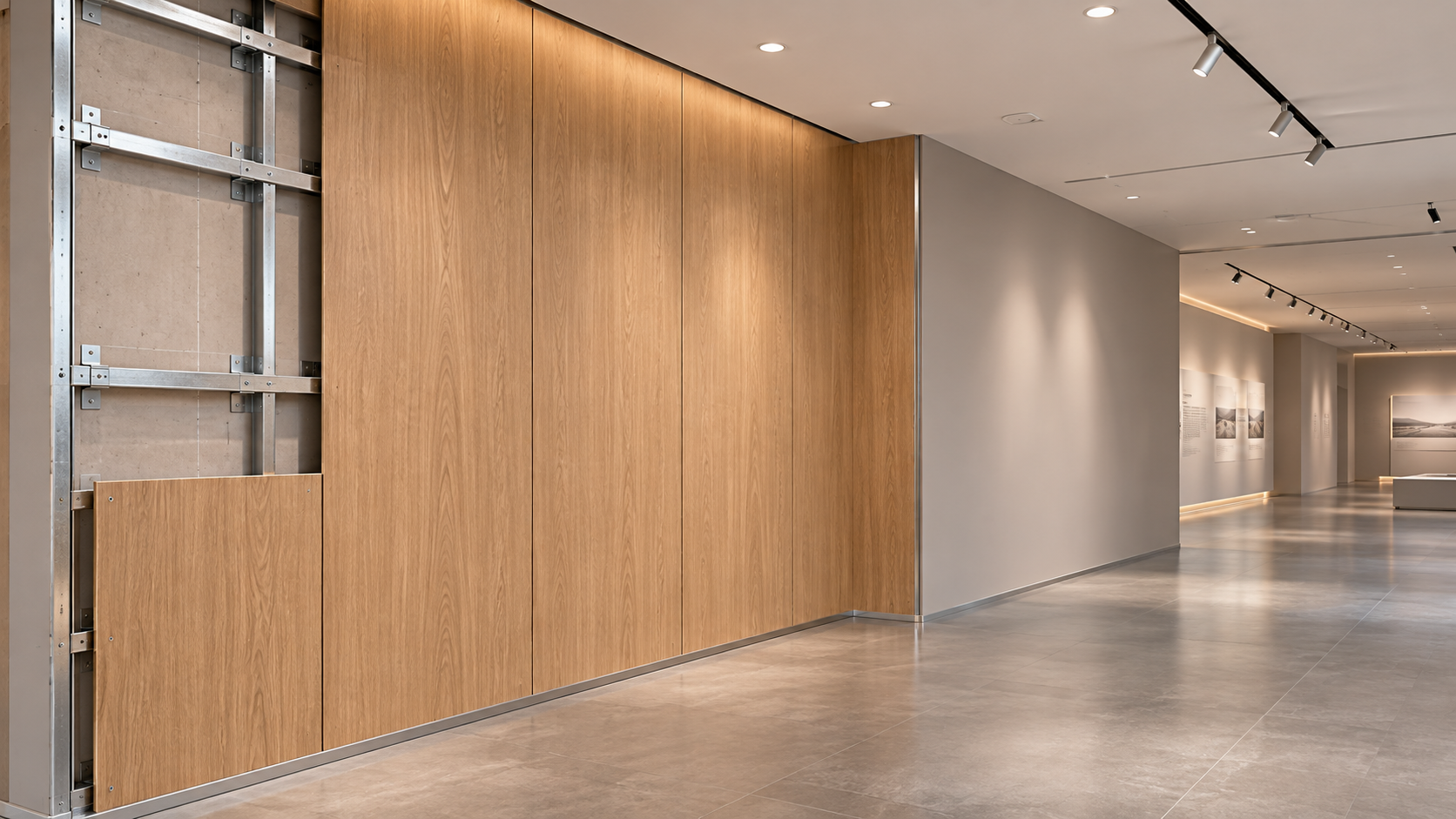
A wall panel is an assembly: decorative face, substrate or core, edge treatment, adhesive or coating, and fixing method can all affect performance. The service should identify the proposed materials and explain which options can be customized without compromising the required application.
Request a written specification for each proposed option. It should describe the panel build-up, nominal dimensions, finish, edge treatment, and fixing assumptions. Where a design is still being developed, mark unconfirmed items clearly so that a preliminary concept is not mistaken for an approved production specification.
Check fire performance against the actual application
Fire requirements vary by jurisdiction, building type, wall location, and the authority responsible for approval. A supplier’s description such as “fireproof” or “fire resistant” is not enough to establish compliance. Ask which test method and classification apply, and whether the evidence covers the proposed panel build-up and installation arrangement.
Provide the relevant reports to the project’s fire consultant or other responsible professional for review. Changes to the core, coating, adhesive, substrate, or fixing arrangement may affect whether existing evidence is applicable. The design service should flag those changes rather than assume a previous approval transfers automatically.
Set decorative panel sample lead time around approvals
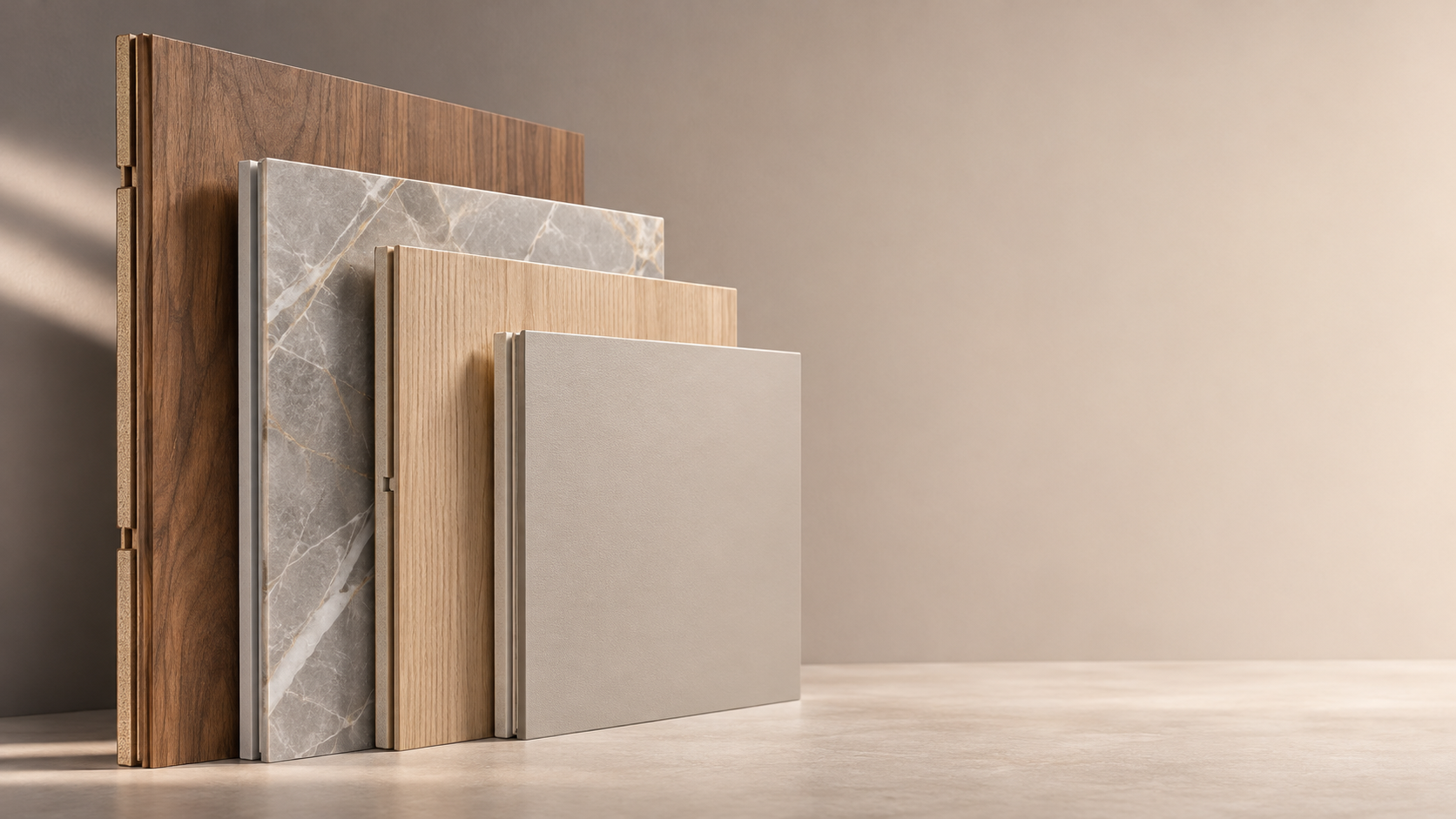
Sampling should answer a specific question: Does the proposed panel meet the project’s visual, dimensional, and performance expectations? A service may offer a small finish swatch, a larger production-representative sample, or a mock-up showing joints and fixing details. These are different deliverables and can require different preparation.
When discussing decorative panel sample lead time, ask the supplier to define when the clock starts, what is included, and which dependencies could change the date. A quoted preparation period may exclude design revisions, material availability, shipping, customs clearance, or the buyer’s review time.
- Confirm the sample brief. Record dimensions, core, finish, color reference, edge details, and the number of samples required.
- Agree on a dispatch date and delivery route. Separate sample preparation from transit, and identify who handles freight and import requirements.
- Set review criteria. Decide who will assess appearance, dimensions, surface quality, and compatibility with adjacent materials.
- Allow for revision. If color, texture, or construction changes, obtain a revised schedule before requesting another sample.
- Retain an approved reference. Label and store the signed-off sample under agreed conditions for comparison with production material.
Review decorative finishes under the lighting and viewing conditions expected on site where practical. A small swatch can establish direction, but it may not reveal pattern repeat, sheen variation, edge quality, or the visual effect of a full-height joint. For a prominent feature wall, a larger mock-up can expose problems before production.
Do not assume a visual sample proves the performance of the finished assembly. If fire, moisture, impact, or emissions requirements apply, ask for relevant evidence separately. Also agree on permissible variation: natural-looking textures and printed patterns may have intentional differences that a single sample cannot fully represent.
Turn the approved design into production-ready information
Once the concept is accepted, the service should translate it into documents that purchasing, production, and site teams can use. The level of detail depends on the project, but responsibility for each document should be explicit.
- Panel schedule: Panel types, dimensions, quantities, locations, finishes, and identification marks.
- Layout and details: Joint positions, orientation, corner treatments, perimeter clearances, and interfaces with doors, outlets, and other building elements.
- Manufacturing information: Approved material build-up, dimensional tolerances, finish references, machining requirements, and packaging instructions.
- Approval record: Drawing revisions, approved samples, outstanding exceptions, and the date after which changes may affect cost or delivery.
Site measurements deserve particular attention. A supplier can design from architectural drawings, but actual wall dimensions and conditions may differ. Agree on who measures the site, who checks the resulting drawings, and whether panels will be fabricated to final dimensions or trimmed during installation.
Late changes can be expensive even when the visible change seems minor. Moving a joint may alter panel quantities, cutting patterns, and labeling. Changing a finish after sample approval may also require new material procurement or another review of performance evidence. A clear change-control process makes these consequences visible before work proceeds.
Compare total delivered cost and schedule risk
The lowest panel price does not necessarily produce the lowest project cost. Compare quotations on a consistent scope, including design revisions, tooling or setup where applicable, samples, packing, freight, duties, site handling, and installation materials. Identify whether taxes and delivery to the final site are included.
Waste should be assessed against the actual wall layout. Large formats may reduce the number of joints, but irregular rooms and numerous openings can increase offcuts. Ask whether the quotation includes spare panels for installation damage and future replacement, and how additional panels can be ordered later.
For scheduling, work backward from the required installation date. Include drawing approval, sample review, production, transit, receiving inspection, and any site preparation. A sample delivery date is not a production delivery commitment. Ask the supplier to identify the release point for production and the conditions that could move the schedule.
For multi-batch projects, discuss finish consistency and traceability before ordering. The agreement should state how batches will be identified, how panels will be packed and labeled by area, and what process applies if a delivered panel differs from the approved reference.
Expect practical installation and after-sales support
A design service should provide installation guidance suited to the proposed system. At a minimum, request substrate requirements, storage and handling instructions, recommended fixing materials, joint and perimeter details, and instructions for cutting or drilling. The installer should check these against site conditions and the project specification.
Clarify how the system accommodates building movement, moisture exposure, and access to concealed services where relevant. If adhesive fixing is proposed, ask about substrate compatibility and preparation. If panels may need replacement, ask whether individual units can be removed without damaging adjacent finishes.
After installation, the buyer should have cleaning and maintenance instructions, finish identification, and a route for reporting defects. Review the warranty for its duration, exclusions, claim process, and the division of responsibility between manufacturer, installer, and other parties. A warranty is most useful when its conditions match the actual application and installation method.
Questions to resolve before appointing a service
Use the final supplier discussion to close the gaps between design intent and delivery. Request the proposed scope in writing and compare it with the project brief.
- Who owns the design, drawing approval, site measurement, and final installation checks?
- What exactly is included in the sample, and what decorative panel sample lead time applies from receipt of a complete brief to dispatch?
- Which documents support the specified fire and other performance requirements for the proposed assembly?
- What variations in color, texture, dimensions, and finish are acceptable, and how will disputes be assessed?
- What are the production release date, delivery assumptions, payment terms, and consequences of changes after approval?
- What installation guidance, spare material, maintenance information, and warranty support will be supplied?
A strong service makes those answers traceable from the initial brief to the finished wall. Before placing an order, align the approved sample, written specification, drawings, quotation, and delivery schedule. That alignment gives each party a common reference when the design moves from the studio to the production line and then to site.
Next:No more content
RECOMMEND

Nov 26, 2026
What Should a Custom Wall Panel Design Service Include?
Plan decorative panel sample lead time with confidence. Discover what a custom wall panel design service should include, from material selection to installation support.
Nov 25, 2026
How to Choose Moisture-Resistant Wall Panels for a Spa
Explore how a custom wall panel design service can help you choose moisture-resistant spa panels for wet zones, easy cleaning, and a polished finish.
Nov 24, 2026
How to Choose Wall Panel Finishes for a Jewelry Store
Explore moisture resistant spa wall panels and other jewelry store finishes. Compare lighting, durability, and care to create a display that shines.
Nov 23, 2026
What Affects the Cost of Exhibition Hall Wall Panels?
Jewelry store wall panel finishes can elevate exhibition halls. Discover how materials, installation, and safety requirements affect costs and plan a smarter budget.