




How to Specify the Thickness of Custom Composite Panels
Choosing the right thickness for custom composite panels is about more than appearance. It affects strength, weight, installation and long-term performance in decorative applications.
Factors such as panel dimensions, core material, surface finish and expected loads all deserve attention during specification. The best choice depends on the complete panel assembly.
For projects using polyurethane-reactive adhesives, understanding PUR laminated panel durability can also help buyers evaluate how the finished panel may perform in its intended environment.
This guide explains the key considerations for selecting a thickness that balances design requirements, functionality and cost.
What thickness should you specify first?
Start by defining how the panel will be used, how far it spans between supports and what loads it must carry. Then compare complete constructions.
A thicker panel may feel more substantial, but thickness alone does not guarantee stiffness, impact resistance or a durable bond. Core and facing materials matter too.
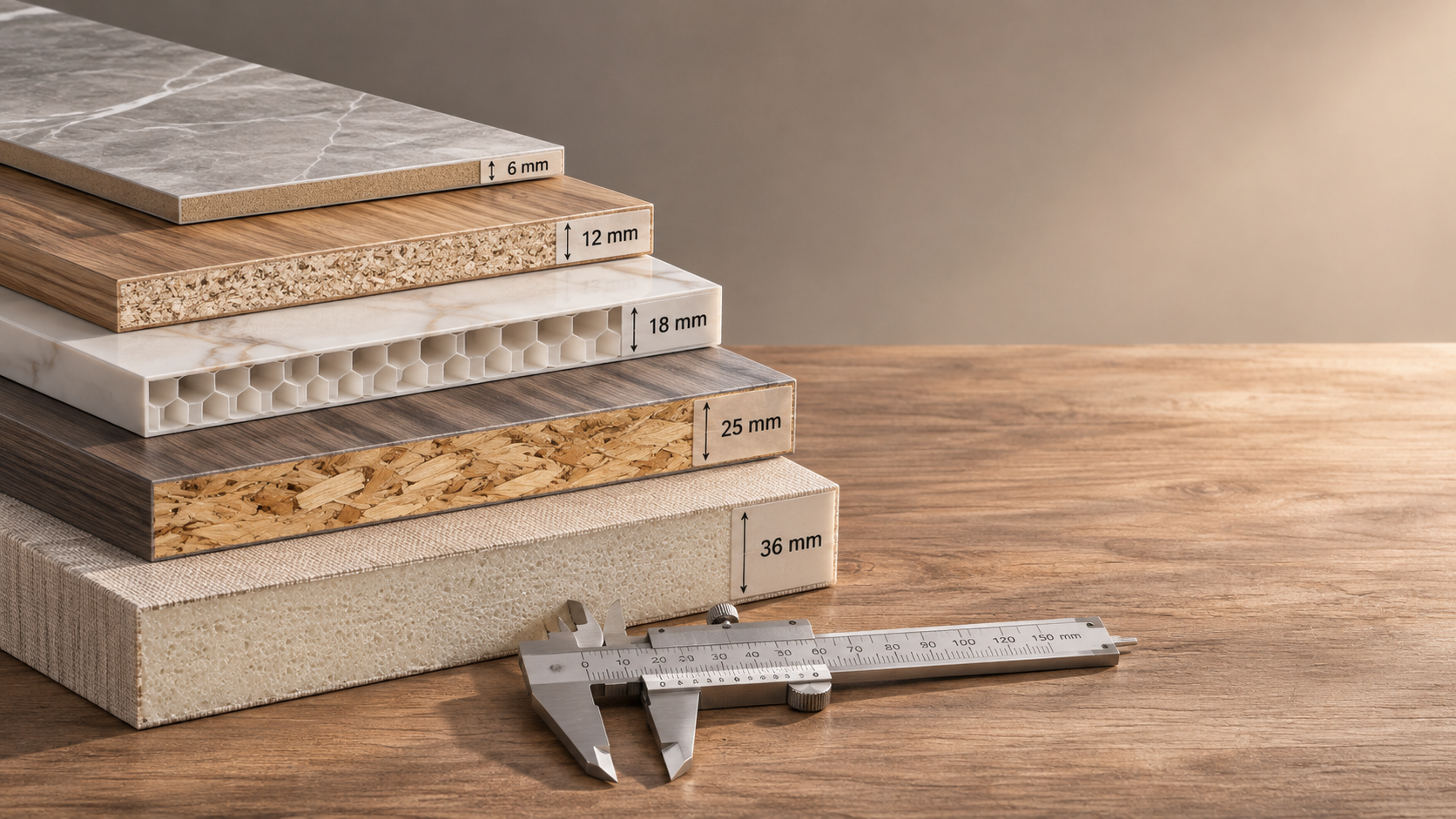
For initial discussions, buyers may compare nominal thicknesses such as 6, 12 and 18 mm. These are examples, not universal recommendations or guarantees of performance.
A 6 mm construction may suit a continuously supported decorative surface, while a larger, less supported door may need a thicker or structurally stronger assembly.
Ask suppliers to recommend a construction for your dimensions and application. Confirm the recommendation with representative samples, relevant testing and project-specific engineering where required.
Which dimensions and loads affect the decision?
Panel width and unsupported span often matter more than overall area. As the distance between supports increases, the panel is more likely to bend.
For a shelf, measure the clear distance between supports and estimate the maximum load, including whether it is distributed evenly or concentrated in one spot.
For a cabinet door, consider height, width, hinge locations and handling. A tall door may need additional stiffness or support to maintain alignment over time.
For wall cladding, identify whether panels will be bonded continuously, fixed to a substrate or attached to spaced framing. Each arrangement creates different support conditions.
Also consider temporary loads during delivery and installation. A panel that performs well after fixing may still be vulnerable to bending or edge damage beforehand.
Share drawings with the supplier rather than stating only the desired thickness. Include panel orientation, support spacing, openings, cutouts and any expected point loads.
How do core and surface materials change the required thickness?
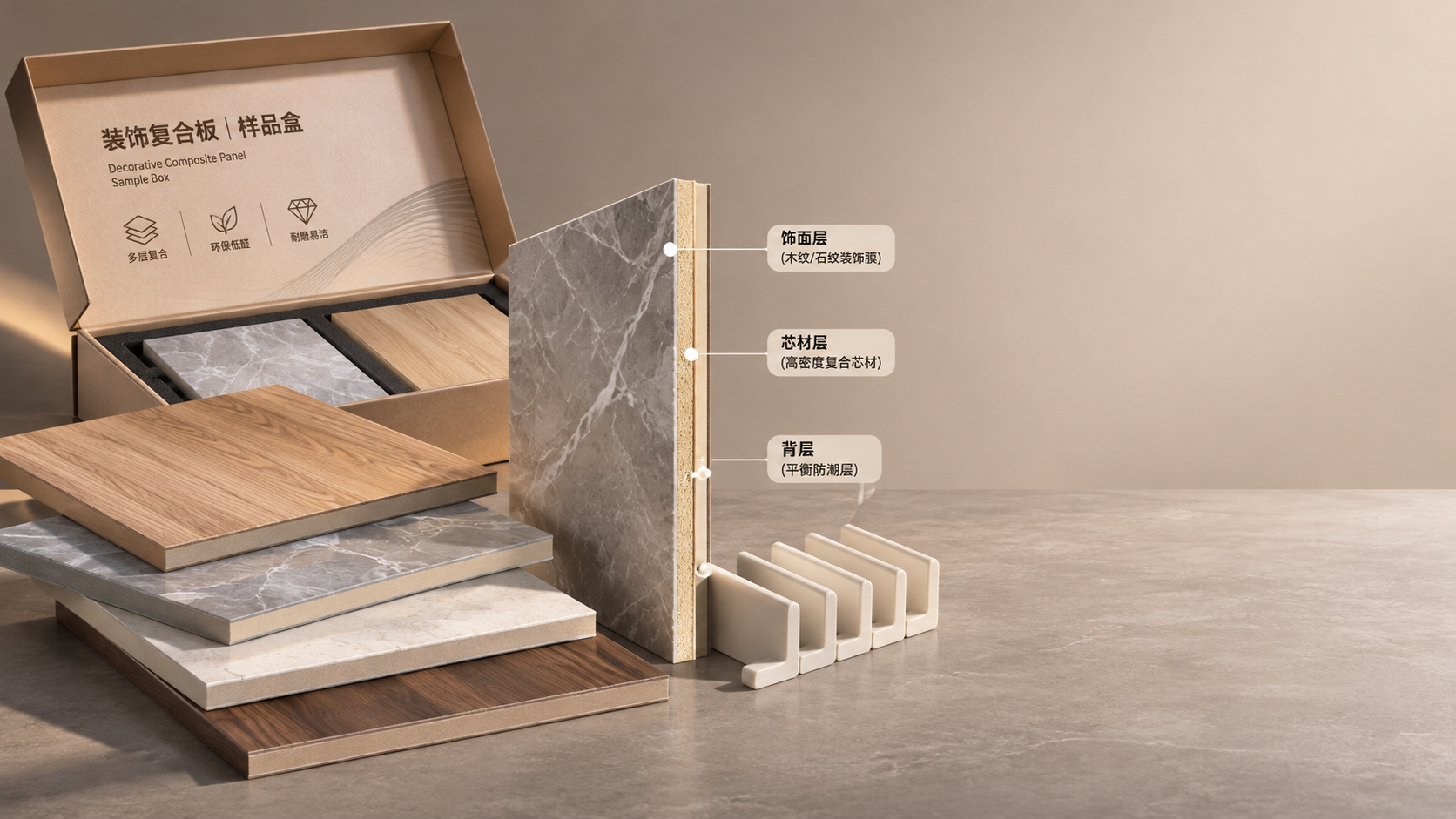
Composite panels combine materials that behave differently. Their stiffness and durability depend on the core, facing layers, adhesive bond and the way those components interact.
Particleboard and medium-density fiberboard are common furniture substrates, but their grades and properties vary. Check density, moisture suitability and screw-holding performance for the intended application.
Plywood can offer useful strength and fastener retention, although species, veneer quality and construction affect results. Confirm the grade and any appearance requirements before ordering.
Lightweight cores can reduce handling loads, but a thick lightweight panel may still need stronger edge reinforcement or inserts where hinges and fasteners are installed.
Surface materials also affect performance. Decorative laminates, veneers and coated sheets differ in thickness, scratch resistance and flexibility, as well as their compatibility with adhesives.
When comparing quotes, request the full layer build-up rather than a single thickness figure. Two panels with the same nominal thickness can perform very differently.
Specify whether the stated measurement includes both faces, decorative finishes and any backing layer. This prevents surprises when panels must fit grooves, frames or hardware.
Does a thicker panel always improve durability?
No. Added thickness can reduce deflection when the construction remains comparable, but it cannot compensate for an unsuitable core, poor bonding or inadequate edge protection.
A thicker door also weighs more, increasing demand on hinges, fixings and installers. That added weight can require hardware changes that offset any material benefit.
In some projects, closer support spacing, a stronger core or reinforced fixing points can improve performance more efficiently than increasing the entire panel's thickness.
Compare alternatives using measurable outcomes: acceptable deflection, impact resistance, weight, service conditions and installed cost. Request calculations or testing when the consequences of failure are significant.
What does PUR laminated panel durability depend on?
Polyurethane-reactive, or PUR, adhesives are used to bond selected panel layers. The cured bond can offer useful resistance to moisture and heat when properly specified.
However, PUR laminated panel durability is a property of the complete construction and manufacturing process, not a promise that every bonded panel suits every environment.
Surface preparation, adhesive compatibility, application conditions, pressure and curing all influence bond quality. Ask the manufacturer how the selected materials are qualified for production together.
Moisture can also enter through exposed edges, cutouts or damaged surfaces. A good face bond does not automatically protect a moisture-sensitive core from swelling.
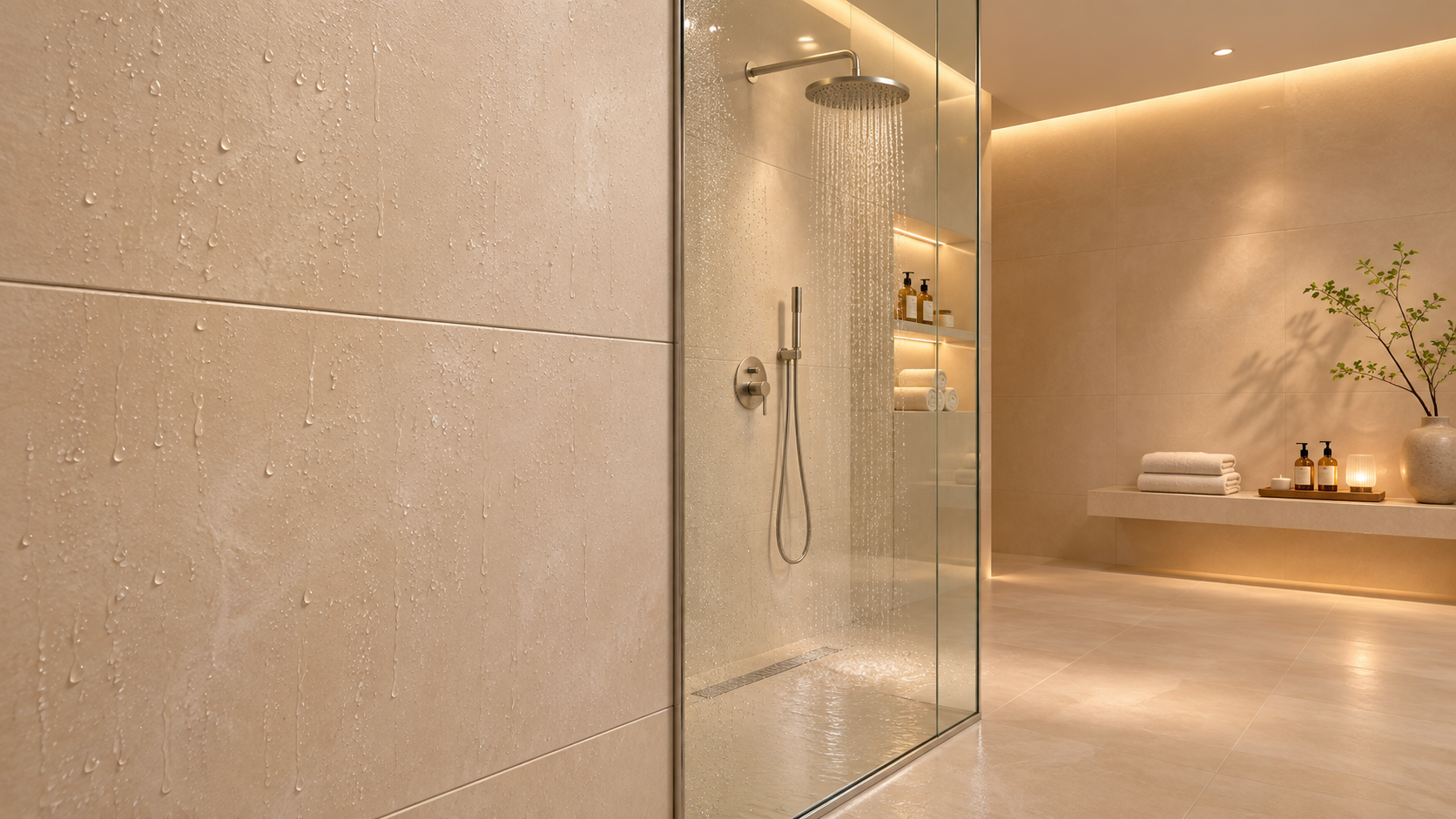
For humid interiors or areas subject to cleaning, specify the expected exposure, cleaning chemicals and edge treatment. Request suitable test evidence for the proposed assembly.
A PUR bond should not be assumed to make a panel waterproof, fire rated or suitable for outdoor exposure. Those claims require separate construction-specific evidence.
How should you account for moisture, heat and movement?
Start with the actual service environment: indoor or outdoor location, humidity range, temperature changes, direct water exposure and proximity to heat sources.
Composite layers may expand or contract at different rates. Unbalanced facings or changing humidity can contribute to warping, particularly in large, unsupported panels.
Discuss whether comparable face and back layers are needed to balance the construction. The appropriate solution depends on the materials, dimensions and expected conditions.
Specify edge sealing around cutouts and exposed perimeter edges where appropriate. Pay particular attention to sink areas, frequently cleaned surfaces and gaps around fixtures.
Allow for movement in the installation details when required by the materials and manufacturer. Overly rigid restraints can create stress as conditions change.
If the project requires fire performance, identify the applicable jurisdiction, classification and complete installed assembly. Verify documentation before assuming a particular core or adhesive is compliant.
How do installation and hardware affect panel thickness?
Choose hardware while developing the panel specification. Hinges, screws, brackets and grooves impose minimum material requirements that can determine a practical thickness range.
For cabinet doors, check hinge cup depth and remaining material beneath the hole. Confirm screw length and pull-out performance with the selected core and fixing method.
For lightweight or hollow-core panels, ask whether inserts, edge blocks or alternative fasteners are needed. These details should appear on production drawings and purchase documents.
For wall panels, coordinate thickness with trims, adjacent finishes, electrical openings and fixing clearances. A small difference can affect alignment across an entire installation.
Consider panel weight alongside site access and labor. Larger or heavier panels may require additional installers, handling equipment or changes to the installation sequence.
Ask the supplier for a realistic finished thickness tolerance. Confirm that the tolerance is compatible with hardware, joinery clearances and any automated cutting or assembly equipment.
How can buyers compare thickness options on cost?
Compare total installed cost rather than material price per panel alone. Include fabrication, reinforcement, hardware, transport, handling, installation time and expected replacement or maintenance.
A thinner construction may reduce weight and material cost, but additional supports or damaged panels can erase those savings. A thicker option may introduce hardware costs.
For repeat orders, ask suppliers to quote two or three technically suitable constructions against the same drawings. This makes differences in cost and performance easier to assess.
Request the assumptions behind each quote, including core grade, face materials, edge treatment, tolerances and order quantity. Confirm whether testing and prototypes are included.
Where appearance is important, inspect production-representative samples for flatness, surface quality and edge finish. A technically adequate panel should also meet the project's visual expectations.
What should a custom panel specification include?
A useful specification describes the required outcome as well as the materials. Give the supplier enough information to identify design conflicts before production begins.
- Application and location, including whether the panel is decorative, load-bearing or part of a larger supported assembly.
- Finished dimensions, nominal total thickness, permitted tolerances and the surfaces included in the thickness measurement.
- Core, face, backing and edge materials, including grades, finishes and any required reinforcement.
- Support spacing, fixing method, hardware locations, cutouts and anticipated distributed or concentrated loads.
- Expected temperature, humidity, water contact, cleaning products and other relevant service conditions.
- Required appearance, flatness, bond performance, impact resistance and applicable fire or other regulatory classifications.
- Sample approval, test methods, acceptance criteria, inspection responsibilities and the documentation required with delivery.
Where performance limits are critical, agree on test methods and pass criteria before ordering. A statement such as “durable” leaves too much room for interpretation.
For example, a shelf specification might identify its span, load distribution and maximum acceptable deflection after a defined period under agreed temperature and humidity conditions.
For a laminated decorative door, the specification might instead prioritize flatness, hinge retention, edge integrity and bond performance after exposure representative of the installation environment.
How should you validate a proposed panel construction?
Begin with a sample made using the intended materials and production process. Small swatches help assess finish, but full-size samples better reveal flatness and handling issues.
Check finished thickness at multiple locations, particularly where panels must fit hardware or frames. Compare measurements with the agreed tolerance, not just the nominal dimension.
Install a representative sample using the proposed supports and fixings. Check alignment, edge quality and whether the panel remains stable during normal handling.
Where justified, commission appropriate tests for bond integrity, moisture exposure, impact, fastener retention or deflection. Select methods and acceptance criteria relevant to the actual application.
Discuss any failure with the supplier before changing thickness. The corrective action may involve the core, adhesive process, edge sealing, support spacing or hardware instead.
Once the sample is approved, record the construction and acceptance criteria for repeat orders. Control material substitutions so later panels retain the agreed performance.
Make the final choice around the application
The right custom panel thickness is the one that supports the intended load, fits the installation and performs reliably under the expected service conditions.
For PUR laminated panel durability, evaluate the adhesive bond alongside the core, surfaces, edges and environment. No single thickness or adhesive determines the result alone.
Shenyang Shengshi Meilin Technology Co., Ltd. works with new materials for construction and home furnishing applications. Share your drawings and requirements when discussing a custom solution.
Compare complete constructions, validate a representative sample and document the approved details. That process gives buyers a clearer basis for balancing appearance, performance and cost.
Next:No more content
RECOMMEND

Nov 28, 2026
How to Specify the Thickness of Custom Composite Panels
Explore PUR laminated panel durability and learn how to specify composite panel thickness for the right balance of strength, installation and cost.
Nov 27, 2026
How Long Does It Take to Get Decorative Panel Samples?
Custom composite panel thickness can affect sample delivery times. Discover what influences preparation and shipping, and plan ahead for project approval.
Nov 26, 2026
What Should a Custom Wall Panel Design Service Include?
Plan decorative panel sample lead time with confidence. Discover what a custom wall panel design service should include, from material selection to installation support.
Nov 25, 2026
How to Choose Moisture-Resistant Wall Panels for a Spa
Explore how a custom wall panel design service can help you choose moisture-resistant spa panels for wet zones, easy cleaning, and a polished finish.