What Is Custom Decorative Panel Manufacturing?
Custom Decorative Panel Manufacturing is the industrial process of designing, engineering, producing, finishing, and converting decorative panels to a buyer's required dimensions, appearance, performance profile, and installation conditions. It goes beyond selecting a standard board from inventory. A customized panel program may define the face material, core structure, surface texture, gloss level, color, edge treatment, machining pattern, fire-related requirements, packaging method, and project documentation.
In practical terms, decorative panels serve two connected roles. The visible face contributes to the architectural language of a room, retail environment, hospitality venue, public area, or engineered wall system. The substrate and structural layers determine how the panel handles moisture, impact, heat, movement, loading, transport, fabrication, and fixing. A successful specification evaluates both roles together rather than treating decorative appearance as separate from functional performance.
The category includes polymer composite decorative boards, stone-look composite boards, aluminum honeycomb panels, and fire-oriented composite constructions. Products are commonly supplied as wall cladding, feature-wall material, ceiling elements, partitions, cabinetry components, display surfaces, or project-specific fabricated parts. Requirements differ by market and building type, so buyers should translate drawings and intended use into measurable technical parameters before requesting a quotation.
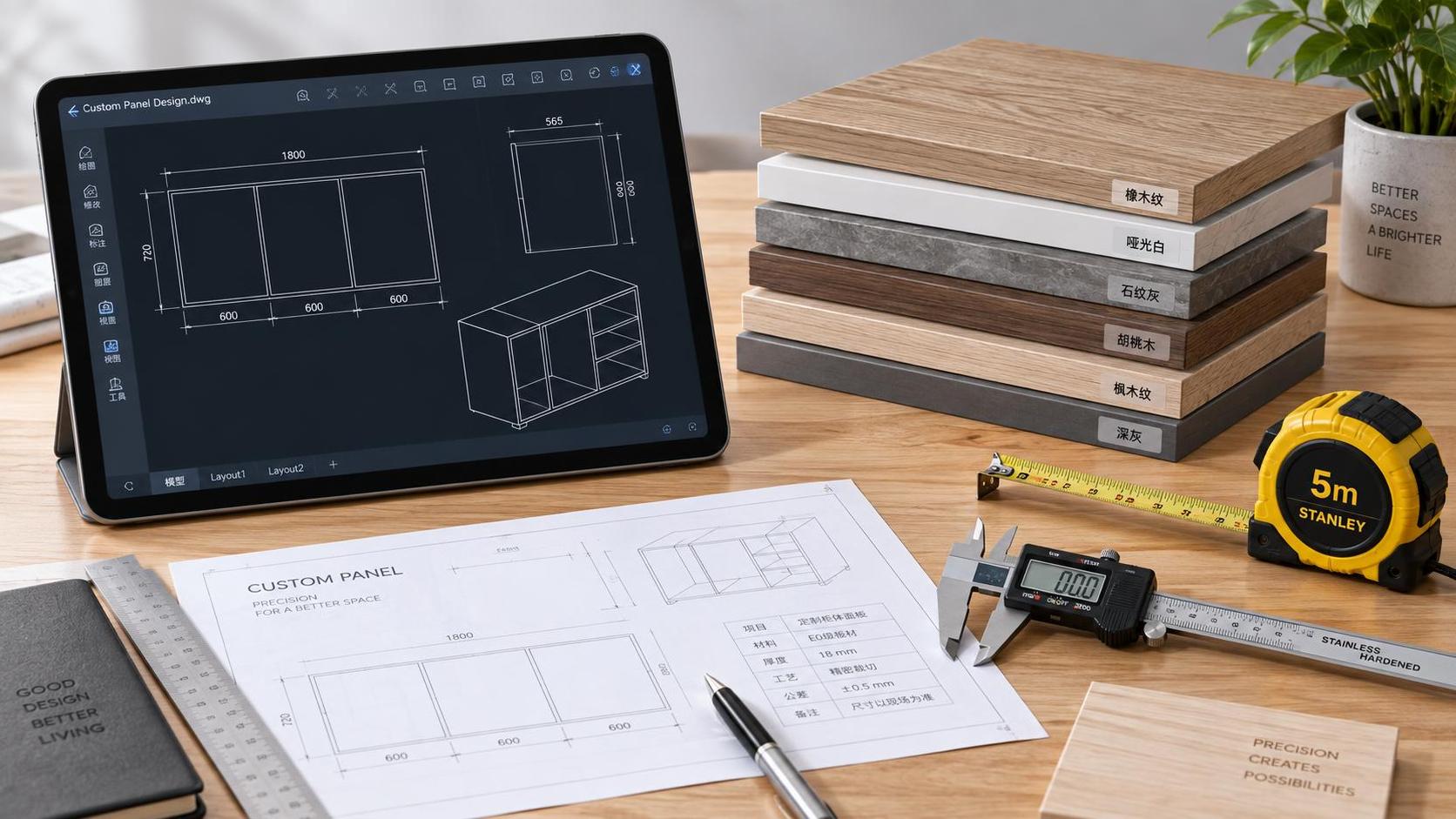
Custom work also requires disciplined communication between designer, purchaser, manufacturer, fabricator, and installer. Drawings alone may not state all practical details, such as acceptable color variation, joint direction, exposed-edge expectations, backing conditions, fixing locations, or protection during construction. A detailed approved sample and production specification establish a shared reference, reducing the risk that a panel is visually attractive but unsuitable for the actual site condition.
Materials And Core Panel Categories
Material selection starts with the performance demands of the location. High-density polymer composite panels can provide a practical balance of decorative flexibility, water resistance, impact resistance, and processing convenience for interiors. SHENGSHI MEILIN manufactures Meilin Board through extrusion and PUR hot-melt lamination, creating a decorative composite panel intended for wall decoration, commercial interiors, hotels, homes, and customized engineering work where a consistent finished surface is important.
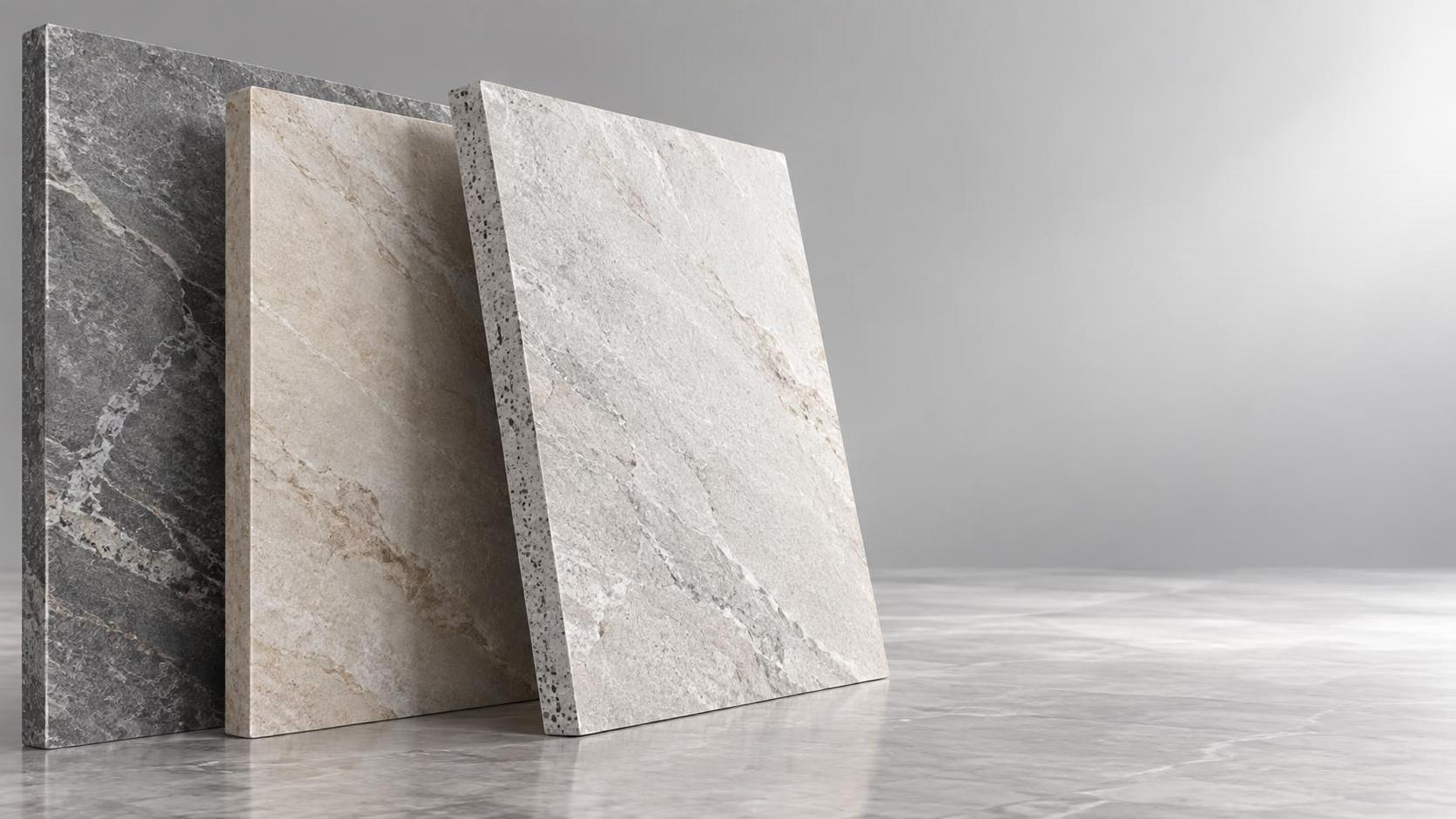
For projects seeking a mineral-inspired visual effect without relying on full-thickness natural stone, Crystal Stone Board offers a premium composite alternative. Its value lies in combining stone-like decorative character with lighter handling and adaptable processing. Buyers should still confirm the selected surface's scratch exposure, cleaning regime, joint arrangement, lighting direction, and batch-control process, because these variables materially affect how a stone-look installation appears after completion.
Aluminum honeycomb panels use thin aluminum faces bonded to a honeycomb core. This construction is widely valued for strength relative to weight, dimensional stability, corrosion resistance, and suitability for broad-format architectural elements. It can be appropriate where solid boards would add unnecessary dead load or where a stable, flat panel is needed for wall systems, exhibition spaces, hotel interiors, commercial buildings, and engineered decorative assemblies.
Aluminum Honeycomb Composite Magnesium Oxysulfate Board adds a magnesium oxysulfate-based core concept to a honeycomb composite structure for applications that prioritize fire-oriented performance, moisture resistance, and lightweight structural stability. It may be considered for public buildings, commercial projects, industrial facilities, and other demanding interior applications. The final selection should always be checked against the relevant project specification, local code pathway, test evidence requested by the authority, and the complete wall-system design.
How The Manufacturing Process Works
A reliable Custom Decorative Panel Manufacturing workflow begins with requirement review. The manufacturer examines drawings, quantities, panel sizes, substrate or framing details, intended orientation, service environment, surface reference, tolerances, and delivery sequence. This stage identifies constraints such as maximum transportable dimensions, site access, panel handling capacity, expansion allowances, and whether cut-outs or concealed fixing zones require local reinforcement. Early clarification prevents expensive redesign after production has begun.
Core formation and lamination are central to performance. Depending on the product, production may involve polymer extrusion, honeycomb-core preparation, adhesive application, hot-melt lamination, pressing, curing, and face-layer bonding. PUR hot-melt lamination is used in Meilin Board production to bond layers under controlled conditions. Process consistency matters because inadequate bonding, contamination, uneven pressure, or incomplete curing can affect long-term flatness, adhesion, and appearance.
After the panel structure is stabilized, surface development determines the visual result. Manufacturers may match approved color references, develop textures, select gloss levels, or prepare stone-inspired appearances. Surface samples should be reviewed under lighting conditions close to the final project, especially for large wall areas. Designers should state whether the panel pattern needs directional continuity, book matching, random distribution, or controlled repetition, as these instructions influence yield, cutting plans, and installation sequencing.
Conversion then turns raw panels into usable project components. Typical operations include cut-to-size processing, routing, drilling, grooving, edge finishing, shape cutting, protective-film application, labeling, and protective packaging. SHENGSHI MEILIN supports size and shape customization, surface finish development, prototype work, OEM production, and engineering project support. A first-article sample is particularly useful for confirming dimensions, finished edges, joint logic, fixing clearance, and visual approval before volume production.
Quality Control And Specification Criteria
Quality control should be planned from incoming materials through final dispatch. Useful checkpoints include face-surface condition, color consistency within an agreed tolerance, thickness, length and width accuracy, squareness, flatness, edge quality, bond integrity, protective-film condition, and package labeling. The right inspection plan depends on the panel design and application. Large-format architectural panels often need more attention to visual uniformity and flatness than small, concealed components.
Procurement specifications should avoid vague wording such as “premium quality” or “similar to sample.” Instead, define the approved control sample, acceptable appearance range, dimensional tolerances, nominal thickness, face and back construction, panel orientation, required fabrication, packing standard, quantity by size, and inspection method. Where moisture, fire behavior, emissions, impact exposure, or corrosion conditions matter, request the evidence and product data appropriate to the project jurisdiction and intended end use.
Environmental and indoor-use considerations also belong in the selection process. Meilin Board is described by SHENGSHI MEILIN as having E0-grade environmental performance. Buyers should verify how that designation applies to their own market requirements and project documentation. It is prudent to distinguish between a material-level claim, a panel assembly requirement, and a building approval requirement, because each may call for different documentation or testing routes.
For complex work, quality assurance extends to traceability. Production batches, finish references, panel labels, packing lists, and site-zone schedules help installers place panels correctly and simplify issue investigation if needed. Before shipment, verify that panels are protected against abrasion, corner damage, moisture exposure, and distortion in transit. Packaging should be designed around the product's actual weight, face sensitivity, stacking limits, and expected warehouse handling rather than treated as an afterthought.
Who Uses Custom Decorative Panels And Where?
The principal users are architects, interior designers, developers, general contractors, fit-out contractors, distributors, furniture and display fabricators, and procurement teams managing branded spaces. Each group evaluates panels differently. Designers focus on texture, scale, color, and detail. Contractors require predictable fabrication and installation. Owners consider durability, maintenance, lifecycle cost, and brand presentation. Distributors need stable supply, packaging discipline, and product ranges that fit local customer demand.
Common settings include residential interiors, hotel lobbies, guest-room corridors, reception areas, retail environments, restaurants, office buildings, exhibition halls, private clubs, public-facing commercial spaces, and engineered wall systems. A panel chosen for a dry private residence may not be appropriate for a high-traffic food-service entry or a humid public washroom approach. The application should therefore drive the material decision, not simply the preferred visual finish.
SHENGSHI MEILIN references applications in Qing Shui Wa Tai Series Projects, the Liju Exhibition Hall, Zhang Liang Catering Projects, hotel lobbies and reception areas, private clubs, a Zhang Liang Group office building, and the Colorful Holiday Hotel. These examples indicate the suitability of customized decorative solutions for commercial and high-end interior environments that need visual differentiation alongside practical panel performance. They should be used as application references, while site-specific requirements remain subject to project review.
For international purchasing, market-entry planning should begin early. Importers and project teams may need to evaluate local building rules, fire-related documentation, indoor-air expectations, labeling, customs classification, packaging marks, and language requirements. A manufacturer can provide product information and samples, but the buyer, designer, and local compliance stakeholders should confirm final suitability. This division of responsibility keeps material selection realistic and reduces avoidable delays during approval or installation.
Installation, Maintenance, And Lifecycle Planning
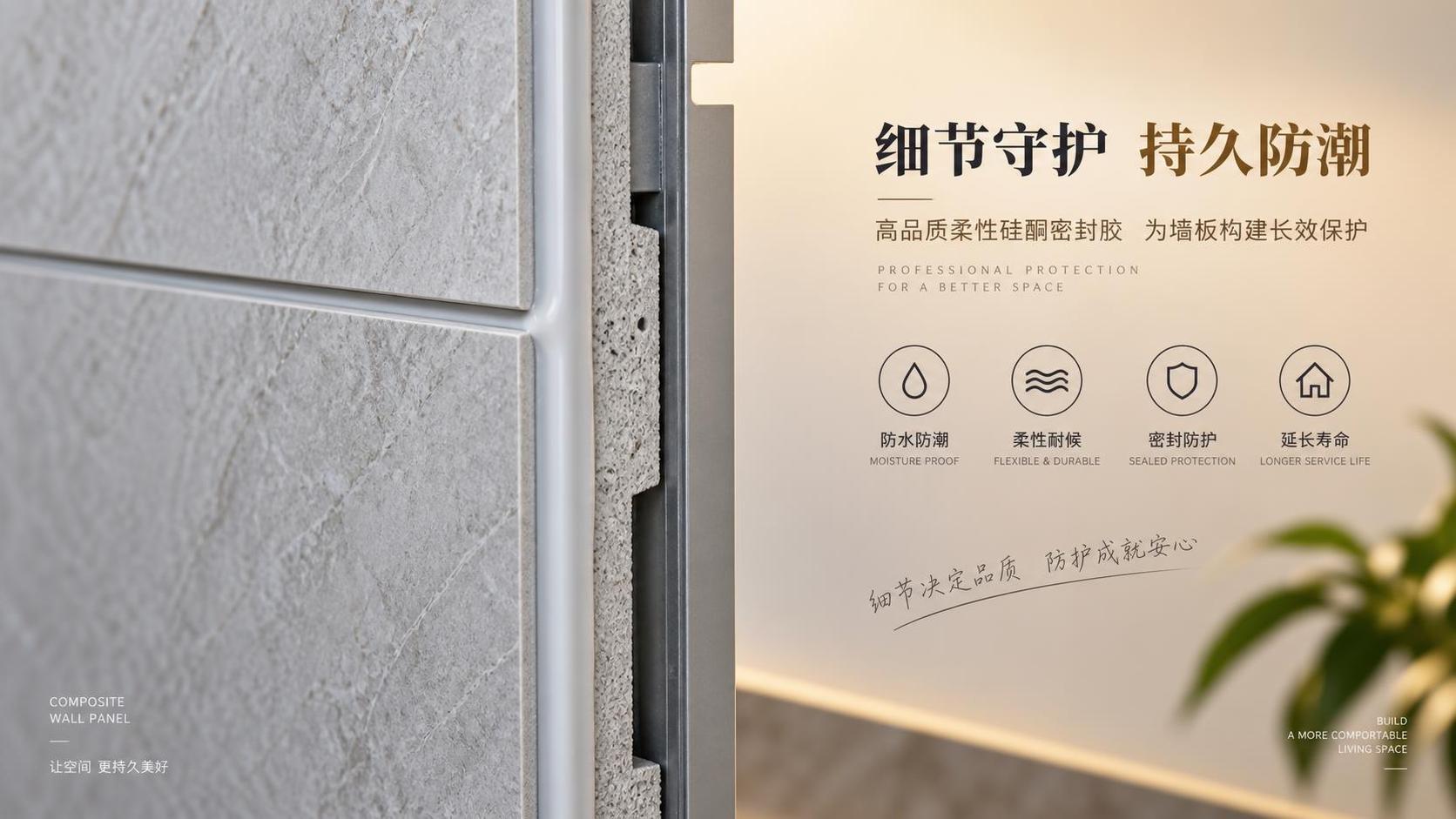
Installation quality strongly affects panel longevity. Before fitting, installers should inspect substrates or framing for level, plumb, strength, dryness, and compatibility with the selected fixing method. Panel joints must allow for the expected movement of the panel system and supporting structure. Adhesive selection, mechanical fixing, perimeter clearance, cut-out treatment, and edge exposure should follow the approved shop drawings and manufacturer guidance for the product and environment.
Site teams should protect panels until handover. Common risks include scratches from follow-on trades, damage at exposed corners, adhesive staining, uncontrolled drilling, and storage in unsuitable conditions. A practical installation plan identifies the order of work, inspection hold points, replacement-panel allowance, cleaning materials, and who may remove protective film. Where directionality or pattern matching is specified, labels should correspond to elevation drawings so panels are installed in the intended sequence.
Maintenance should be matched to the face finish rather than assumed to be identical across all decorative panels. Routine cleaning normally favors soft, non-abrasive materials and cleaning agents compatible with the panel surface. Facility managers should avoid aggressive solvents, harsh abrasive tools, or unapproved coatings unless verified for the selected finish. A documented cleaning protocol is valuable for hotels, retail chains, restaurants, and public interiors where multiple staff members maintain the same surfaces.
Refresh cycles are driven by traffic, brand updates, surface damage, lease turnover, and changes to operational requirements. Custom panels can support phased refurbishment when dimensions, finish codes, and batch records are retained. For projects with a long operating horizon, buyers should discuss spare quantities, replacement lead times, and finish continuity before the initial order. Planning this at procurement stage is less costly than trying to reproduce a discontinued or undocumented surface several years later.
Total Cost Of Ownership And Buying Decisions
The purchase price per square meter is only one element of total cost of ownership. The delivered cost also includes development samples, engineering time, substrate preparation, fabrication complexity, yields from cutting, packing, freight, duties where applicable, handling equipment, installation labor, waste, cleaning, repair exposure, and future replacement. Large or unusually shaped panels may reduce visible joints but can increase transport risk and site-handling requirements, so the lowest unit price is not always the lowest installed cost.
Buyers can improve return on investment by matching the construction to the actual risk profile. A lightweight honeycomb structure may reduce handling effort and support-load demands in some applications. A robust composite decorative board may reduce concerns around moisture or impact in other interiors. The appropriate choice depends on measurable site conditions, required aesthetics, panel geometry, installation method, expected service life, and the cost of disruption should replacement become necessary.
A sound request for quotation includes drawings, material schedule, quantities by size, finish reference, target delivery location, required Incoterm, packaging expectations, testing or documentation needs, and proposed installation system. Request separate pricing for prototypes, standard panels, fabricated panels, and spares where relevant. This creates a clearer comparison between suppliers and prevents a low initial quotation from masking omitted conversion or logistics work that will later appear as variation cost.
SHENGSHI MEILIN can support customer design from concept through final production, including material selection, structure optimization, texture and color development, prototype samples, and OEM or private-label development. This is most useful when procurement teams need a panel adapted to a defined project rather than a generic catalog item. The commercial objective should be a documented, installable solution with controlled appearance and performance, not customization for its own sake.
Future Trends In Decorative Panel Manufacturing
The future of Custom Decorative Panel Manufacturing is moving toward more integrated design-to-production workflows. Buyers increasingly expect digital drawings, rapid sample development, cut-to-size supply, finish customization, and clearer production traceability. This trend favors manufacturers able to connect material development, panel engineering, surface processing, fabrication, packaging, and project support. It also raises the importance of accurate data exchange, because a digital drawing is only useful when its tolerances and installation assumptions are understood.
Lightweight construction will remain important as designers seek easier handling, reduced structural demand, and efficient installation. Honeycomb-based solutions and optimized composite structures can address these needs when selected for the right environment. At the same time, buyers will continue to compare materials through a broader sustainability lens that includes durability, resource efficiency, indoor-use expectations, waste reduction, repairability, transport efficiency, and the availability of credible project documentation.
Surface design is also becoming more project-specific. Rather than relying only on uniform commodity finishes, commercial interiors often use tactile textures, stone-inspired faces, coordinated color families, branded visual details, and panelized compositions. Customization must remain manufacturable: every added finish option, machining detail, or pattern sequence should be evaluated for repeatability, lead time, yield, and the ability to replace panels later without creating an obvious visual mismatch.
For buyers, the practical next step is to begin with a concise performance brief and an approved visual direction. Provide SHENGSHI MEILIN with drawings, dimensions, quantity estimates, environmental conditions, installation concept, and sample expectations. The manufacturer can then recommend whether Meilin Board, Crystal Stone Board, Aluminum Honeycomb Panel, or Aluminum Honeycomb Composite Magnesium Oxysulfate Board is the most appropriate starting point for sample development and technical review.
 What Drawing Formats Are Accepted for Custom Cut-to-Size Panel OrdersLearn what drawing formats are accepted for custom cut-to-size panel orders. Discover why DXF, PDF, and AI files ensure precision, avoid errors, and speed up your project. Get expert tips for perfect results every time.
 How to Prevent Moisture Damage on Composite Wall Panels During MaintenanceLearn how to avoid moisture damage with composite wall panels through expert maintenance tips. Prevent swelling, mold, and delamination with practical inspection and cleaning techniques. Protect your investment and keep panels looking pristine. Click to read the full guide.
 Which fire-rated decorative panels comply with ASTM E84 Class A requirements for hotel lobbies?What fire rating should decorative wall panels meet for hotel lobbies? ASTM E84 Class A—verified, customizable, eco-certified stone-look composites deliver safety, luxury & precision.
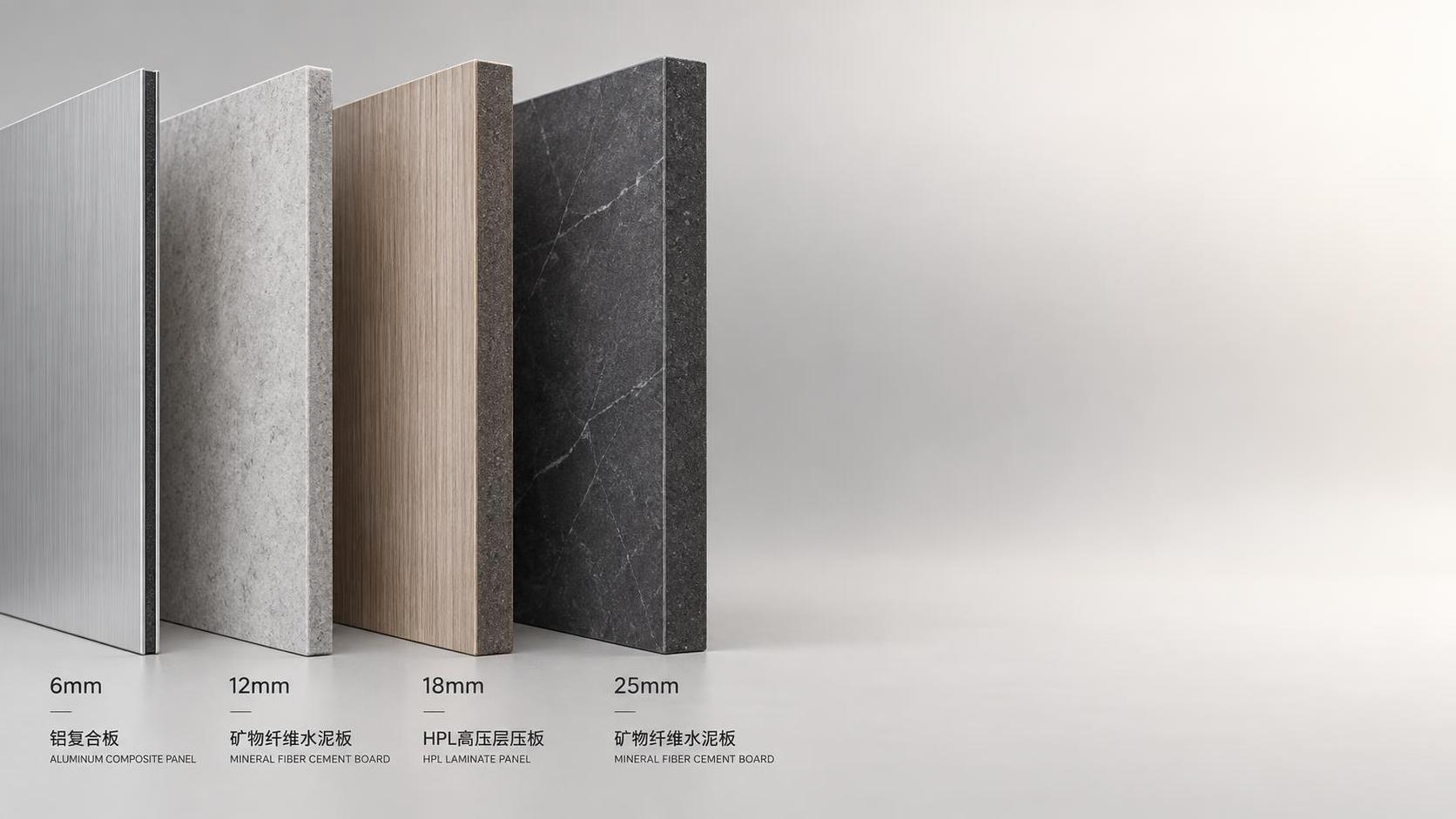
 What interior wall cladding panel thickness options are available for large-scale commercial lobby installations?What thickness options exist for interior wall cladding panels in large commercial lobby projects? Discover optimized 6–25mm solutions engineered for acoustics, fire safety & durability—backed by real-world testing and application expertise.